
In No Bears, the newest film from Iranian director Jafar Panahi, Panahi plays a version of himself. Like the real Panahi, Panahi in the movie has been banned from making new movies, and prohibited from leaving the country. Also like the real Panahi, he continues to make movies anyway. To get away with it, Panahi has moved to a tiny village near the border with Turkey, where he is remotely communicating with his film crew in Turkey as they are making a docudrama. In the doc, Panama’s team are filming a couple who fled Iran and are trying to obtain stolen passports in order to leave Turkey and make their way to Europe. Besides Panahi’s life in the village and the story of this couple in Turkey, there’s a third storyline going on too: Panahi has been charged at his temporary home with photoing a young couple one day. This couple aren’t supposed to be together; the woman was promised to another man in the village, and he is demanding this photo as proof to bring charges against his wife-to-be’s beau. Panahi has to juggle the village elders against his own inherent belief in freedom, as well as avoid Iran’s police who suspect he is still making films, while trying to oversee his movie in Turkey. Lots going on, but if you are paying attention, you’ll be rewarded with a tale of a man’s determination to not back down from injustice, both in front of the camera and behind it. In real life, Panahi has been arrested in Iran several times, most recently in July 2022 (he was in jail when this movie premiered at the Venice Film Festival), but was released this past February after a 2 day hunger strike. Have to applaud his courage. ★★★★

A Radiant Girl is a French film following a Jewish young woman during the German occupation in 1942. 19-year-old Irène is an aspiring actress with hopes to be accepted into a conservatory to hone her craft, but Paris is changing around her, and she is mostly unaware of those changes. Some of that is because her father, André, is trying to protect her from what is going on. He engages in hushed arguments with his own mother, Irène’s grandmother Marceline, who is Irène’s kindred spirit, a free woman who doesn’t bow to anyone. André is willing to accept the big red “Jew” stamped on their papers, while Marceline wants to fight it. All of this is going on in the background; all Irène is focused on is preparing for her audition. But when we see the baker refuse Marceline, and other glances the family receives when they are out and about, the viewer becomes aware that there’s no way Irène is getting into that school, whether she’s qualified or not. The film is about a woman’s hope and dreams in the face of adversity, but also the consequences of trying to pretend everything around you is OK, when it most certainly is not. A (mostly) quiet drama, but has a very emotional, impactful finale. ★★★½
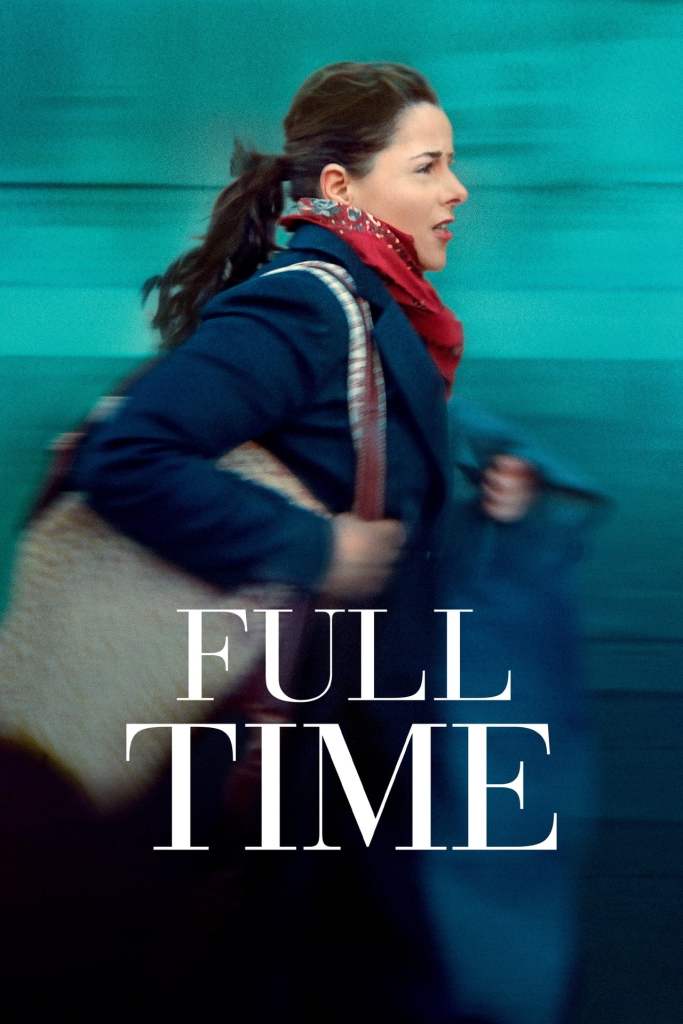
Full Time, from first-time French director Éric Gravel, follows a single mom named Julie (Laure Calamy) as she struggles to provide for her 2 kids. With a car that won’t run, Julie is forced to rely on public transportation to get from the suburbs to Paris, where she works as head maid for a luxury 5 star hotel. Julie, with a masters degree in market research, is trying to get a better paying job after the last company she worked for went bankrupt. But life is not dealing her the right cards. The public transportation she relies on grinds to a halt when the bus and train drivers/conductors go on strike, due to recent labor law changes France has made to help pay for its aging retired/pensioned population. Contending with that, Julie also struggles with hiding her job search from her current employer, finding daycare for her kids, an ex-husband who won’t return her calls or pay alimony, and a dwindling bank account as she is forced to pay for taxi’s and hotels when she can’t make it home (putting a bigger strain on her childcare). Life continues to spiral on her, until you don’t know if she is going to ever see the light again. It’s a harrowing movie (who knew someone could turn everyday life into a thriller?), but not sure it’s a great movie. Interesting for sure, and arresting at times, but if not for Calamy’s excellent acting chops, not sure it’d be all that memorable. ★★★

One Fine Morning is a beautiful, moving film from French writer/director Mia Hansen-Løve, starring French superstar Léa Seydoux. She plays Sandra, a single mother to Linn. Sandra is caring for her father, a celebrated philosophy teacher, who has come down with some kind of visual/cognitive disease (its exact nature isn’t explained until fully halfway through the film). He is deteriorating quickly, and can no longer care for himself, forcing Sandra to put him in a home. While all this is going on, Sandra runs into an old friend, Clément. Clément is married with a boy of his own, but his marriage has lost the spark, and he finds love again with Sandra. Unfortunately, as the film goes along, it seems more and more like he is never leaving his wife, and that Sandra will just be his mistress. As her dad gets worse and bounces from home to home, in search of the one that will best care for him, Sandra’s personal life with Clément gets rockier. Will she find her one fine morning? It’s the sort of real-life picture at a moment in time that is light on plot but heavy on emotion. I ran the gamut of feelings throughout this movie, and was swept up in Sandra’s life. Wonderful picture. ★★★★½

Saint Omer is one of those quiet dramas that is supposed to be thought-provoking and emotional, but unfortunately it’s just too wordy and lacking emotional heft, despite its subject matter. Rama is a college professor and novelist who goes to attend the trial of a young Senegalese immigrant named Laurence Coly. Laurence is charged with murdering her 15-month-old girl, leaving her on a beach to be swept out to sea. Laurence doesn’t deny the changes, but her defense paints her as a woman who went mad, put down and kept down by a family who put too much pressure on her to lift herself (and them) up through schooling and a system which did not help immigrants. The prosecution though points out a myriad of lies Laurence told her family and those around her, showing her to be a conniving woman. Rama is there to perhaps write a story about Laurence’s ordeal, but also because Laurence’s story hits close to home. Rama herself is the daughter of a Senegalese immigrant, and she had a rocky and troubled relationship with her mother, as told in flashbacks. Rama herself is also now pregnant with her first child, and fears becoming her mother. What should be a whale of an emotional rollercoaster is bogged down in the telling of it. The entire movie (almost literally) is testimony by Laurence and others during the trial. The camera will stay on someone’s face for 5, 10 minutes at a time, not moving, while they answer questions. And most of it is Laurence, and she delivers dialogue in a cold, emotionless, stale tone, in an attempt by the writers, I’m sure, to show how broken she is, but it leaves much to be desired as entertainment. ★½
- TV series recently watched: Luther (series 4-5)
- Book currently reading: Heir to the Jedi by Kevin Hearne

 Jons Movie Takes
One thought on “Quick takes on One Fine Morning and other foreign films”