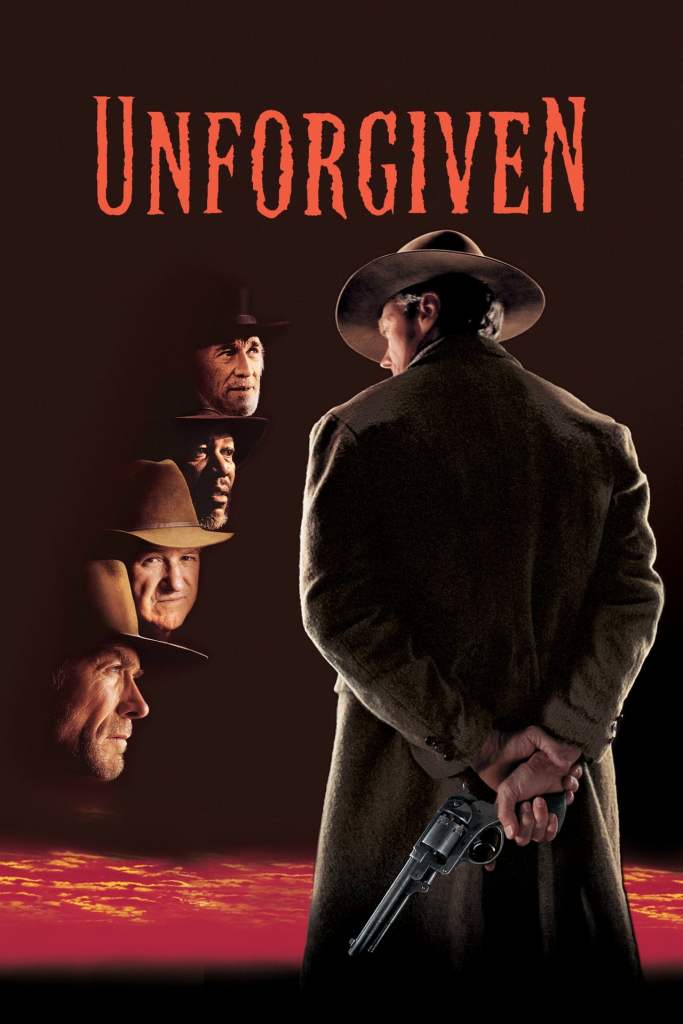
Since I’m still taking a break from watching a bunch of “new to me” classics, I thought I’d go back and revisit a few films. Each of these critically acclaimed pictures I’ve only seen once before; four of them back when they first came out, and the last has been at least 25 years too, so I get a chance to see them with fresh eyes. Up first is Clint Eastwood’s Unforgiven, from 1992. A western, starring himself, Morgan Freeman, and Gene Hackman, it sets up the viewer with the preface that Eastwood’s character, William Munny, used to be a drunk and a murderer in the old west, but he met the right girl and settled down. Though his wife died, Munny still raises his kids well, but the Kansas farm is not doing well and the family is just about broke. What comes his way is news that, in Wyoming, a couple cowboys cut up a woman and there is now a $1000 bounty on the nefarious men. What Will doesn’t know is the woman was a prostitute, and that even the local law (Little Bill, played by Hackman in a devilishly bravado way) is discouraging the bounty, which was raised by the woman’s fellow prostitutes. Will calls on his former sidekick Ned (Freeman) and are joined by a young wannabe gunfighter, who idolizes the legend that is William Munny, and the trio head off to Wyoming for the promise of riches. They’ll need to face the bad cowboys, Little Bill and his fellow lawmen, and Munny will have to take hard look in the mirror about the man he used to be, and if he can be that man again. Super exciting action, nail biting suspense, and the gritty feel of the wild west make this a perfect film from start to finish. There are no good guys in a story like this, but you just have to root for the lesser of the evils. ★★★★★
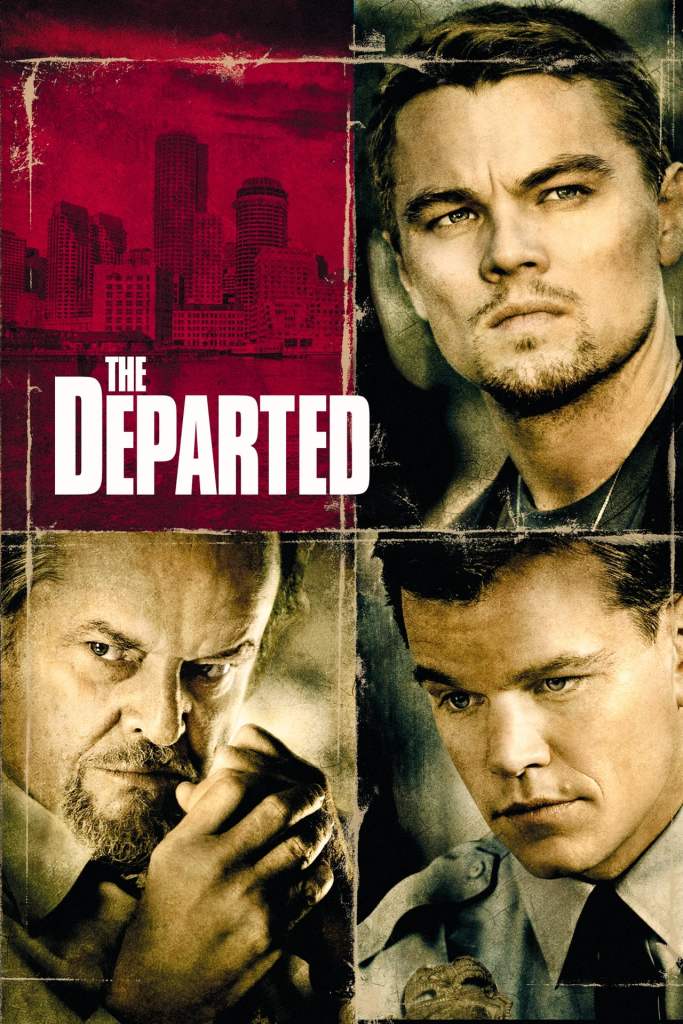
For whatever reason, The Departed wasn’t as good for me this time around, despite me having good memories of it from 20 years ago when it was released in 2002. From all-star director Martin Scorsese and with an amazing cast (Matt Damon, Leonardo DiCaprio, Jack Nicholson, Martin Sheen, Mark Wahlberg, Vera Farmiga, and Alec Baldwin), it is quasi- based on gangster and FBI informant Whitey Bulger. Colin Sullivan and Billy Costigan are two young men on diverging paths. Colin came from a good family, but was influenced by mobster Frank Costello early in his life, and as a police detective, he is Frank’s eyes and ears inside the police force. Billy’s background is the opposite: from a family of known crooks and jailbirds, he is trying to break that mold and become a good cop. But a secret division within Boston’s force, one that oversees the undercover officers, sees an opportunity to place Billy, someone who’s family is well-known in the criminal underworld, as the perfect covert operative. Between Billy and Colin, who will sniff out their counterpart first, and what happens at the end when everyone realizes that Frank is already informing to the FBI anyway? The premise is fantastic, the delivery not so much. Far be it for me to besmirch the genius that is Martin Scorsese, but the presentation of the film just felt off. Wasn’t a fan of the editing, and while the story is engaging, I never felt completely pulled in and enveloped by the telling of it. Which is weird coming from a Scorsese film, the master of storytelling. If it sounds like I’m ragging on it, that’s not my intention, but I just expected more. ★★★½
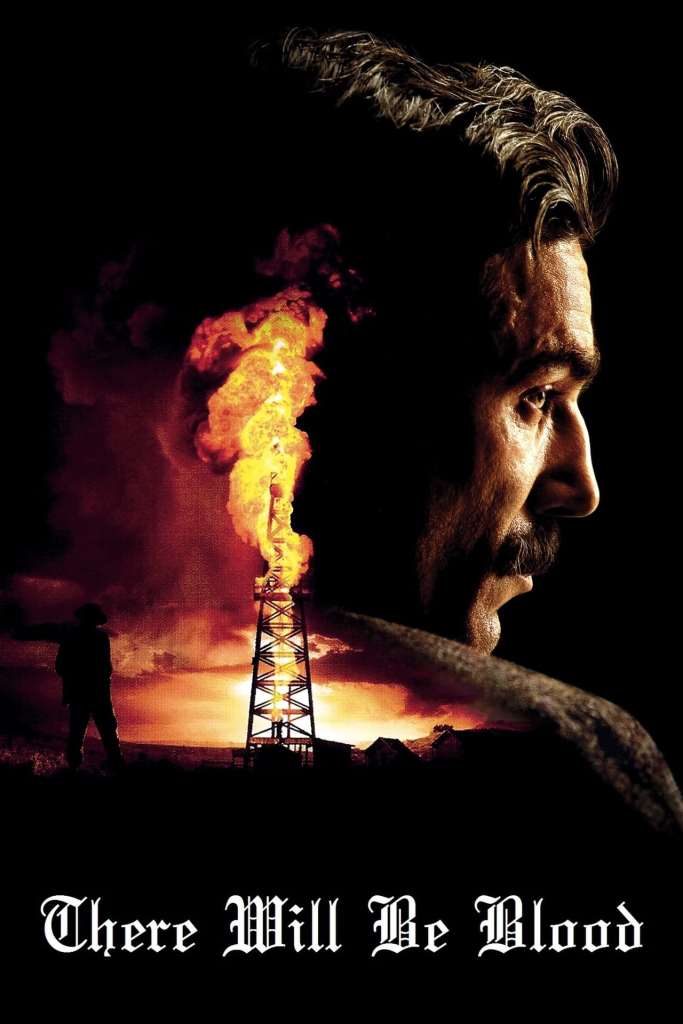
There Will Be Blood was the opposite of the above film. I remember thinking this film was over-hyped when I first saw it around 2007 or 2008, but watching it now (maybe a little wiser and more aware of certain film techniques), I was completely enraptured from nearly the very beginning. From director Paul Thomas Anderson (his followup to Punch-Drunk Love, my favorite of his films), it stars Daniel Day-Lewis as Daniel Plainview, as ironic a name as you’ll find in film. In the late 19th Century, Daniel is mining for silver and gold, but when he accidentally discovers oil in his mine, it changes his life. Together with an orphan he’s taken in (after the boy’s father was killed in his oil well), Daniel sets out to find his riches, digging for oil in California in the first part of the 20th Century. The film shows Daniel’s deterioration in his personal life over the course of a couple decades, in direct proportion to his exploding wealth. Daniel’s greed knows no bounds, but neither does his complete lack of humanity or sympathy. The strident soundtrack, not much more than jarring, discordant sounds mostly, adds to the tension of the film, even as the pleasing-to-the-eye vast vistas of the open country show the beauty and splendor of virgin America. I didn’t like this film much when it came out, but glad I watched it again. I’m not a huge PTA fan (loved Punch-Drunk, hated Inherent Vice and Licorice Pizza, and was indifferent to Phantom Thread), but this one is well worth a watch for the experience. ★★★★
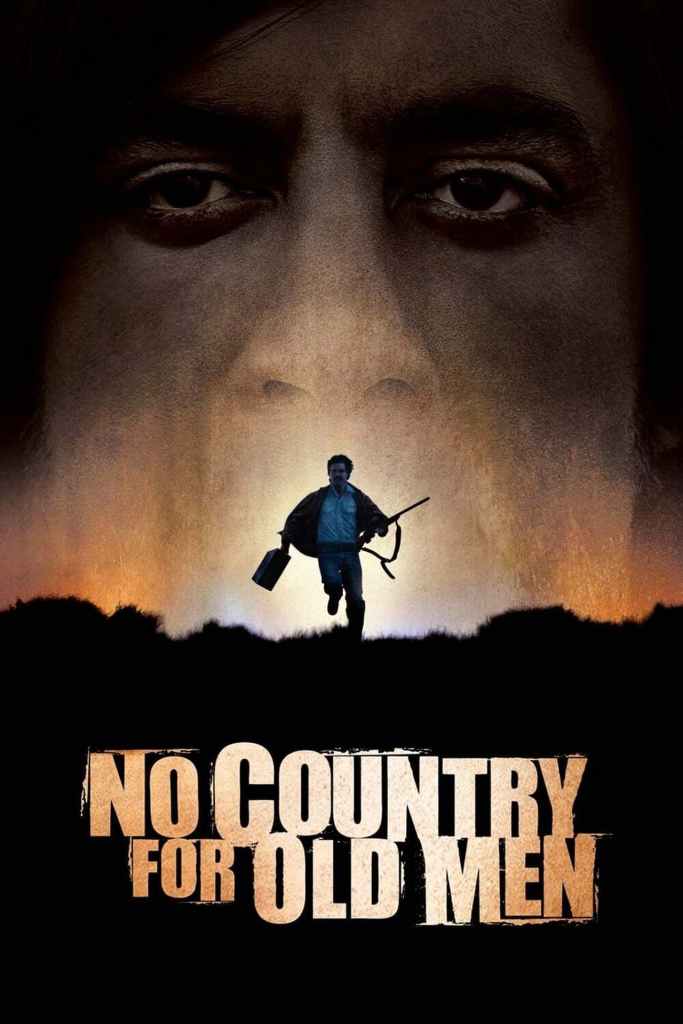
Maybe the best of today’s batch is 2007’s No Country for Old Men, perhaps the Coen Brothers’ best film. Josh Brolin plays Moss, a cowboy with some smarts, who stumbles across a drug deal gone wrong in rural Texas. Everyone is dead and there’s a big pile of money ripe for the taking. Moss grabs it, thinking his fortunes have turned, but when he returns to the scene later that night (feeling sorry for a not-quite-dead Mexican begging for water), Moss finds that taking the money is not the same as keeping the money. More Mexicans are out to take it back, and before long, Moss gets his first taste of Chigurh (Javier Bardem). Chigurh is a hired killer, and he will not let that 2.4 million go. So begins a wildly suspenseful, wildly entertaining film along the USA/Mexican border. Chigurh is very good at his job, and no matter what Moss does, he feels Chigurh constantly nipping at his heels. And though Moss immediately knows his family will be in danger too and sends his wife off to her mother’s, no place is safe. Others become involved too, including another man hired to hunt the cash (Woody Harrelson as Carson Wells) and the local sheriff, who sees the world is hurtling towards a violent end and feels he is too old to fight it (Tommy Lee Jones as Sheriff Bell). This movie is violent, but it is a mostly subdued violence, if that makes any sense. Much of the killing is done off screen; we see the evidence of it, and sometimes hear bullets fly off camera, but almost all is heard and not seen. Rather than subtract, this adds to the suspense. Once the movie gets going, early on, it never really lets up, so that my heart was beating just about the whole time. Pure perfection. ★★★★★
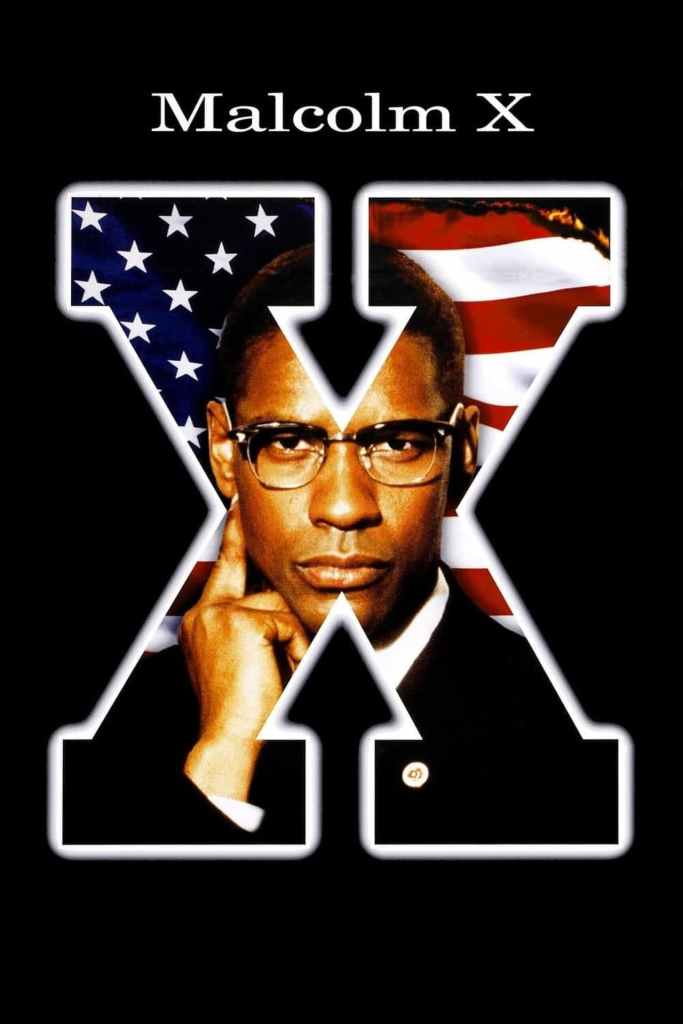
Malcolm X, the renowned Spike Lee movie starring Denzel Washington as the eponymous, controversial figure, rings as profound now as it did in 1992. Honestly though, the first hour (the film is over 3 hours long) is tough to get through. It deals with Malcolm Little’s growing up, and a lot with the crime he got into as a young man. While essential viewing, as it gives you his backstory and shows how different he is compared to the man he would be later, he’s such a little shit that it is impossible to root for him. Once he becomes involved with the Nation of Islam, following the teachings of its leader Elijah Muhammad, the movie gets much better. Malcolm drops Little and takes on the name X, symbolizing the name and heritage that was stolen from him by white slaveowners. Malcolm X then begins his crusade to embolden the black community. In complete juxtaposition to Martin Luther King Jr, who preached “turn the other cheek” and peace, Malcolm, while not exactly promoting violence, is angry with how his race has been treated. He isn’t afraid to point out hypocrisies in how black men and and white men react to adversity, and how those reactions are construed by society. A whole lot of what he says makes sense, even as the viewer starts to see flaws in Malcolm’s teachings, especially in regards to the hypocrisy of the NOI’s leadership, something that Malcolm is blind to for far too long. This changes when he becomes aware that his leader has been fathering children outside of marriage. Malcolm leaves the NOI and travels to Mecca. He meets Muslims of all races, and changes his stance. Instead of hostility towards white people, he starts preaching love and tolerance. But his former colleagues and mentors will not let him go so easy, and start threatening him and his family, leading to the day of February 21, 1965, when he is assassinated. This movie works because of the incredible performance of Denzel. As a biopic, it gets a little bogged down in the details, as many of these types of films can, but Denzel is captivating and larger-than-life, as Malcolm X himself was. He dominates every scene and commands your attention, and you can’t help but get swept up in Malcolm’s cause. ★★★★½
- TV series recently watched: Luther (series 2), The Mandalorian (season 3)
- Book currently reading: Pachinko by Min Jin Lee

 Jons Movie Takes
One thought on “Quick takes on There Will Be Blood and other modern classics”