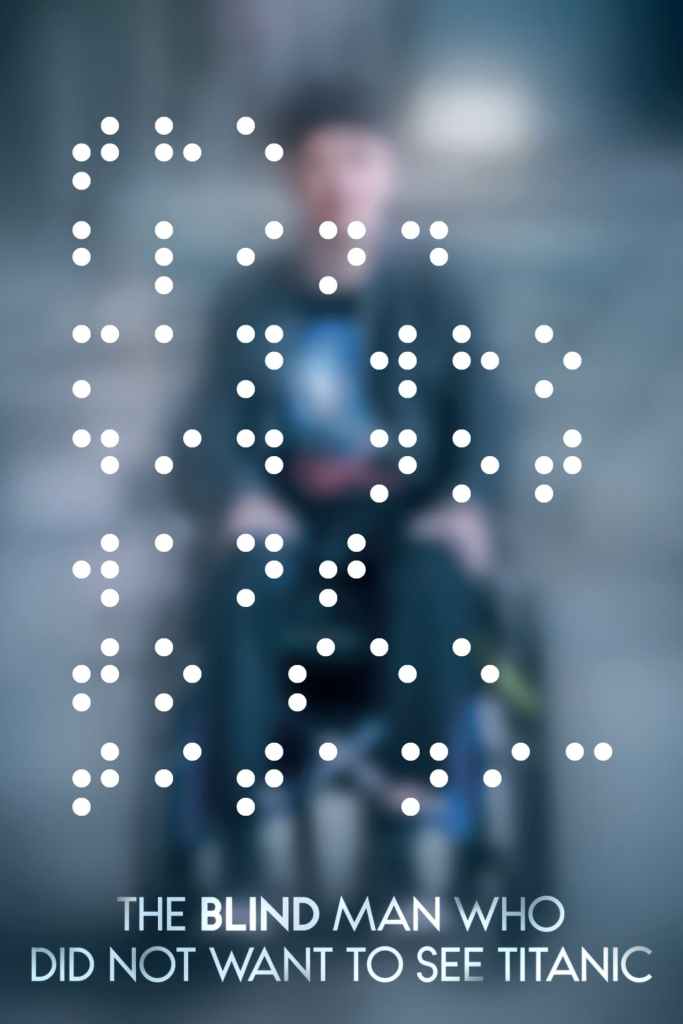
I sort of have a thing for films with unwieldy names; it doesn’t get any better than The Blind Man Who Did Not Want to See Titanic. Out of Finland, this film focuses on a man named Jaakko, and when I say focuses, I mean, he is (nearly) the only person we ever see clearly (more on that in a bit). The film begins with his regular nightmare, of himself going for a jog. It’s a nightmare because it is far removed from his regular life: an illness has taken his sight and restricted him to a wheelchair. Jaakko is virtually a shut-in, reliant upon a caregiver who visits 3 days a week, and his only other social interactions are a daily call from his father (to check in) and his “lady friend,” Sirpa. Jaakko and Sirpa met online, but have never met in person. She lives “two cab rides and a train ride” away, but in Jaakko’s condition, that might as well be on the other side of the planet. Sirpa and Jaakko talk on the phone all day long, lifting each other up, as each is dealing with their own illnesses which will ultimately take their lives. They talk about life and hobbies, including Jaakko’s love of movies, and of course, the one big one he has refused to watch. When Jaakko wins a nice sum of money playing online Kino, he decides to finally make the trek to meet Sirpa in person. But even going out the door is a dangerous proposition, and Jaakko is completely dependent upon strangers to help him with everyday tasks. Because of this, the film turns quickly from a drama to a psychological thriller. What sets this film apart from all the rest, is the director puts us in Jaakko’s perspective, or as much as he can. The camera never leaves a close-up of Jaakko’s face, and everything else in the peripheral is blurry. When Jaakko runs into trouble on his journey, like Jaakko, we can’t see his harassers’ faces. We hear them, and that’s about it. It really adds to the fear and feeling of helplessness that Jaakko is feeling. Great film. ★★★★
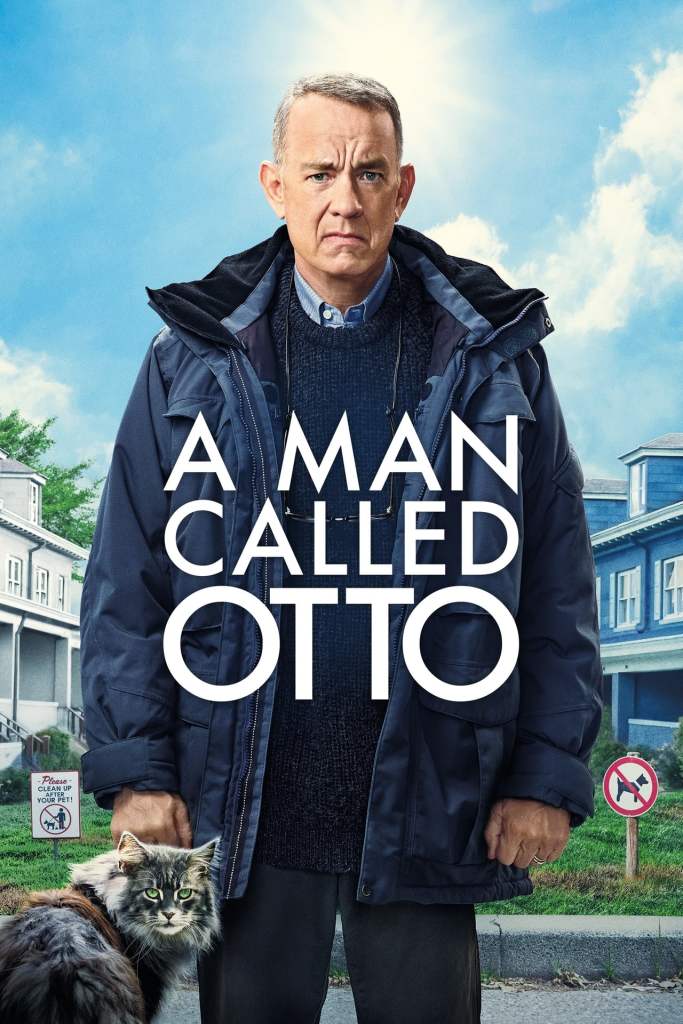
A Man Called Otto received middling reviews from critics, and I see why as soon as it starts. Everyone likes Tom Hanks, but in this film, he plays an asshole. No one wants to see Tom Hanks be an asshole. But there is more to the movie than that. Otto Anderson is a grumpy curmudgeon who berates his neighbors for not following the neighborhood “laws,” isn’t grateful for the retirement party his coworkers throw him, and generally is a sourpuss to everyone who crosses his path. Otto has zero patience for people who don’t do things the way he thinks they should be done. And Otto has a plan: he’s set a date for when his electricity and phone will be shut off, and plans to commit suicide that day, to join his recently deceased wife in the next life. Those plans are wrecked when Otto gets new neighbors: Tommy, his immigrant wife Marisol, and their 2 kids move in across the street. Marisol is outgoing and starts to win Otto over with her amazing cooking, and she won’t take “no” for an answer when he tries to weasel out of getting together. Before he knows it, Otto is watching the kids so the parents can have a date night, and teaching Marisol how to drive, in his own car no less (because their’s Is an automatic; he wants to teach her how to “really” drive a car). It’s a tried-and-true formula that has worked a million times, and it (mostly) works here again. But I still couldn’t shake the feeling that Tom Hanks is just play-acting. He’s just not a believable jerk. ★★★

Alice, Darling finds another actor stepping outside the kind of roles they normally take. Alice (Anna Kendrick) plays a woman who, at first, seems to be madly in love with her boyfriend Simon, but we quickly see that things are not what they appear. Alice presents a front to her friends (who she has alienated from, since being with Simon) that all is good, but when she’s alone, she seems to be full of nervous, tense energy. When we see that she has to lie to Simon about her whereabouts when she goes out with those friends for a week-long getaway to celebrate a birthday, we know that something is really up with their relationship. Turns out that, while Simon isn’t physically violent, he is extremely emotionally abusive, and Anna has become codependent to the point that she has to be constantly checking her phone for Simon’s latest message, for fear of his anger if she doesn’t respond right away. When her friends become aware of her problem, one of them hides her phone to force her to relax and enjoy her time away. Just when she starts to, Simon shows up, having tracked her phone to where she is. Not ready to face him alone, Alice will rely on her friends, now more than ever. It’s a tense film and a very real picture of an unhealthy relationship, the kind that is probably all-too-common. Kendrick gives an excellent performance of a woman living in fear. ★★★½

I kept putting off Babylon because it got such terrible reviews, but here’s one that I really enjoyed. From director Damien Chazelle (Whiplash, La La Land), it is a chaotic mess, but it is an entertaining chaotic mess. The film follows a half dozen or so film stars, mostly over a single decade from the silent era into the early “talkies,” and what that transition meant to people in showbiz. The first hour (it’s a long film at over 3 hours) takes place 1926-27, and film sets are a crazy, chaotic mess. With no need to be “quiet on set,” people are yelling and screaming, as multiple movies are being filmed in a small space (this loud chaos draws all the more attention when sound films hit, and the sets are suddenly deathly silent). At night, crazy, debaucherous parties are the norm, and you wonder how these people ever made movie magic. But they did, as things just sort of came together when they needed to. An early scene shows silent film star Jack Conrad (Brad Pitt) so drunk that he can barely walk, but when the director yells “action!” Jack is able to walk slowly to the girl, and deliver the perfect kiss just as the sun sets behind them. A lasting image that will sizzle in the minds of the audience. Once sound hits, Jack’s star fades, and another young actress, Nellie LaRoy has a hard time adapting as well. She can’t remember her lines, her over-the-top style, which worked so well in silent, can’t be toned down, and the demands of early sound technology don’t make it any easier. The transition ruins careers and lives, yet the film machine (and the party that follows it) just keeps on chugging. The movie doesn’t paint the actors as saints, in fact, they are very flawed people, some of whom can be argued got what they deserved in the end, but the message is clear: stars come and go, but the audience will watch whatever is thrown up in front of them regardless, and sometimes, what is thrown up on the screen is pure wonder. ★★★★
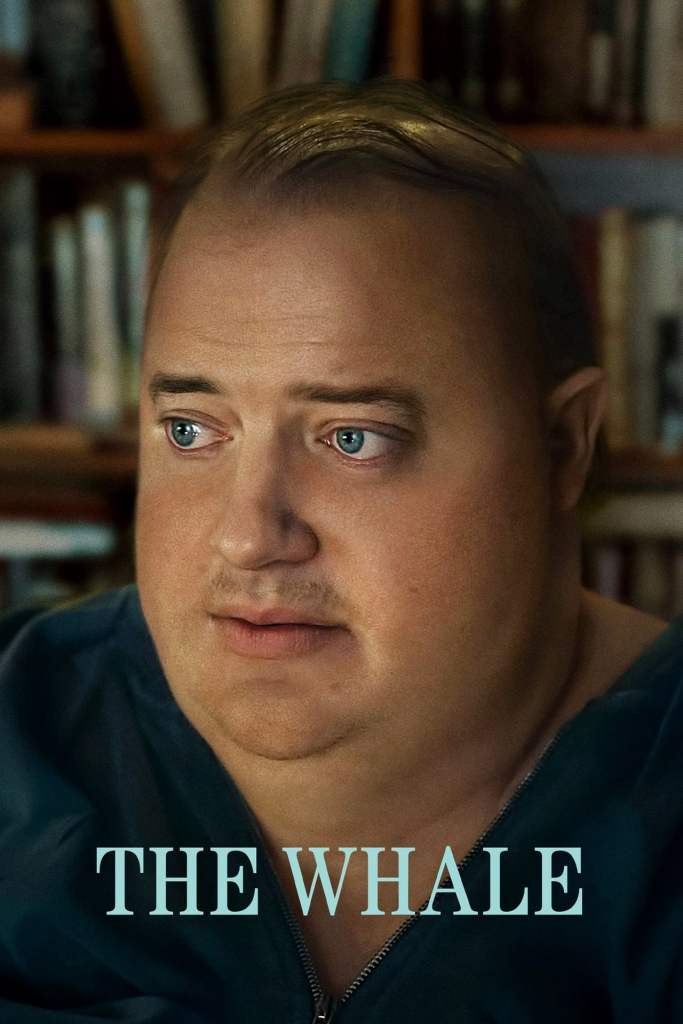
When Brendan Fraser was wracking up awards for The Whale, I figured it was mostly because of his story. Hollywood loves a good comeback, and here’s an actor who all-but disappeared for the last 15 years. But now having seen it, those accolades are well deserved. However, the film on its own merits? Meh. The latest from Darren Aronofsky (loved his Requiem for a Dream, Black Swan, and even mother!, despite what others said, but hated Noah), the film follows Brendan as Charlie, a 600+ pound man confined to his condo, in the last week of his life. Charlie is a shut-in, unable to leave due to his weight, and his only friend is a kindly nurse who looks after him. The nurse, Liz, gives him the news that his failing heart will not survive the week if he doesn’t seek immediate help, but Charlie refuses to call 911. Charlie decides to make the most of his last week. He left his wife and child 9 years ago when he fell in love with a man, a man whose death led to Charlie giving up on life and seeing his weight balloon. Charlie’s daughter Ellie is now 17, and he reaches out to her to see if it is too late to mend that fence. Rightly so, she is full of anger and hurt, feeling abandoned, and she’ll never understand that Charlie did it because he fell in love. The movie is awfully heavy handed, and while I felt sorry for Charlie as he put away pizzas and buckets of chicken by the handful, it was still tough to watch (in typical Aronofsky fashion). But Fraser does shine, and it is remarkable that a man with this kind of talent was unable to find meaningful work all these years. Worth watching for his performance alone. ★★½
- TV series recently watched: Hell on Wheels (season 5), The Chosen (season 1), Servant (season 4)
- Book currently reading: Dune House Atreides by Herbert & Anderson

 Jons Movie Takes
One thought on “Quick takes on Babylon and other films”