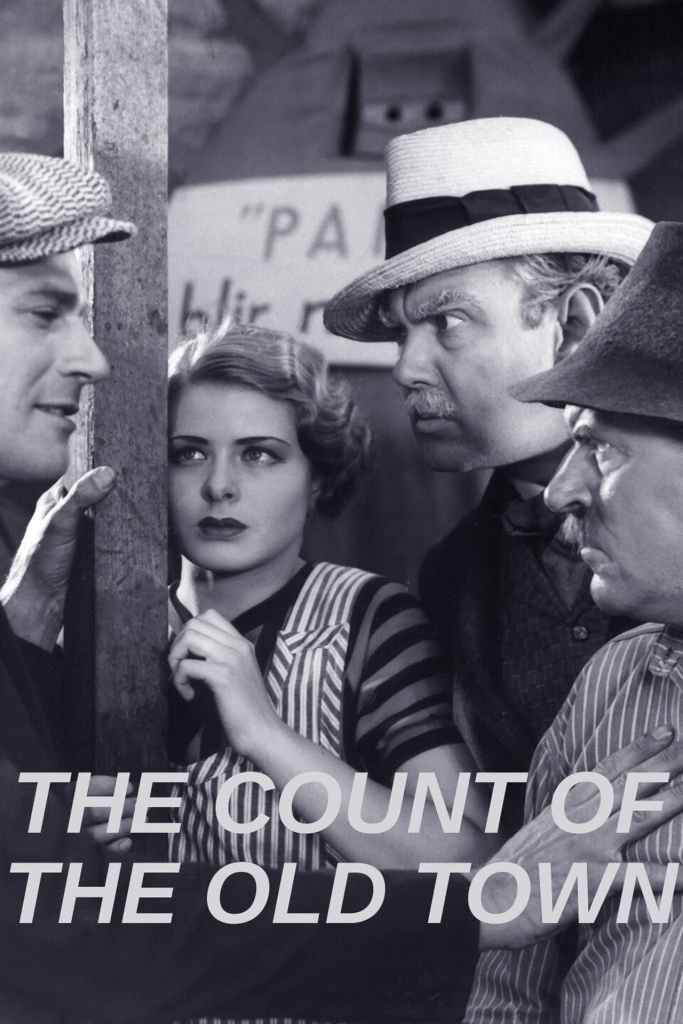
Over the last few years, I’ve seen many films starring Ingrid Bergman. In her long career, she’s headlined films by the best, directors you know from only their surnames: Renoir, Hitchcock, Lument, Rossellini, and Bergman (Ingmar that is! Maybe that’s a bad example here…). Many have seen those blockbusters, but fewer have seen her humble beginnings in Sweden, so up today are 6 of her films made in her home country, all but the last made before heading to Hollywood in 1939. The Count of the Old Town (1935) was her first credited role. This movie is (I guess?) a comedy, but laughs are few and far between. In a little corner of a city where all the residents know each other, an unknown thief has been plaguing the local businesses. The inept cops think it is one man, but he somehow always evades capture, even while the local hotel’s maid (Bergman) falls in love with him. Some silly subplots about the old guys in the area and their drinking games, as well as their attempts to find love with the aging ladies nearby. Pretty silly movie, but the highlight is Bergman sings a song halfway through. She’s young, but the talent is already there, and she’s really the only reason to watch this bore. ★
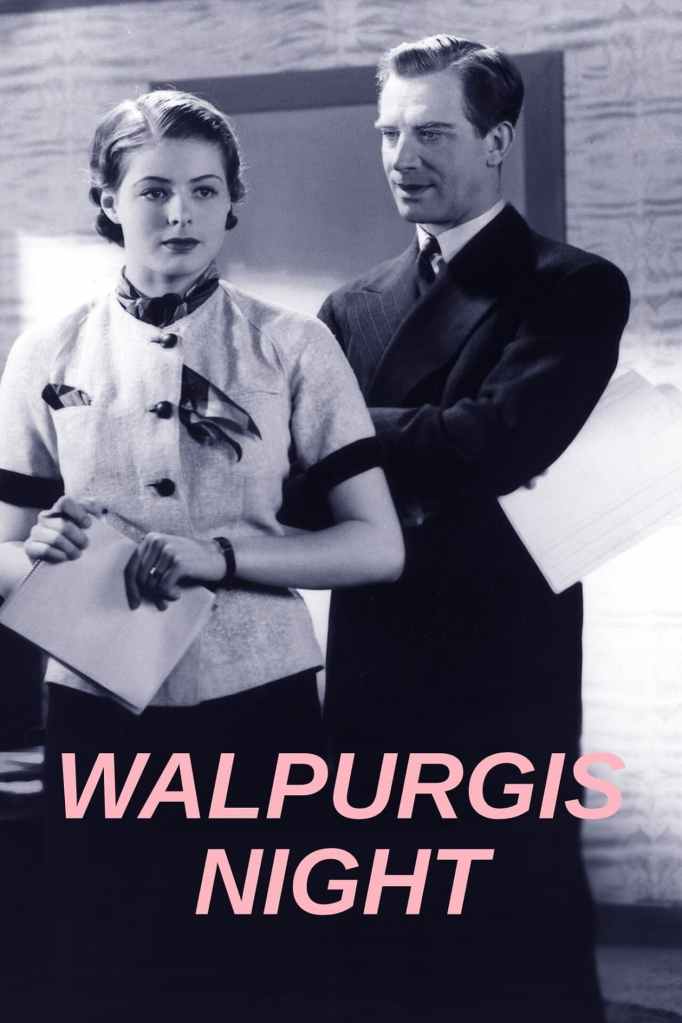
Know the old phrase, “It’s always darkest before the dawn?” It’s damn near bleak at the beginning of Bergman’s career. Walpurgis Night isn’t any better than her first film. In fact, if I rated that one a single star, this one should somehow be in the negatives. A completely inane movie about a secretary who’s in love with her boss, but he’s married to a shrew who won’t bear his children. The film starts with a solid 5-10 minutes of dialogue around the newspaper office about the country’s birthrate problem, with contrived arguments as to the causes of the low birth numbers, almost had me give up on the film before it had even begun. Even so, I only made it maybe 25 minutes in before calling it quits. Terrible editing, no flowing plot, it was sort of like watching a movie made up of quick, seemingly random acts strung together in no particular order. And the acting? For the most part, you’ll see better at your local high school. Many actors were carryovers from the silent era, and sound film doesn’t do them any favors. ½
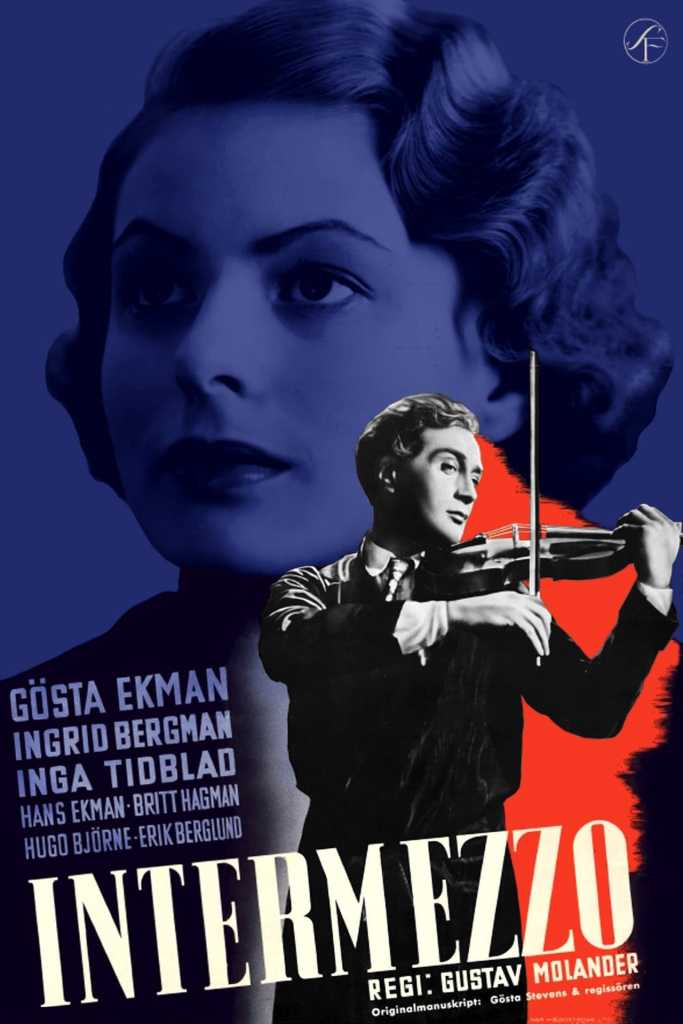
Intermezzo, from 1936, gets a little better, mostly because we finally see more Ingrid Bergman, for its her first leading role. She plays Anita Hoffman, a pianist who begins the film as a teacher to acclaimed violinist Holger Brandt’s daughter. Holger is moved by Anita’s playing, and asks her to accompany him on an upcoming tour. On the trip, the two become romantically involved, and that secret isn’t kept. Holger’s wife demands a divorce, and while Holger is happy with Anita, he does greatly miss his daughter, leading Anita to make a decision that is best for her love. It’s all a bit over the top, but Bergman does finally get her chance to shine, and she makes the most of it. The film drew the attention of American producer David O Selznick, who brought Bergman over to Hollywood for her first American film, a 1939 remake of Intermezzo. For the male lead, Selznick got Leslie Howard, who only agreed to be in Selznick’s Gone With the Wind in exchange for a producer credit on Intermezzo. Can anyone imagine that film with Howard’s Ashley Wilkes? Oh what may have been! ★★
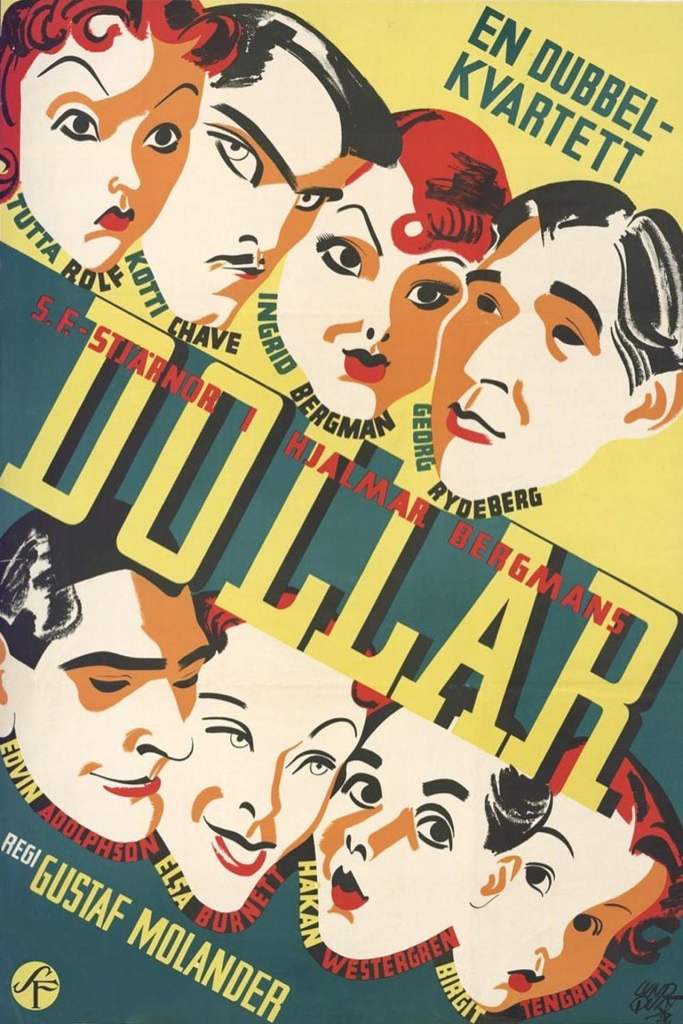
The American version of Intermezzo was still a couple years away, so in 1938, Bergman was still in Sweden, and made a couple films, starting with Dollar. A comedy, it follows a trio of married couples, each of which is unhappy in marriage, and enjoy flirting with one of the other spouses in their circle of friends (much to the chagrin of the spouse left on the outside, until they go and flirt with someone else on their own). All these (mostly harmless) dalliances lead to jealousies, which lead to angst in the marriages, which lead to more flirting. The movie is humming along pretty well until the sextet go on a skiing trip together, which one of the husbands, a doctor, eyes as a business trip. Also coming to the ski resort is a wealthy American, who the doctor wants to hit up for investing in his clinic. The American though comes crashing through the door and upending the precarious status quo between the couples. The movie falls off the rails there for awhile, and becomes overly melodramatic, losing the comedic elements that made the first half so entertaining. In the end, I was left wondering, regarding their marriages or even their flirting, how much these people even cared about any of it, which made me guess how much I should care about the film in general. ★★½

A Woman’s Face was also released in 1938, and, finally, I get a good one. Bergman plays Anna Holm, a disfigured woman with half her face marred by a burn scar. Looked down upon her whole life and with no family or friends, she’s turned to a life of crime, running a blackmail ring with a couple thugs. When the movie begins, they have 2 scams going. One involves love letters from a doctor’s wife to her boyfriend; Anna is using the letters to blackmail $10k from the wife so the letters don’t go public. However, when going to the doctor’s house for payment, Anna is surprised when the man arrives home early and she is caught trying to flee through a window. When his wife says they shouldn’t call the police (for fear that Anna will reveal the love letters), the doctor is moved to help Anna pro-bono, and does surgery to remove her scars, for which Anna returns the letters to the wife. With a newly made beautiful face, Anna is free to act on scam # 2. A man named Torsten is already deeply in debt, but he has hinted that there is a single obstacle to him coming into a fortune. He previously said he needs a beautiful young woman to get close to Torsten’s uncle, the head of a vast company. Anna (and we viewers) suspected Torsten was hinting at some sort of affair, but when Anna takes the role and gets close to the family, we find that Torsten’s goal was much more sinister. Torsten will inherit his uncle’s fortune if his nephew, the wealthy owner’s orphaned grandson, is eliminated. Anna, who has turned over a new leaf and has become attached to the boy as his governess, balks at the dastardly deal, but Torsten will not let things settle when he’s this close to the money. Fantastic film, with awesome twists and superb storytelling, and Bergman shows that she has started to hone her craft into the star she was on the cusp of becoming. FYI, this film was also remade 3 years later — directed by George Cukor and starring Joan Crawford in the lead. ★★★★
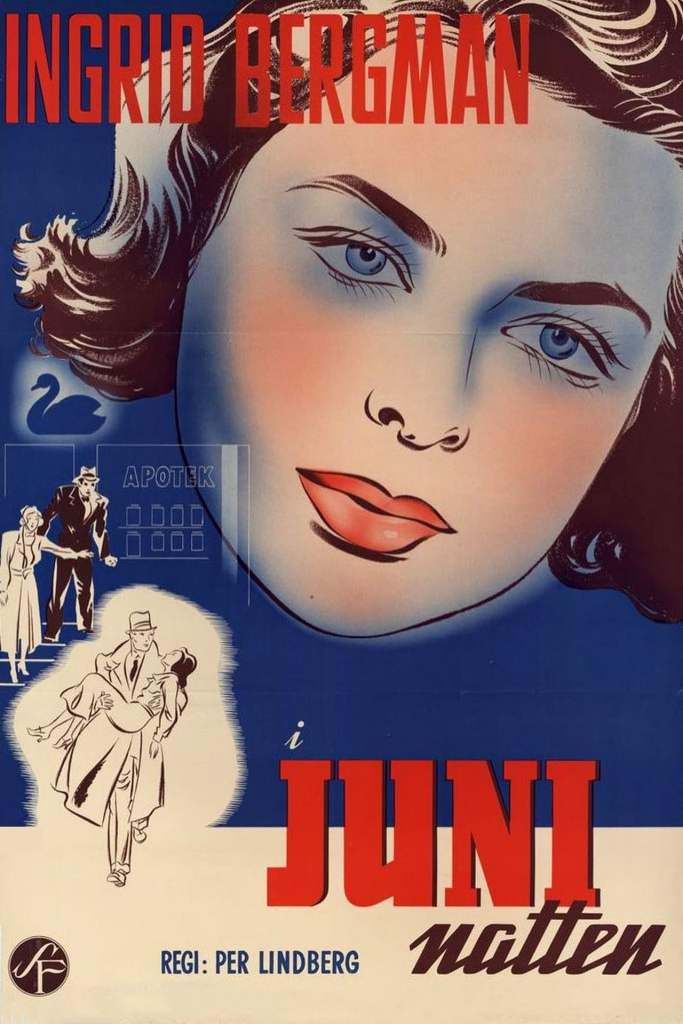
After the American Intermezzo, Ingrid Bergman returned to Sweden for one more film, 1940’s. June Night, where she gets to play a noir-style femme fatale. In the beginning of the film, Kerstin Nordbäck gets into an argument with her boyfriend, Nils, and he pulls a gun out and shoots her in the chest. Kerstin survives, and Nils is charged with attempted murder. At his trial, Kerstin begs for leniency for him, saying his actions were her fault. We don’t know what she means by this until the very end of the film. The trial is a sensation, and tabloid journalist, Willy, splashes the story everywhere. Once Kerstin is healed, she wants to start anew, somewhere where she won’t be recognized, so she changes her name to Sara Nordanå and moves to Stockholm. In a strange twist of fate, one of her flatmates at her new home is dating Willy. Also, “Sara” catches the eye of a young doctor at her new office (who is supposed to be dating one of her friends), and we start to see why Sara blames herself for Nils’s attack. Apparently wherever she goes, men are captivated by her. Like the above film, Bergman gives a tour-de-force performance, commanding the viewer’s attention in every scene she’s in. I loved the ending of the movie, where we see that the more things change, the more they stay the same. ★★★½
- TV series currently watching: Clark (miniseries)
- Book currently reading: Test of the Twins by Weis & Hickman

 Jons Movie Takes