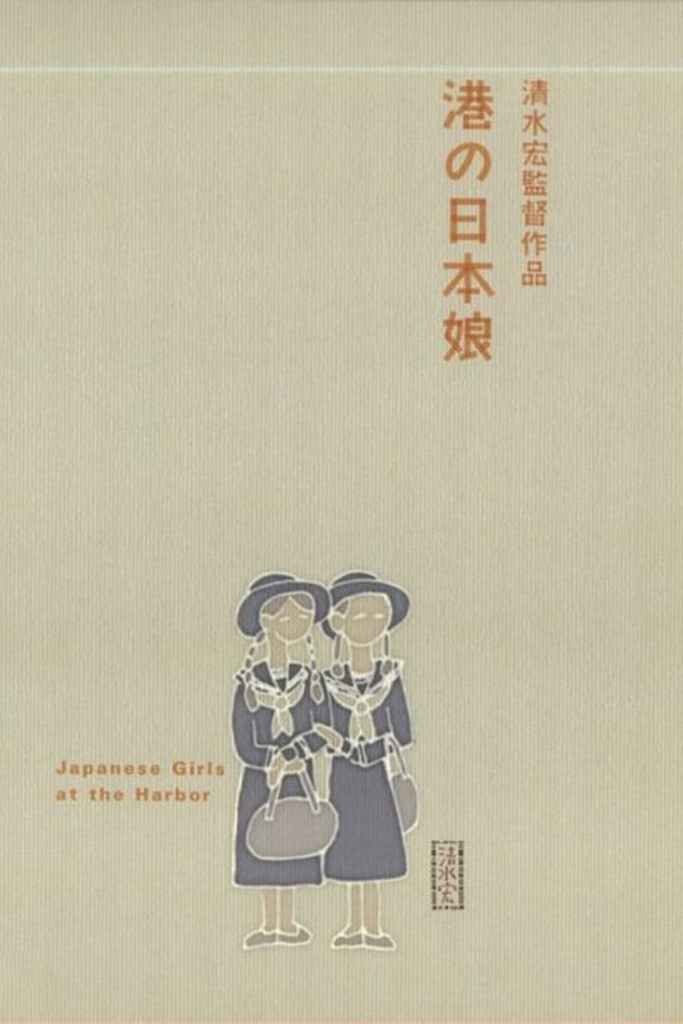
Today I’ve got 5 films from 1930’s Japan, 4 from director Hiroshi Shimizu. Despite a very prolific career (160 films!), Shimizu isn’t a household name today. He started in the silent era, and I’ll be starting with one of his silent films, though it was released well into the “talkie” era, in 1933. Japanese Girls at the Harbor is a beautiful film telling the lives of a two young ladies. Sunako and Dora are best friends in school when a man comes between them. Henry flirts with each before settling on Sunako; unfortunately he has another girl, Yoko, on the side, and when Sunako learns of this, she shoots Yoko in the chest. Fast forward a few years, and Sunako has left the area and is now a prostitute in another city when Henry spots her. Henry, having long since married Dora and expecting a child, can’t help himself, and starts hanging around Sunako again. After seeing what her previous actions have done to her life, she doesn’t want to ruin another, and urges Henry to return to his family. Following Sunako around is an itinerant painter who has feelings for her despite her profession, who happens to also be friends with Yoko, who Sunako doesn’t know survived the attack years ago. It’s an ever-tightening circle of connections, told as a story by a “narrator” through the intertiles, and a very compelling one. No newcomer by 1933, Shimizu knows how to set a scene, and the camera work is lovely. I wish I could see him work in a more modern film; his lush landscapes scream for a widescreen color shot. ★★★½
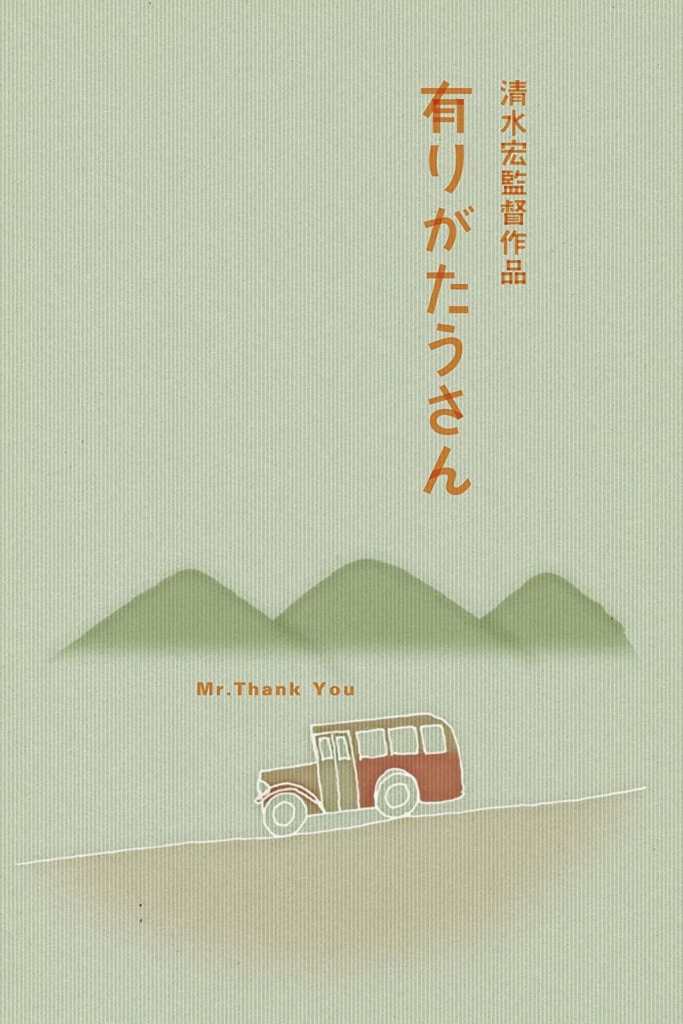
Mr Thank You, from 1936, has a couple introductory intertitles, but it is a sound film. An unnamed young bus driver is called “Mr Thank You” by everyone on his route, for his politeness in greeting every passerby. His route takes him through tiny mountain villages from rural Izu to Tokyo, and all the smalltown folks along the way know to look for Mr Thank You’s bus. Today, his travelers include a surly mustached man whom everyones loves to tease, some day workers, students, a girl mourning the death of her father, and, unfortunately, a woman with her 17-year-old daughter, a girl who is being sold in Tokyo to help the financially strapped family. The film presents a start look at depression era Japan and shows a practice that lasted for a very long time. Though the premise is great, the film ultimately becomes too predictable by the end, and though a short movie at 76 minutes, it even started to drag. Does have some heart-wrenching moments though. ★★½
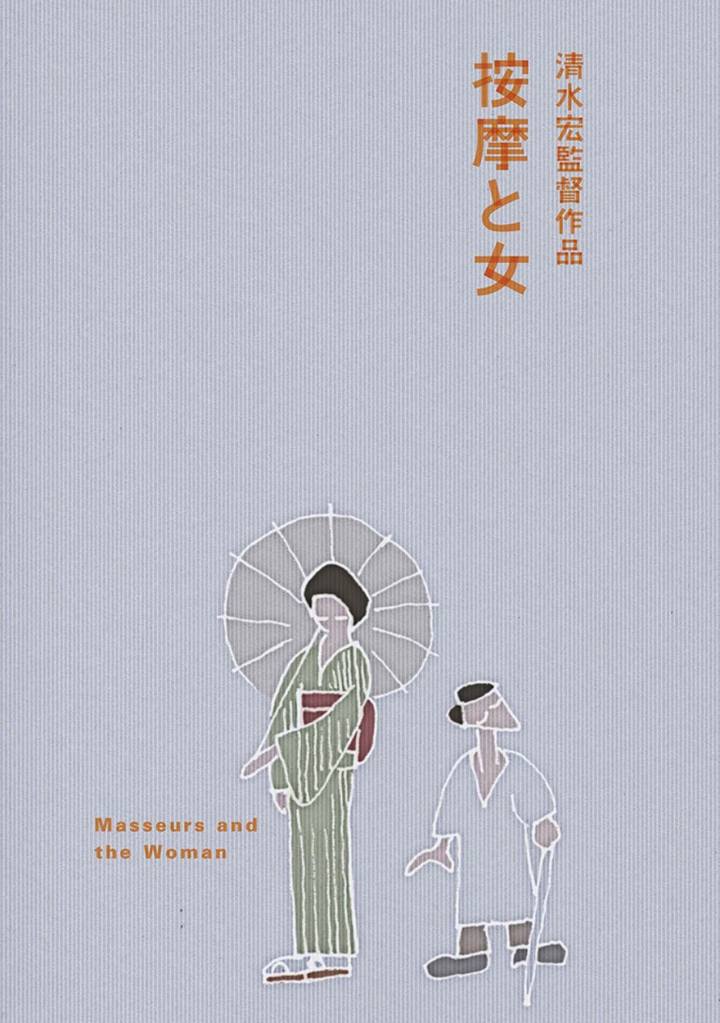
The Masseurs and a Woman is a drama/comedy, and again, a very short picture at just 67 minutes long. It gets you right into the “action” with two blind friends walking up a mountain towards a spa town, where they work as masseurs. Toku and Fuku settle into work immediately, massaging hikers and a woman passing through from Tokyo. Toku is instantly smitten by the woman, as is another visiter in the area, a man traveling with his nephew. Before the woman can pursue either relationship, money is stolen from the hikers, and people start whispering that the woman was the only other person around that day. Toku wants to protect her as much as he can, but his fears may be ill placed. The movie is pretty ho-hum and not all that memorable, outside of its humor, and unfortunately not in a good way. In 1938 it may have been funny to make fun of a blind person by making noises or tickling their noses with a feather; if it was funny then, it isn’t now, and that’s about all I took away from this picture. ★½
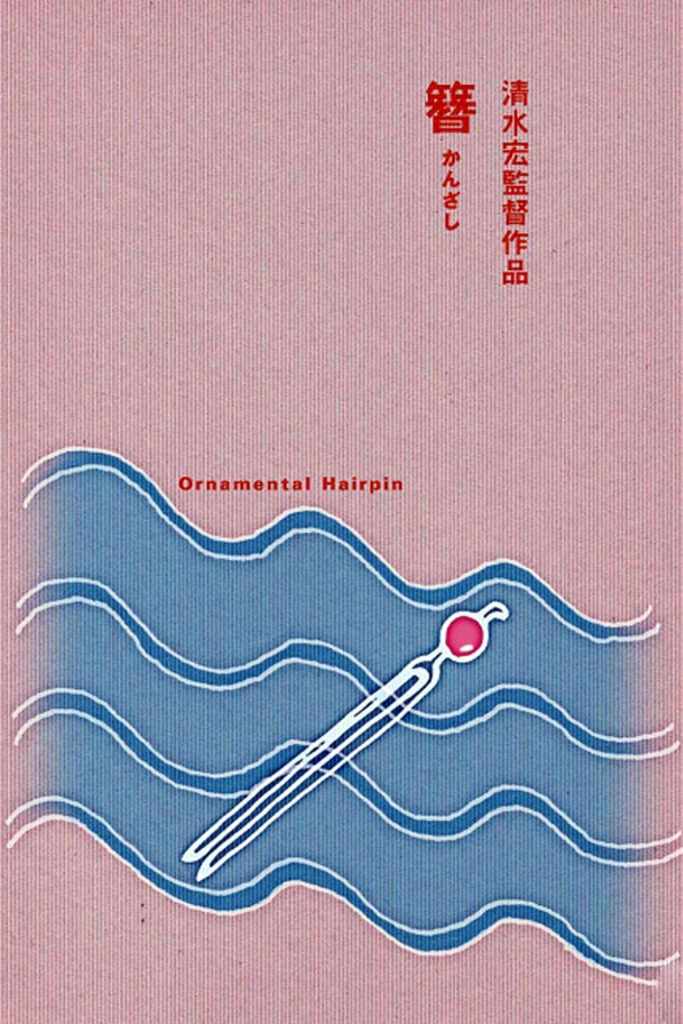
Unfortunately these films just keep getting worse. Ornamental Hairpin again takes place in a mountain spa, and the setup is a group of “regulars” who keep getting annoyed by hikers and visitors who come in and make a big ruckus. One young man, Nanmura, hurts himself by stepping on the title hairpin while in the pool; it must be pretty bad because he spends the rest of the movie limping along. The man dreams that only a lovely young lady could leave such a piece behind, and there’s a big (i.e. very long) brouhaha over if the girl will be a beaut or a hag. When she hears that her missing hairpin caused harm, Emi returns to the spa to mend Nanmura along, befriending a couple young boys and the other regulars as well. Turns out, Emi is a kept woman in Tokyo, and she doesn’t want to return to her life there. The movie has so much hemming and hawing that, while the total runtime is just 80 minutes, it could easily have been halved if they just cut out all the repeated dialogue and stale jokes. Watching Nanmura take (long) trips over and over again on his bad foot, hobbling along while Emi and the boys root him on, happen too frequently in the final half. The very final scene is actually very nice, if you have the patience to get there, but by then, it was too little, too late. ★
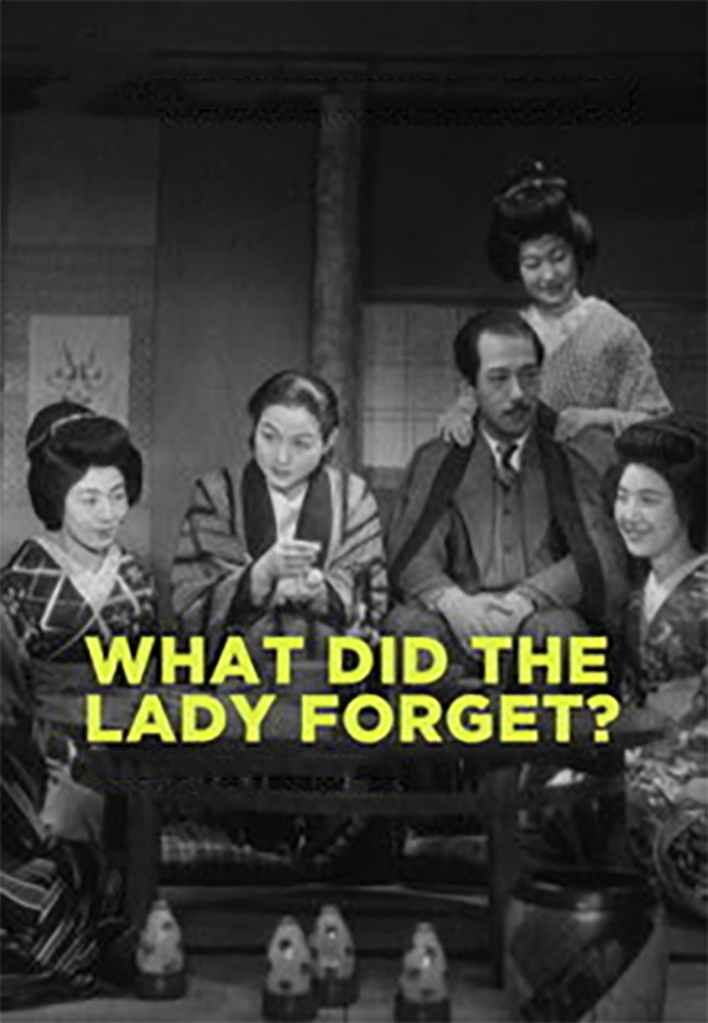
I was going to watch one more Shimizu film, but I can’t take it anymore, so to finish up, I went back to Yasujirö Ozu. I’ve seen a whole bunch of his films, and am rarely let down. This is What Did the Lady Forget?, a comedy from 1937. Right away, there’s a joke, and unlike my recent films from above, I actually laughed! Three friends, women, are talking and one tries out her “new laugh,” where she’s trying to laugh without scrunching up her eyes, because of her new wrinkles there. This, and the general banter between the women, is genuinely funny, and so typical Ozu. Anyway, onto the plot! It unravels as most Ozu films do: a quiet, simple family drama. One of the above women is Tokiko; she and her husband Komiya are hosting their niece Setsuko. Setsuko is a modern young woman: she smokes and drinks and likes to hang out late with friends. Tokiko is having none of that, and wants to clamp down hard on the girl’s free spirit. Komiya, however, clandestinely goes out with Setsuko and doesn’t discourage her from her habits. The viewer definitely gets the idea that he wants out of the house as a breather from his overbearing wife too. When he is caught in a life though, Tokiko starts to whirl on him, but Komiya is going to have to finally stand up to her. It’s a nice little film, with some very good laughs here and there, and Ozu’s style is easily seen. ★★★
- TV series currently watching: Harley Quinn (season 3)
- Book currently reading: Wuthering Heights by Emily Brontë

 Jons Movie Takes
Awesome blog! Look forward to it every week.
LikeLiked by 1 person