
Sometimes all you want is a simple, heartfelt film with no fluff, and if that’s your mood, check out A Love Song from first-time director Max Walker-Silverman. To tell his story, he got two longtime professionals in Dale Dickey and Wes Studi. Dickey plays Faye, an older retired woman whose husband died several years ago. The setting is her camper next to an idyllic lake somewhere in the west. She’s alone but seemingly content in the beginning, and is awaiting a meeting from a friend from long ago: Lito (Studi). Lito is slow in showing up, allowing Faye to have encounters with a family wanting to dig up their dad (buried awhile back under where her camper now sits) and a lesbian couple at the next campsite over (where one wants marriage and the other is hesitating), but when he does, the two old friends settle into an immediate camaraderie. Lito too lost his wife awhile back, so the only uncomfortable moments between the two is the idea hanging thick in the air between them: will they pursue each other now or stay alone. That’s the whole movie in a nutshell, but the telling of it is a joyous ride of emotion. There’s a moment where Faye, seemingly left alone at a time when she is craving companionship, is front-and-center with the camera trained on her face, and you see the tide of emotion sweep over her and can practically hear her thoughts of loneliness. You just hope in the end that she will be OK, and let me tell you, getting to the end is a wonderful ride. Very sweet film. ★★★★
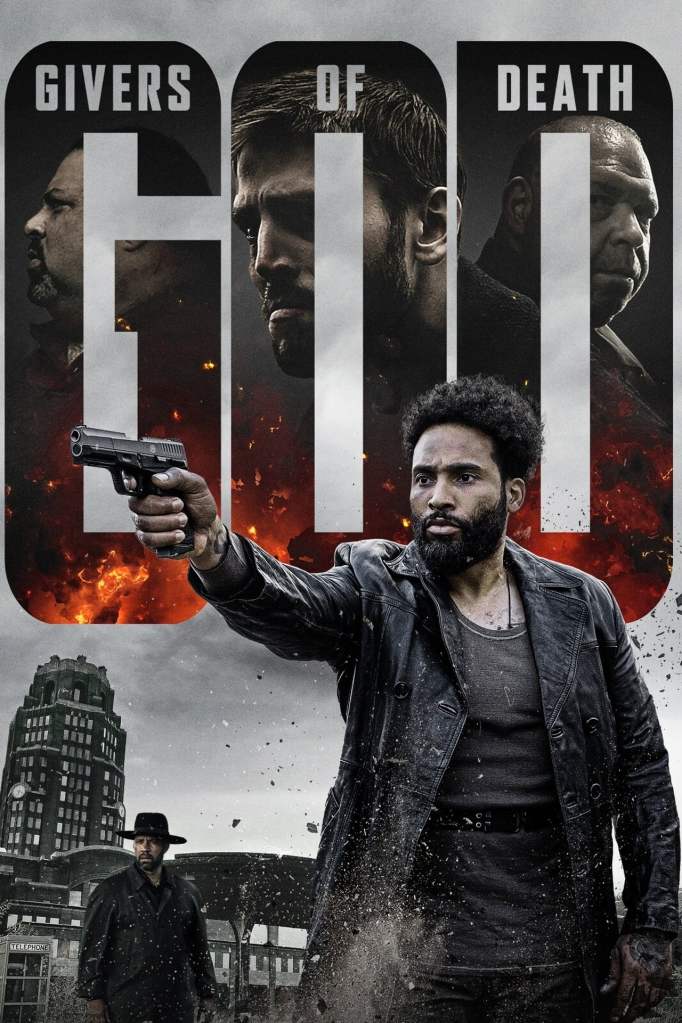
Boy, did Givers of Death let me down. I’m a junky for post-apocalyptic movies, but some movies are so bad that even my love for the genre isn’t enough. This film takes place after a fatal virus, which causes large oozing sores on the body, has wiped out a third of the world’s population. With no cure in sight, a business has popped up offering relief to those infected: for people who are unable to end their own pain, professionals can be hired to come in and kill you painlessly. “Fog” is one such professional, working for a childhood friend who opened this business when he saw the opportunity. Fog is haunted by images of the family he lost to the virus, while at the same time is pursued by a detective out to stop these vigilantes. Despite most cops in the city of Buffalo having long ago thrown their arms up at the rampant lawlessness, Schmidt still wants law and order (which is hilarious, because he isn’t above shooting down a suspect here and there). This is a Rough (capital “R”) ultra-low budget film, which doesn’t necessarily warrant automatically being bad, but the dialogue is laughably awful, and the acting, for the most part, is worse. Newcomer Addison Henderson isn’t horrible in the lead as Fog, but he can’t do it all himself, and the story doesn’t give him any help. ★
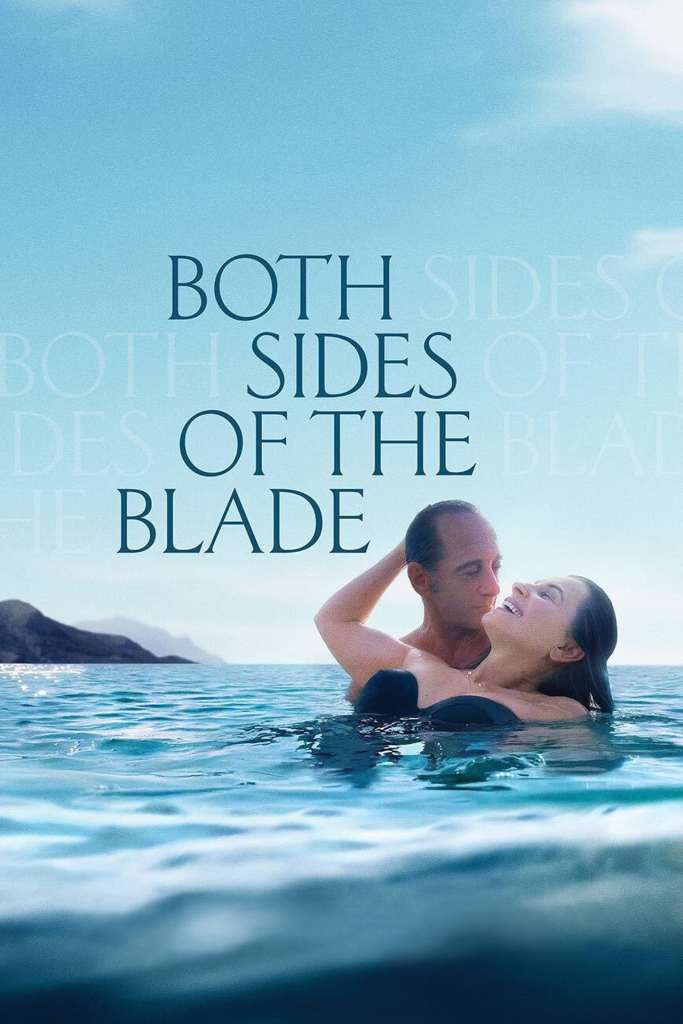
I don’t know why I keep drinking from a dry well; I always expect to be blown away by a Claire Denis film and it seems I’m always let down. Both Sides of the Blade stars one of France’s best, Juliette Binoche, as a Sara. She’s been in a relationship with Jean for 10 years, but when she spots an old flame, François, Sara is overcome with emotion. Turns out François and Jean were once business partners, but had a falling out when Sara and François broke up and she started dating Jean. Now the two men are starting a new business together after all these years, and Sara starts sneaking around to see her old flame. There’s also a subplot about Jean, pretty much a deadbeat father, and his failed relationship with his teenage son from a previous relationship, who is being raised by Jean’s mother. The story is slow but not bad, but what kills me about this film is the completely childish dialogue. Jean and Sara’s arguments are the kind you’d hear from a couple lovesick teenagers; no adults I know talk like this. And there’s so much fluff in the dialogue that I felt it could be trimmed back quite a bit and you could complete this film in about an hour. The whole “you said this,” “no, I said this,” and “do you really love me?” bullshit wore on me to no end. ★½
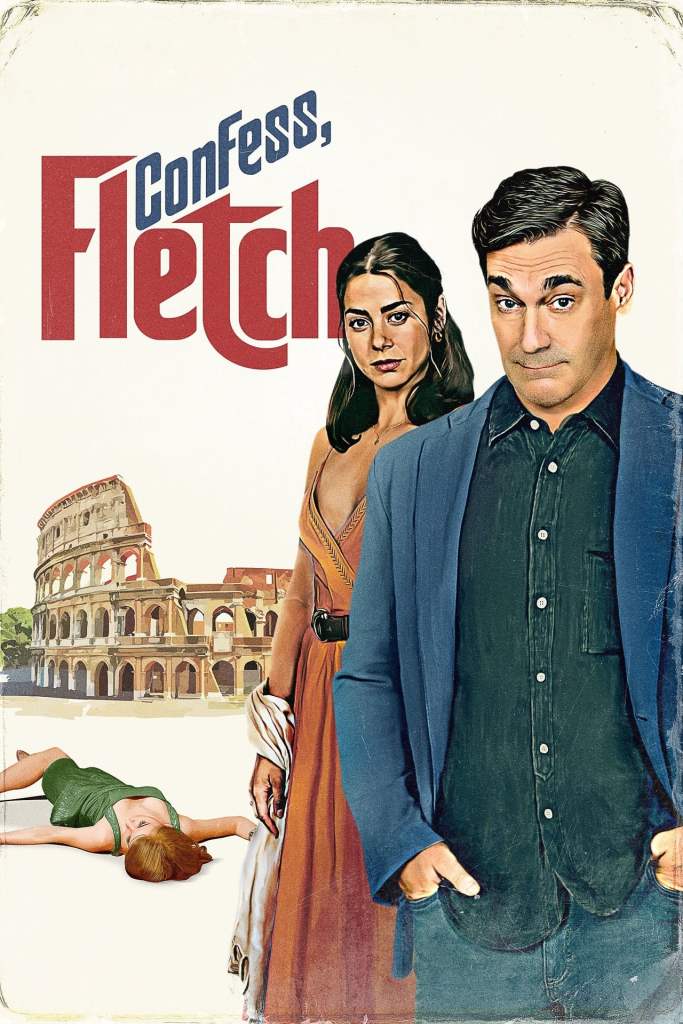
Confess, Fletch is a reboot/revival of the Fletch character, originated from a series of books by author Gregory Mcdonald, and last seen on screen in the 80s with Chevy Chase as I.M. Fletcher. In this new go-around, we get Jon Hamm as Fletch, a sometimes-bumbling idiot but who always seems to solve the case. Fletch is trying to help his girlfriend, Italian heiress Angela de Grassi, hunt down some valuable paintings stolen from her father. Her dad has gone missing, apparently kidnapped, and the kidnappers are demanding one of the stolen paintings as ransom. An art dealer in Boston has recently sold 2 of the stolen paintings, so Fletch is there to dig into that guy, when Fletch runs into some unexpected trouble. A murder takes place in the house he is renting (from a wealthy playboy), and the police point at Fletch as the number one suspect. Now Fletch has to keep the fuzz at bay (thankfully, they can’t walk but for stepping on their own feet, worse than Fletch) while he tries to get to the bottom of the art theft, and wonder why he is being set up in the murder. When the film started, I had a hard time disassociating Hamm from Chase as Fletch; Chase played the role in such an iconic way, but Hamm is very funny and it wasn’t too long before I was able to settle in to the flow of the picture. The movie is very funny and they are able to hold the mystery of the murder, with a host of suspects in true whodunit fashion, until the very end. If another sequel comes, I’ll be lined up for it. ★★★½
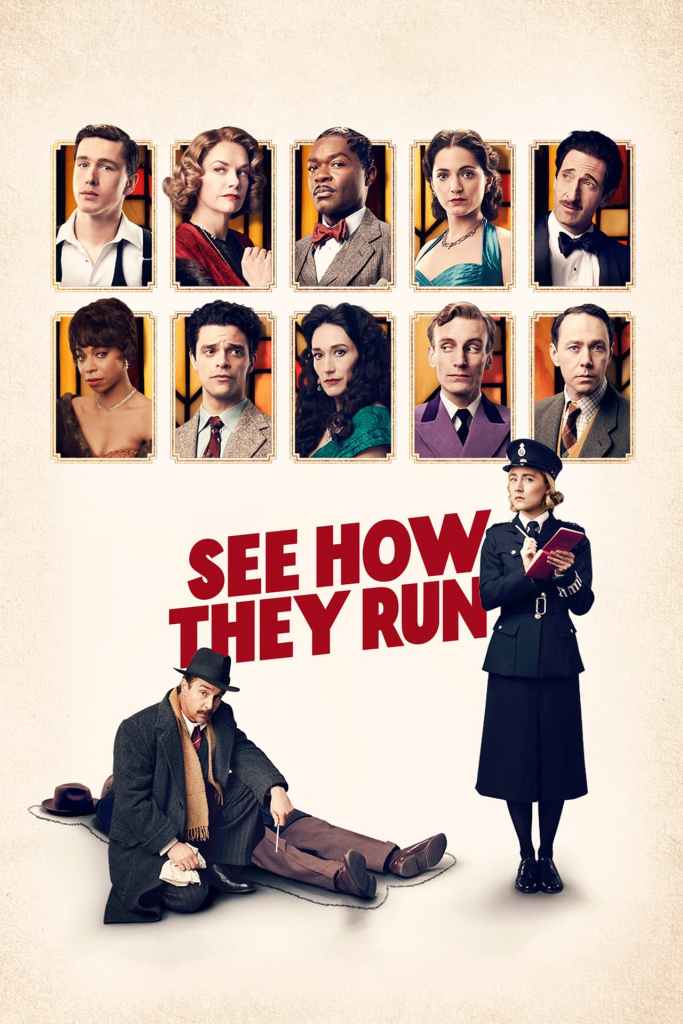
See How They Run is a true whodunit comedy crime film in the classic Agatha Christie style (it pays homage to her and she plays a central figurehead in the movie throughout). In 1953 London, a narrator introduces us to the film, explaining how murder mysteries are old and played out, laying out the classic tropes by using the example of a stage play currently playing at the West End, Christie’s The Mousetrap. Humorously, the narrator, an American director hired to make a film adaptation of this play, shortly thereafter is killed, on the night of the 100th performance of the play. The detective brought in to solve the murder, Inspector Stoppard, revives the tropes just introduced, by making sure we know all the characters involved, and with his unwanted sidekick, young and enthusiastic Constable Stalker, spends the rest of the film identifying motives by each person involved in the play/movie and ruling them out as needed, until the finale, when all are brought together in one room for the classic unmasking of the killer. Yes, it’s been done a million times, but they try to keep this one fresh by telling the viewer what’s coming before it actually does (“This is how you make a whodunit,” and then following through). There’s a fantastic cast, including Sam Rockwell and Saoirse Ronan as the cops, and the rest filled out with Adrien Brody, Ruth Wilson, Harris Dickinson (who is on a roll lately), David Oyelowo, and others. There are some very funny moments, but also whole sections of the film where the comedy disappeared unfortunately, and the mystery wasn’t as deep or intriguing as the above Fletch film. Still, not bad, and certainly a fun way to spend 90 minutes. ★★★
- TV series currently watching: Andor (season 1)
- Book currently reading: Wuthering Heights by Emily Brontë

 Jons Movie Takes
One thought on “Quick takes on Confess Fletch and other films”