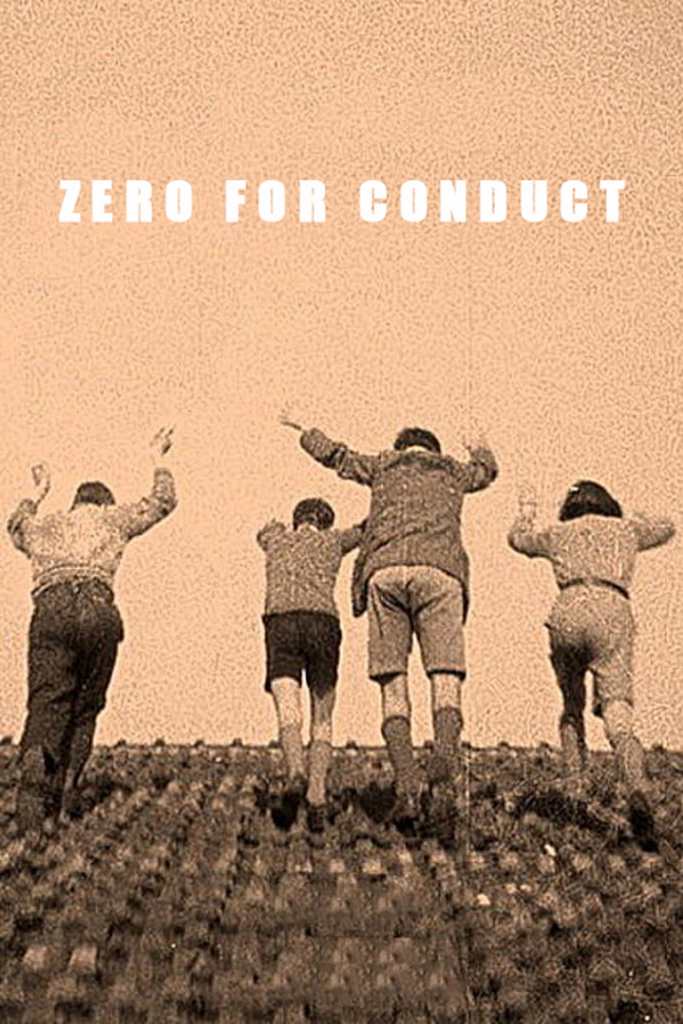
Zéro de conduite (Eng: Zero for Conduct) hails from 1933 by director Jean Vigo. I’ve been wanting to see a couple films by this director, whom several French directors of the New Wave pointed towards as inspiration. This short film (about 40 minutes) is a fly-by-the-seat-of-your-pants trip about 4 boys’ experiences in a totalitarian boarding school. They are rambunctious boys, and thus are always getting in trouble, often getting the “zero for conduct” grade and being punished with detention on Sundays. They have rebellion on the mind though: a planned disruption of the upcoming commemoration celebration, an annual event that draws dignitaries. The film paints the school in a poor light: teachers either don’t care to educate the youth, or lord over them unbendingly, or, even worse, prey on them, as one does to one of the more effeminate looking boys (an act which the headmaster addresses by asking the boy to be more careful, not by admonishing the teacher). I can definitely see muse here for the New Wave, as the lively nature of the boys is more important than a narrative story, but it’s a bit too rough for my tastes. ★★
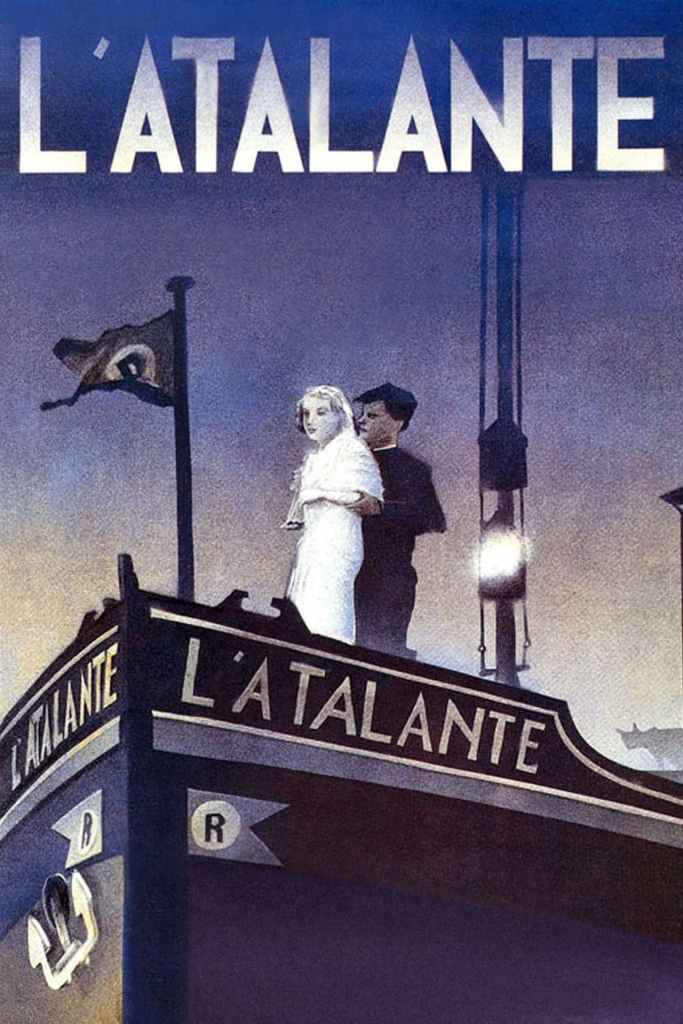
Having seen (literally) thousands of movies over the last 10 years, I’m a little weary when I read that so-and-so movie is considered one of the best of all time. Vigo’s L’Atalante is one such, and while I can’t agree with that lavish assessment, it is a fine movie. River barge skipper Jean has just married small-town girl Juliette (the ominous looks of the villagers as the couple leave on the barge, refusing to waive goodbye, is as funny as it gets). Their honeymoon is on the barge, as Jean continues his work with first mate Père Jules and a young unnamed cabin boy. Jean promises Juliette that he’ll take her to Paris and all the other exciting cities along the way, places that Juliette has never seen, but plans go awry. First, Juliette visits Jules in his cabin; he’s definitely trying to charm Juliette but you get the impression it is just because he isn’t around women very often, and Jean mistakes their meeting as something sinister. Then, when they finally put in to Paris, Jules and the cabin boy head out immediately, leaving Jean to watch the boat and delay his date with Juliette. When the couple get off the boat the next day, Juliette is swept off her feat by a street peddler, a man who talks a big game, sending Jean into another fit of jealousy. When Juliette sneaks off the boat to see Paris without him, Jean has had enough, and sets the boat out onto the river without her. Neither are happy without each other, but you aren’t sure if they’ll reunite or not. It’s fun enough, with a sterling turn by Rita Parlo as the blonde bombshell Juliette, but I do not get the heaps of praise the film gets. It’s not all that memorable and probably not one I’d watch again. Shortly after its release, Jean Vigo died, at the age of 29 from tuberculosis, having completed just 4 films. ★★★
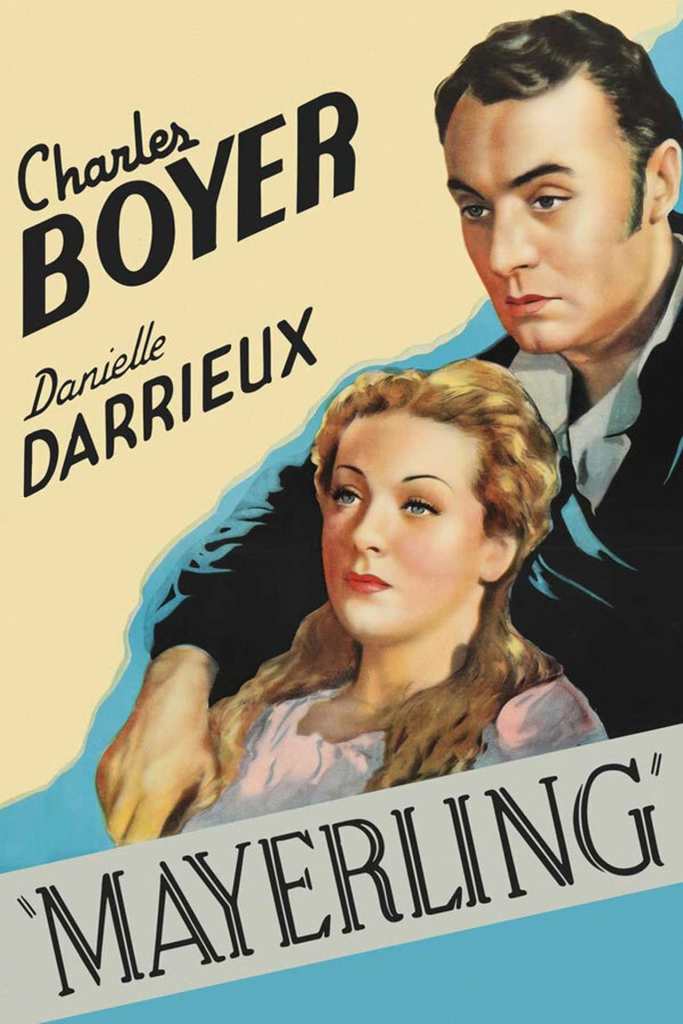
Mayerling is, unfortunately, a forgettable film from 1936, which has been remade into better versions from what I understand (including a 1968 version with some star power, if you care to look it up). The film’s main character is Prince Rudolf, heir to the Austrian throne. Under pressure from his father the emperor, he marries, but Rudolf makes it known that he is only doing so to produce an heir; he is no intention to quit his philandering ways. He does quip on his wedding day that, “God grant that I never meet the love of my life.” Famous last words. Five years later, he does indeed meet the girl, a 16-year-old baroness named Marie. For both, it is love at first sight, and the rest of the film is their burgeoning relationship, and the lengths they’ll go to to stay together despite outside pressure. Giving away the ending a little (it is somewhat based on a true story after all), it ends with a Romeo and Juliet moment, and in real life, Rudolf’s death led to the succession of the empire passing to his cousin, Franz Ferdinand, whose assassination obviously led to World War I (for you history buffs out there). The film is just OK, nothing spectacular, and there’s some glowing plot holes, like how the prince complains that no one ever wants his attention except to get something in return due to his position; though this may be true, his own best friend is a republican named Szeps, who openly challenges the monarchy, yet Rudolf has no problem with Szeps (who obviously gains much from their friendship). I will say one thing about this movie: it introduced me to director Anatole Litvak. How have I never heard of this guy before?! His filmography reads as a who’s-who of stars from Hollywood and around the world. He also headed up the photography division that documented the D-Day landings in Normandy. ★★
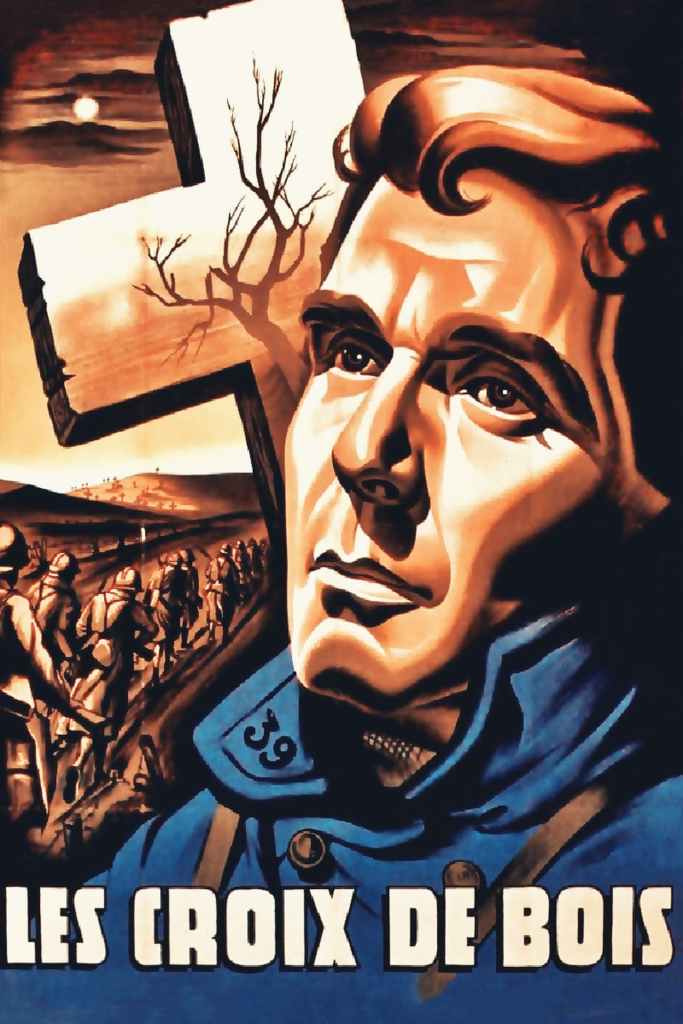
I recently watched the new film version of All Quiet on the Western Front and loved it, so I thought I’d take in a film in a similar vein. Wooden Crosses (French: Les Croix de Bois), from director Raymond Bernard, has been called France’s take on that German novel (Western having been based on a German soldier’s viewpoint, and Crosses from a Frenchman’s). Unfortunately, while it was very well received upon its release in 1932, it has not held up well. Much like its German counterpart, it follows a young man, in this case a student named Gilbert Demachy, who excitedly enlists for the war early in the going, with dreams of defending his country and becoming a hero. He soon finds that war is nothing like what he expected. He and his troop face death soon and often, in a series of battles. While the battle scenes are very good for 1932 and still are passable by today’s standards, there’s some serious problems with the movie. When there is down time, the soldiers are often a bit too happy-go-lucky, and while I’ve never been a soldier, I have to imagine the constant fear of death hanging over your head would preclude hearty laughs and gayety. And while I know acting has changed in 90 years, it is still laughable for me when I see a character shot dead, but not before throwing both arms up in the air and doing the slow fall down to the ground. ★½
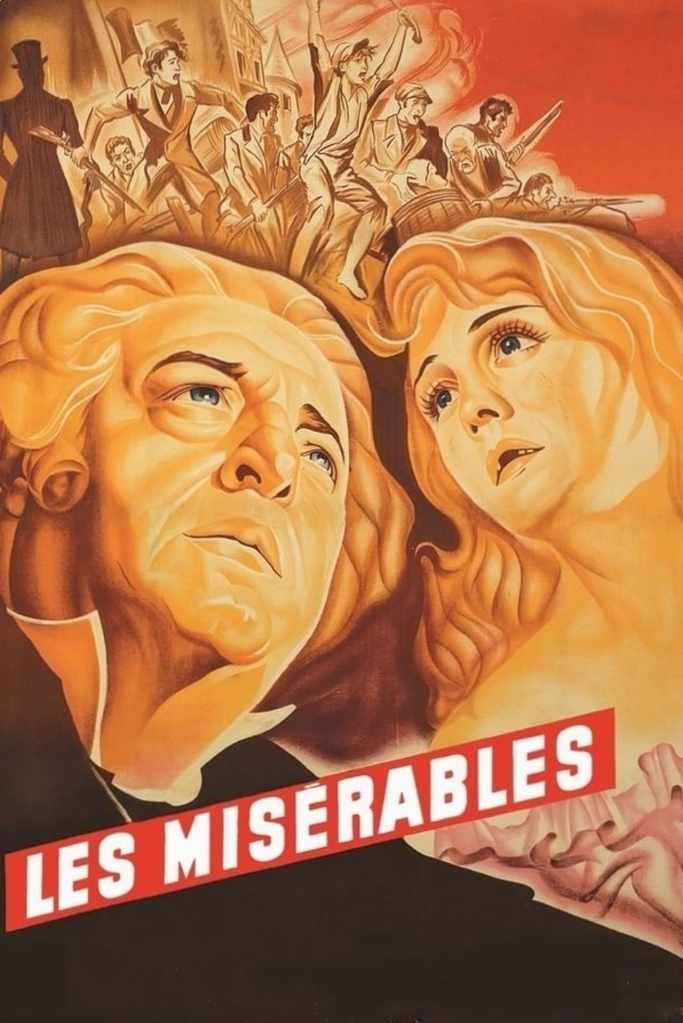
I always like to finish sets out with epics whenever possible, and what better than the classic Les Misérables. This version comes from Raymond Bernard again, released in 3 parts over a couple weeks in 1934, total run length approaching 5 hours. Due to being longer than the other films, it has a much greater character development, and while I’ve never read the book, I understand it to be a very faithful adaptation. At this point, you’ve probably seen the musical, one of the myriad films or TV series, or even read the book, if you are at all interested, so I won’t rehash it with a synopsis. Suffice it to say, it’s a great film, especially if you, like me, are a fan of epics. There’s really only one section that lost my attention, and unfortunately it’s one where it should have been most exciting. The first half of part 3, a full 45 minutes or more, shows the 1832 June Rebellion in Paris, but during this section, Jean Valjean mostly disappears and isn’t shown much, while events greater than him are taking place. Harry Baur gives a riveting performance as the redeemed ex-convict, and when he’s not there for a long stretch of film, the movie suffers. A minor quibble for what is otherwise a tremendous film, and despite its long length, I’m down to watch this one again one day. ★★★★½
- TV series currently watching: The Walking Dead (season 11.3)
- Book currently reading: Wuthering Heights by Emily Brontë

 Jons Movie Takes
One thought on “Quick takes on 5 French films of the 1930s”