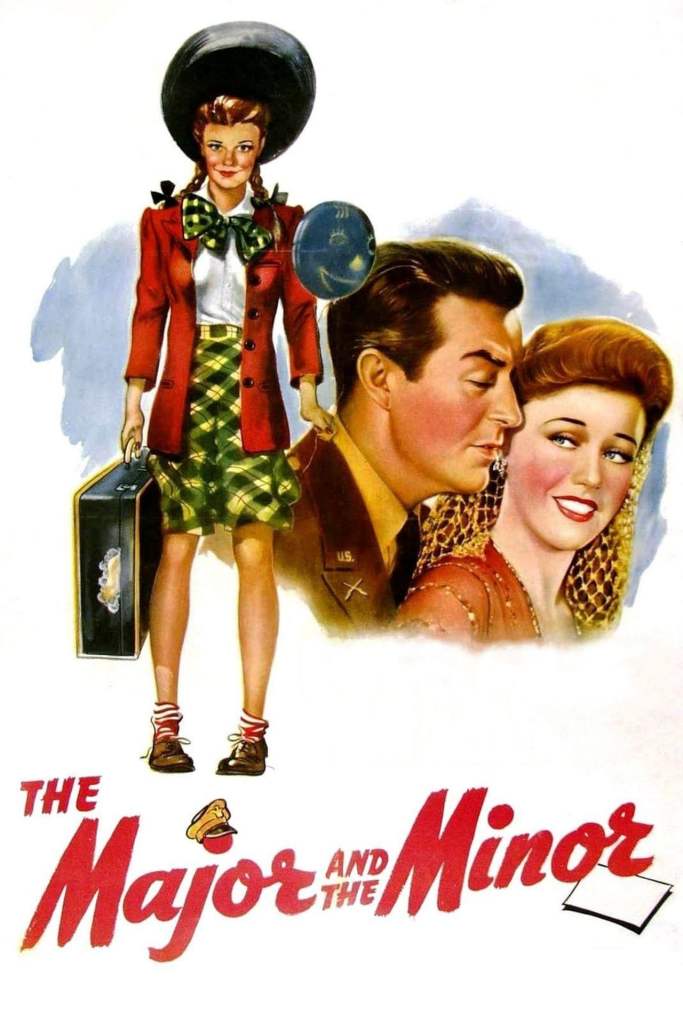
Billy Wilder was an iconic director of some massive hits, and while his career spanned decades, I’ll be looking at 5 of his most famous films from Hollywood’s Golden Age, starting with his directorial debut, 1942’s The Major and the Minor, starring Ginger Rogers and Ray Milland. Rogers plays Susan Applegate, a young woman who’s spent the last year trying to land a steady job in New York, but has finally given up and is ready to return home to Iowa, where she has a boring life with a boring homegrown man waiting for her. Unfortunately she doesn’t have enough train fare to get there, so she pretends to be 12-year-old Su-Su and purchases a half fare ticket. The train conductors smell a rat immediately, and while evading them, Su-Su jumps inside a compartment, occupied by Major Philip Kirby (Milland). Still in character, Su-Su explains she’s returning home alone, and Philip insists on watching over her until he has to exit the train in Indiana. Unfortunately, the train breaks down near there, and Philip demands that Su-Su not wait on the train by herself, but to come to his fiancee’s, Pamela’s, house, until the train is running again. Su-Su reluctantly agrees, but upon arrival, she is finally sniffed out by Pamela’s little sister Lucy. Lucy agrees to play along, but her time at the house, overlooking the military school where Philip works and constantly beset by boys who notice “something special” about Su-Su, will be a challenge. Doesn’t get less complicated as Susan falls in love with Philip. Though it loses a bit of steam in the epilogue, it’s a very funny film and endearing in the classic Hollywood mold. ★★★½
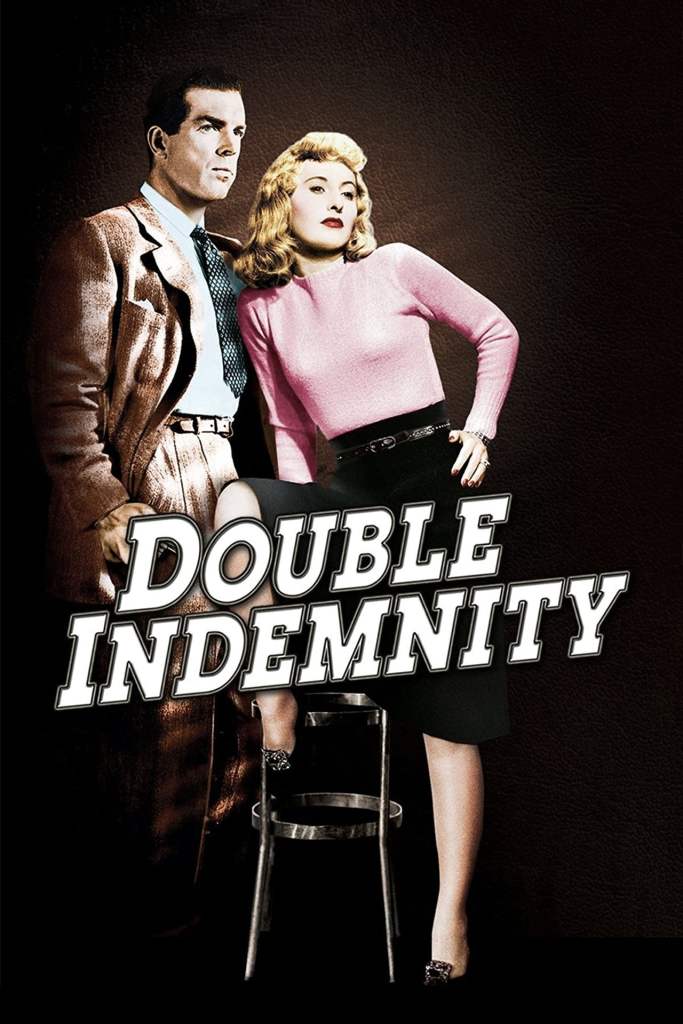
Double Indemnity, released in 1944, is cited as having “set the standard for film noir.” High praise, but as is rarely the case in my experience, the film delivers. Billy Wilder wrote the screenplay with crime fiction master Raymond Chandler, and it tells. The film stars Fred MacMurray as Walter Neff, an insurance salesman who is calling on a client when he meets the client’s wife, Phyllis. The viewer can see immediately that Phyllis is bad news, but Walter is smitten immediately. And after she tells him about how big of a brute her husband is, Walter wants to help. They devise a plan to kill the husband and make it look like an accident, so that she can cash in on a new life insurance policy. If they make it happen on a train, the insurance’s double indemnity clause kicks in, paying 100k instead of the standard 50k. But Phyllis is not all that she appears, and Walter’s bosses at the insurance firm are not easily fooled by an easy death. Fantastically dark noir with the perfect femme fatale role with Barbara Stanwyck as Phyllis. There’s some great twists in the end too that really keep you on your toes. ★★★★½
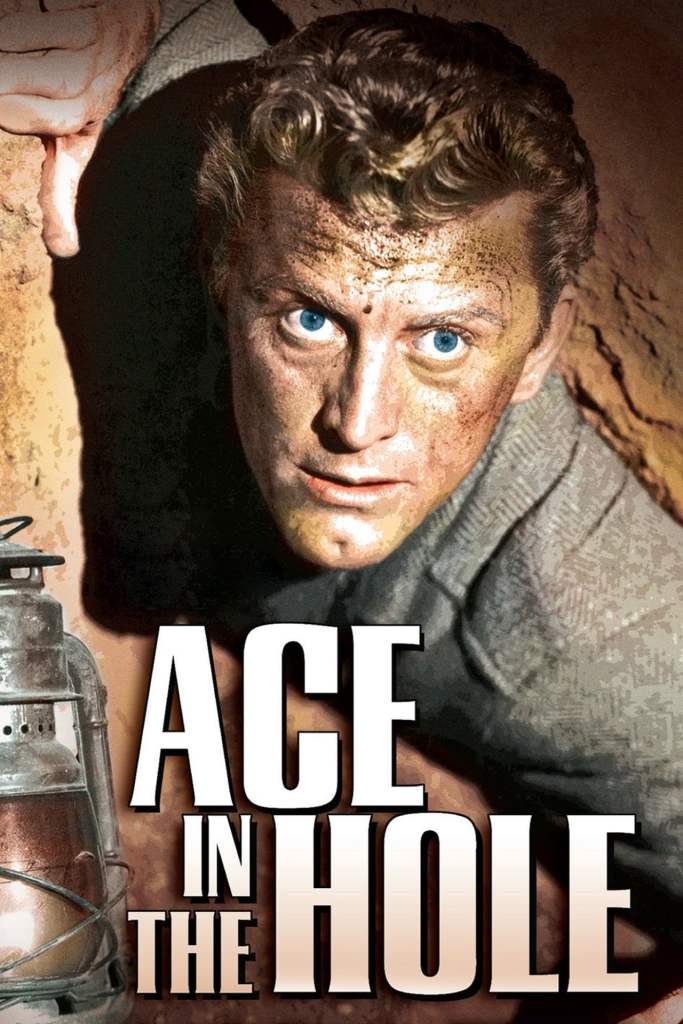
A trend I’m seeing in these movies is, despite wildly different subjects and themes, Wilder lands star after star in his films. Doesn’t get any bigger than Kirk Douglas in Ace in the Hole. He plays Chuck Tatum, a journalist with a flare for the dramatic, who can’t keep a job due to his constant drinking. He’s found himself at a small paper in Albuquerque, and his loud, cocky attitude gets him a job (and possibly his last chance). Assigned to cover a small-town event out in the boons, Tatum stumbles upon a story: a local man, Leo Minosa, has just been trapped in a cave that very day. Tatum runs straight to the cave and finds Leo, his legs trapped but otherwise healthy. Seeing a story, Tatum gathers the sheriff and engineers and concocts a tale: Leo is stuck in a cursed cave, in trouble by Indian spirits for traversing their hollowed grounds. The story spreads like wildfire, and people from all over start flocking to the cave. The engineer says they can get Leo out in 16 hours, but Tatum needs his five seconds of fame to last longer than that, so he gets the engineer to dig from the top rather than go through the side, a process that will take a week. And in that week, the people keep on coming, until a literal carnival arrives (satirically, the circus is most definitely in town). In the meantime, Leo’s estranged wife, who was about to leave him, stays behind to run their diner, which is now seeing hopping business, bringing in money which she still intends to use to leave her husband. But will Leo live to see the fruits of it all? If the movie weren’t so tragic, its over-the-top depiction of sleazy journalism gone mad would be comic, but Douglas’s cynical Tatum is full of energy and completely compelling. ★★★★
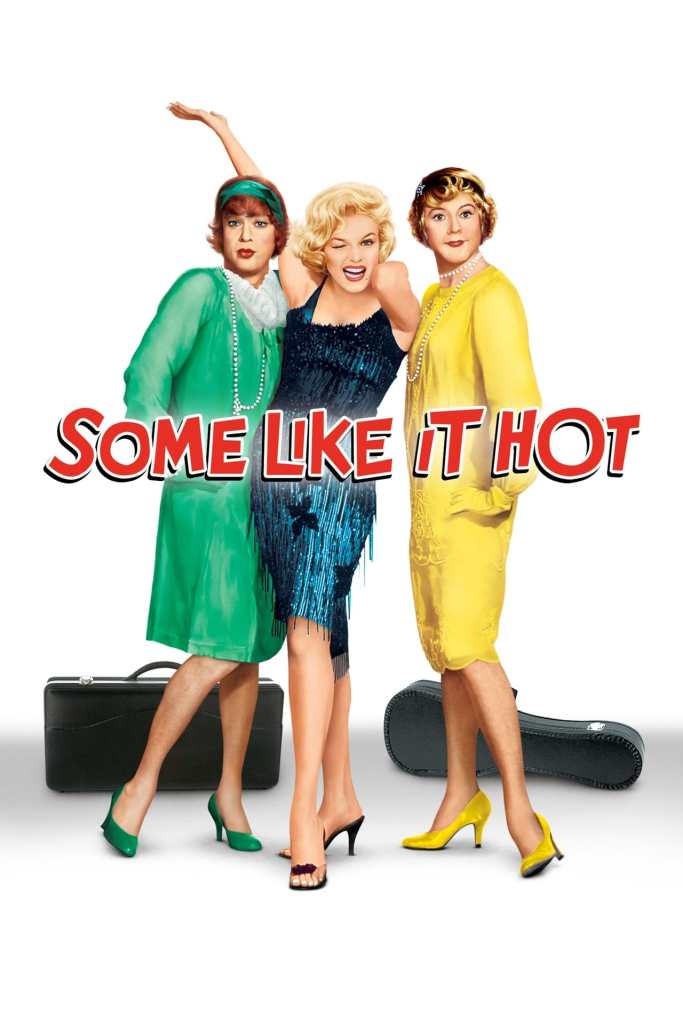
I had another epiphany about Wilder with Some Like it Hot. Some directors want to stress a point, some want to show off their ability, some want to push their own views; Billy Wilder just wanted to entertain, and have a good time doing it. You can tell he had a good time in this film, one of the greatest comedies of all time. It stars Jack Lemmon, Tony Curtis, and Marilyn Monroe at the height of her fame. (By the way, I had to choose between this film and the other Wilder/Monroe picture, Seven Year Itch, which features the iconic scene of Marilyn getting her dress blown up by the vent; I went with this one due to higher reviews and apparently more lasting appeal.) Taking place in 1929 prohibition era, musicians Joe and Jerry are playing at an underground speakeasy when it is raided by police, who are after crime boss Spats Colombo. Spats is of course surrounded by good lawyers and doesn’t do any time, but he hunts down the man who tipped off the police, and shoots him up. Unfortunately for Joe and Jerry, they witness the murder and are now on Spats’s hit list. Their way out: dressing in drag so as to join an all-female band who is heading south to Florida for a gig. What starts as a crime noir turns into a comedy for the ages. Speaking in falsetto, the “girls” fall in with the rest of the band, whose singer Sugar Kane (Monroe) says she always falls for the bad bad saxophone player. “Josephine,” now the sax player in the band, seems like he might be the next, and he’ll go to great lengths, including impersonating a millionaire once they hit Florida, in order to get and keep Sugar’s attention. The boys aren’t in the clear though; a big mobster get together in Florida brings Spats down from Chicago. Absolutely hilarious film, and looks to have stood the test of time. Despite the boys dressing up as girls, they don’t belittle women and in fact, Lemmon’s character (as a girl) loves being wooed by a wealthy older man in Florida. In the beginning, surrounded by girls in the band, he has to keep reminding himself, “I’m a girl.” When a rich man is lavishing “her” with gifts, he has to start reminding himself, “I’m a boy.” I’m pretty sure Wilder wasn’t trying to make a statement*, he was just trying to get a laugh, but in doing so, his film has been able to avoid today’s social warriors, and remains a hell of a good time.
*Or maybe he was. Joe goes by Josephine, but Jerry, instead of going by Geraldine as Joe assumed, chooses his own name, Daphne, much like transitioning people today may choose a new name. For the rest of the film afterwards, Joe is still very much a man in woman’s clothing, ditching the clothes whenever possible, but Jerry/Daphne rarely goes back, and embraces being a woman more and more as the movie progresses. Funny? Definitely. But was there more to it in Wilder’s eyes? ★★★★★
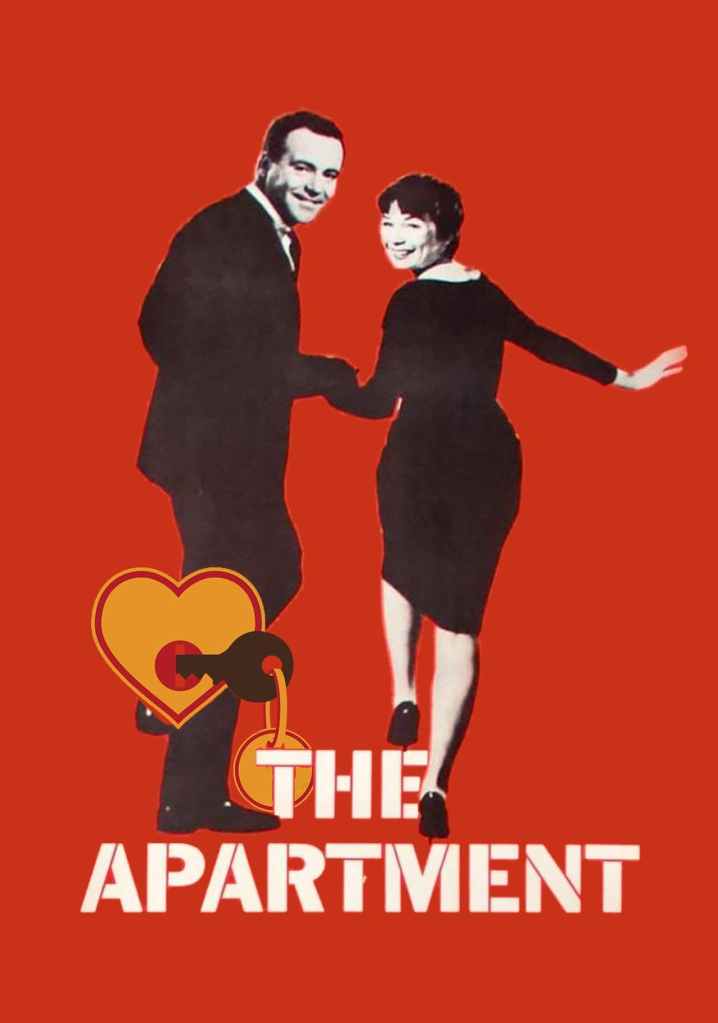
OK, now I’m in a quandary. I gave the above film 5 stars because it deserves it, but then what do I do for a masterpiece like The Apartment? I’ve painted myself in a corner! The titled New York apartment belongs to C.C. Baxter (Jack Lemmon), a lowly insurance underwriter with an eye for advancing quickly in the company, sort of in a How to Succeed in Business Without Really Trying kind of way, for you musical fans out there. His job is dreary, but the one highlight of his day is riding in the elevator with the beautiful and charming elevator operator, Fran Kubelik (Shirley MacLaine). Baxter’s been lending his apartment to higher-ups in the company to use for clandestine dates with their side-pieces, in order to keep away from their respective wives. To this end, Baxter spends more time away from his apartment than in it, but he does finally get that promotion when the personnel director, Jeff Sheldrake (Fred MacMurray) starts making use of the apartment too. Unfortunately (and unknown to) Baxter, Sheldrake’s current girlfriend is Ms Kubelik. She’s been on Sheldrake to leave his wife for some time, but of course he always has an excuse. It isn’t until Kubelik talks to Sheldrake’s secretary, herself a one-time girlfriend to the man, that she realizes that Sheldrake has been using the same old lines for years now, on multiple women. In a fit of despair, Kubelik attempts to kill herself in Baxter’s apartment one night after Sheldrake has left her there, by swallowing a whole bunch of pills. Baxter comes home in time to save her, but even then, he won’t mention a bad word about Sheldrake. In fact, Baxter’s too-good-to-be-true attitude throughout the film doesn’t have him thinking or talking bad about anyone, no matter how many times they rub his face in the dirt. You have to watch through to the end to see how it all plays out, but be ready for a film far more emotional than what you may have expected in the beginning. A taught film, with a tight plot, heavy on the laughs but equally heavy on the tears, this movie has got it all. And judging by these 5 films, Billy Wilder was one hell of a consistent deliverer. ★★★★★
- TV series currently watching: House of the Dragon (season 1)
- Book currently reading: Chapterhouse Dune by Frank Herbert

 Jons Movie Takes