
Everyone passably interested in film has heard of the French New Wave, but ever heard of the Black Wave? A film movement out of Communist Yugoslavia in the 60s and 70s, it too bucked traditional film approaches, and was led by a group of young directors, Dušan Makavejev being one. Today I’ll be viewing 5 of his films, starting with his first, Man is Not a Bird, released in 1965. It doesn’t have a traditional narrative plot (much like the New Wave), but that doesn’t mean it isn’t entertaining. The film takes place around a mining town and, at first, we think worker Barbulovic is the main character (I should have known better though; there is no “main character, as I quickly learned). He starts a brawl at a bar, which gets the woman singer knifed. She’s “known by the men” about town, and the police throw Barbulovic in jail for a couple days for starting the fight. When he gets out, he has to confront his wife, who is upset with him for giving her 3 best dresses to his mistress (yet another woman). Interspersed throughout, there’s another story involving a man named Rudinski, who is an engineer who has come to the town to modernize the mine, making it more profitable and more productive. Rudinski starts a relationship with the only blonde in town, whose hair color sets her apart from all the other dark-haired locals, and thus is the object of desire of many men. When Rudinski finishes his job at the mine and is ready to move on, he has to make a decision on what he’ll do with his new girlfriend, a decision we aren’t privy to. Much like the New Wave, the film doesn’t answer every question, and while this kind of film isn’t for everyone, if you generally like the New Wave (and I do), you’ll find plenty to enjoy. A great first effort from the director. ★★★½

The director’s second film had the unwieldy title of Love Affair, or the Case of the Missing Switchboard Operator. After a (seemingly, though it makes sense later) introduction by a sex expert, given in a documentary-like way directed at the camera, we meet our switchboard operator, Izabela. A beautiful young woman from Hungary, she has a first date with a member of the Yugoslav communist party, Ahmed, who works in the sanitation department trying to keep the rampant rat population under control. He gives off creepster vibes at first, but you soon realize that he does genuinely care for Izabela. Just as the couple is taking their relationship up a notch and moving in together, we get another break from the story. Instead of a sex talk, we hear from a criminologist, talking about how to dispose of bodies and whatnot. Afterwards, in a flash forward, a woman’s body is found in a well, and just a bit later, an autopsy is performed where we learn she was 3 months pregnant. If the title of the film didn’t give it away, an astute viewer will recognize the woman is Izabela, so the table is set for the rest of the film, and it definitely adds a layer of suspense. Izabela and Ahmed seem very much in love and all is good, until he goes out of town for work for a whole month, and Izabela succumbs to the advances of a postal worker who won’t leave her alone. The resulting pregnancy is a surprise, but Ahmed initially thinks the child is his. We never see how he finds out the truth, that little discussion/argument is kept from the viewer, but the end result doesn’t disappoint. Very well put-together film. A little more out-there with the breaks to the storyline (there are several I didn’t bring up here), but it is good overall. ★★★
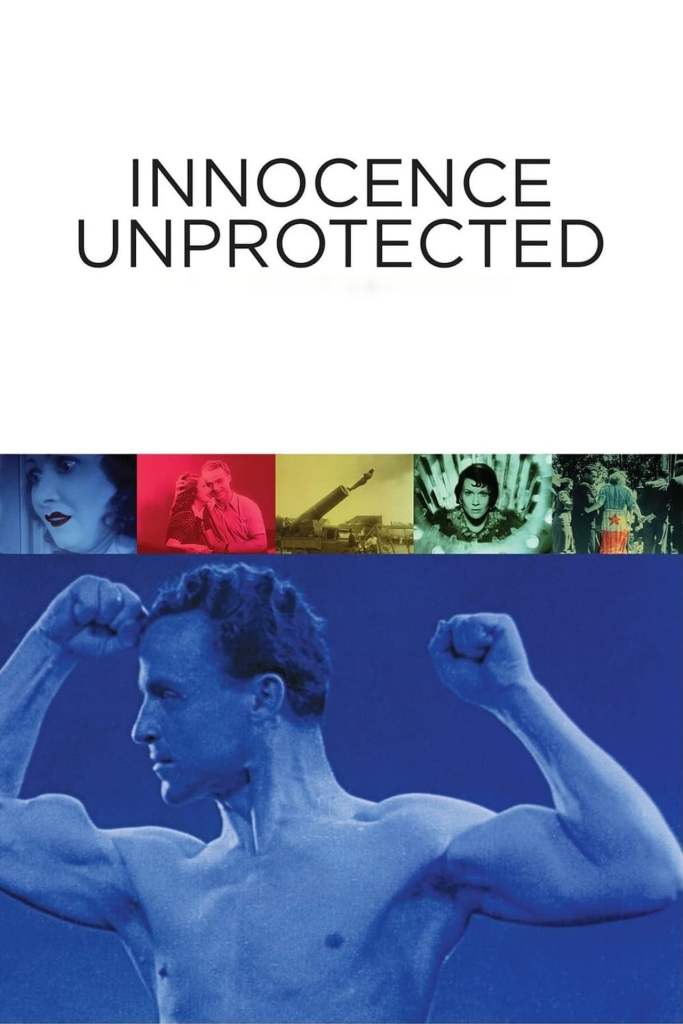
Innocence Unprotected is an interesting film, but unfortunately one that is more interesting than entertaining. It is a quasi-documentary about a Yugoslavik film of the same name which was released in 1941 during German occupation. The 1941 film has the distinguishment of being the first sound film made in Serbia in the local language. As such it received a big ovation when it was released, which the Germans didn’t like (it squeezed out the German cinema), but then the director took the reels and hid them, so it never expanded past its opening showing. Then, after the war, the Yugoslavia government banned the film and there were whispers of charging the filmmakers with collusion with the Germans in making the film. All of that is ridiculous, because the film was made without German knowledge or approval. Anyway, fascinating story, so what the new film does is look back at the original production, as well as interview the surviving cast and crew about their experiences, mostly focusing on star Dragoljub Aleksić, who was a locally famous acrobat whose death-defying acts amazed Europe after World War I. Unfortunately the film didn’t do it for me. I think Makavejev was really going for a nationalist, pro-home country feel, and it achieved that, but for outsiders, the movie’s a bit dull. ★½
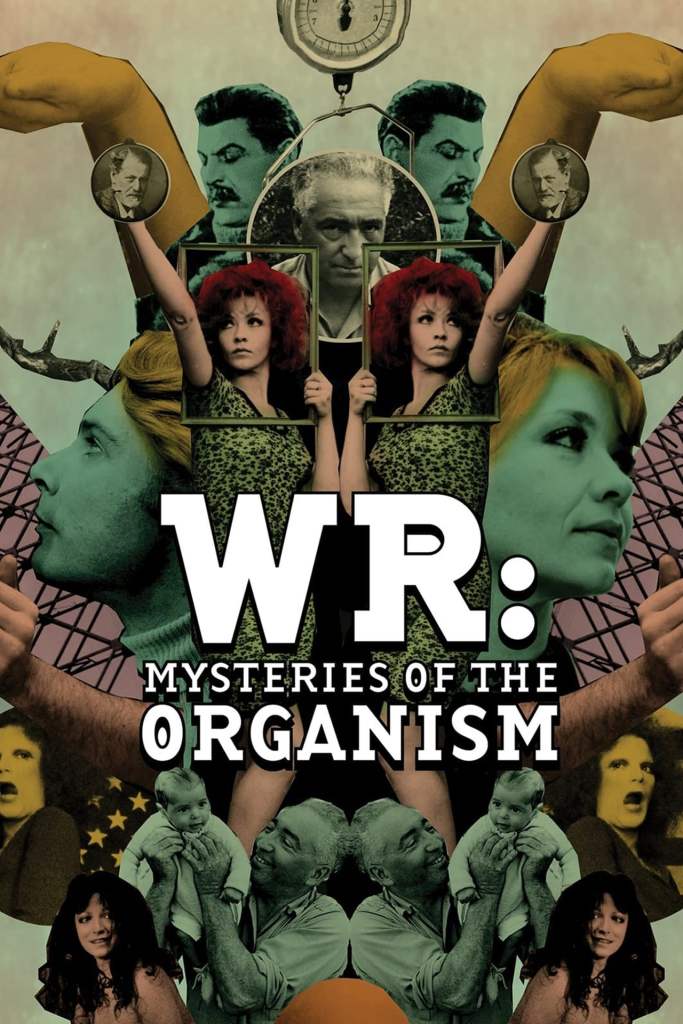
WR: Mysteries of the Organism is supposed to be Makavejev’s masterpiece, garnering acclaim at the 1971 Cannes Film Festival. I don’t get it at all though. It’s even more experimental than the above film, and opens basically as a documentary. The WR is Wilhelm Reich, an Austrian doctor who worked under Sigmund Freud until splitting off with his own ideas. Reich was a proponent of the powers of sexual energy and, specifically, the power of orgasm. He said this power could be harnessed through special machines and could do everything from calm nerves to cure cancer His radical ideas, even in the USA where he fled during World War II, led to imprisonment (he died in jail) and later, the seizing of his equipment by the FDA and a mass book burning right here in the USA. The film details much of these events, as well as a cobbled-together story in the latter half about a revolutionary woman in Yugoslavia who believes these ideas, and who tries to convert a pro-Communist young man. The woman exclaims loudly and proudly that Communism could be stronger if it didn’t suppress sexual desires in its population. Obviously the film is very graphic in spots; that part didn’t bother me so much, but it’s just so over the top weird. Its content obviously got it banned in its home country, and I’m confident that’s the only reason critics think so highly of it. They love a good pushing-the-boundaries kind of movie. ★

Sweet Movie started a lot better, maybe because this time, I actually got a story to follow. Two stories in fact. One follows a rich American tycoon who always wants the best, so he started a Star Search-like contest to find himself the perfect virgin to marry. As women are paraded on stage for a gynecologist to examine their rose buds, jokes are aplenty. The woman chosen, Miss Canada, is happy to be picked until that night, when the tycoon (played by Animal House’s John Vernon) takes down his pants and has had his penis gold plated. It scares her enough to want to leave, but rather than let her go, the tycoon has his henchman knock her out, stuff her body in a suitcase, and ship her off to Paris. There, she ends up in a wild cabal of sex and debauchery. The other story follows a woman named Ann, who is captaining a ship traversing around Amsterdam. Her boat is full of candy, with which she lures young boys onboard. Sex is never shown but definitely implied, so that’s tough to stomach. The movie as a whole started off fine enough. It’s an absurdist comedy, and while some graphic scenes are rough, they’re nothing like the above couple pictures. That is, until, the film devolves in the last act; both stories run off the rails and lose all narrative, becoming nothing more than garbage. Oh well, should have stopped after the first 2 movies today. ★½
- TV series currently watching: She-Hulk (miniseries)
- Book currently reading: Chapterhouse Dune by Frank Herbert

 Jons Movie Takes