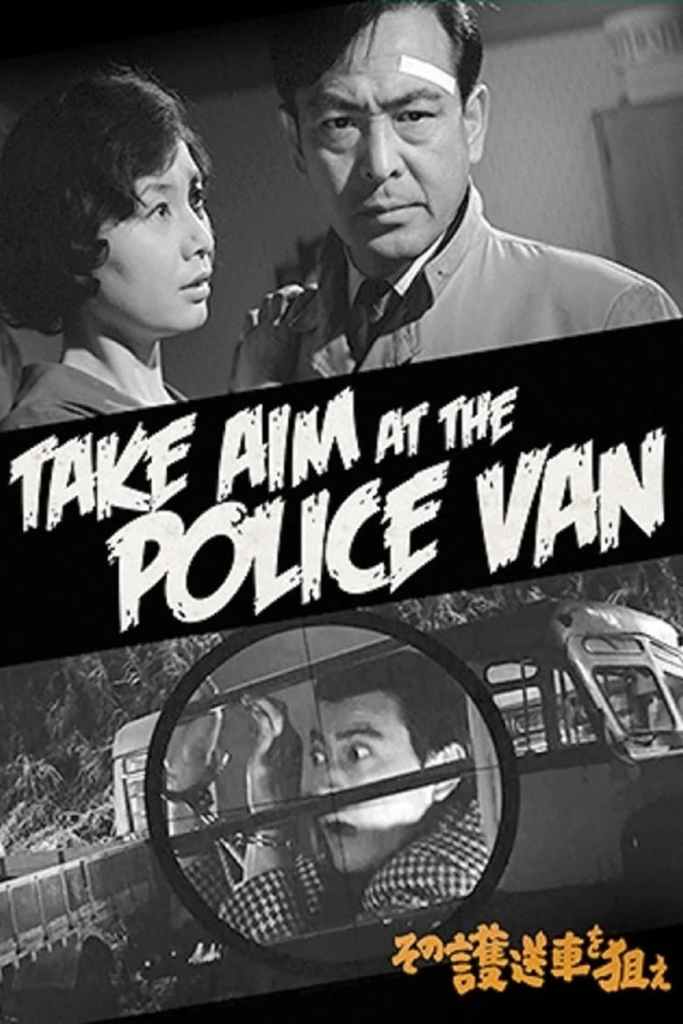
I think I’m right in this, but I’m pretty sure I’ve never seen a film by Japanese maverick director Seijun Suzuki. A director whose style got him blacklisted for a decade, his films were irreverent but cool. Today I’m looking at five of his films before he disappeared for 10 years, starting with 1960’s Take Aim at the Police Van. The title refers to the opening scene: a police truck is transporting prisoners when it comes under fire. Two prisoners are killed, but one, Goro, survives, and he was to be let go soon anyway. The driver of the van, a security guard, is not content to let the police dig into what happened, as he doesn’t feel it is high on their priorities to find who killed some cons. The guard, Tamon, hits the streets. He checks in on Goro, who isn’t talking, despite Tamon feeling like he knows something, so he looks up the girlfriends of those who were killed. His hunt takes him to a prostitution ring and all the seediest spots and people in town. The movie is at times outlandish and feels a bit like a Hollywood B movie (which, I’m pretty sure, is Suzuki’s intent). While not my favorite genre, it is fun in the right spots. ★★½

Youth of the Beast was, for my tastes, a much more exciting picture, though stylistically, it is much the same. If anything, maybe even more over the top. But the story is more engaging. The film begins with the death of a police detective, Takeshita, who it seems was killed in a murder/suicide by a prostitute, his lover. From there, the story follows Joji “Jo” Mizuno, a hoodlum who seems hell-bent on getting the attention of both rival yakuza gangs in town, Nomoto and Sanko. His actions gain him a meeting with Nomoto’s leader, Tetsuo, who hires Jo as an enforcer. Unbeknownst to Tetsuo, Jo is investigating Takeshita’s death. Jo doesn’t believe for a minute that Jo was killed by a prostitute, thinking that the crime lords in the city are behind it, but he doesn’t know why, and he doesn’t know who the actual murderer was. Jo is getting to know everyone in Nomoto’s organization, and before long, he heads over to the Sanko family to do the same, pretending to be a double-crosser against Nomoto. Finally, we learn that Jo was once Takeshita’s partner, and he is out to get justice and the truth for Takeshita’s widow. An explosive film full of gunfights and action, and an ending that you do not see coming. It’s a hell of a ride from beginning to end. ★★★½
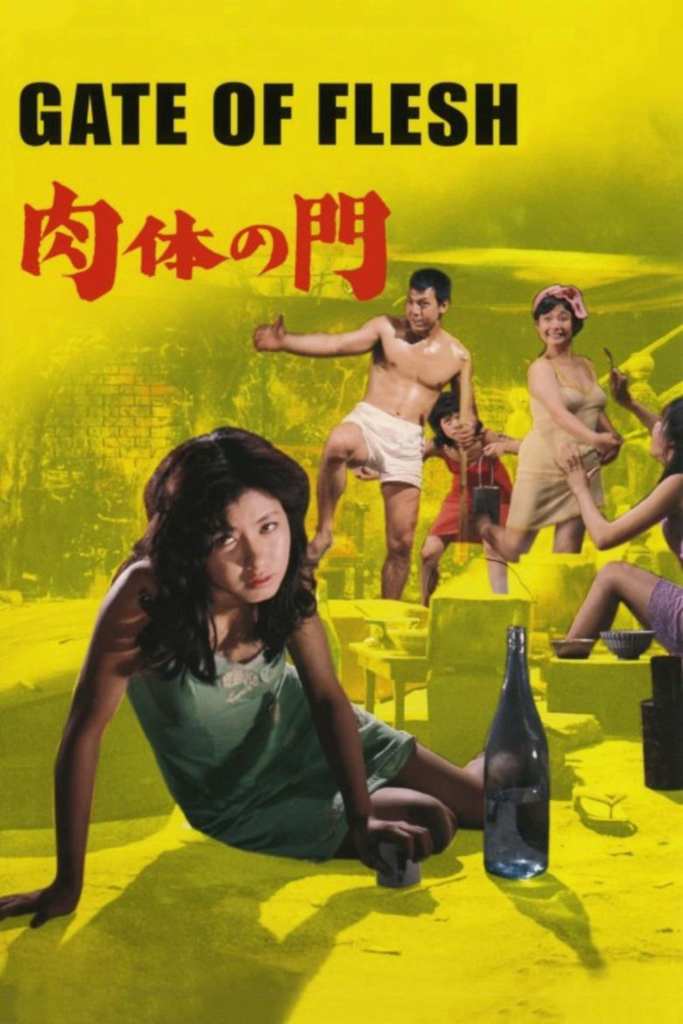
Gate of Flesh hits it out of the park, and shows me why Suzuki was so well thought of (and not just for showing lots of skin, though the title may imply it). The film takes place just after World War II, during the American occupation, in the slums of Tokyo, and follows a quartet of women who are earning a living the only way they can: selling their bodies. The film’s central character is Maya, who begins the movie by stealing on the streets after she lost her husband in the war. When she is caught, she is given a chance to not have to steal, by becoming a prostitute. The women she falls in with are not victims though; they wear their profession with pride. They live in a bombed out warehouse, take care of themselves, look after each other, and don’t take shit from anyone, not even the American soldiers that pervade the area. Their one rule: don’t give sex away for free. Their bodies are their currency, and everyone has to pay. When a woman does fall in love and doesn’t charge her beau, she is beaten by the other women and cast out of the group. Maya quickly learns the ropes and finds a home, but into this setting comes Ibuki. Ibuki, a former Japanese soldier, was shot while stealing from the local army base, and comes into the women’s shelter to hide out. They allow him to stay while he recoups, but his presence brings problems, as a couple women, Maya and the group’s leader, start to fall for him. There are moments in the film which are definitely hard to watch, and Suzuki doesn’t just skirt controversy but instead hits it head on, but the film has a much deeper meaning than just showing the hard knocks of life on the streets. Excellently shot too; the viewer is enveloped in the seedy underbelly of Tokyo and feels the plights of the films’ characters. ★★★★½
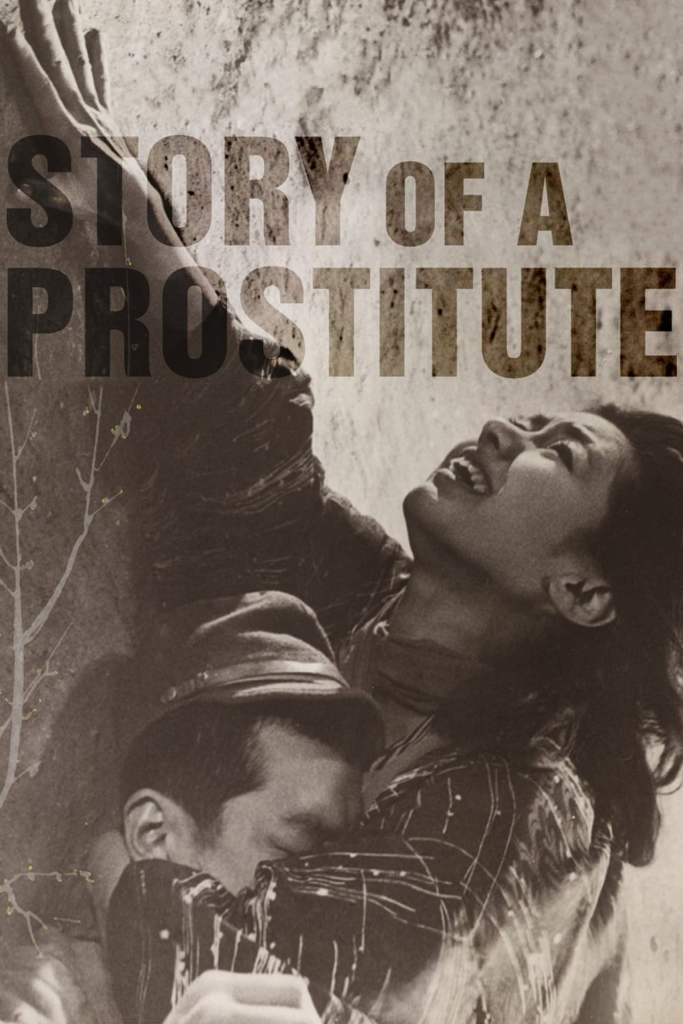
Story of a Prostitute follows a woman, Harumi, who is jilted by her true love, and rather than get back on the horse, she agrees to be sent to the front line in Japan’s war with China and become a prostitute for the soldiers. Roll with me here. Once in camp, she and the other half dozen or so girls are told they’ll be servicing a whole battalion, so they’ll be working from early afternoon to late night, every day. Harumi doesn’t seem like she’s going to mind it much, until she catches the eye of the camp’s commander, Narita. Narita is a sadistic a-hole, and loves demeaning Harumi. Making matters worse, Harumi is instantly attracted to a young soldier in camp, Mikami. And Narita being who he is, he won’t let either find pleasure, forbidding Harumi to sleep with Mikami. Don’t expect a happy-go-lucky film here. Unfortunately, don’t expect a great film either. Unlike in the above films, I could never connect with the main protagonist; she seems to get herself into trouble at every turn, and then spend a few minutes screaming (very loudly) about it. ★½
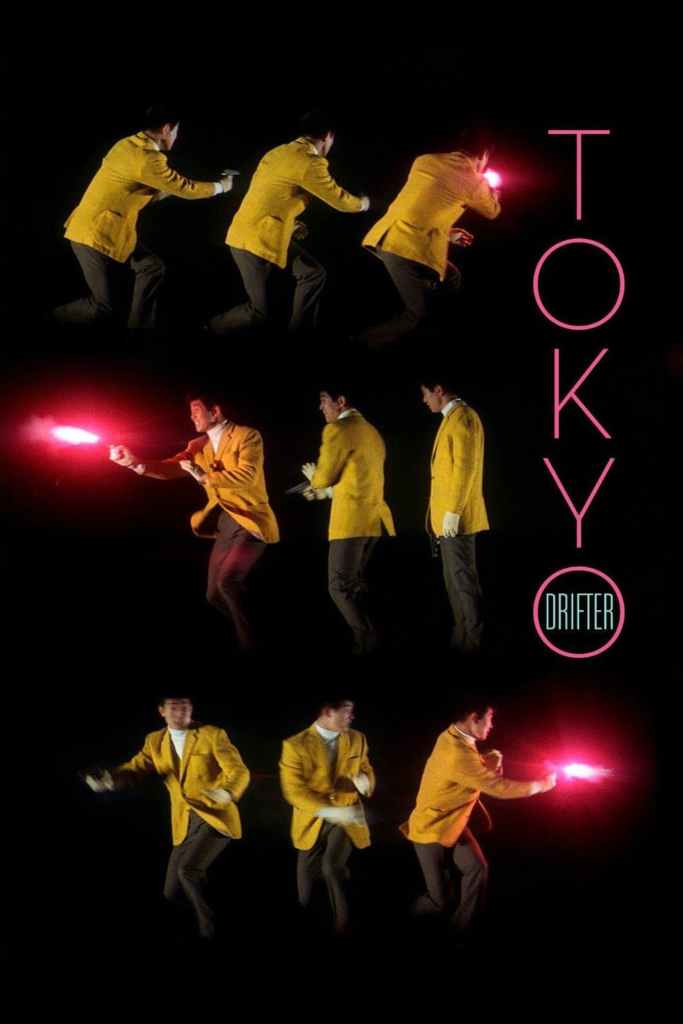
Tokyo Drifter is a chaotic mess, but sometimes it’s a fun mess. Tetsu is a former hit man for the yakuza boss Kurata, who recently has decided to get out of crime and go straight. Karuta’s former adversary, crime boss Otsuka, doesn’t quite believe it, and has sent his own assassin, Tatsuzo, to kill Tetsu. Unfortunately for all involved, Tetsu is one hard man to kill. Throughout the film, various people try, and no one succeeds. The man seems bulletproof. He doesn’t seem to care for anything other than 2 people: his girlfriend Chiharu (a singer at a night bar frequented by the mob) and Karuta, for whom Tetsu holds extreme loyalty. Karuta sends Tetsu away, ostensibly to keep them both safe, but more may be at play here. The gun and fist fights in this film are frequent and completely unrealistic; there is no such thing as too over the top for this director. So while you have to just go with some of the absurdity, there are moments where the silliness transcends disbelief and just becomes fun. ★★★
- TV series currently watching: We Own This City (miniseries)
- Book currently reading: Time of the Twins by Weis & Hickman

 Jons Movie Takes
One thought on “Quick takes on 5 Seijun Suzuki films”