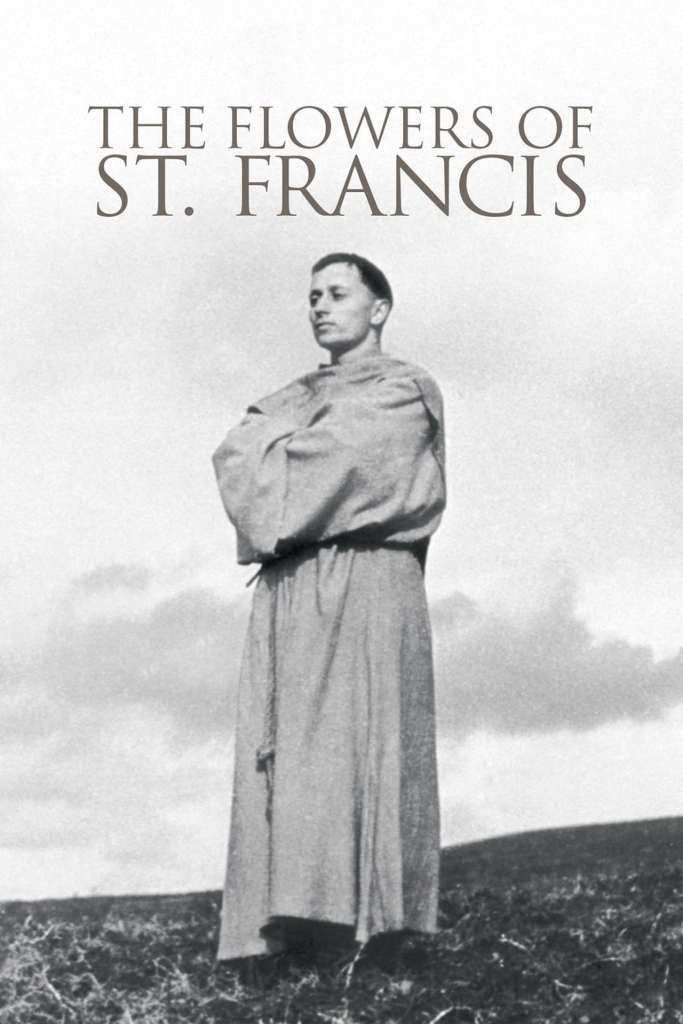
A couple years ago I did a series of films by Roberto Rossellini. A whole bunch more today, starting with 1950’s The Flowers of St Francis (Italian: Francesco, giullare di Dio). Based on a 14th century book, it isn’t exactly the life of Francis of Assisi, but more glimpses at his piety and teachings. The movie is made up of 9 short vignettes, exhibiting various parables, each supposed to extol a moral code. The writing is decent (Federico Fellini was a cowriter), but Rossellini’s obsession with using nonprofessional actors is baffling. To make the film, he had actual monks play Francis and his fellow friars, and they aren’t good, to the point of being distracting. The stories are cute, and some are quite funny, but I can’t feel the emotions of the characters on screen when they are displaying none. ★★
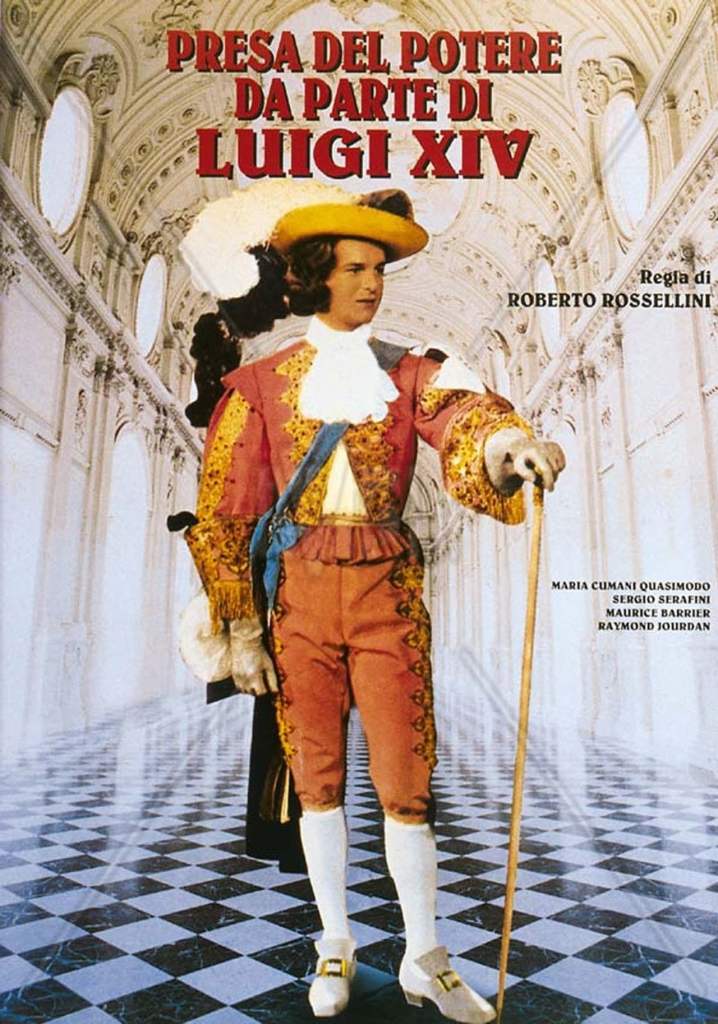
The Taking of Power by Louis XIV (French: La prise de pouvoir par Louis XIV) was a TV film Rossellini did for French television in 1966. The title is a bit misleading because, while it does show King Louis XIV consolidating his power and making the French throne the most powerful it had ever been or would be again, that makes up only about 30 minutes of this 90 minute film. Fully the first 50 minutes deals with the dying and death of Cardinal Mazarin, the de facto ruler of France for a couple decades as Louis was growing up (he was coronated at the age of 6). When Mazarin was dying in 1661, Louis was by then 17 years old and ready to take the reins, but Mazarin had made powerful allies around him. Louis found that he was neither the wealthiest nor the most powerful in his own country, and he meant to change both. The final third of the film deals with the changes he made at court and with rules governing the nobles so that by the time he would die, the French royalty (and France as a whole) would be on solid footing. It’s a lovely shot film, with colorful costumes and authentic-looking sets, and while not exacting thrilling, I did (mostly) enjoy the story. However, again, we get non-professional actors. I hate to keep harping on this, but Louis was a wet paper bag. It literally looked like he was reading lines at times, and at others, his dialogue was delivered in such a deadpan way that he might as well have been. Zero emotion, no facial movements. At least he never looked at the camera, though a few of his fellow “actors” did, here and there. It’s a shame because it hurts the experience of something that could have been quite good for lovers of period drama. ★½
Blaise Pascal is another (very dry) French TV film, about the life of the Pascal, a French scientist and philosopher. He’s someone I knew nothing about going in, and seems to have been a smart dude back in the mid-17th century. He invented a few things that progressed mathematics (one of the first mechanical calculators) and was an early proponent of the concept of a vacuum. He also theorized on religion and a host of other topics, all by the time he died at the early age of 39, after always being a rather sickly person. The film spends a lot of time looking at other “signs of the times,” like a woman accused of being possessed by the devil. Much like Louis XIV, the best part of this film is the costumes and sets, which are amazingly authentic. Parts of the film can really drag, and it doesn’t help that no one is ever in a hurry. Literally, actors walk SLOWLY across the screen before engaging in conversation with someone, time and time again throughout the film. Speed these people up and the movie would have been about half as long. Still, some interesting discussions, and the actors weren’t quite as bad as the earlier films. ★★
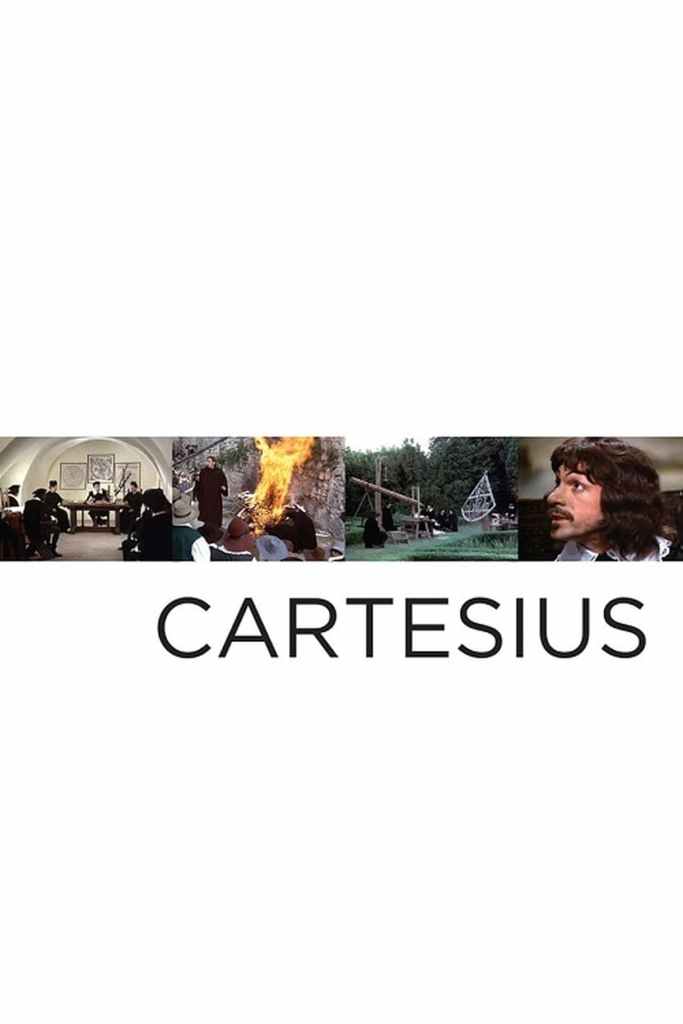
Maybe these historical made-for-TV films are starting to grow on me, because I thought Cartesius was better, despite overall being more of the same as the previous handful of pictures. Once again we visit the 17th Century, this time looking at the life of French philosopher René Descartes, whose character showed up in a brief scene in Blaise Pascal. A two-part film roughly 2 1/2 hours long, I think it helps that the film has a true “villain” for Descartes to fight against, namely, the long-standing scholarly view that everything Aristotle said was fact, and could not be disputed. Descartes continually ruffles feathers by putting forward new viewpoints, and even bothers other scholars with his refusal to perform experiments in the established ways that science has followed before. He even has to dodge the church, for his viewpoint that the Earth revolves around the sun, and that the Earth is not in fact the center of the universe. In order to avoid persecution, Descartes stays on the move, often staying away from his home of France and traveling Europe, always keeping an eye out for new ideas or new math problems to solve. The film spends a little too much explaining various experiments that Descartes and his friends perform, down the minutest detail (yes, we get it, it was a long time ago and things were done differently), but at least the film is interesting. ★★★
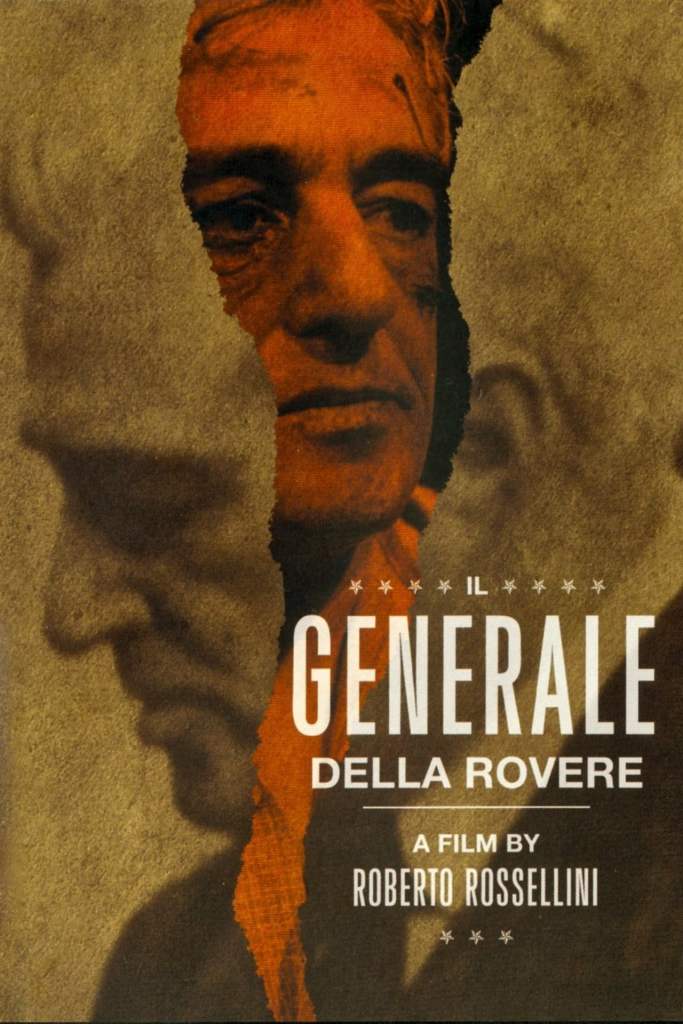
I still have one more TV film of Rossellini’s to watch, but I needed a break, so I’m going for a real narrative film this time. 1959’s General Della Rovere (Italian: Il generale Della Rovere) stars Italian actor/director Vittorio De Sica in the lead role of Emanuele Bardone. Near the tail end of World War II, Bardone’s heart is in the right place, but his penchant for gambling (and losing) keeps getting him into trouble. Calling himself a colonel, he’s been approached by many Italians around town with pleas to get family members out of jail, people who’ve been arrested by German police and are at risk for getting shipped to Germany. Bardone takes money from the families to use as bribes on the German officers, but gambles the money away, sinking himself further and further down the hole. When his schemes finally crash upon him, the Germans arrest him, but the lead German officer takes a liking to him. Rather than charge him with crimes that will most likely get him hung, the officer offers Bardone a deal: impersonate the recently deceased Italian resistance fighter Della Rovere (killed trying to escape arrest) and get intel from other prisoners in jail. It’s an offer Bardone can’t refuse, but once inside, he finds that it is hard not to get swept up in the movement for freedom for Italy’s people against their fascist leaders. It’s a wonderful film, showing what Rossellini can do when he hires real actors, has a true narrative story to tell, while still putting his attention to detail to use. The film is all the more fascinating when you learn that it is based on a true story. Names and facts are changed, but there was a thief who impersonated Della Rovere, a family name well known in Italy with a couple popes in its ancestry (including Sixtus IV, who built the Sistine Chapel). ★★★★
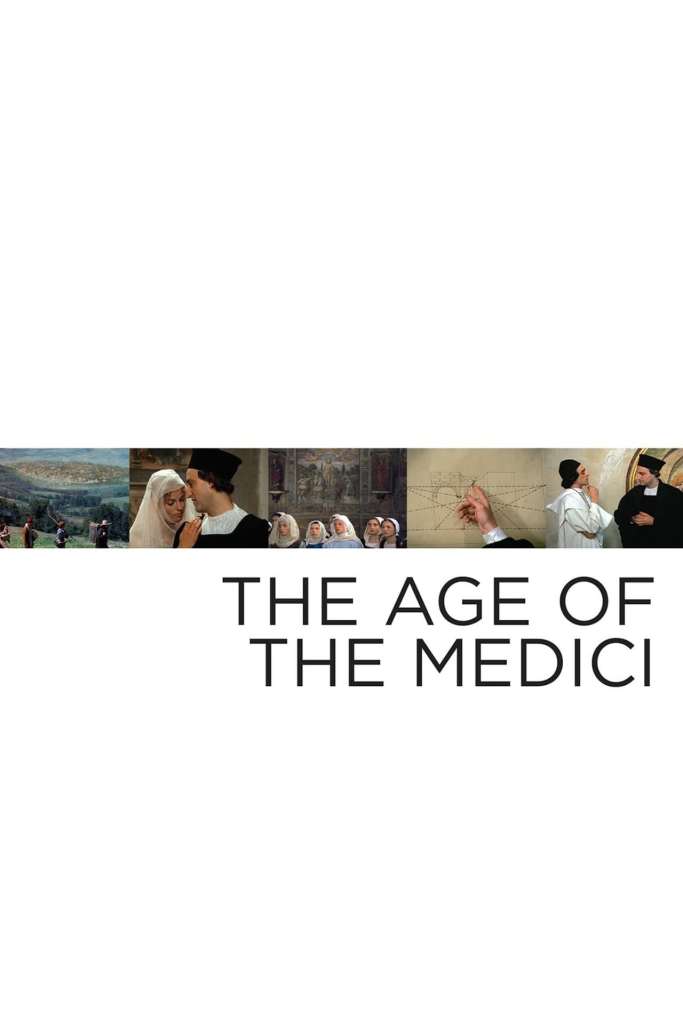
For you Hulu watchers, my final film today looks at a generation of the Medici family, a couple hundred years before Catherine Medici of The Serpent Queen show currently airing there. The Age of the Medici (Italian: L’étà di Cosimo de Medici) is last up today, a 3 part television series released in 1973. A lot of Italian films were filmed silently and the soundtrack was dubbed in later (for various reasons — I encourage you to look it up if you are interested, it’s all fascinating), so it’s not uncommon that the lips don’t match the actors. It is more pronounced here, because the series was filmed in English, with Rossellini hoping to find an American distributor. When he failed to do so, he added the Italian soundtrack and it was released there. The film begins with the death of the wealthy Giovanni di Bicci, and all of Florence is whispering about what his sons, Cosimo and Lorenzo de Medici, will do with the newfound riches. As Cosimo expands the banking enterprise, and his power grows, the nobles in Florence worry that he wants to set himself up as a local king. They are able to get Cosimo arrested, but rather than face time, he bribes his way out and is instead exiled to Venice for 10 years. The first episode ends with him pledging support to the Doge of Venice, and we see that he plans retribution on those who went after him.
At the start of episode 2, it’s been about a year and Florence is selecting new leaders, pulled “randomly” from the guild leaders, and wouldn’t you know it, Cosimo’s buddies are now in charge. After an almost-war breaks out between those who oppose and those who favor, things settle down, and Cosimo returns to Florence. Outwardly, he says it is time for the city to heal and he doesn’t seek vengeance, but in private, he pays off the debts his friends have wracked up in his absence, and gets the city’s rulers to trump up charges against his detractors. By the end of the episode, having survived an attempt on his life, Cosimo gets 80 enemies exiled from the city, and is the de facto ruler of Florence. Unfortunately Episode 3 takes a turn for the worse; it touches on Cosimo a bit here and there in the beginning, but spends a lot more time with Leon Battista Alberti, an architect and artist, and the last part gets bogged down in the detailed minutia that plagued the Louis XIV and Blaise Pascal films. Alberti goes around talking about sculptures, and building churches, and pulling up Roman ships from the bottom of the sea, each subject explored exhaustively, but none of which have anything to do with the plot of the first two episodes. This film had a lot of promise, but devolves into more of the (boring) same I saw in the beginning of this set. Before going into TV films, Rossellini in 1962 quipped that, “Cinema was dead.” Maybe the only thing that was dead was his skill behind the camera. ★★
- TV series currently watching: Vikings (season 1)
- Book currently reading: The Chrysalids by John Wyndham

 Jons Movie Takes