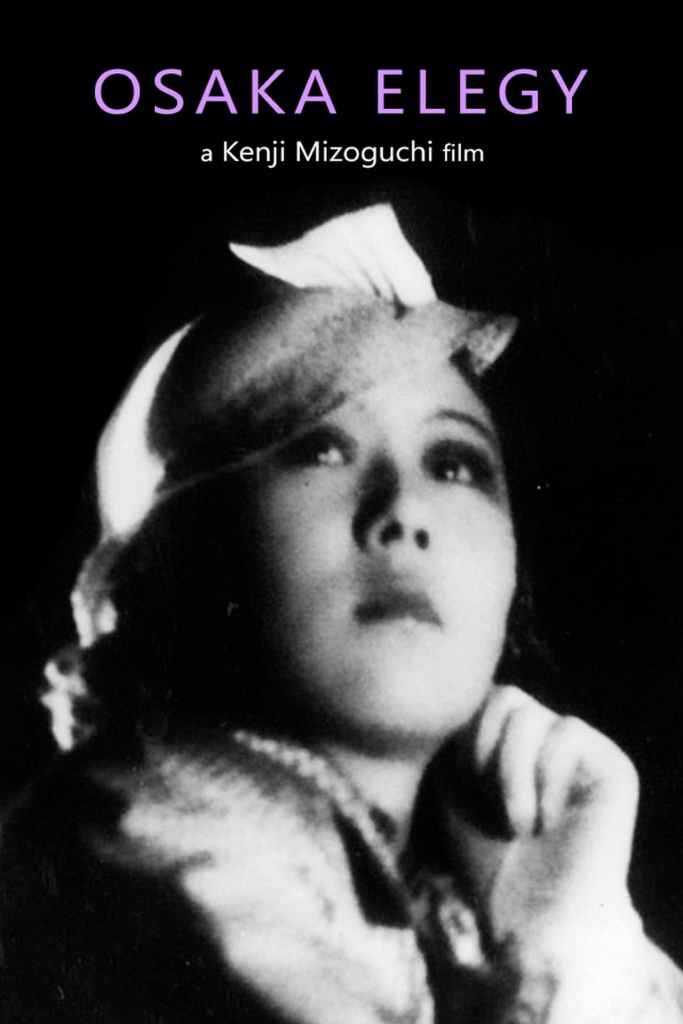
A couple years ago, I watched a handful of films from Japanese master Kenji Mizoguchi. Two in particular were incredible, so I’m visiting more of his films today, starting with 1936’s Osaka Elegy. Though he’d made over 50 films before this one, Osaka Elegy was his first critical hit in his home country (it would still be some time until his name spread outside Japan). Like a lot of Mizoguchi’s film, this one follows a woman facing a society that gives her a lot less power due to her sex. Ayako lives with her father and younger sister; a brother is away at college. Their dad has been unable to find work and is about to be jailed for debts. To cover his debt, Ayako becomes the mistress to her company’s boss. When that relationship ends (after the man’s wife discovers the affair), Ayako discovers her family is in the hole again, this time due to her brother’s tuition being unpaid. To the rescue again, Ayako lures a man to a room, only to take his money and leave before “giving him the goods.” Apparently hooking out is OK by her dad when he needs money most, but thievery crosses the line, and he kicks her out of the house. A dark and depressing film, and one of those rare instances when I wish the film was longer. A tidy 71 minutes in length, a lot of the scenes felt stunted. Don’t know if it was a director still putting it all together, or a studio wanting a quick runtime, but it could have been better letting the scenes breathe a bit more. ★★★
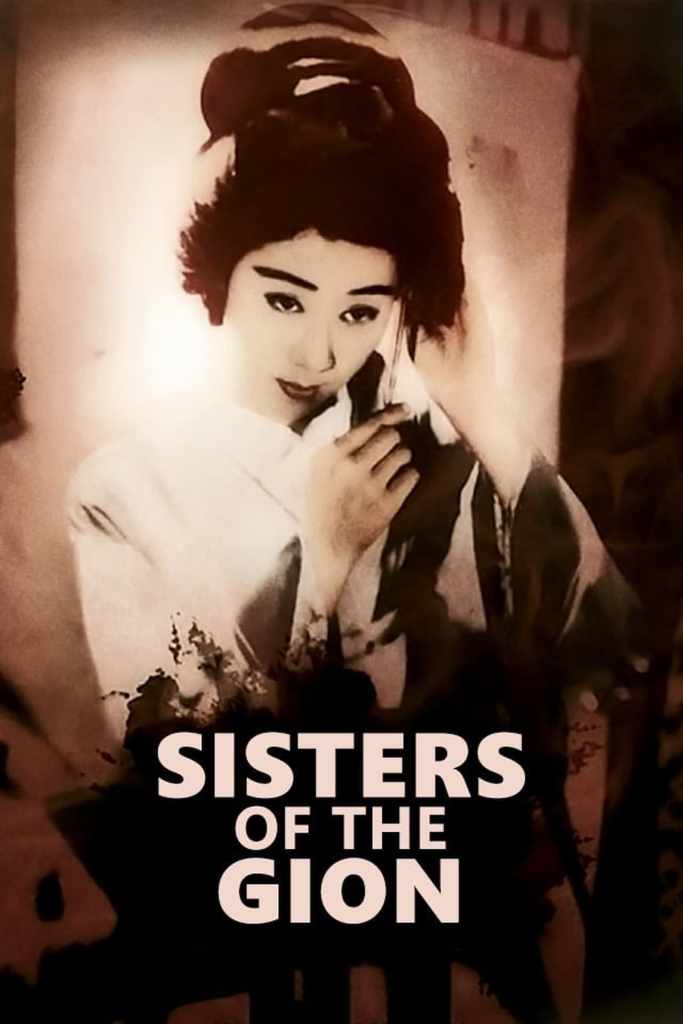
Much of the same cast stuck around for Sisters of the Gion, released the same year. A lesser picture but, for me, more entertaining, the film follows sisters Umekichi and Omocha, both geisha, who have very different outlooks on life. They are struggling to get by; living together in a small house in the pleasure district, they don’t have a wealthy patron, which is what a geisha needs to survive. Umekichi was raised traditionally and has more traditional Japanese values, holding loyalty to her former patron Furusawa, who is now broke and can no longer support her. Omocha, educated in public schools and dressing in western (American) clothes, has no such loyalty to any man. She uses her looks to curry small favors here and there, but knows the family needs more than that. As such, she devices a scheme to get Furusawa out of the picture and find a new wealthy patron for her sister. Omocha will say and do anything to bring money to the house, but all her devious plans backfire on her before the end. I think Osaka Elegy is better “cinema” but the pacing is a lot better on Sisters, and the story is “cleaner” and easier to follow. ★★★
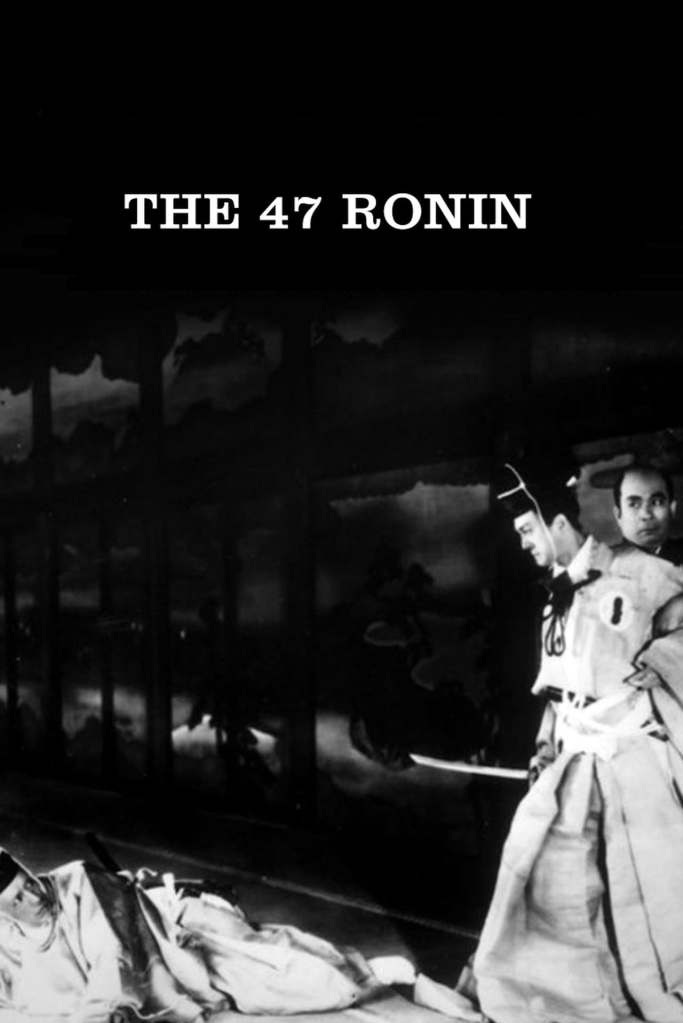
The 47 Ronin (not the 2013 film with Keanu) is an epic released in two parts, in December 1941 and the second half following in February, coming in at just about 4 hours in total length. A re-telling of the Japanese true-life legend (and only the second film to ever do so), it begins in Edo Castle, where Lord Asano has just heard Lord Kira besmirch his name. Asano attacks Kira, who survives, but the Shogun lord sentences Asano to death by seppuku. He doesn’t punish Kira at all for his words. Asano’s household, his wife and retainers, are left without a lord, but his loyal samurai, now leaderless ronin, vow revenge. Oishi organizes them, and has them swear in blood to avenge their slain lord. With the court against them, Oishi knows it will take time and planning, but that is something he has. The film was a bust in theaters, releasing just a week before Japan bombed Pearl Harbor and brought them into war with the USA. Japan had been waring with China and Mongolia for years already, and the film was supposed to be a rousing nationalistic movie, but Mizoguchi took a different approach, making it much more of a “thinking man’s” movie, with a lot of dialogue and debate, and lighter on the action. In fact, even when the Asano clan goes after Kira, it isn’t shown on screen. The result is an overly long, wordy drama that makes you wonder how this event became such a long-lasting legend. ★
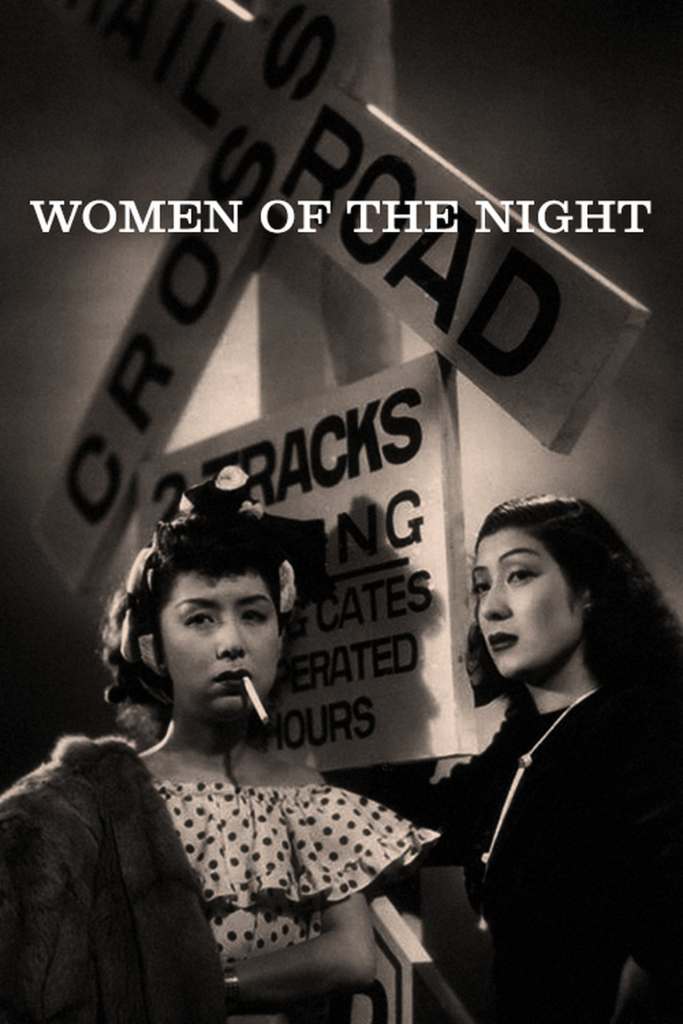
Mizoguchi returned to the underbelly of the city with Women of the Night, following two sisters and a third, younger friend, as they see their lives spiral out of control. Fusako’s husband died in the war, making her the “head of the house,” but it is a house deep in debt. She’s struggling to keep everything afloat, and has turned to prostitution to pay the bills. Unfortunately, her younger sister Natsuko is following in her footsteps, running away from home, only to be raped and impregnated her first night out. She turns to the streets to try to get by too, but thankfully Fusako finds her and gets her to a hospital before it is too late. A younger, impressional friend of the girls, Kumiko, isn’t so lucky. A stark drama shining a light on the plight of single women in post-war Japan, the movie is about as bleak as it gets. ★★★½

Street of Shame was Mizoguchi’s last film, released in 1956 just a couple months before his death. He revisits women on the lower rungs of society again, a subject for which he ended up becoming most well known. But this was an entirely new take, and the best movie out of this set. The film revolves around 5 prostitutes working in Tokyo’s Yoshiwara district (their red-light district). Rather than take the same approach as the above films, showing what got them there, we instead get a sympathetic view of their day-to-day lives, and we find that these are not the kinds of women you’d expect. One has an out-of-work husband and a sick kid they are trying to support. Another is desperately seeking a husband to take her away, but when she finds one, she discovers he wants a maid more than a wife. A third woman has worked the streets her whole life as a single mom to raise her son, only to see him rebuff her in shame now that he is a grown man. A fourth is scrounging every penny in order to leave this work, but it almost costs her her life in doing so. Finally, the fifth, the youngest and prettiest, seems to not have a care in the world, until we see the family from which she ran away. All of this takes place against the backdrop of a changing Tokyo, where the current political environment is threatening to make prostitution illegal, thus taking away these women’s only means to live. Fantastic, humanistic film. You start out feeling maybe a little disgusted by them, a natural reaction by many I would think, but you grow to hope for something better for each, though you know that’s probably not in the cards. The film proved prophetic too; Japan did indeed criminalize prostitution shortly after the movie’s release. ★★★★½
- TV series currently watching: The Dropout (miniseries)
- Book currently reading: Anthem by Noah Hawley

 Jons Movie Takes