Up today is a set of films from trailblazing African-American actor (and singer, football player, intellectual, activist… you name it) Paul Robeson. The son of a slave who escaped north on the Underground Railroad as a teen, Robeson was well educated (academic scholarship to Rutgers where he graduated valedictorian; then a degree from Columbia Law School) and he never backed down from standing up for causes he believed him. This got him blacklisted during McCarthyism, but his career continued in Europe. I’ll be reviewing a few of his films from the 20s till early 40s.
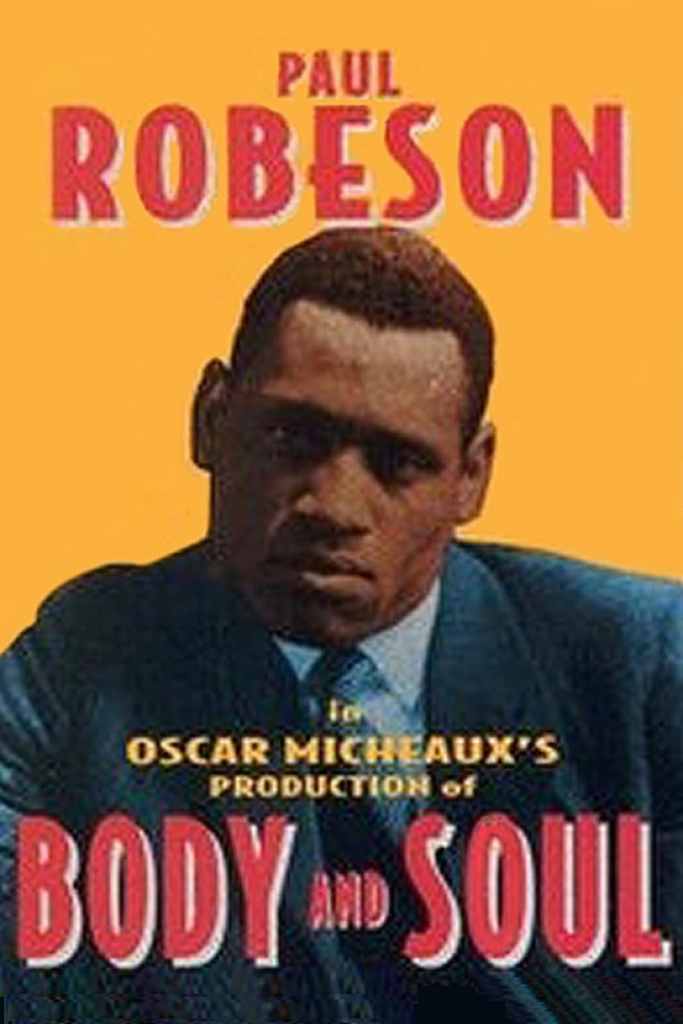
After making a name for himself on stage, he transitioned to film with his first role in 1925’s Body and Soul. From the late silent era, Robeson plays two roles, the primary one being Reverend Jenkins. Jenkins runs a church in a small town, but in his spare time, he drinks with gamblers and ne’er-do-wells. Turns out Jenkins is an ex-con, and only pretending to be a man of God to swindle the townsfolk out of their money. He’s already made the moves on Isabelle, but Isabelle knows she can’t take that info to her mom, because her mom will not hear a bad word spoken about Jenkins. Isabelle wants to marry a working man named Sylvester (Robeson’s other role), but her mom rejects the union since Sylvester has no money. What ends up happening is Jenkins steals Isabelle’s dowry, pinched and saved by her mom, and Isabelle, knowing her mother will never believe the story, runs away to Atlanta. It’s a fascinating film and holds a whole lot of drama in its tight runtime. The version I watched had a fantastic jazz soundtrack too, making for an enjoyable experience. ★★★
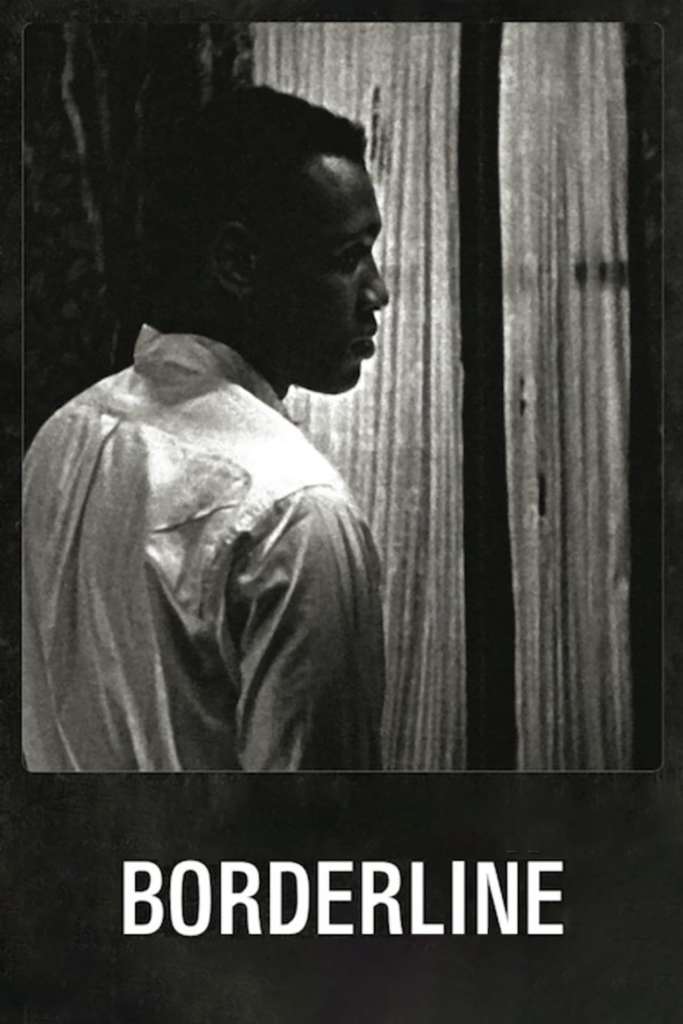
Borderline, another silent film, was a lot harder for me to get into. An almost-experimental film produced by an avant-garde group, it features very little “dialogue” (intertitles), so the viewer is left to interpret what is being said and happening on screen. Characters will come together and have whole conversations (or fights, as is often the case) with never a word to the viewer to know what is being said. And I didn’t even know what was going on for a large portion of the film. It was something about a black couple (Robeson and his real-life wife Eslanda) getting mixed up in a love triangle with a white couple while visiting some sort of resort. The film was groundbreaking for its day (1930) for its depiction of interracial relationships while also showing the discrepancy of justice handed out due to race (the black Pete, who does nothing wrong while his wife is having the affair, is driven out of town, whereas the white man, Thorne, who kills his wife in a fight over her affair, avoids jail time). Great subject matter, but the execution by its out-there filmmakers was too much for me. Never a good thing when you are watching the movie and can’t understand what the hell is going on. ★½
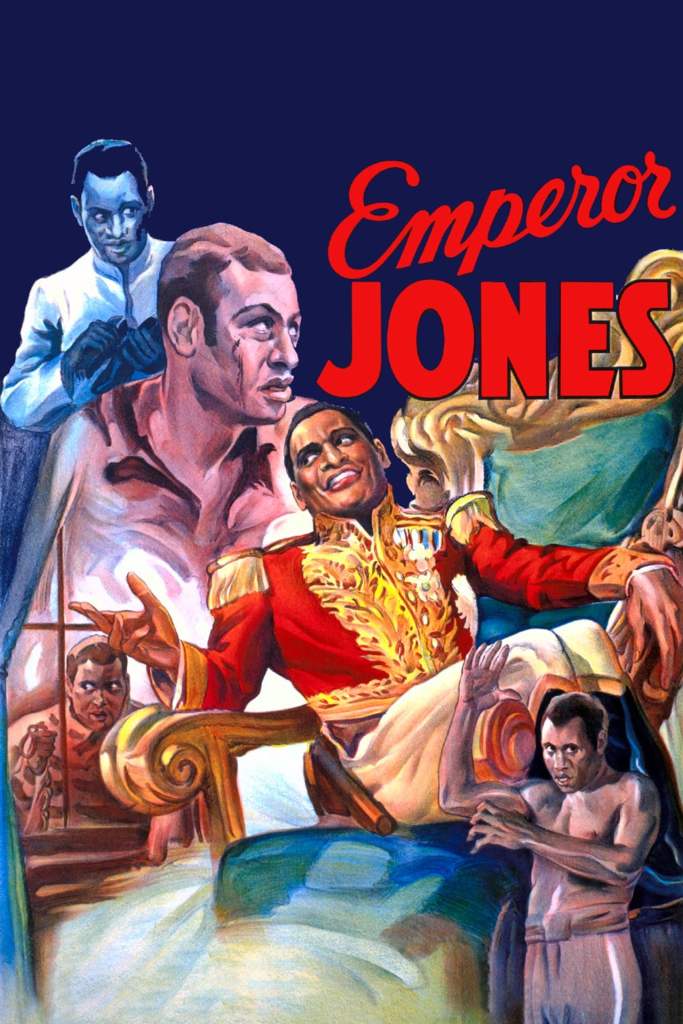
Robeson’s first sound film, and the one that catapulted him to stardom, was The Emperor Jones, based on a play by Eugene O’Neill. We finally get to hear Robeson’s deep, booming voice, and he delivers. He plays Brutus Jones, a man who, initially, we think is a good man leaving his wife and church to go make money to send home. We quickly learn though that Jones is not an upstanding citizen. He kills a man over a gambling argument, which gets him sent to a chain gang, and when he escapes from there, he only returns home long enough to kiss his wife goodbye and fly off to the Caribbean. There, Jones hatches a plan for his biggest swindle yet: robbing a country out of its king. Through an act of trickery, he purports to be invincible, and dethrones the area’s current ruler to set himself up as “Emperor Jones.” By the end, when he pushes his people too far and taxes them to the point of revolution, Jones comes to face all the sin he’s done in his life. Unfortunately for him, it may be too late. Jones is shown as a man larger than life, and Robeson’s big frame and deep baritone voice fill out the character. It’s a typically pessimistic play from O’Neill (Long Day’s Journey Into Night, The Iceman Cometh), but expecting that, I was very much into the movie. ★★★½
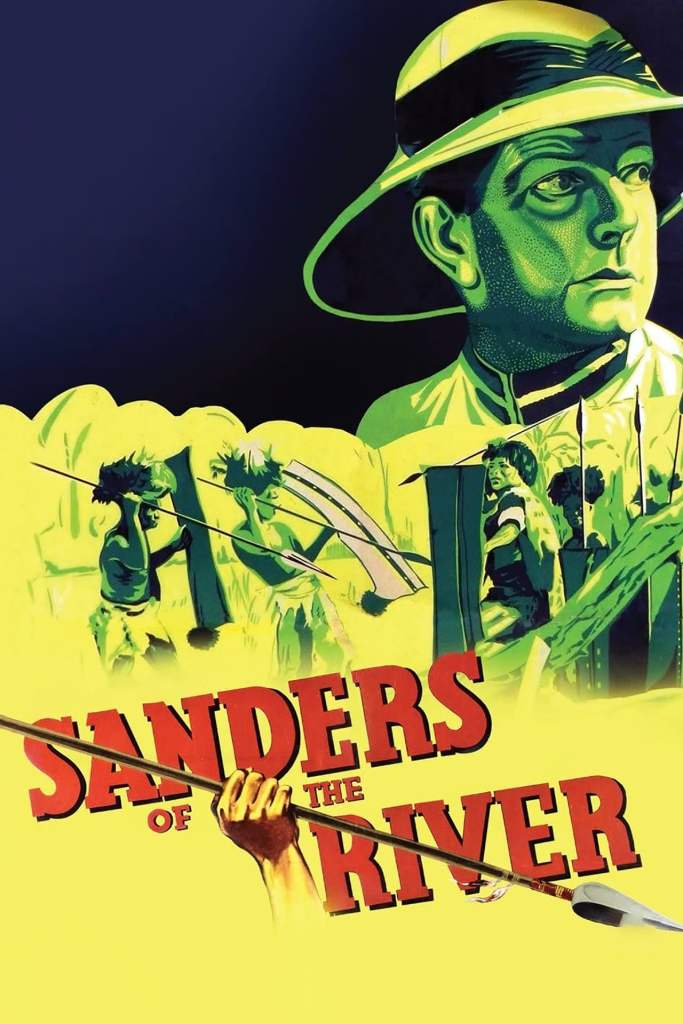
I quite literally just watched a handful of films directed by Zoltan Korda, and here he pops up again. Sanders of the River was a popular film upon its release in 1935, but it has not held up well, for the same reasons that, at the time, Robeson hated the final product and denounced it. It’s not a bad story though, taken at face value. Sanders is an English colonial commissioner in Nigeria, tasked with overseeing the people and “keeping the peace.” Sanders finds help from Bosambo (Robeson), who is a tribe leader, but who is western educated. When Sanders is there, everything goes fine, but when he is called back to England for a few weeks, the tribes begin warring with each other. One of the tribe leaders, Mofolaba, takes the opportunity to kidnap Bosambo’s wife to try to force him and the other leaders under his rule. When Sanders returns, he squashes Mofolaba’s plans. Robeson thought he was making a film about the heritage of powerful black men in Africa, but it obviously turned out to extoll British colonialism, making it appear that the black population adored their English rulers. Robeson’s dislike of the film and its obvious flaws aside, at least the story was intriguing and it was better than the last couple films coming up… ★★★
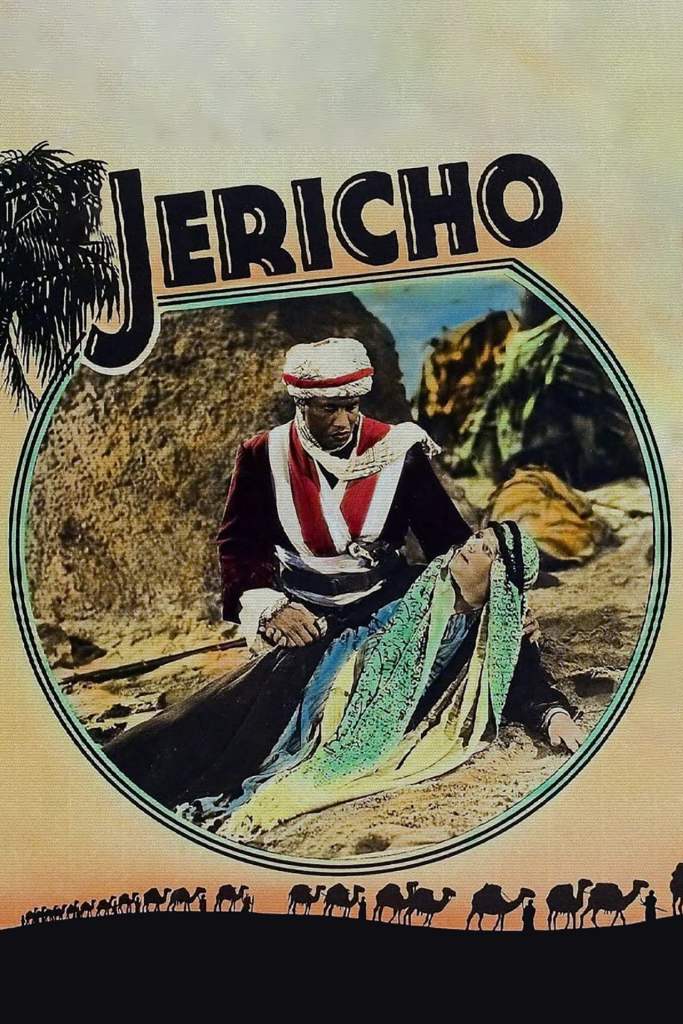
In Jericho (released in the USA in 1937 as Dark Sands), Robeson plays Jericho Jackson, a navy soldier who disregards orders in order to save fellow trapped men after their ship is hit by a submarine. During the act, Jericho accidentally kills an officer, and the result is a court-martial and the threat of impending jail time. Before he goes away, Jericho escapes and flees on a boat to Africa, where his medical training helps the local people. His kindness but firmness endears him to the people, and over the next few years, he grows to be their leader. During this time, Jericho’s former commander, who was also kicked out of the navy and did his own jail time for failing to keep Jericho in custody, has been released and vows to find Jericho and make him pay. When he sees Jericho’s face on a news reel about the people of northern Africa, he goes there to fulfill his oath. Robeson was keen to take this role, about a strong black man carving his own patch, after his disgust with the previous picture, and while I appreciate the sentiment, the film isn’t all that exciting. Worth a single viewing, but not much more than that. ★★
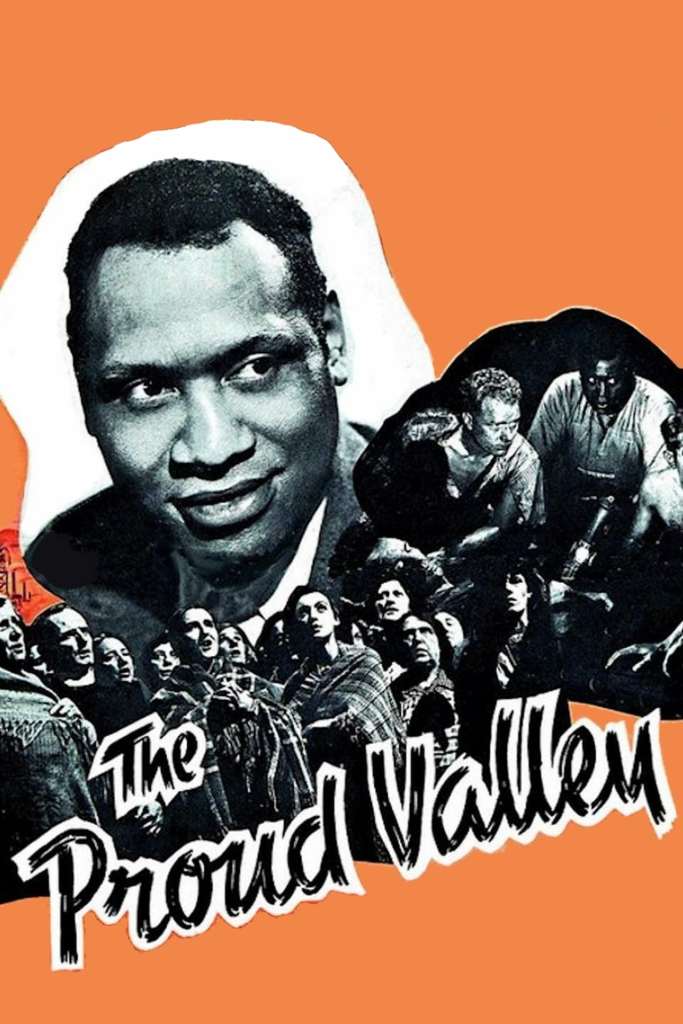
His next film was 1940’s The Proud Valley, and unfortunately I have to say, we’re moving in the wrong direction. David is a deserting sailor who finds himself in a mining town in Wales. The men who work the mine also sing together in a choir (odd, I know, but just go with it) and David’s supremely rich voice gets him in the group, to the consternation of some of the racist townsfolk. David proves his worth though; one day a fire breaks out in the mine, and David risks his life to try to save a fellow miner. Though the man dies, the people now accept David wholeheartedly. Unfortunately after the accident, the mine is closed, but with World War II beginning, the country will need that coal again, so David and the other men trip to London to plead their case. They get approval, so the group has to go down into the dangerous mine and try to open a path through the damaged section, down to the coal veins. David again will get a chance to show his courage. Very ho-hum movie, with plenty of odd twists in the plot that will leave you scratching your head. And the acting is downright rough through much of it. Unfortunately, I found his movies to be very uneven in this set. One lauded film, Show Boat, I’m saving for another day, and I have high hopes for that one. ★½
- TV series currently watching: Better Call Saul (final season)
- Book currently reading: The Great Hunt by Robert Jordan

 Jons Movie Takes
One thought on “Quick takes on 6 Paul Robeson films”