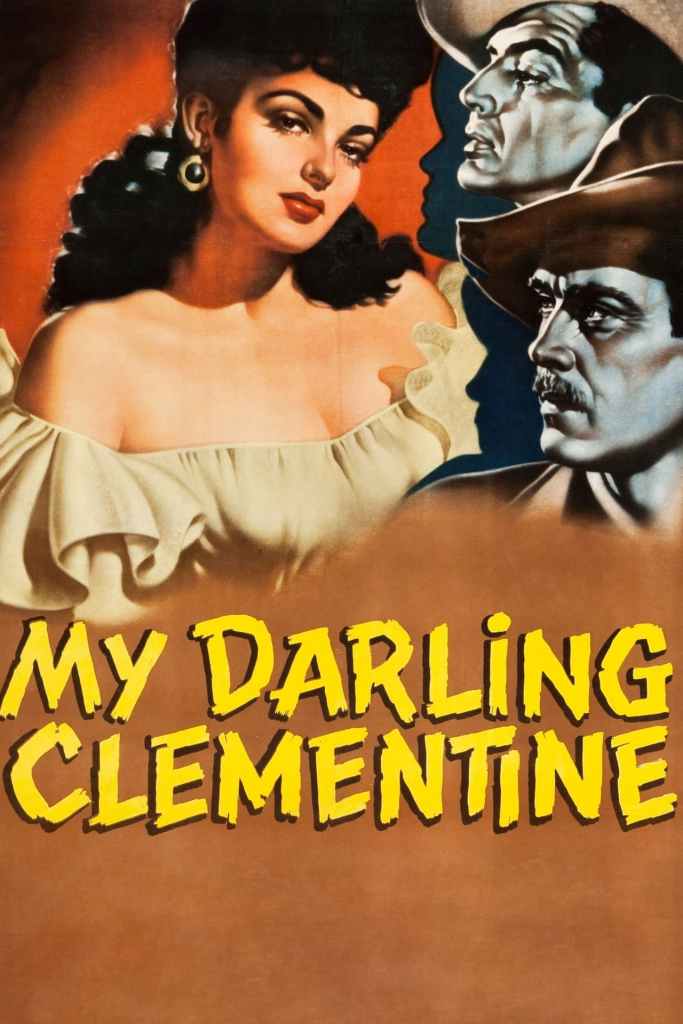
My Darling Clementine comes from one of the all-time best in this genre, director John Ford, and stars one of the era’s best too in Henry Fonda. Fonda plays lawman Wyatt Earp. He and his brothers are moving cattle across the west, but while stopping for a rest in Tombstone, the cattle are stolen away and younger brother James is killed. The likely culprit is the Clanton family, a group of ne’er-do-wells in the area, so Wyatt is sworn in as Marshall with vengeance on the mind. But first, he has to deal with the drama of Tombstone. Doc Holiday is a hot-headed gambler running from something. That something seems to be Clementine Carter, his former love from back east, who has followed him to Tombstone, much to the chagrin of his current girlfriend, Chihuahua. Clementine gives off a bit of a lovesick vibe kind of thing, but when it becomes apparent that Holliday has moved on, she may find a new reason to stay in Wyatt, who’s been smitten upon first seeing her. People who come into this film expecting to see the famous gunfight at the OK Coral may be a bit disappointed, but hopefully they, like I, find something more substantial that just a gunfight. While that battle is the big finale in the movie, the film’s focus is more on the relationships between these legendary characters. Through modern-day eyes, you do have to look past the bad of a classic 40’s western (Indians are bad, the Marshall is always right, and woman should swoon when a strong man walks through the door), but it’s still a highly entertaining film. ★★★★
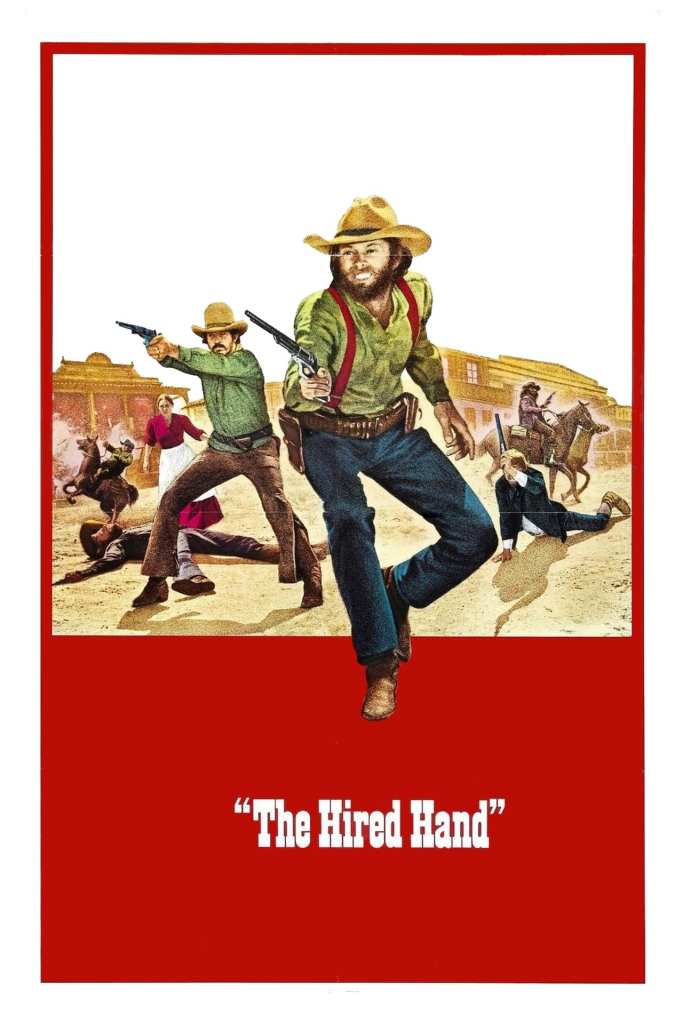
From Henry Fonda to his son, Peter. Two years after his heralded work in Easy Rider, Peter Fonda directed and starred in The Hired Hand, his directorial debut. He plays Harry, a cowboy who left his wife and baby daughter years ago to go live free in the American west. After 7 years though, he’s found the life isn’t as exciting as he expected, and is ready to return home. He goes back to his wife, with friend Arch tagging along. A younger friend is killed by some thugs along the way. When Harry gets back to his wife, Hannah, he finds that she’s been living like her husband is dead, and their daughter doesn’t even remember him. To try to get into her good graces, Harry suggests he and Arch live in the barn and just be treated as hired help; no one, including their daughter, need know that Harry is Hannah’s long-lost husband. However, in town, Harry hears rumors that, over the years, Hannah has slept with the various men she’d hire to do odd jobs around the farm, so Harry decides to take his place as husband again and quash those rumors. As Harry and Hannah settle into a relationship again, Arch decides to head off to fulfill his goal of seeing the ocean, but the thugs from earlier aren’t done with the friends. When Harry learns that they’ve kidnapped his bud, Harry must leave his wife again. The film feels very amateur at times, which, though it was it was Honda’s first time directing, you’d think that his vast experience in the business would give him a surer hand. However, the movie features excellent sets and a real gritty, genuine feel, which offsets the uneven storytelling. And despite hailing from 1971, it avoids the trap of feeling dated. ★★½
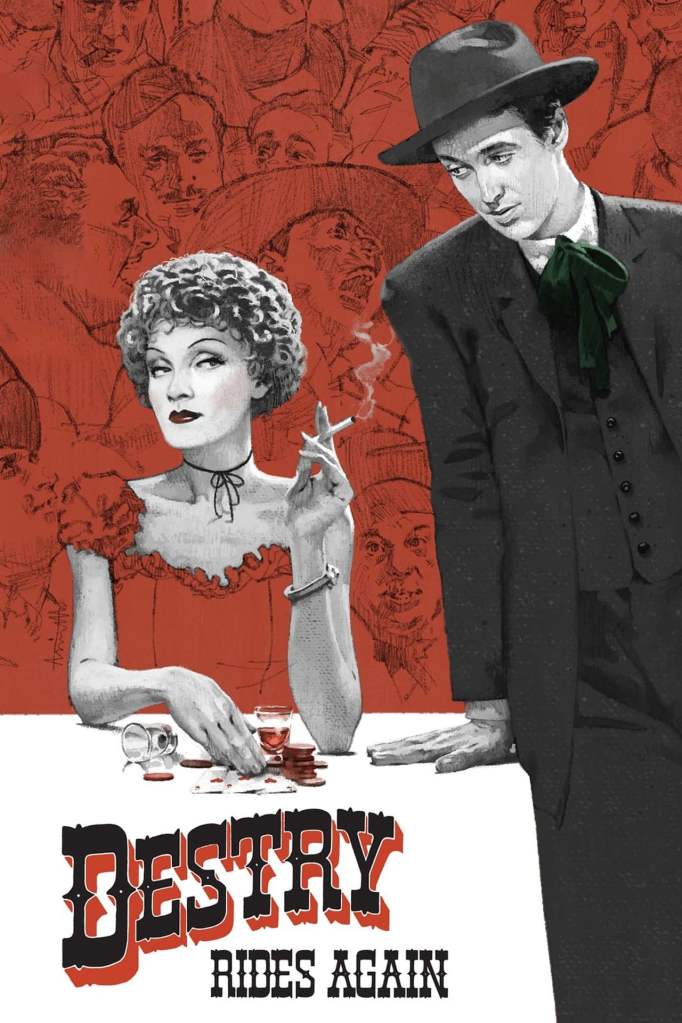
Destry Rides Again, from director George Marshall, borders on being a spoof, but ends up be a hilarious comedy mixed with some of the best elements of the western genre. The town of Bottleneck has a law problem, in that there is none. The mayor is in the pocket of saloon owner and gambler Kent, who is the real power in the town. When Kent swindles a gambler out of his ranch, and the town’s sheriff steps in to stop it, the sheriff ends up dead, and everyone just looks the other way. Seemingly as a joke, the mayor selects a drunk, the apt-named Washington Dimsdale, as the new sheriff. Dimsdale, to everyone’s surprise, decides to give up drinking and take the job seriously, and sends off for a famous deputy: Tom Destry (a young James Stewart, whose star was just starting to shine in 1939). Destry’s dad was a famous lawman and he seems to be a chip off the old block. Destry arrives in Bottleneck and his aw-shucks attitude and easy-going nature, not to mention his refusal to carry a gun, makes him the immediate butt of jokes, and Kent and the others don’t take him too seriously. That is, until Destry starts digging into the old sheriff’s murder. Oh, and let’s not forget a love interest, in the person of Frenchie, the saloon’s singer/tramp, portrayed handily by the great Marlene Dietrich. Lots of belly laughs and an intriguing plot to keep you on your toes, I had a great time with this one. And who doesn’t love Jimmy Stewart? ★★★★½
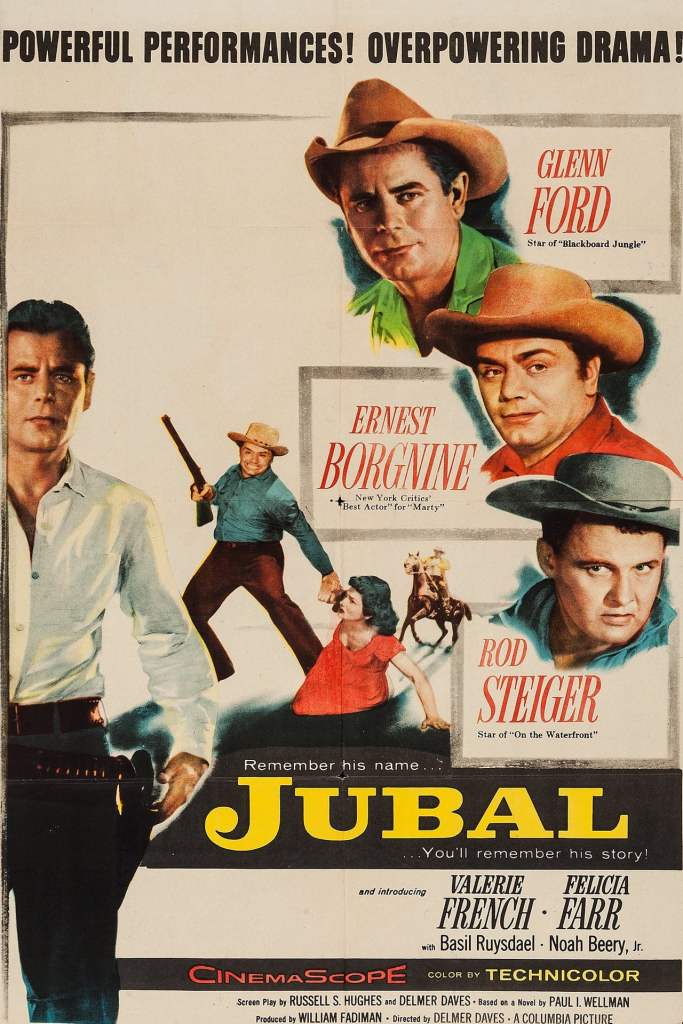
Jubal comes from director Delmer Daves and also has some heavy hitters in the leads: Glenn Ford, Ernest Borgnine, and Rod Steiger. Ford is Jubal, a wandering cowboy who comes upon Shep’s (Borgnine) ranch. Jubal makes a good first impression and is hired on, and it isn’t long before he is made foreman. This doesn’t sit well with the ranchers who have been there awhile, most notably Pinky (Steiger). Pinky’s been dallying with Shep’s wife Mae behind his back, but Mae has now set her eyes on the easy-on-the-eyes Jubal. Jubal wants no part of that triangle, but Mae’s attention on him riles up Pinky further. The other plot line involves a religious group squatting on Shep’s land, as they tend to some sick members. Pinky wants them kicked off but Jubal urges compassion, and gets his way. He also falls for one of the member’s daughters. The best part is the cinematography; shot on location in Wyoming, the vistas are spectacular (in widescreen too!) and the colors just pop off the screen. Or maybe I’ve just been watching too many black and white films lately. The story is just OK — good but not outstanding. ★★★
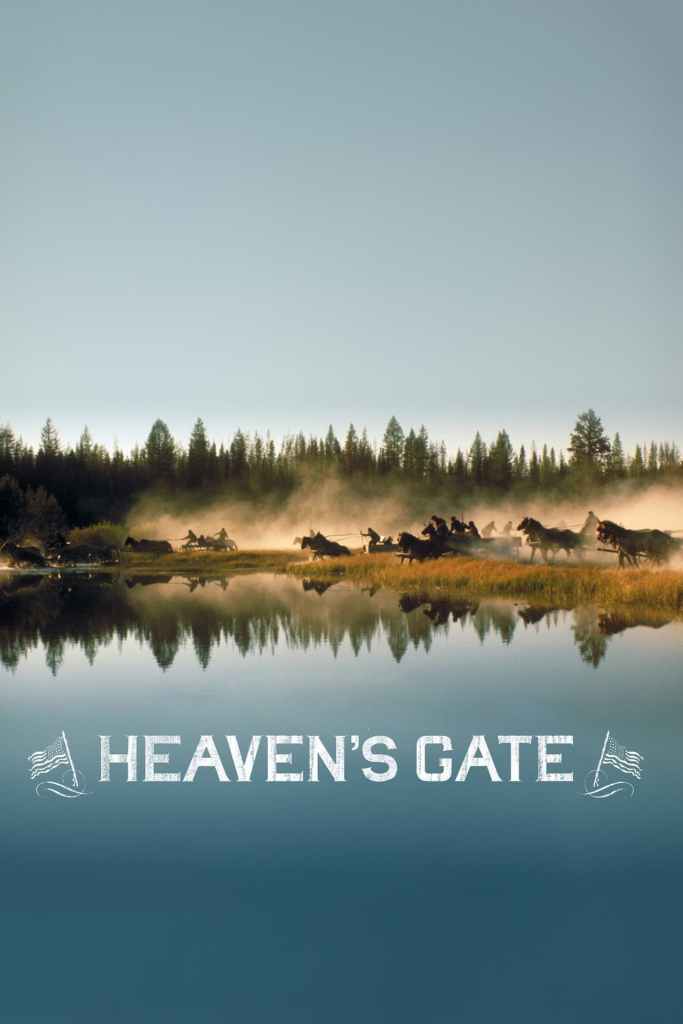
Heaven’s Gate is a much-discussed film out of 1980, directed by Michael Cimino, and featuring a stellar cast of actors who, while not new to business (many coming off their breakout roles in the couple years prior), were still young in their careers: Kris Kristofferson, Christopher Walken, John Hurt, Isabelle Huppert, Jeff Bridges, and Sam Waterston. It doesn’t begin in the west; instead, we see a young couple of friends, Jim Averill and Billy Irvine, graduating from Harvard. After some foreshadowing speeches at graduation, the film jumps ahead 20 years, to where Averill is now a marshal in Johnson County, Wyoming (and Irvine will pop in later – he hasn’t changed much since college). The situation in the area is volatile. The wealthy cattle owners (Wyoming Stock Growers Association, led by Frank Canton) have targeted the stream of immigrants who’ve come looking for a new life. Canton and his fellows are contending that the immigrants are stealing cattle (some are, for food), and are ready to put an end to them. Canton puts together a “death list” of 125 names, men and women, suspected of cattle theft, and hire a load of mercenaries to come north and kill them. Canton is opposed by his right-hand man, Nate Champion, who is not a wealthy man and, while he has been Canton’s enforcer to this point, now sees that he is on the wrong side of morality. Champion and Averill, often at odds (and especially so because they share affection for the same woman, a brothel owner and also immigrant named Ella Watson), team up to see as little killing done as possible. Unfortunately, little is still a lot. This is a long film with a troubled history. Originally nearly 4 hours long, it was shrunk down to 2 1/2 after it’s opening week was lambasted by critics. They didn’t like the shorter version any better, and it wasn’t until decades later than a longer version was restored and, in retrospect and with changing views on immigrants, given more attention. I have to admit, the first solid 2 hours left me wondering if anything was going to really happen, but the fireworks in the second half more than made up for it. The cast is on their game top to bottom, and all of the characters are varied and intriguing. A couple knocks for taking so long to get going, but the end is extremely powerful. This expensive-to-make film lost a ton of money on its release. Coming off his previous hit (The Deer Hunter), director Cimino was given carte blanche in production, and its failure put an end to director-driven production in Hollywood for a long time. ★★★½
- TV series currently watching: Yellowstone (season 1)
- Book currently reading: Dragons of The Hourglass Mage by Weis & Hickman

 Jons Movie Takes
One thought on “Quick takes on 5 American Westerns”