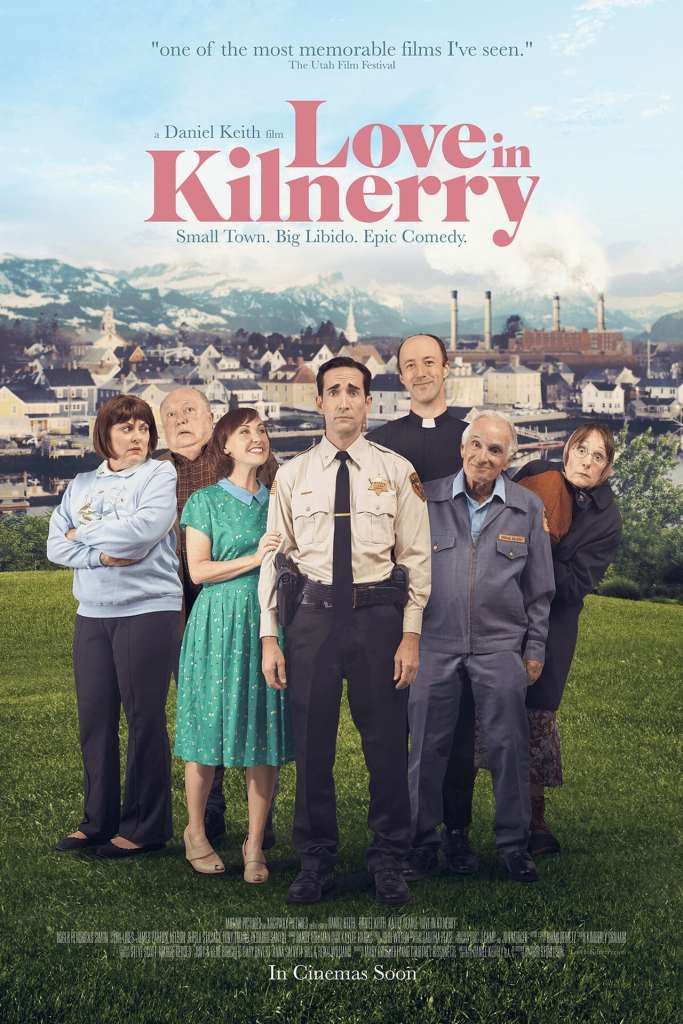
Love in Kilnerry is a cute little romcom if you, like me, are into dad jokes. The premise is simple: a tiny town New Hampshire, whose biggest employer is a chemical plant, is thrown into turmoil when the chemical produced at the plant is changed by the higher ups, and the new chem has a purported side effect: it raises the sexual libido of those who interact with it. The community, mostly made up of middle aged and elderly folks who never moved away, are in a tizzy over what “sexual improprieties” may now arise from drinking the water. And things do start to happen. The staid sheriff arrests a couple for public fornication, the long-time mayor (and bar owner) makes moves on a local divorcee, an elderly couple of singles start dancing together (in a very risqué manor), and a young storeowner sets her eyes on the sheriff himself. And lets not forget the town priest… The wordplay is funny in an old-timey sort of way; I can see my parents laughing pretty hard. And I did too, though my wife (who did not watch the whole thing) was just rolling her eyes. To each his own. It’s definitely low budget, low production, and not great acting, but the dialogue is fun. ★★½
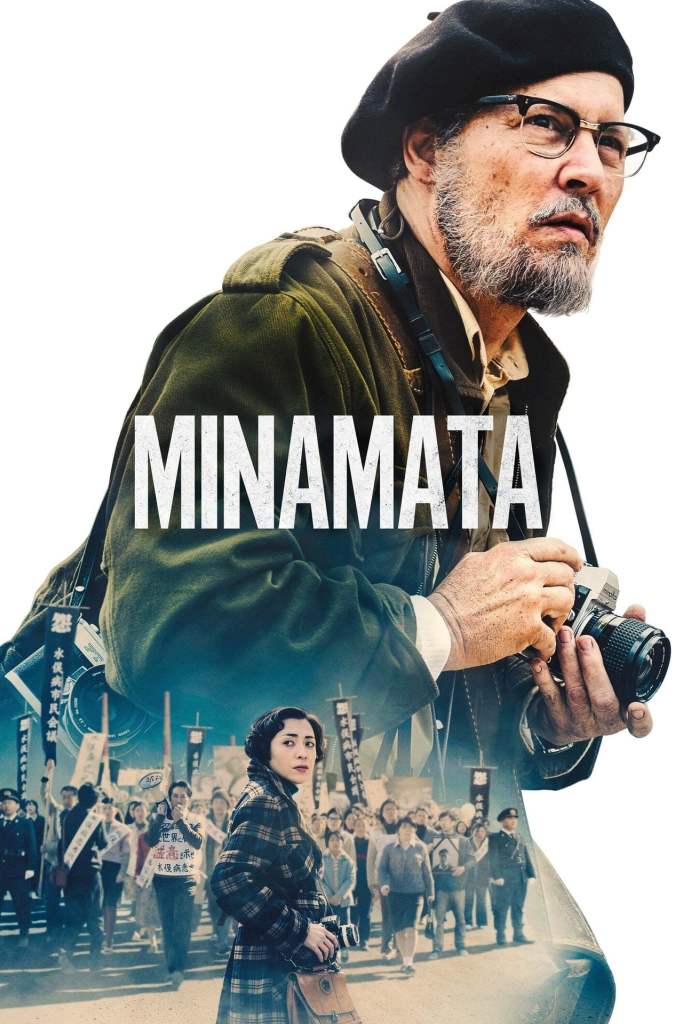
Minamata is the telling of photojournalist W Eugene Smith and his work in Japan, telling the story of the mercury poisoning of the village of Minamata by a local factory. In 1971, Smith is already an established photographer for Life Magazine at the start of the film, but he’s getting up there in years and has pretty much given up on the world. He doesn’t like the direction journalism has taken, and he’s decided to drink away what days he has left. However, he is visited by a Japanese woman named Aileen, who begs for help to spread the word about Minamata. After digging a bit, Smith sees that stories have popped up here and there over the last few years about the village, but no one has ever gone there and done a deep dive into what is actually happening. With the go-ahead from his editor, Smith does just that, and what he finds is alarming. A whole generation has been born crippled from the poison the company is dumping in the water. Children and adults are born disfigured or with serious developmental deficiencies. The people are angry, but at the same time, shame has kept them from letting others see their disfigured family members. Smith knows that he needs to convince the locals to allow him to share their stories with the world, if help is ever going to come. Smith is portrayed by Johnny Depp, which is probably why you’ve never heard of this film. It was definitely buried after all the allegations came out against him, and it was very quietly released in various countries over the past couple years. The film is a bit uneven, though it is certainly moving at various points. Say what you will about Depp, but he’s undoubtably a great actor, and he draws you in to the struggle onscreen, even as his character deals with his own demons. ★★★
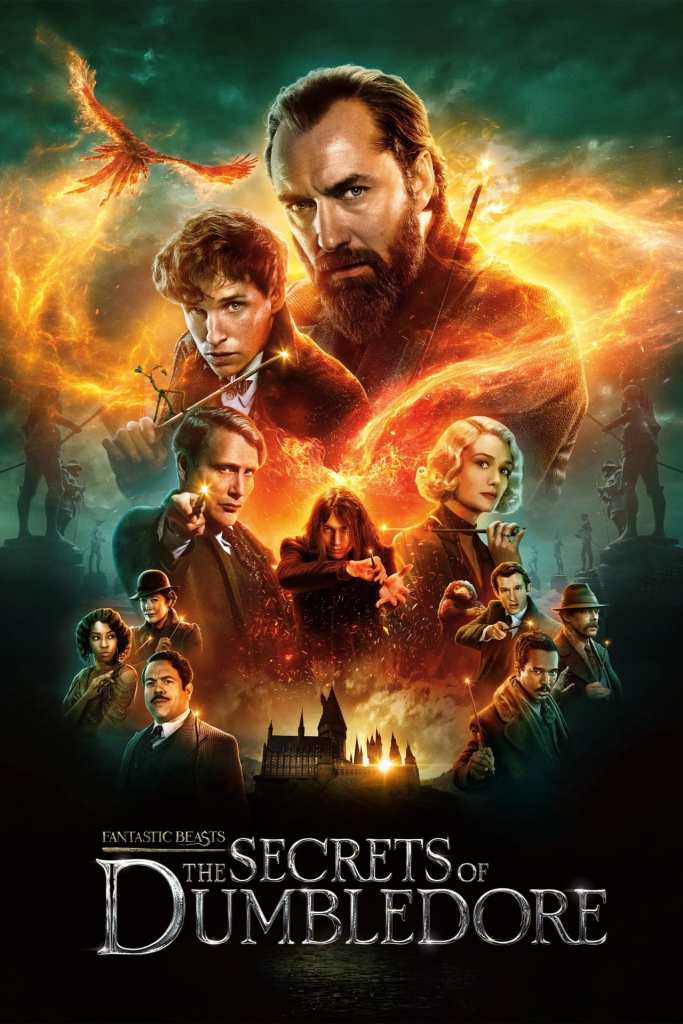
The Secrets of Dumbledore is the latest from the Harry Potter world and the third film in the Fantastic Beasts series (and maybe the last; it did pretty poorly in theaters, so we shall see). I wanted to give this film every benefit of the doubt despite the reviews, but it’s just not very good. For one, no plot developed for a solid 30-45 minutes, and that’s too long for a film of this type. Other than “Grindelwald is bad” and “Dumbledore & Scamander are good,” the movie doesn’t advance the overall story of the series either. Grindelwald (with Mads Mikkelsen replacing Johnny Depp) has a goal to be elected Supreme Mugwump (head of the wizard world) in order to advance his goals of making war against all non-magic muggles. (Again, we don’t know of this election for a long time into the movie.) Dumbledore must overcome personal history with Grindelwald if he is battle him, and he is aided by Newt Scamander and friends. For a movie about magic, this movie is awfully light on wonder. It fails to capture the imagination as the old Harry Potter films did. Back then, you may have had the overarching plot of Voldemort gaining power and setting up his ultimate duel with Harry, but each film still had a subplot to develop and keep the film moving. This one had none of that. It is like one big prologue to a fight that is yet to come. A fight that we may never see if Warner Bros doesn’t do something to right this ship. ★½
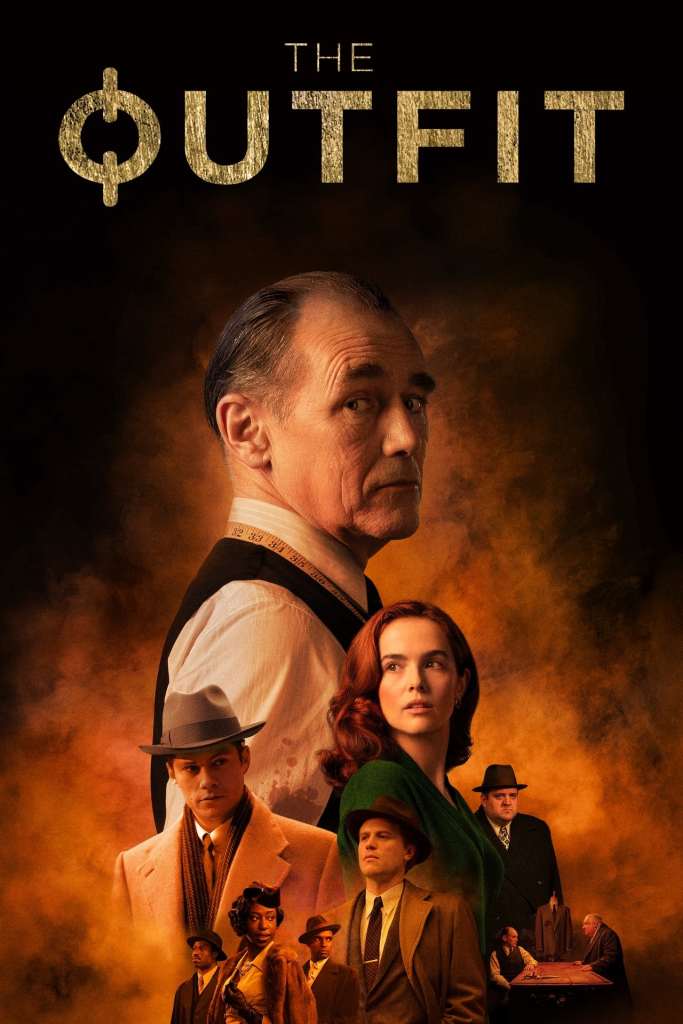
Didn’t know what to expect from The Outfit; seems some people loved it, and others called it overhyped. After a viewing, I think I lean more towards the latter group, but there are good moments. The movie takes place over a single long night in 1950s Chicago. Leonard Burling runs a men’s tailor shop. The shop is frequented by the Chicago mob, who use it as a safe house. Leonard, called “English” by the mobsters due to his British accent, allows it, as the men are all good customers. On this particular night though, events go sideways. First, Francis and Ritchie show up, with Ritchie having been shot in the abdomen. Ritchie is mob boss Roy’s son, and Francis threatens Leonard unless Leonard sews him up. The shooting was from a rival mob, over a supposed tape recording implicating Roy’s mob family in criminal activity, a tape provided by Al Capone’s “Outfit,” a group tasked with protecting crime families from the law. The rest of the film plays out as a who-done-it search for the rat leaking info to the FBI, as the two local crime families target each other (and just as often, themselves). Solid acting, in particular by longtime stage actor and star Mark Rylance as Leonard, but there were a few too many “gotcha” moments for my liking. When a film drops a plot bomb on the viewer once, it hits hard, but whey they do it 3 or 4 times over the course of a movie, it loses luster by the end. Fun enough for a single viewing, but that’s about it. ★★½

A darling of the critics, very rarely does director Paul Thomas Anderson deliver for my tastes. The only film of his I really liked was Punch-Drunk Love, but somehow his movies always wrack up the nominations (though if you look at audience reviews instead of critics, you get a different story). His latest is Licorice Pizza, a story about a 15-year-old boy, Gary, who falls in love with a 28-year-old woman, Alana. While young, Gary is a go-getter and entrepreneur, who’s taken some money earned from a few acting gigs to start several businesses whenever he sees an opportunity to get rich quick. Alana is the opposite: at 28, she doesn’t have a goal in life and is aimless. Despite her age and the restrictions of societal norms, she can’t help but be attracted to the charismatic Gary. However, despite attraction on both sides, the film mostly takes a meandering path on their relationship, as the two continually attempt to make the other jealous, or to move on to other relationships that never pan out. The movie has one thing going for it: it is a wonderful time capsule to the early 70s period in which it takes place. Other than that, it is a huge bore with only a handful of compelling moments, and unfortunately, it is far too predictable to be enjoyable. ★★
- TV series currently watching: Star Trek Picard (season 2)
- Book currently reading: Before the Fall by Noah Hawley

 Jons Movie Takes
One thought on “Quick takes on Minamata and other films”