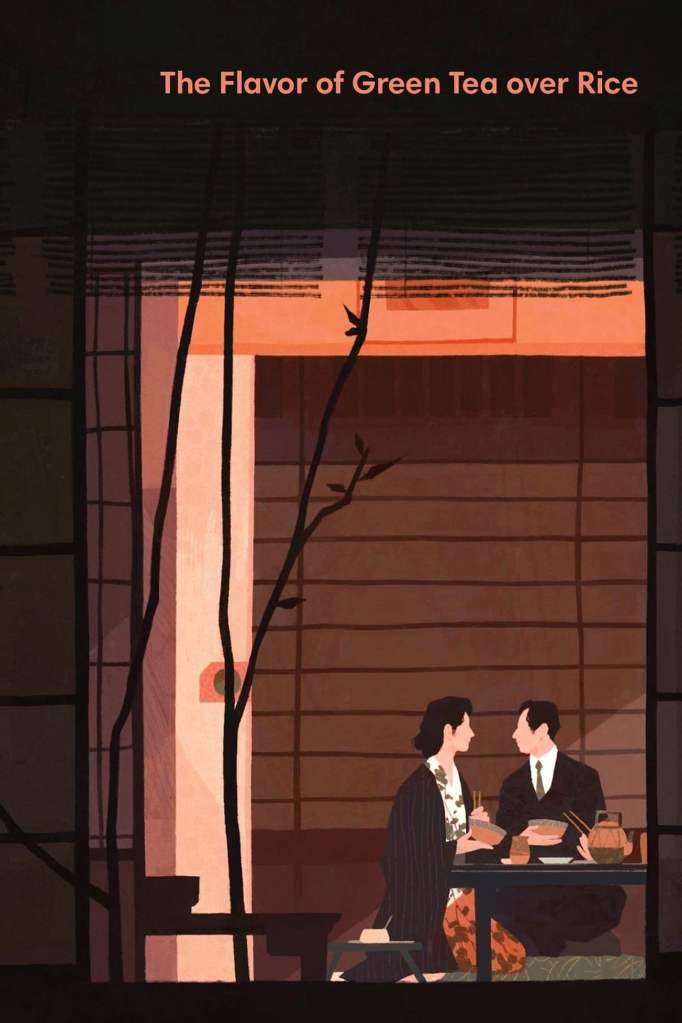
Returning today to one of Japan’s greatest directors, Yasujirō Ozu, and specifically, five of his post-World War II films. First up is 1952’s The Flavor of Green Tea Over Rice. While there is a subplot involving a modern niece wanting to escape the tradition of an arranged marriage and pick her own husband, the main focus of the film revolves around longtime married couple Taeko and her husband Mokichi. Their’s was an arranged marriage, and despite being together for years, they’ve never found common ground. Taeko is a city girl, who likes to hang out with her girlfriends and go to spas, whereas Mokichi, from a country background, likes the quiet and is at peace away from the hustle and bustle. Taeko regularly lies to her husband to go out with her friends, and makes fun of him behind his back, talking about how slow and dim he is. But Mokichi is not an idiot; he may like the slow life, but that doesn’t mean he’s slow, and hopefully, before the end, the couple can talk about their differences and put their longtime simmering animosities to bed. A lovely film, looking at one of Ozu’s favorite topics: the modernizing of Japan’s society and its affect on the family unit. ★★★½
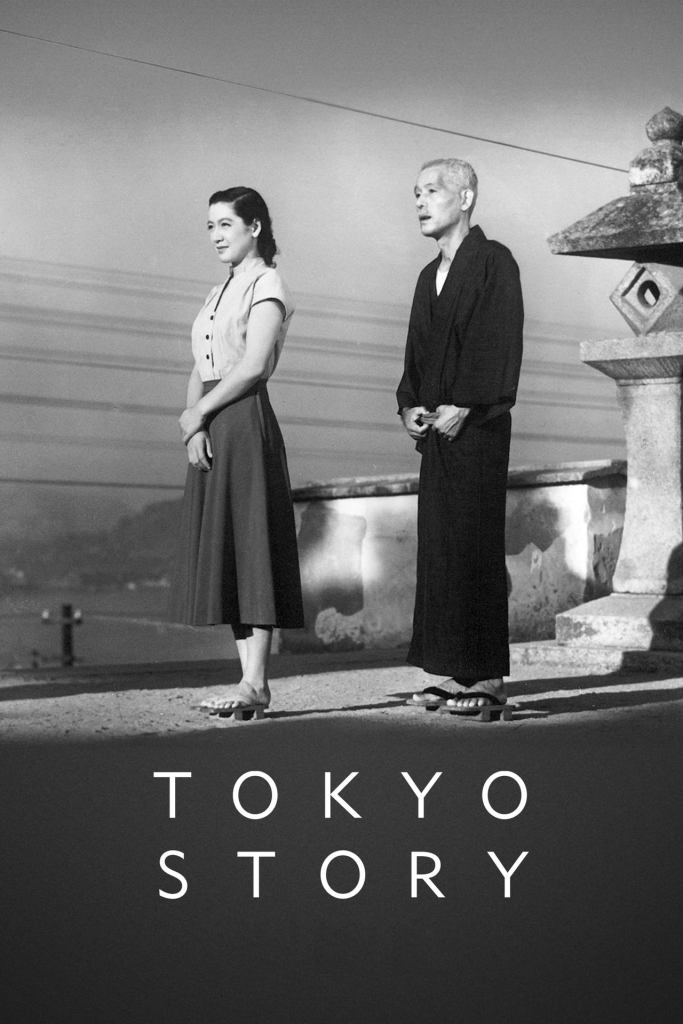
Tokyo Story is often considered one of the finest films ever made. It follows the Hirayama family and shows what can happen to the traditionally tight family unit as Japan continued down the path of western modernization. Shukichi and his wife Tomi are in their 60s and live in a rural community with their youngest daughter Kyoko, who is a school teacher. Their two eldest children, Koichi and Shige, live with their spouses in Tokyo, a day’s journey away. A fourth child died in the war, and his widow, Noriko, also lives in Tokyo and keeps in touch. It has been some years since Shukichi and Tomi saw their adult kids, so they make the trek to visit, perhaps for the last time as they are getting up there in years. They envisioned a warm welcome with kids (and grandkids) happy to see them and spend the week or more together, but their kids have busy lives of their own, and the grandkids are shy, as they don’t know their grandparents. Koichi and Shige keep trying to pass the parents off to someone else to “take care of;” only daughter-in-law Noriko takes time off work to go sight-seeing with the elder couple. When all the travel takes its toll on Tomi, her children can barely make time to see her in her final days. It’s a sad film to be sure. You want to dislike the two eldest children for being selfish, but Noriko tells her parents (and the viewer) that this is just the way things are these days, and to forgive them their lives. In typical Ozu leisurely fashion, the film plays out slowly with great import given to every exchange. Very touching movie. ★★★★
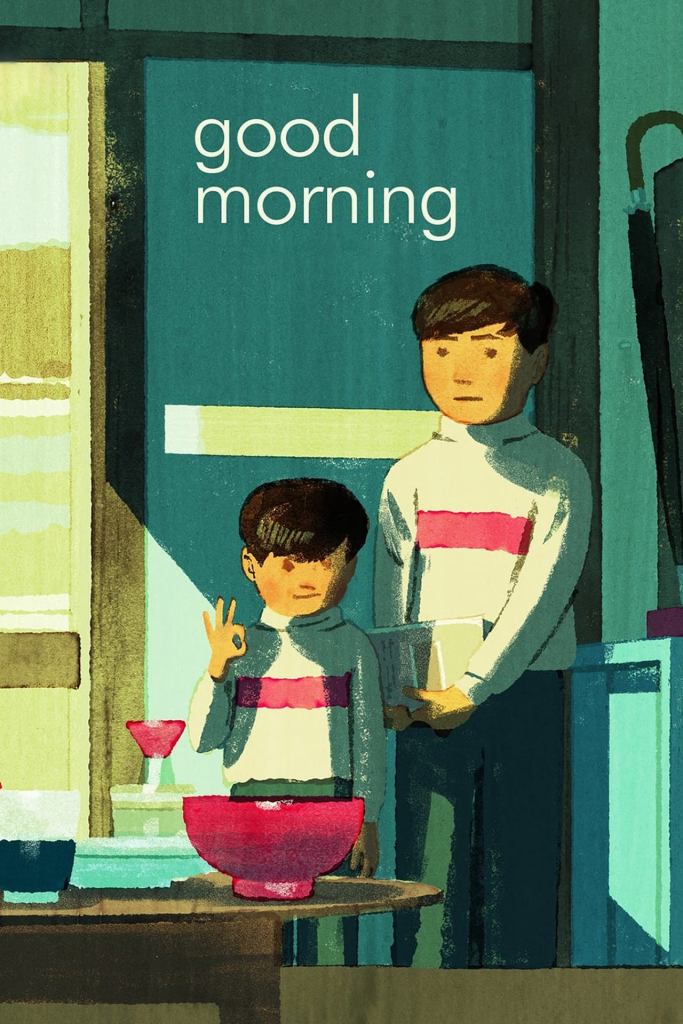
Good Morning, released in 1959, is a loose remake of Ozu’s 1932 silent film I Was Born, But… I really liked that movie, but this one didn’t connect with me as much. It’s a pretty loose remake; the two brothers are still present, but the film focuses a lot more on the antics of their parents and neighbors. A comedy (much different than the dramas Ozu is more well-known for), there are lots of funny moments, especially revolving around the rumor mill as the chatty mothers in the neighborhood gossip about each other. The main story about the boys is their temper tantrums in order to get their parents to buy them a television. They go so far as to go on a hunger strike and refuse to talk to adults until they get their way. For a director who is known for sometimes being a bit staid and serious, it was funny to see his characters engage in continuous fart jokes throughout the film. Outside of that though, the overall presentation just didn’t do much for me. I missed the heart of I Was Born, But… and the kids, while amusing, often come off as just spoiled brats. ★★
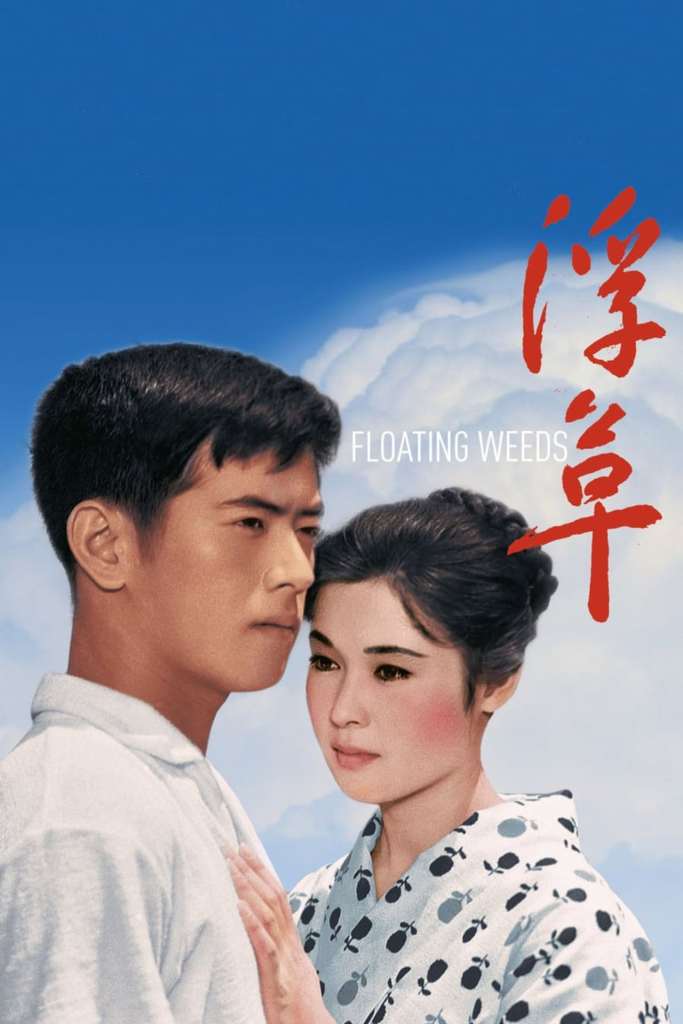
Floating Weeds is another remake, this time of A Story of Floating Weeds, and this one is a fairly faithful remake. Traveling theater troupe owner Komajuro has brought his group to a tiny seaside town, one that doesn’t seem large enough to give his troupe a good long run of performances, but Komajuro has a reason for coming here: to visit his son, who he hasn’t seen in 12 years. Many years ago Komajuro had an affair with a local girl, Oyoshi, and they had a boy, Kiyoshi. Komajuro didn’t want his son to know that his father was an itinerant actor, so Kiyoshi thinks Komajuro is his uncle, and that his “father” is dead. When Komajuro’s current girlfriend, fellow actor Sumiko, learns of this, she is chased off by Komajuro, who warns her to stay away as his son, a hard working young man with a bright future, is too good for any of them. To prove Komajuro wrong, Sumiko hires a young beauty in the troupe, Kayo, to seduce Kiyoshi. She does not plan on the young couple actually falling in love with each other. At times, a very funny film, but also with Ozu’s trademark heart, love, and loss, and all of it very well acted. ★★★
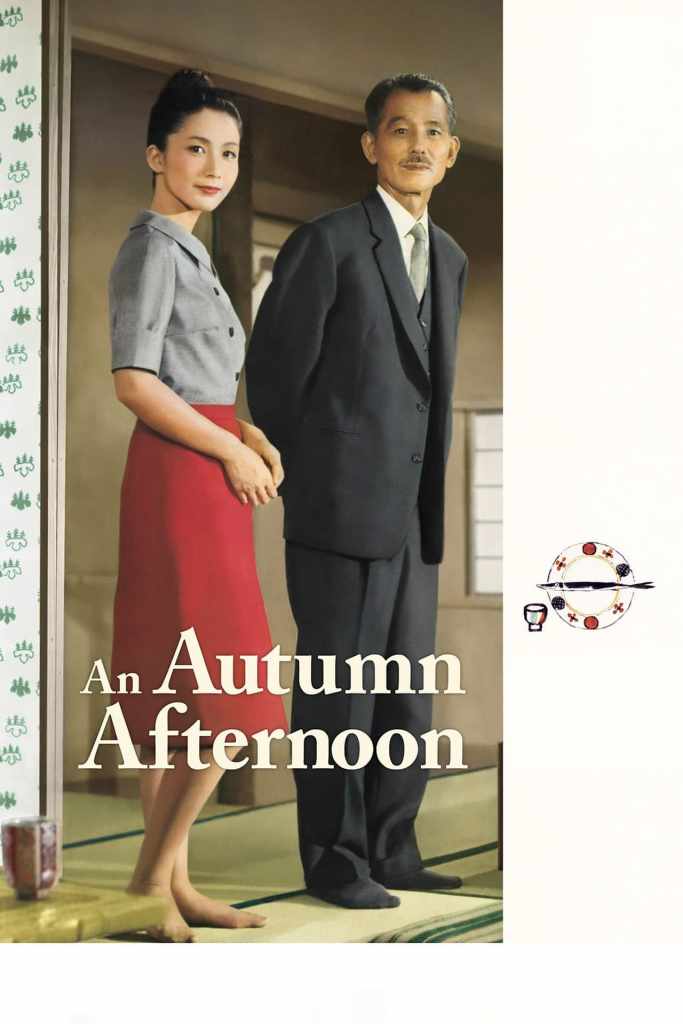
An Autumn Afternoon ended up being Ozu’s final film, released in 1962 (Ozu died a year later of throat cancer at the age of 60). He probably didn’t mean for it to be his last, but since it is, I couldn’t help but feel a sense of sadness that added to the emotional heft of the movie. Hirayama is an aging man with 3 adult children. His eldest boy, Koichi, is married, but his daughter, Michiko, and younger son, Kazuo, still live at home. Michiko is 24 and, in traditional Japanese culture, should be looking for a husband, but neither she nor Hirayama seems to be in a hurry, despite urgings by Hirayama’s friends. His drinking buddies include coworkers, former war friends, and one man who is teased relentlessly for having a new, young wife the same age as their kids. It isn’t until Hirayama hangs out with an old teacher, and sees that the teacher’s daughter never married and is still living at home as a middle-aged woman, that he decides he needs to finally see his daughter married. Though Tokyo Story often gets lauded as Ozu’s masterpiece, and it is great, I thought this film was even better. The final scenes, of Hirayama sitting alone at a table at home, juxtaposed with views around the house that feels very empty without Michiko in it, are beautifully delivered. It’s a lovely farewell to one of film’s best. ★★★★★
- TV series currently watching: The Stand (2020 miniseries)
- Book currently reading: Before the Fall by Noah Hawley

 Jons Movie Takes
2 thoughts on “Quick takes on Tokyo Story and other Ozu films”