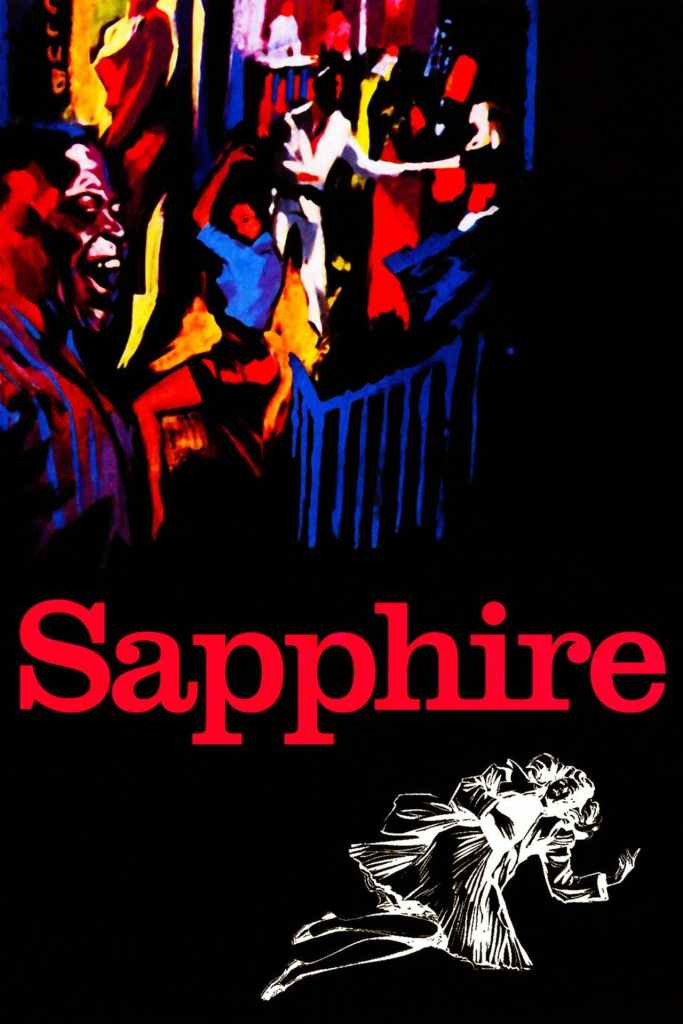
To be honest, I’d never heard of British director Basil Dearden until stumbling upon these films. I’m glad I did, as they are great, story-driven films, and I’m a sucker for a good story. First up is 1959’s Sapphire. Sapphire is a beautiful 20-something white woman who is found murdered in a London park, and police are quick to look for the killer. Her boyfriend/fiancé David is an obvious suspect, as Sapphire just found out that she was pregnant, which would put the brakes on David’s career goals. But the suspect field grows larger when Sapphire’s brother, Dr Robbins, comes to town, because he is black, and he says that so was Sapphire. Both are biracial, she just came out with skin light enough to pass as white. As the police dig deeper, they find that Sapphire used to hang out in black clubs, but stopped suddenly one day when she was mistaken for a white woman, as she saw a way to quickly climb the social ladder. There are whisperings that David’s parents are very racist, as was common in the 50’s, so could that be the motive? Who knew what, and when? The movie keeps the viewer guessing, even as the police continue their investigation. It’s a fun police procedural drama, with obvious racial implications that sadly still hold true to today in many parts of our country. ★★★★
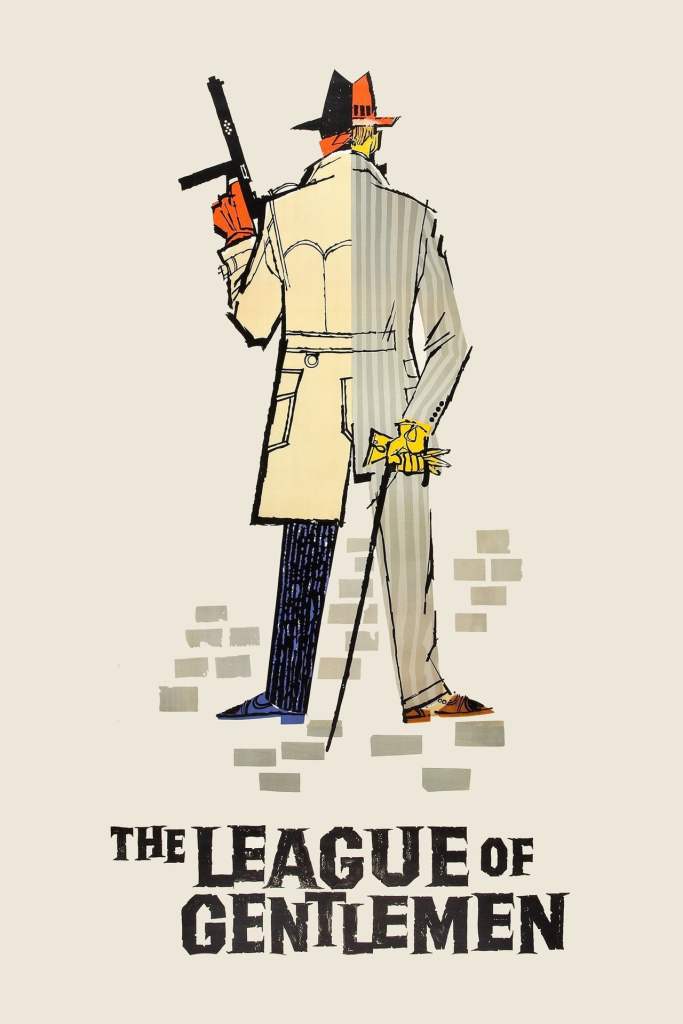
The League of Gentlemen followed the next year, and is a more light hearted affair. Former military man Norman Hyde recruits a team of ex-military officers for a daring bank heist. Every one of his recruits is a crook in one way or another, but Hyde himself always played by the rules. Being a good soldier got him nothing in the end, as one day he was told he was redundant and kicked to the curb. Now he’s done playing by the book and wants what he thinks he deserves. First they need gear, so they put their military expertise to use and steal weapons and other needed items from a local military base. With everything in hand, they go after the bank. It’s not the best bank robbery movie around (Oceans 11 or Le cercle rouge come to mind), but it is entertaining and surprisingly funny at times, with a fantastic cast of who’s who from that era of British film. ★★★½
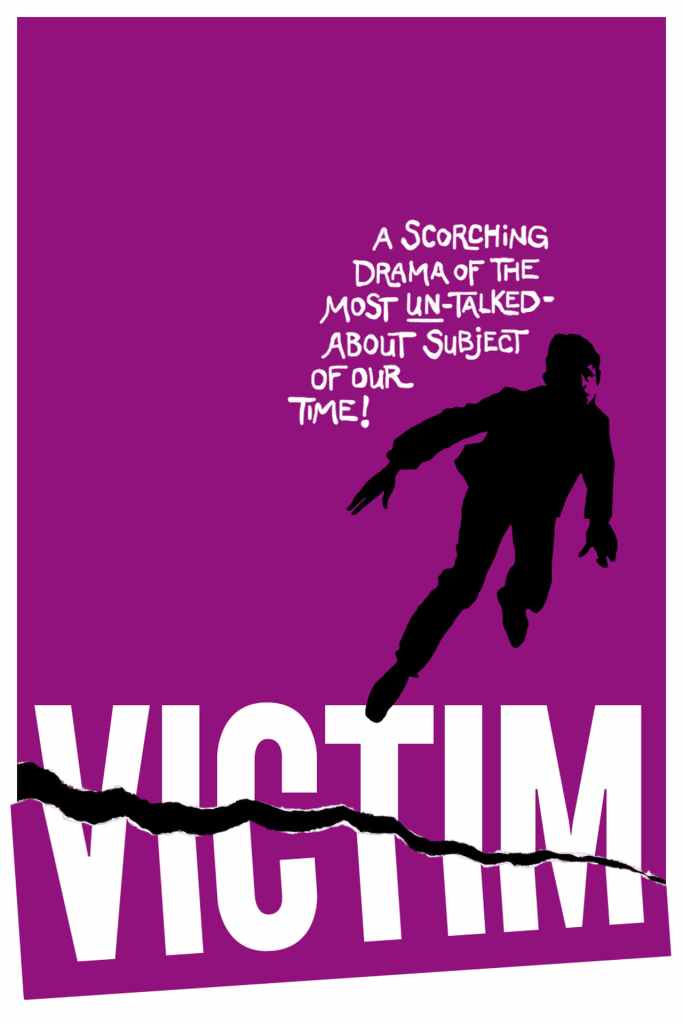
Victim is the one film in this set that let me down, I think mostly because it dealt with a very touchy subject for 1961 (even more so than Sapphire). In fact, I didn’t even know what it was about for 30 minutes. It starts with a man, Jack Barrett, who is on the run from the police. He tries to get help from friends to get out of dodge, most notably from an up-and-coming lawyer, Melville Farr, but isn’t able to get away clean before he is arrested. Tragically, he hangs himself in his cell. Why was Jack running, and what was he afraid of? We (finally) learn that Jack was gay. Not only was this illegal in Britain at the time, but it was obviously frowned upon by the public at large. Jack was being blackmailed by someone who knew he was gay, who had incriminating photos of he and Melville Farr. Farr, who has yet to receive a blackmail letter, starts going around to other gay men in his circle, to see if he can find out who the blackmailer is, before Farr himself gets into his sights. Farr has a lot to lose, as a public trial would obviously end his career. The story isn’t bad, but the film spends too much time tip-toeing around the men and their “urges,” probably in an attempt to skirt the censors. It comes at the detriment of the film. ★½

All Night Long righted the ship. Based on Shakespeare’s Othello, it takes that classic tale and transplants it to a modern setting. Rex is a musician, married to a celebrated singer named Delia. A friend of their’s, jazz promoter Rod Hamilton, is throwing a party in their honor. A lot of musicians and friends show up, and the film takes place over that one night. Drummer Johnny Cousin, who wants to start his own band, wants to get Delia out of retirement and use her name to draw a crowd, but soon sees that she has no desire to go on the road again without Rex, who is happily living the retired and newly-married life. Thus, Johnny decides to do his best this night to break up the couple. As the evening plays out, Johnny whispers to one guest, tapes (and edits) another, until he has enough “evidence” to get Rex to turn on his wife, thinking that she is having an affair with saxophonist, and longtime family friend, Cass. If you know the Othelllo story, you know how this one (mostly) plays out, though it does have a different, happier ending. Good acting, an engaging story, and a tremendous soundtrack, provided by some great musicians of the era, including Charles Mingus and Dave Brubeck, who play themselves at the party. ★★★½
- TV series currently watching: Star Wars Resistance (season 2)
- Book currently reading: Heretics of Dune by Frank Herbert

 Jons Movie Takes