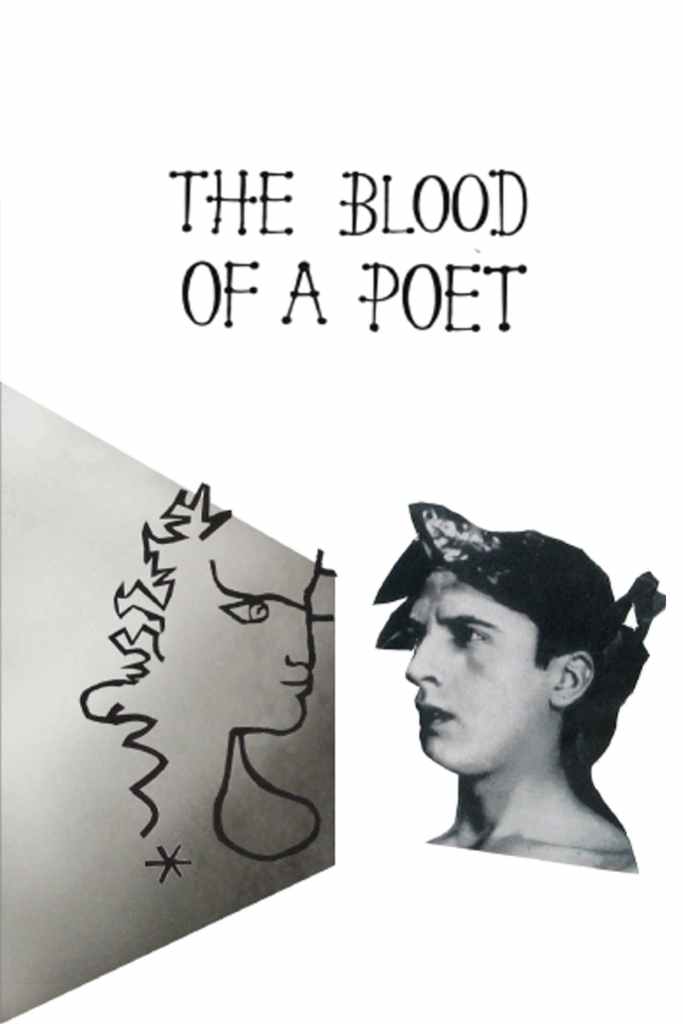
Jean Cocteau was an eclectic and prolific artist. According to his wiki page, “poet, playwright, novelist, designer, filmmaker, visual artist, and critic.” He didn’t make a lot of movies, but today I’ll be looking at 5 of them, including his so-called “Orphic Trilogy.” The first of these was The Blood of a Poet (French Le sang d’un poète), released in 1930. An avant-garde and visual art film, it follows an artist as he sees the lines blur between reality and his art. It begins when our unnamed artist is looking at a painting he is working on, that of a face, and the lips start moving. The artist wipes the lips off the canvas, but they are then moved from the page to his palm, and they continue to speak. When he is finally able to get them off of him, by putting them on a sculpture, the statue comes to life, and urges the artist to look deeply into the mirror in his room. When he does, the artist falls through the mirror to the other side. Here, he sees a hallway of doors, and he peers through the keyholes of each to see fantastic images and scenes. Now, normally, this is not my kind of movie. I prefer a more concrete story and am not one for experimental film (not a fan of Brakhage nor Frampton), but this movie had me, hook line and sinker. Perhaps partly because of how much Cocteau was able to do with what he was working with. Here’s a film from 1930, at a time when they barely had advanced to the sound movie era, and he is doing visual things that left me entranced. Walking through mirrors, watching people “fall” up the walls to crawl around on the ceiling, statues coming to life, etc. Just unbelievable for the era. I was spellbound, and left wanting more. ★★★★½
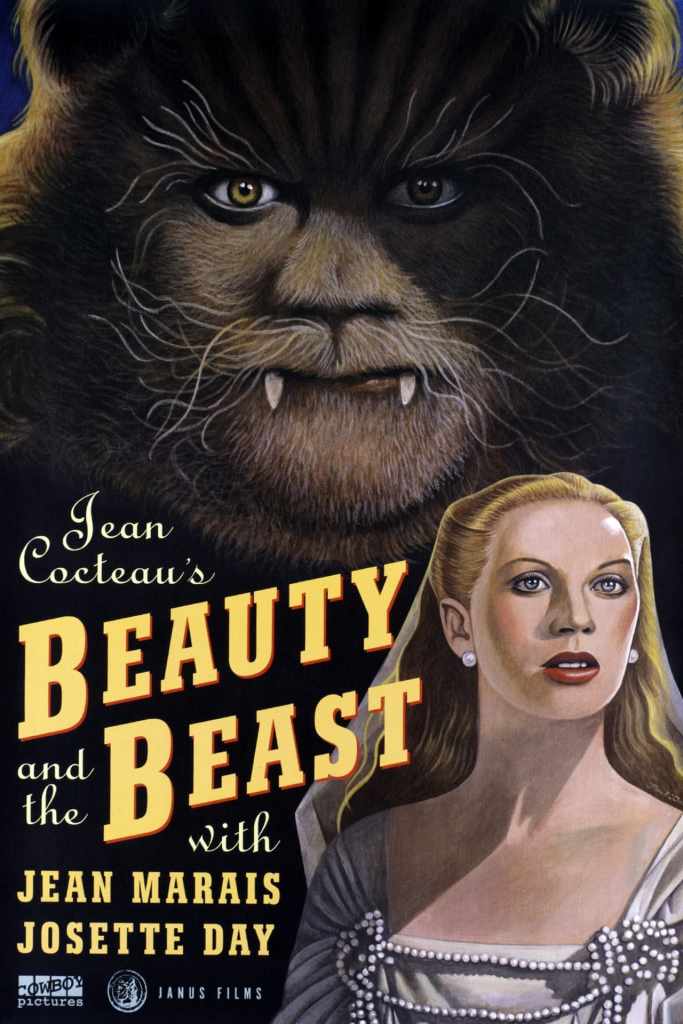
It would be 16 years until Cocteau made another film, 1946’s La Belle et la Bête (Beauty and the Beast), based on the classic French story. These days we all know the tale from the 90s Disney cartoon (or, if you are younger, maybe the film remake). I believe Cocteau’s film may be the first film adaptation, and he pours all of his magic into it. I won’t rehash the story because you probably know it, but some things I found worthy of note. Apparently the original book had no “Gaston” part; the main villain was an evil aunt of Belle’s. Disney’s Gaston is based on Cocteau’s Avenant, a part he created to give the movie a more defined bad guy to root against. Like in the above film, Cocteau uses all of his imagination and the special effects available to him in the day to create a castle full of magic. Doors open and close on their own, pieces of furniture whisper to Belle, there’s a magic mirror that will show her what she wants to see, and candelabras are held by human arms extending from the walls, which sway and point the way for guests. If there had never been a Disney cartoon, I probably would have enjoyed this one more, but I was a pre-teen in 1991 when the cartoon came out, and that one will always hold more magic for me. Still, this is a very well done film with more characters and, sometimes, a greater sense of both wonder and peril. ★★★
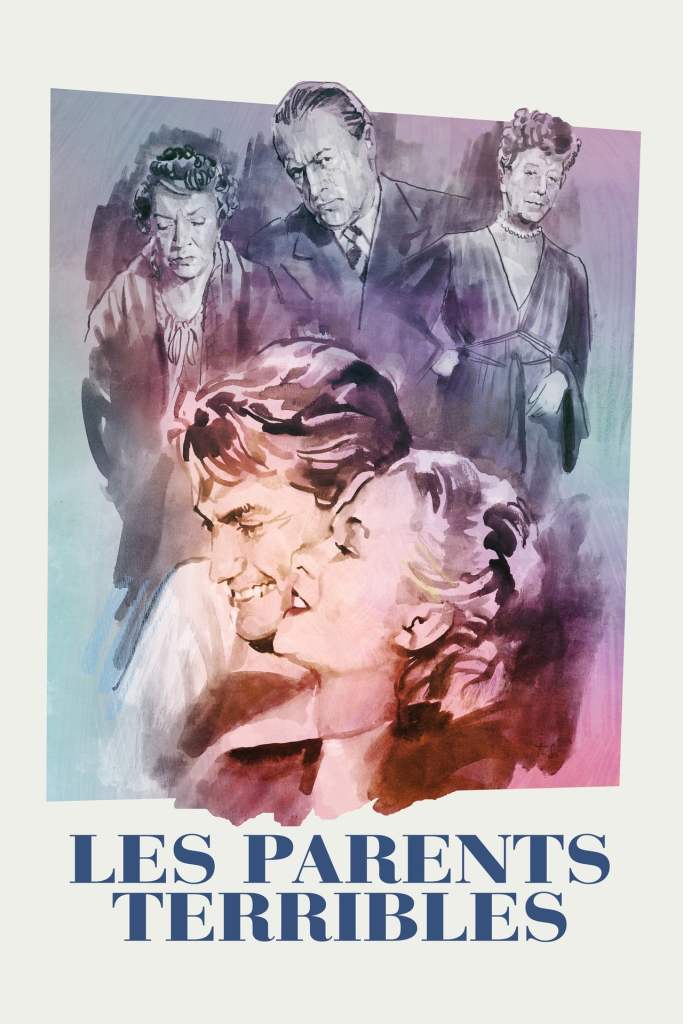
The Terrible Parents (French Les Parents terribles, also known as The Storm Within, its English title) was the first crash and burn Cocteau film for my tastes. Based on a play he had previously written, and staring the same cast as his 1946 stage production in Paris (including Jean Marais and Josette Day, Beast and Belle, respectively, from the above film), this movie has a fantastic idea for a story, but I’m afraid it is probably better as a play than a movie. Michele is a young 20-something man ready to leave the nest and have his own life, but it is hard for him to escape his overbearing mother Yvonne, and to be honest, he has too friendly a relationship with her. Also in the household is Michele’s father Georges and his “aunt” Léo, who once loved Georges, but he picked Yvonne over her. Unable to have his love, she opted to keep his company, and it’s been this odd trio in the house Michele grew up in. After Michele was born, Yvonne threw all of her attention at him and ignored Georges; Léo predicts that Georges has found love elsewhere by now. Into this setting, Michele has found a love of his own, the beautiful Madeleine. But first, Madeleine must dump her current boyfriend, a sugar daddy who has been pampering her for some time. You guessed it, her older boyfriend is Michele’s father Georges. As Léo quips, this is either going to be a comedy or a masterpiece. Well, it’s light on the former, and definitely not the latter. Maybe this played better in 1948, but there’s nothing scandalous about having an older man or multiple boyfriends now, and the dialogue doesn’t hold up with some of the other classics from the era. I spent much of the movie bored. ★½
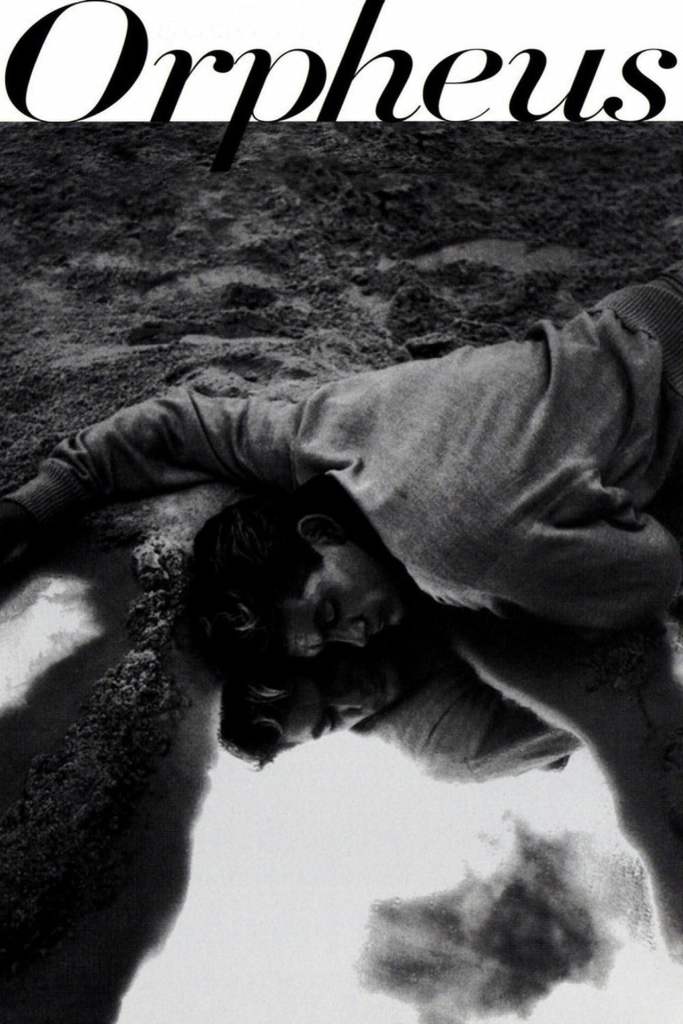
Cocteau righted the ship with 1950’s Orpheus, based on the classic Greek story. After a brief narration about the original myth of Orpheus and Eurydice (which is good, because I am not a Greek legends kind of guy), we get into the story. Set in modern day Paris, Orpheus is a famous poet. He’s having lunch at a cafe when a younger, brash poet, Cégeste, comes up and starts a drunken fight with some people. Police arrive to break it up, and Cégeste is struck by a motorist while trying to run. He is ushered into the posh car of the lady who came to the cafe with him, a mysterious woman known only as the Princess. The Princess asks Orpheus to ride along with her and Cégeste. Orpheus is confused though when they don’t go to a hospital, and instead to a large estate where the Princess is waited on. It is then that Orpheus sees that Cégeste isn’t hurt; Cégeste is dead. Now we get into the fantastical, and the movie really gets going. The Princess is actually Death, and she “raises” Cégeste to be a new servant of hers. The next day, Orpheus is returned to his wife, Eurydice, and accompanied by Death’s “chauffeur,” Heurtebise. Heurtebise, already himself deceased and beholden to Death, falls in love with Eurydice, even while Death has set her sights on Orpheus. Wonderful film, completely engaging from opening scenes to closing credits, and full of the dreamlike state that made The Blood of a Poet so engrossing, while also adding a deeply rich plot. Outstanding movie. ★★★★★
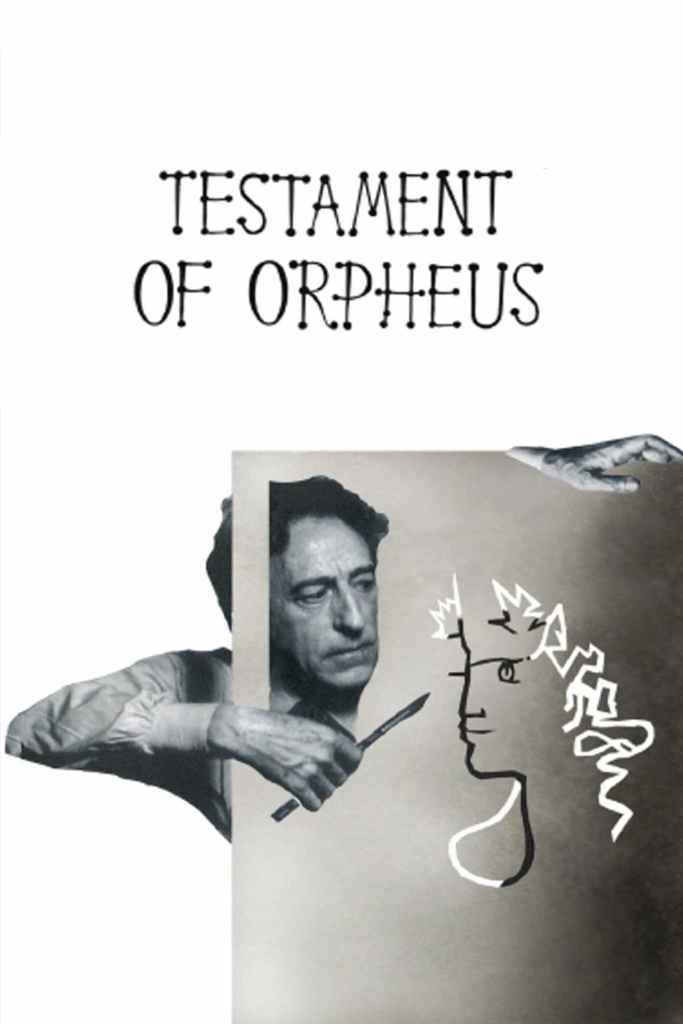
Nearly a decade later, Cocteau made his last film, Testament of Orpheus. A quasi-sequel to Orpheus and a sendoff for himself, it follows a fictional version of himself (Cocteau) as he travels through time and visits actors and moments from the film. He answers questions about the life of a poet and artist, and basically shows off how brilliant his is for 80 minutes, culminating in his becoming a god-like figure in the end. The whole thing comes off as extremely pretentious. For my tastes, there wasn’t much to like. Cocteau again puts together some film editing tricks, relying heavily on recorded film shown in reverse (people falling “up” out of water), but by now, we’ve seen all his tricks, and what amazed in the 30’s and 40’s didn’t seem so slick by 1960. I have to hope that the film was done sort of tongue-in-cheek, otherwise Cocteau may have been one of the most egotistical people to have ever lived. ★
- TV series currently watching: Sherlock (series 1-2)
- Book currently reading: Dragons of the Highlord Skies by Weis & Hickman

 Jons Movie Takes