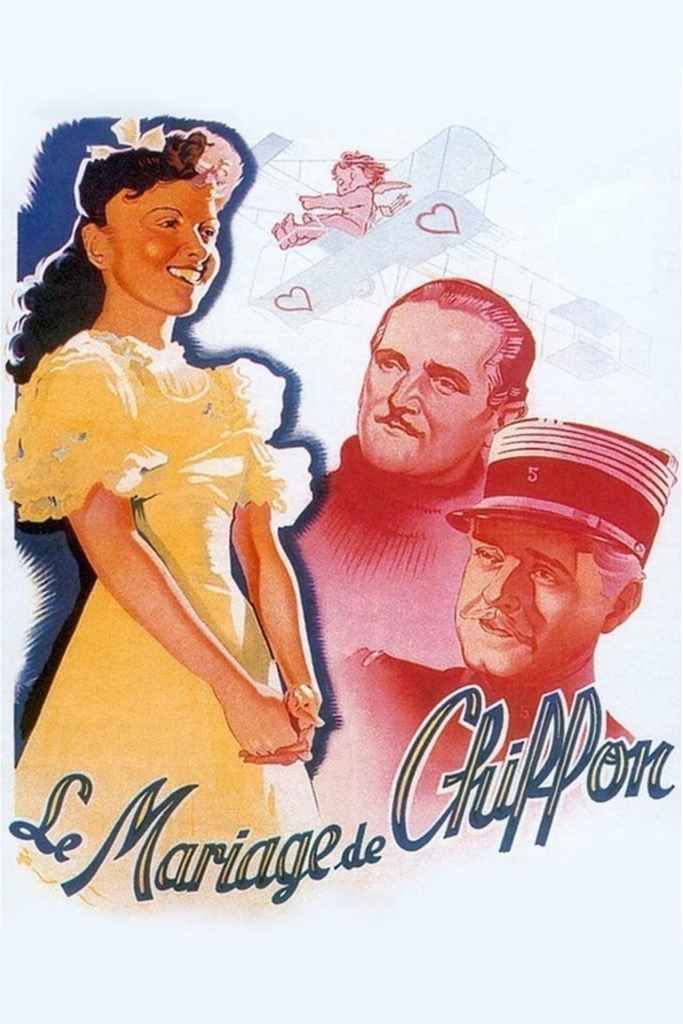
Claude Autant-Lara was a French director who had his share of controversies later in life, but he made quite a few good films earlier on. Today I’ll be looking at four of his films made during World War II, 3 of which were made during German occupation. The first, Le Mariage de Chiffon, came out in 1942. It’s a fairly straight forward love story revolving around Chiffon, a pretty 16-year-old who is rebelling against her aristocratic mother. Dear old mommy is very strict, but Chiffon finds friends with her step-dad, Philippe, and his brother Marc, Chiffon’s uncle (by marriage). Marc once had money, but has blown it all in his dream to become one of the first to achieve human flight. Chiffon has always had a girlhood crush on her uncle Marc, but it isn’t until she has attracted the attention of a new military colonel stationed to the area that she becomes aware of her feelings. The colonel, a Duke, is an old friend of Marc’s, and Chiffon has definitely caught his eye, and of course Chiffon’s mother would rather she marry the rich Duke, but Chiffon has always done what she wants. If you can look past the (very) dated story that a pushing-50 year old man can court a 16-year-old, it’s not a bad little story. Humor is perhaps a bit dated as well, but it is charming at times. ★★

Lettres d’amour (Love Letters) came out later the same year, and, for my tastes, had a better, more intriguing plot. Taking the same lead actress (Odette Joyeux), it is about a woman who is trying to help her friend keep up an unnoticed affair. Zélie is a recent widow helping out her aristocratic friend, Hortense, carry out said affair by having the guy’s love letters delivered to her (Zélie) and then passing them along to Hortense. Zêlie has never met the lover, but does love his words. But it seems to Hortense, it was just a dalliance, and she breaks it off with the man. The man turns out to be François, who is newly sent to their town as a judge. When one of the love letters is unearthed by the townsfolk, addressed to Zélie (though thankfully written under François’s nickname, keeping his identity a secret), the people turn on her as a harlot without honor. She keeps up the charade for her friend’s protection, and, feeling sorry for her, François starts hanging out with Zélie. They grow to have feelings for each other, even as she still doesn’t know that François was once Hortense’s lover. It sounds a lot more convoluted than it is. Autant-Lara had to play within the censors allowed him to disguise some political undertones (the working class vs the aristocrats in the film), but there’s a good story here and, again, a fun love story, as well as an early film about a woman unafraid to face the herds or defend her lifestyle when, after all, it is her life to live. ★★★
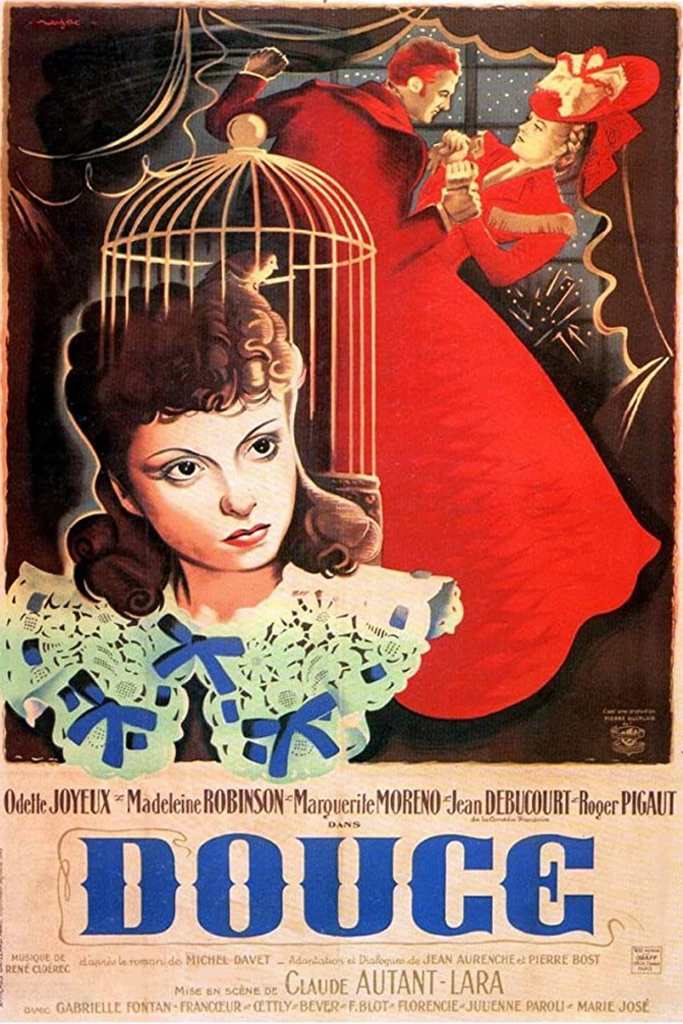
Douce (Love Story) is a cute little film with a simple premise. The eponymous Douce de Bonafé (Joyeux again) is a spoiled rich girl with a crush on her family’s steward, Fabien. Fabien however has had a long, secret affair with Douce’s governess, Irène. Irene and Fabien were once poor but connived their way together into the de Bonafé family, and now Fabien wants out. He is prepared to steal a large sum of money and run away to Canada with Irène. Now that their time is here though, Irène is having second thoughts; she’s really grown to like the family for the kindness they’ve shown her. Also, the family’s patriarch and longtime widower, Monsieur de Bonafé, has professed his love for Irène and wants to marry her. When Douce does get her way with Fabien, the result obviously isn’t the dream she had envisioned. The ending was a bit heavy-handed for my tastes, extolling the consequences of going against your family, while also painting poor people in a bad light for no other reason than being poor, but the story in the middle is engaging. ★★★½
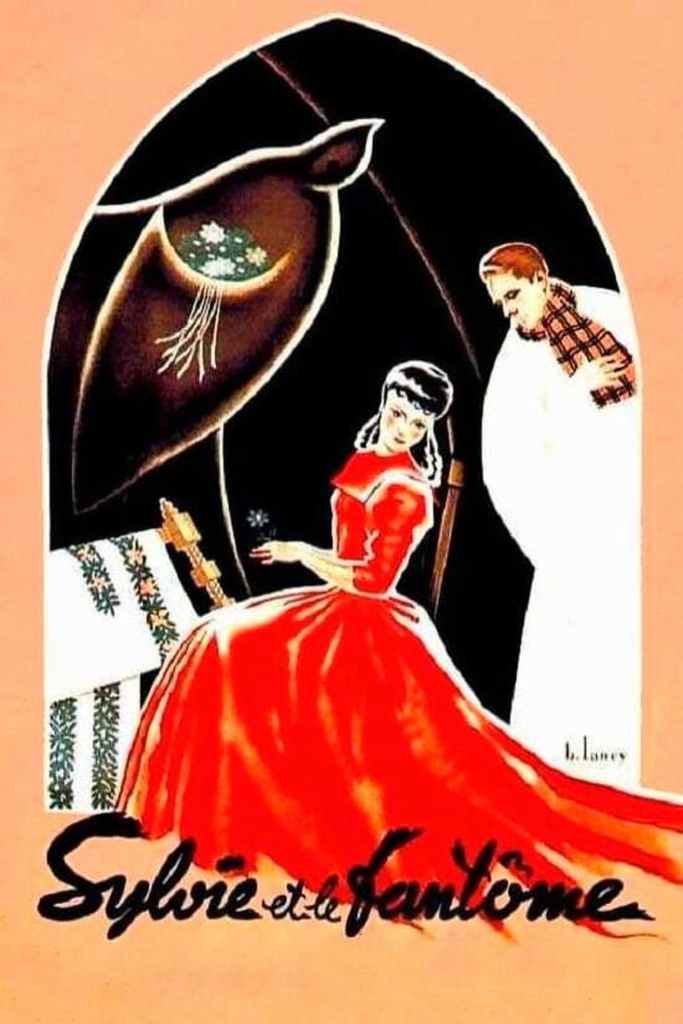
Sylvie et le fantôme (Sylvie and the Ghost) brings in Joyeux (one more time!) as Sylvie, a (once-again) 16-year-old (though the actress was in her mid-30s by now) who is in love with the idea of her grandmother’s first love, “the one who got away.” Alain was a hunter who lived and loved around the castle Sylvie and her family live in, and she talks to a large painting of him, which conceals the secret passage the living Alain would use to enter in to meet his love. Sylvie loves the old love stories about the couple and makes jokes that she feels Alain’s presence. To give her a bit of joy, Sylvie’s father hires a couple actors to dress up as ghosts at her birthday party. Except the real ghost, Alain, decides to make an appearance too! When he stepped out of the painting, I thought he looked awfully familiar; sure enough, this movie was Jacques Tati’s first acting role. He would start making his own movies just a year later, but in this first picture, he puts his mime background to good use as the silent specter. There’s some cute moments, but much of the humor is very dated and the film moved at a snail’s pace for much of its length. ★★
- TV series currently watching: Moon Knight (miniseries)
- Book currently reading: Dragons of the Highlord Skies by Weis & Hickman

 Jons Movie Takes