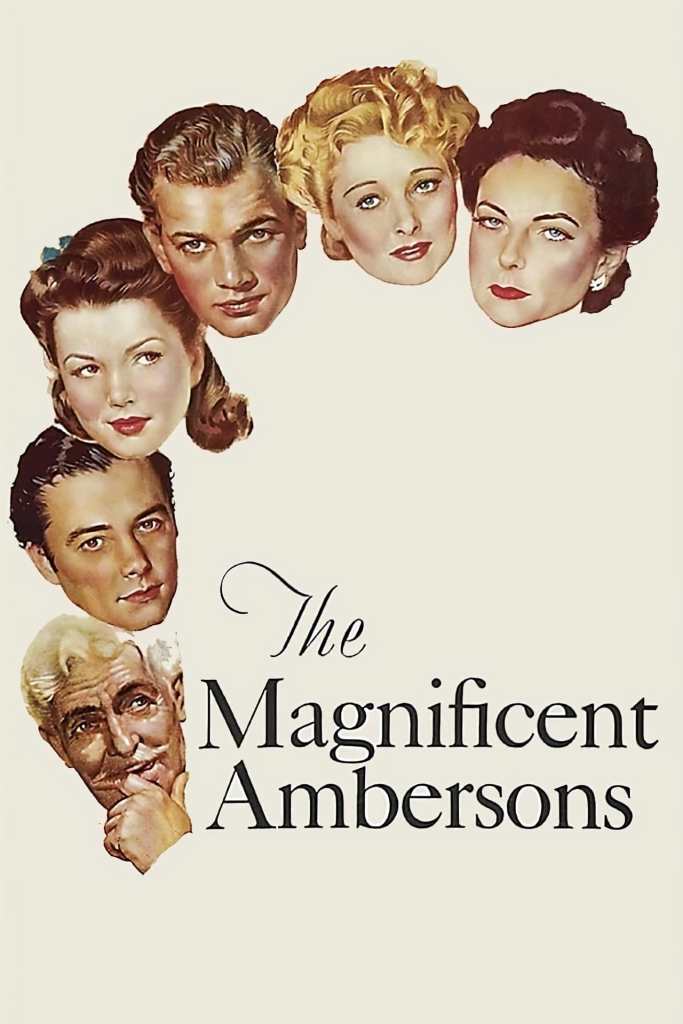
Everyone associates Orson Welles with Citizen Kane. It was his first film as director and it cemented his reputation as a master of the craft at the young age of 26. But unless you are a cinephile, you probably aren’t as familiar with his followup picture, which also has a cult-like following. The Magnificent Ambersons was released just the year after Kane, in 1942. It tells the story of Amberson family and their decline from the wealthiest family in town to a footnote in history. Isabel Amberson is looking to get married, and while she is fond of a young inventor named Eugene Morgan, she rejects him when he muffs a serenade one night, and marries the staid Wilbur Minafer instead. The couple have one child, George, who is a rapscallion around town from an early age, leading the townsfolk to anticipate the day when he gets his comeuppance. He never does, at least until he is a young man. At that time, George falls for a beautiful young woman named Lucy Morgan. Yes, that Morgan. Eugene, now a widower, has returned to the city with his daughter after having made money as an early supporter and inventor of the automobile (a device that George scoffs at, thinking it beneath his station). The bristly George still hasn’t made any friends outside of his circle, but the times of “station” and “old money” are coming to an end, if only he could see the writing on the wall. Wonderful film, even in the 88 minute version that is shown today. As a person who regularly suffers from FOMO, I wish the original 131 minute version still existed, to see Welles’ original vision. That version was cut up immensely by the production company after initial previews didn’t go well, and the original footage destroyed. No one living knows what that original version was, thus leading to the mystery of the film. Even so, the version we have is right up there with the best. ★★★★★

Othello has another famous story behind its production. The film is obviously based on the Shakespeare play, and by now, you either know it or you don’t (I am not a Shakespeare buff, and did not know it, but I did like the movie). Not having read the play or seen an adaption before, I don’t know how accurate it is, but it is well done. I love the story behind the film too. Perhaps due to experiences he suffered in films like Ambersons, Welles wanted more complete control over his production. Othello was one of those that he made completely self-financed. Welles would film sections of the movie until he was tapped out, and then go act in a film or play to get paid, and come back to film some more. In this way, it took 3 years to complete Othello, and while the production levels are low on such a tight budget, Welles’ complete mastery of the camera hides this fact. There are scenes that look like they came from any big-budget Hollywood picture. This movie hasn’t changed my opinion: with few exceptions, I’m not a big Shakespeare fan, but this adaptation is very well done. ★★★

Mr Arkadin is a mystery, quasi-thriller about a mysterious millionaire, the eponymous Gregory Arkadin, who hires small-time smuggler and general ne’er-do-well Guy Van Stratten for a strange mission. Arkadin claims amnesia before 1927, with no recollection of how he showed up in Switzerland that year with $200k, money that he then used to build his fortune. Guy uses his connections and a nose for digging up dirt to get to the bottom of Arkadin’s mystery, but the trail leads to connections that Guy is completely unprepared for, and the biggest surprise is saved for the viewer. Once the movie gets going, it is really good, but Arkadin isn’t even introduced until 30+ minutes in, and it takes forever to build a plot. I understand they were laying the foundation for the first third of the film, getting the viewer to know who exactly Guy is and what makes him tick, but I was honestly bored until Guy’s investigation started ratcheting up. However, even in the beginning, there’s some incredible imagery, as you’d expect from the perfectionist Welles. The final 30 minutes is a solid 4+ star film, but I have to even it out from the slowish beginning. ★★★½
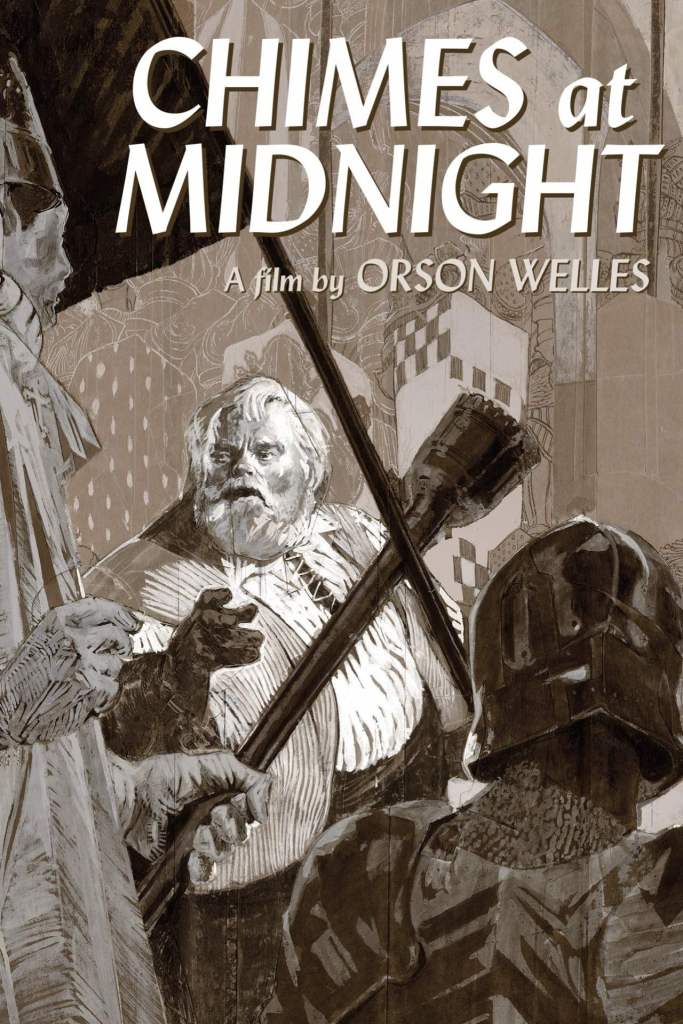
Chimes at Midnight is another take on Shakespeare, with Welles taking the role of John Falstaff, a character who Welles always said was his favorite. Culling material from a few Shakespearean works (mostly Henry IV Parts 1 and 2, and a bit from Henry V and Richard II), the movie follows Falstaff’s influence over and his shenanigans with King Henry IV’s son, Prince Hal. The comedic Falstaff loves to drink and womanize, which the young Hal of course is drawn to as well. While the king is dealing with an uprising from Henry Percy over the line of succession, Hal and Falstaff are off carousing. This leads to the king’s lamentation that he wished Percy and Hal could switch places, even though Percy at the moment is his enemy. It isn’t until the rebellion is put down and Hal pledges to his dying father that he will take the thrown and treat it with the respect it is due that Henry IV is able to find comfort. Unfortunately for Falstaff, the newly crowned Henry V keeps that vow and no longer has time to dilly dally with his old bud, brusquely telling him he is not welcome at court. This movie gets tons of attention and, as you can expect from Welles at this point, it is detailed and gorgeous to watch. But again, Shakespeare’s not my thing. I was unfortunately bored though stretches of the movie, but did stick around to see the heartfelt ending. ★★½
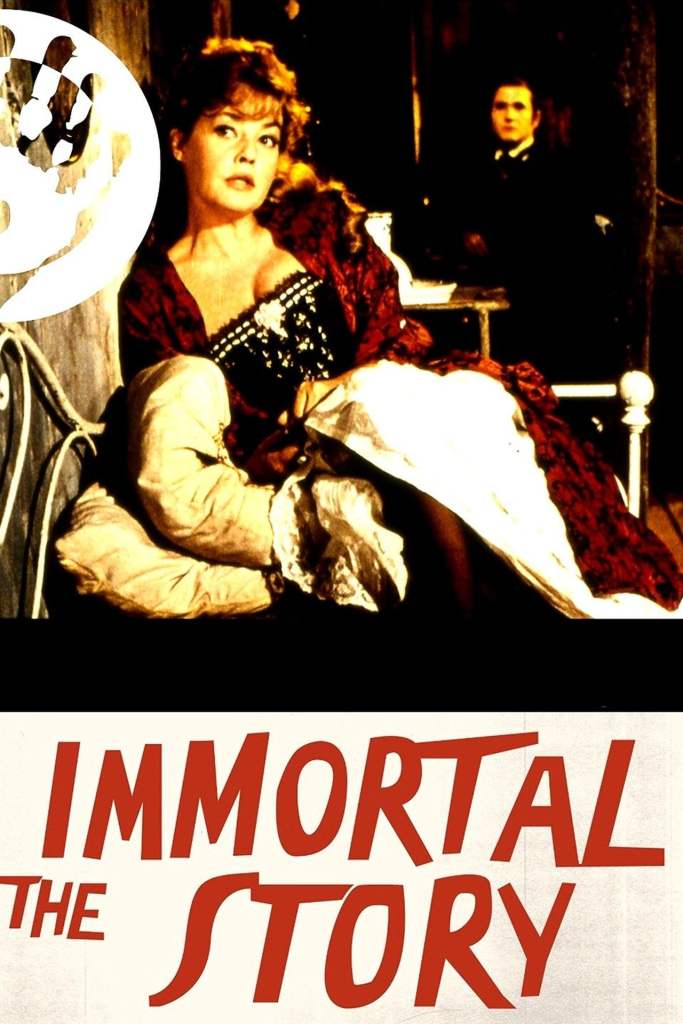
The Immortal Story is a tidy (just shy of 1 hour) film, and this one was more my jam. Based on a story by Karen Blixen and released in 1968, it was Welles’ first color film, as well as his final fictional film released in his lifetime. He plays Mr Clay, an old rich man living in a mansion in Macao. His only companion is his bookkeeper, Levinsky, who reads to Mr Clay at night. For something new, one night Mr Clay begins a story he once heard about an aging rich man who paid a young stud to impregnate his wife. Levinsky interrupts Mr Clay and finishes the story for him, giving him the news that the story is old and oft-told amongst sailors; it probably never happened. Mr Clay, who only believes in facts and figures, wants to make this story happen, and tasks Levinsky with finding a woman to “play” his wife, as well as a sailor to do the deed with the girl. Levinsky knows poor sailors are a dime a dozen, but finding a willing woman will be harder (and expensive). He has one in mind: Virginie, who is a poor clerk’s mistress on the island. As luck (good or ill?) would have it, Virginie is poor because her father was once Mr Clay’s partner, and was swindled by Clay out of his fortune. In fact, Mr Clay now lives in the mansion that Virginie grew up in. When they find their sailor, does the event play out as Mr Clay hoped? Fantastic, tidy little story, with the incomparable Jeanne Moreau portraying Virginie. The final act is a bit more ethereal than you might expect, but I loved it all. ★★★★
- TV series currently watching: Cobra Kai (season 4)
- Book currently reading: The Eye of the World by Robert Jordan

 Jons Movie Takes