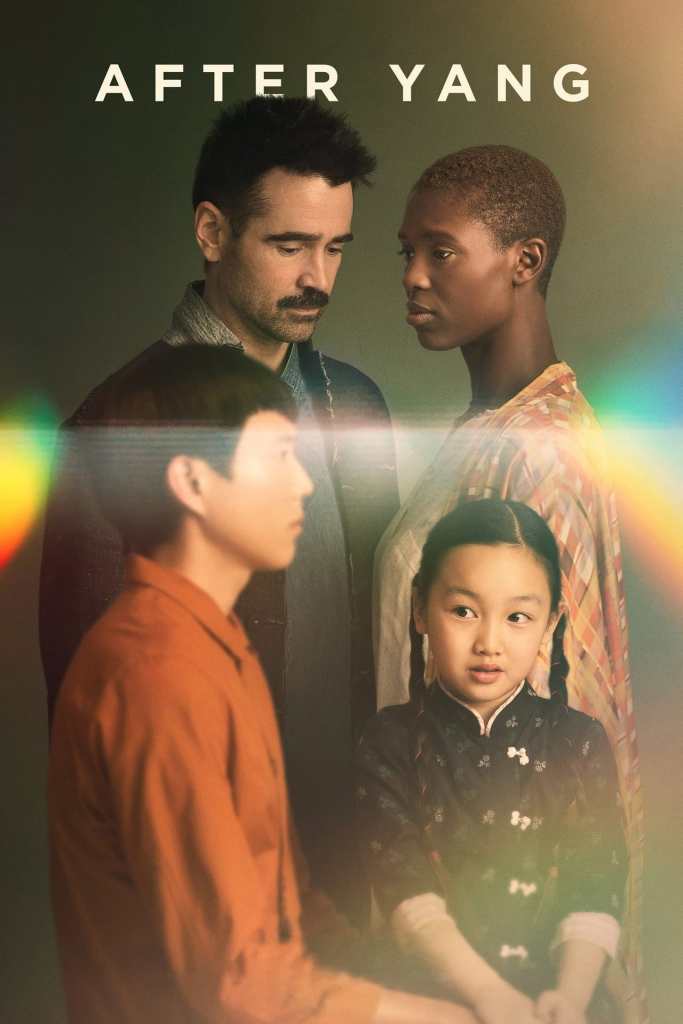
Some very good pictures in today’s lineup, so let’s get started! After Yang is the second film from director Kogonada (I really liked his debut, Columbus, a few years ago). Taking place at some undetermined point in the future, Jake (Colin Farrell) and his wife Kyra (Jodie Turner-Smith) are raising their adopted daughter Mika with the help of android Yang. Yang was purchased to help Mika, who is of Chinese descent, have a connection with her birth nation, as Yang looks Asian and is filled with facts about China. Early in the film though, Yang malfunctions and shuts off. Yang is everything to the household: servant, babysitter, and Mika’s best friend. She is devastated, and Jake, who’s a bit of an absent father due to work and who relies on Yang to watch his daughter, starts looking into getting him repaired. When Jake takes Yang to get him fixed, they access his memories and give a copy to Jake, who starts reviewing them. What he finds will wake Jake up to the world around him. The film examines questions of what is humanity, and do you need to be human to exhibit it. Yang’s memories remind Jake to slow down and look around once in awhile, to enjoy life. Very touching film, told in a beautiful, leisurely pace that allows the viewer to enjoy the path Jake is taking along with him. ★★★½
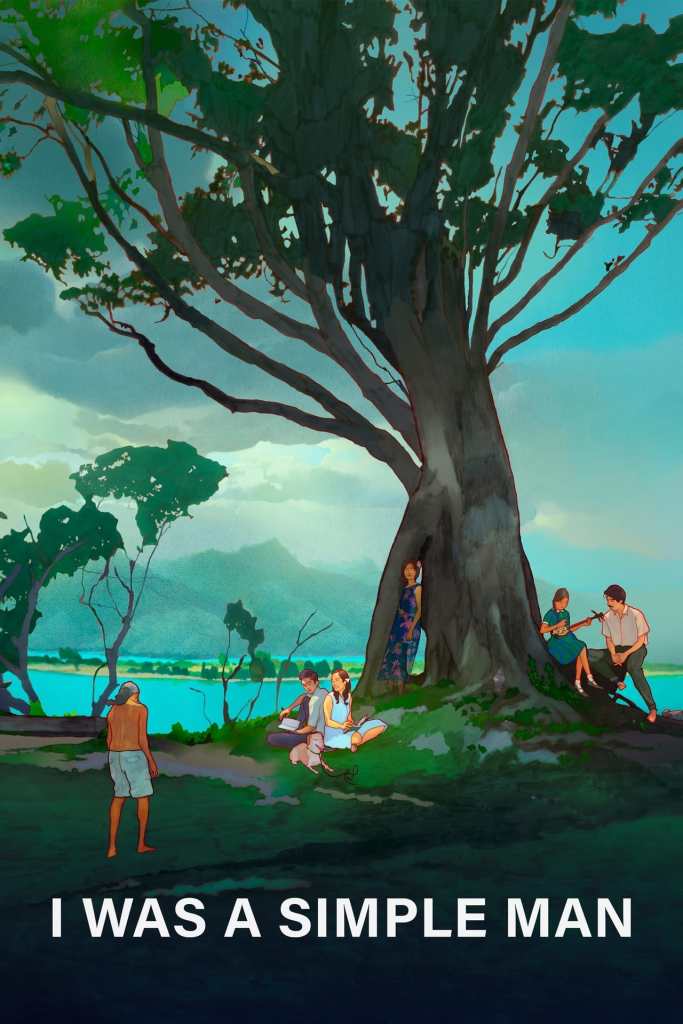
I Was a Simple Man is a quiet, understated film about a man who is anything but simple. Masao is an older man of Japanese descent, living in Hawaii with only a dog as his companion. His wife died many years ago, and he is estranged from two of his adult children: the eldest son lives on the mainland and is only a voice on the phone, and his daughter barely wants to speak to him. Masao’s younger son is around, but suffers from a mental illness that has kept him from holding down a job. Within this scenario, Masao is given the graven news from his doctor that he is dying, and he doesn’t have much time left. As the film progresses, we see what splintered Masao’s family, and the guilt he lives with because of it. As he grows closer to death, Masao begins to see the spirit of his long-dead wife, and converses with her about his regrets. This is a film which forces your attention, or you’ll miss a delicate word or sentence which can really add to the experience. A beautifully subtle picture that reminds you to make the most of the life you are given. ★★★★
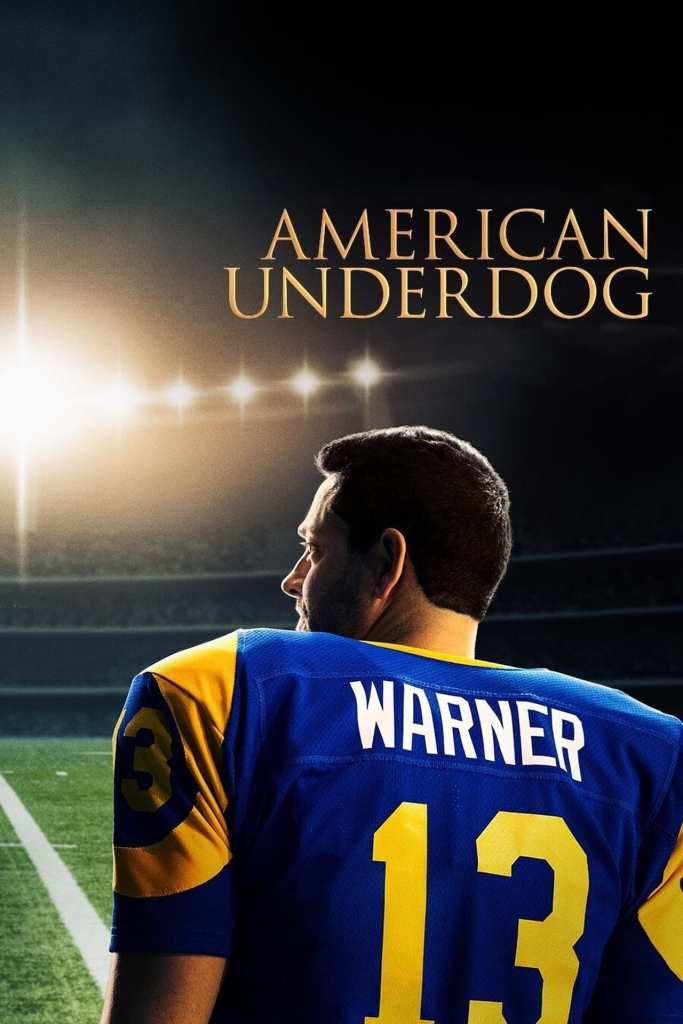
American Underdog is a pretty straight forward biopic about the life of NFL quarterback Kurt Warner. Growing up in St Louis and in college when Warner burst onto the scene in 1999, I’ve been wanting to see this movie since it came out, though I didn’t expect to learn anything new. I was right, but the movie is told well. It stars Zachary Levi as Warner and Anna Paquin as his wife Brenda (as well as Adam Baldwin, Bruce McGill, and Dennis Quaid (who would never miss an opportunity to be in an uplifting sports flick) as coaches along the way). After a short introduction to a young Warner who grows up loving football, we see Kurt play his way onto the field in college at Northern Iowa, an invitation to training camp with the Packers, but then his subsequent cut and slow climb back. Unless you just aren’t a football fan, you know the story of how he went from stocking shelves at the local grocery store to leading the St Louis Rams to a Super Bowl win in just 5 years. His meteoric rise is told very well and it is extremely touching. I’m an admitted crier at an emotional film, and even though I knew what was coming, I was a blubbering mess at the end of this movie. That’s not to say it’s a super great film or anything, but it does know how to pull at the heart strings. Nothing groundbreaking, but sports film fans will find plenty to life. ★★★½
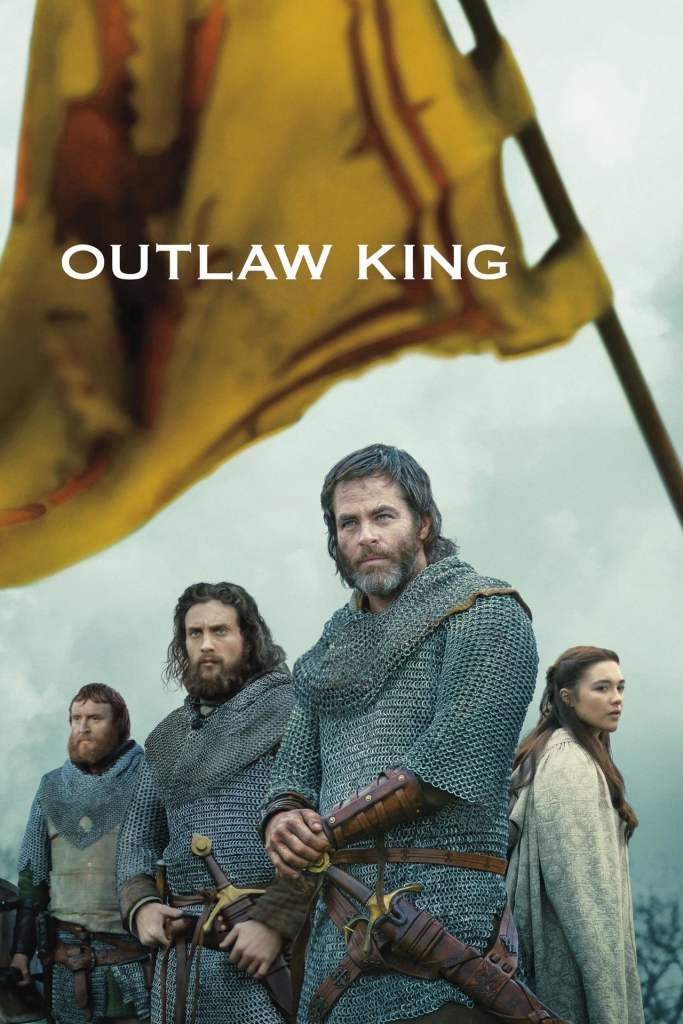
Not sure how I missed Outlaw King when it hit Netflix a couple years ago, but a buddy recently told me to check it out. I’m a big fan of the Mel Gibson Braveheart movie, and this one is told from the perspective of Robert the Bruce, the villain-turned-hero in that movie. In this one, the role is taken on by Chris Pine. Robert’s father has just sworn allegiance to the King of England, but Robert is torn by his love of Scotland and his wish to see the land ruled by its own. William Wallace has just suffered a big defeat and is in hiding, and when he is found and killed by the King’s men, Robert has finally had enough. With his father dead, Robert assumes leadership of the family and its people, and sets out to get enough followers to stand a chance against England’s armies. The film is decent enough; good action, and the bloody battles are exciting. You can’t help but compare it to Braveheart though, since many of the characters are shared across the two films, and while it doesn’t quite reach that film in emotional heft, it’s still a fine film on its own legs. ★★★½
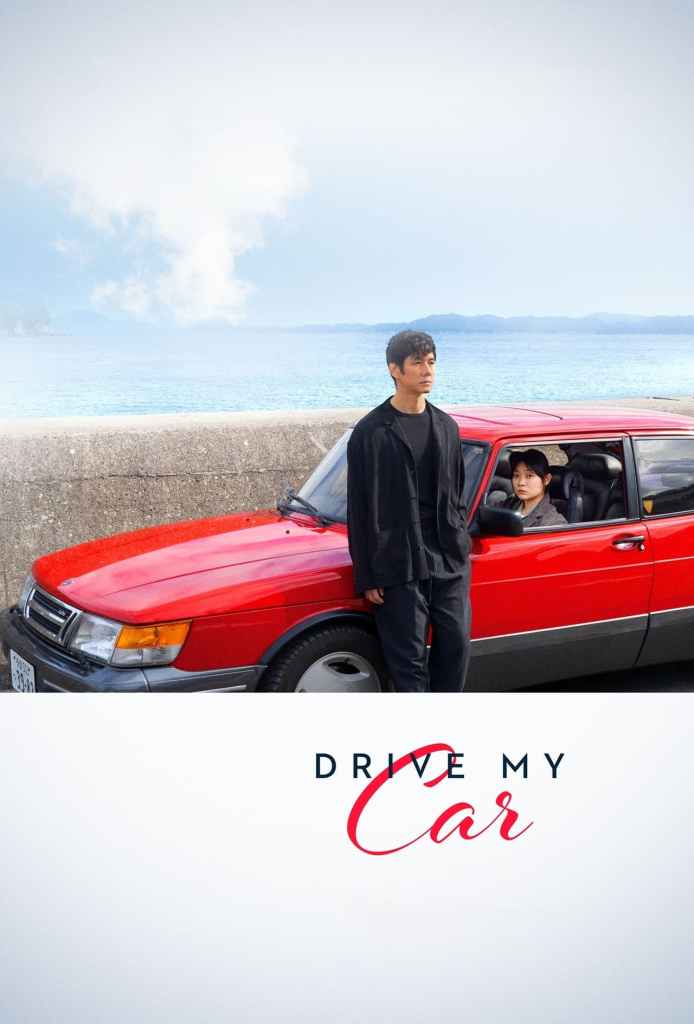
Drive My Car is a multi-language Japanese film about a director searching for his way back to life. When we meet Kafuku, he is an accomplished theater actor, and is married to Oto, an equally well-thought-of screenwriter. The two seem to have a strong, passionate relationship, and in fact, it is their sex that spurs Oto to creativity, as she often relates stories to Kafuku afterwards. When a flight of his gets delayed one day, Kafuku returns home to find Oto sleeping with a young actor, Takatsuki. Kafuku sneaks out of the house without alerting them to his presence, and days later, Oto dies suddenly of a brain hemorrhage. Two years later, Kafuku still has not recovered from the whole experience. He has given up acting, and is now directing. He has been hired to put together a performance of Uncle Vanya in Hiroshima, and goes there to audition actors and begin production. Of course, Takatsuki is there, and is given the lead roll of Vanya. This brings back a lot of emotions to Kafuku, which he slowly, over the course of the three hour film, relates to the driver brought to ferry him back and forth from hotel to rehearsal space. The driver, a young woman named Misaki, has her own inner turmoil raging, and the two help each other along the way. This is a deeply touching movie. To say it moves leisurely is an understatement; director Ryusuke Hamaguchi is in no hurry to get to the end, and allows scenes to breathe until the viewer feels like he or she is sitting at the table with the characters, going over lines, glimpsing into inner turmoils, and feeling the anguish of the individuals. Strong film, and, recent years notwithstanding, is one of the rare foreign language films to have been nominated for an Oscar Best Picture (the 14th of all time). ★★★★
- TV series currently watching: The Expanse (season 6)
- Book currently reading: Dragons of the Dwarven Depths by Weis & Hickman

 Jons Movie Takes
One thought on “Quick takes on Drive My Car and other films”