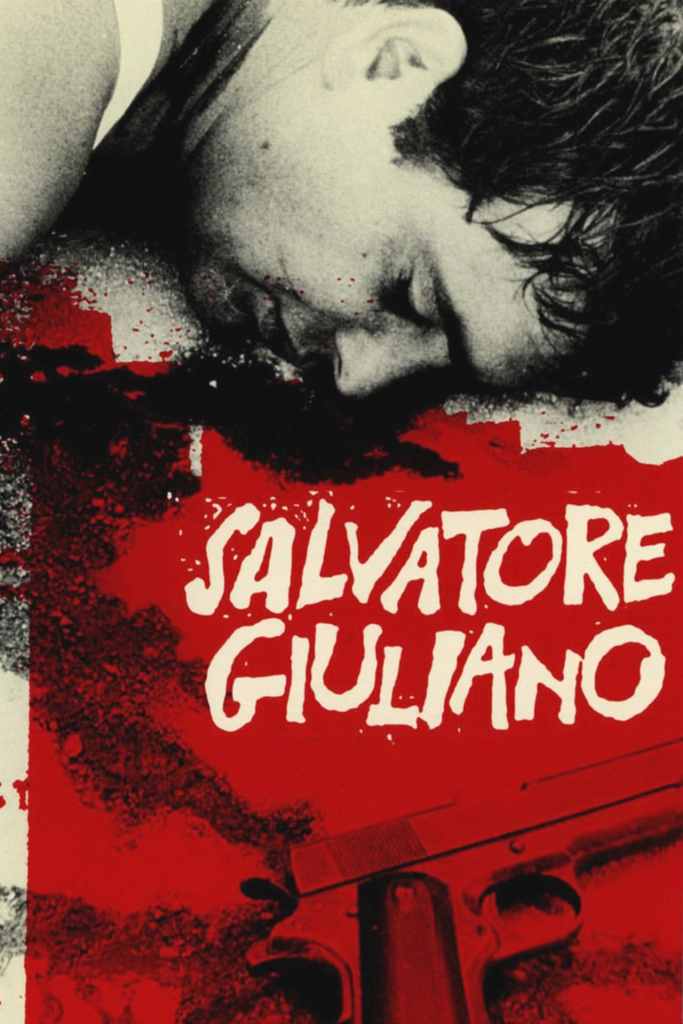
Checking out a few films from Italian director Francesco Rosi today, a director known for his realism. I’m starting with the one that put him on the map: Salvatore Giuliano. Based on the life of Giuliano, it tells the tale of his recruitment and subsequent life of the Sicilian bandit as he doggedly struck at police and was generally a thorn in the side for right-wingers who wanted Sicily to be part of the unified Itsaly in the mid 1940s. Despite circling his life, he is shown on screen very little. The film begins at the end, with his body found shot up in a plaza and the public spectacle that it becomes, but then rewinds to his activities in the years leading up to his death. The story is told through those he ran with, and the authorities who chased him. I guess this was done to add to the legend, but whatever. He was a modern day Robin Hood character, and was very popular amongst the general pop, who wanted freedom from Italy. About halfway through, the film turns to the courtroom, and the final half was like watching paint dry. I’m sure it’s a great film, but I was bored out of my mind by the end. I did appreciate that film was shot in and around Guiliano’s spots: the plaza of his death is the same in real life as the film, as are the mountains that were his hideout. ★½
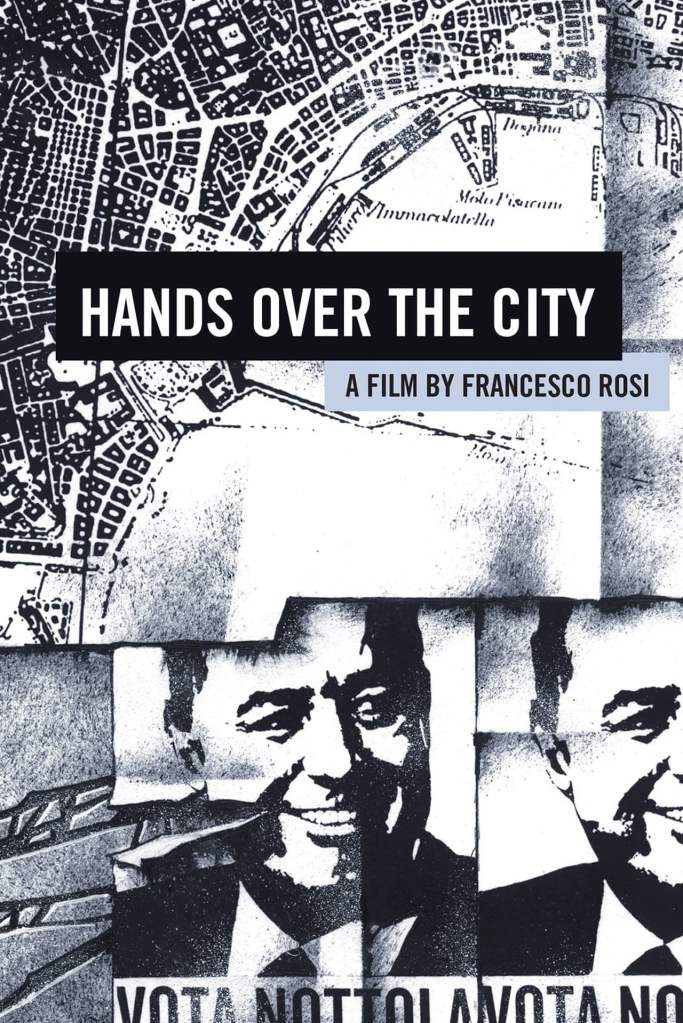
Hands Over the City is even more political than the last, shining a light on political corruption in the Italian government. Land developers see the value of land, but not with old buildings on it. So they start tearing down empty buildings, but unfortunately the disturbances cause damage and even a couple deaths in neighboring old buildings that were still inhabited. While some in the government are intent in pointing blame to those in charge (mostly to further their own political ambitions), the developers don’t see anything wrong with the outcome; you can’t make an omelet without breaking some eggs. This is a thinking man’s thriller, with a lot of charged dialogue. When it too turned to a courtroom (or, more precisely, a city meeting that looked like a court), I thought, “Here we go again…” But it was better this time. Still, not a really entertaining film in my opinion. I don’t mind dialogue driven movies, but Rosi obviously cared more for getting his point across than entertaining. ★★
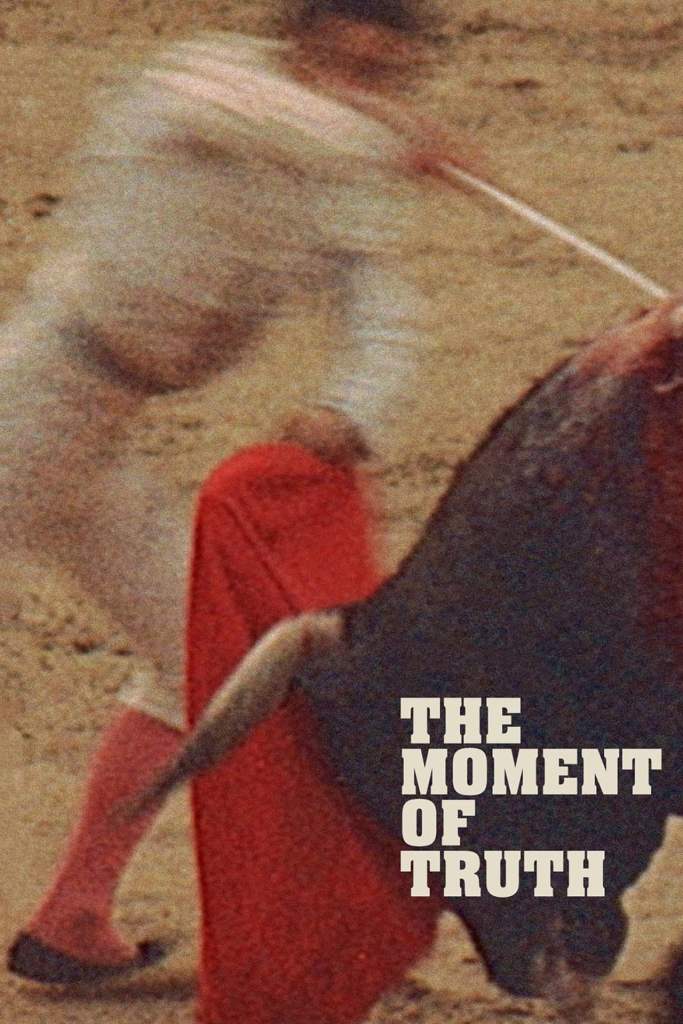
The Moment of Truth is less political, and for my tastes, much more entertaining. It tells the tale of a young man named Miguel, who leaves his father’s farm and moves to the big city, with dreams of success. Unfortunately he finds jobs scarce and really struggles to find his footing. A family friend who was supposed to get him a start doesn’t help. Miguel finally finds a level of success in bull fighting. It seems he has natural instincts and a flare that pleases the crowd, and quickly rises in the ranks to become a well-known matador. After he is injured in a match though, Miguel has a hard time finding his mojo again, and definitely loses a step. Miguel is portrayed by a real-life matador (also named Miguel) and while the actual bullfighting is tough to watch (it shows their deaths and all), I enjoyed this movie more than the first two, though animal lovers will obviously find plenty to fault. The ending is at least much more exciting than my previous trips through Rosi’s oeuvre. My biggest gripe is the same I have with many realism films (both post- and neo-): the use of non-professional actors leaves much of the picture feeling dry. ★★★
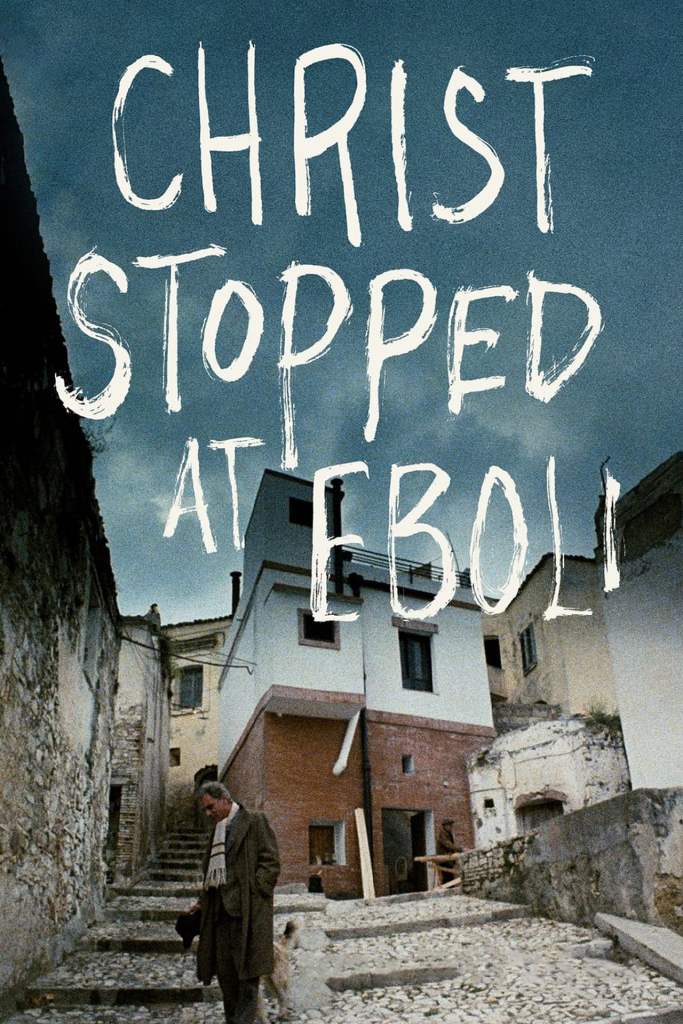
Christ Stopped at Eboli, a true story based on a memoir, follows a man named Carlo, who is sent to the remote city of Aliano as a political prisoner for having been a vocal opponent to Mussolini’s fascist regime. The title of the film comes from Carlo’s first view of the town, saying that Christ’s love and influence spread all over the world but stopped at this desolate land, where “only conquerors and the lost happen through.” The land is unforgiving, the inhabitants poor, and their struggle made worse under a cruel and tyrannical mayor. Carlo was schooled as a doctor but never practiced; that doesn’t stop the locals from seeking him out when they get sick. Before he knows it, he is treating everyone and has become very popular. Unlike the other people of authority in the city, he actually cares for the poor, and they love him in return. The leaders in Rome want to squash his popularity, by issuing an edict that he not be allowed to medically treat people, but the Mayor is forced to allow it when his daughter becomes ill. The film ends with his Carlo’s freedom and return north to Turin, but his views are forever changed by his time in the south of Italy, and how the people there are forgotten by the rest of the country. I watched the full 4 hour version of this film (it was also edited down to a 2 hour feature), and I highly recommend the full movie. I’m sure the shorter version loses a lot of the character building that makes this such a lovely piece. Ol’ Rosi started off rocky for me, but I’m warming up to him. ★★★½
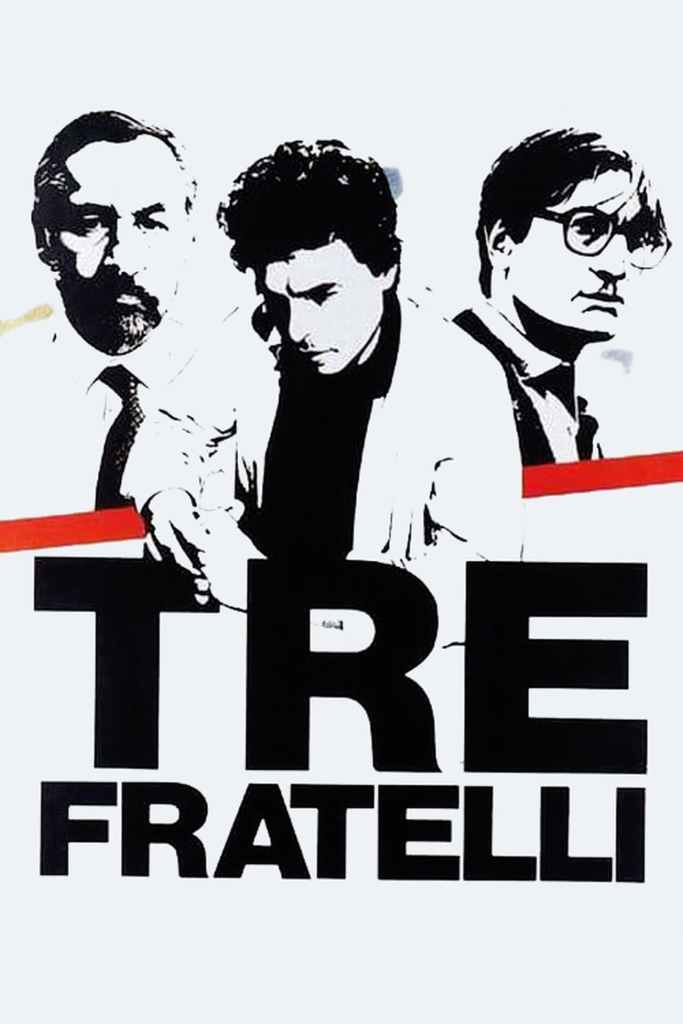
In Three Brothers, the matriarch of the family has died, and her widower has asked their three boys to come home to bury her. The three have gone in very different directions with their lives, and the film looks at each of them. The oldest, Rafaele, is a judge who is looking at taking on a case about local terrorism, a case that has already gotten police and other judges killed. Middle son Nicola, is a laborer who flirts with communism ideas. Nicola’s marriage is on the rocks, and he’s brought his daughter for the weekend. The youngest son is Rocco, who has devoted his life to helping at-risk children, trying to help them turn their lives around before they end up incarcerated for life or dead. Each person is wrapped in their own world, too much to notice the suffering of their father, but Nicola’s daughter latches on to his side; she and her grandpa become inseparable. Rosi drops some of his trademark realism for this film, delving a bit into the dreams of each character, and it is better for it. He can’t help himself but throw some political talk in the end, but that didn’t distract too much. ★★★
- TV series currently watching: Star Wars Rebels (season 3)
- Book currently reading: Dragons of the Dwarven Depths by Weis & Hickman

 Jons Movie Takes
One thought on “Quick takes on 5 Francesco Rosi films”