
The Power of the Dog is a complicated film, as complicated as the characters in it. It takes place in 1925 Montana, centering on wealthy ranch owner brothers Phil and George (Benedict Cumberbatch and Jesse Plemons). Phil is a rough-and-tumble man’s man, and is popular among their hired hands. George on the other hand is quieter, and more prone to wear a suit than chaps. George falls for the local restaurant owner, widowed Rose (Kirsten Dunst), and marries her. Phil doesn’t like the arrangement from the get-go, thinking Rose is only marrying into the family for their money, and his suspicions are aroused when she immediately uses some money to send her son Peter (Kodi Smit-McPhee) off to a nice boarding school for the semester. Young Peter is everything that Phil is not: he’s skinny, awkward, can’t ride a horse, is into crafts, and is basically a momma’s body. As such, Phil takes every opportunity to belittle him, and he makes snide remarks to and about Rose, even in front of company. It’s easy to hate Phil, but as the movie goes along, we learn that maybe he is the most complex of all of them. His rough exterior is definitely hiding some inner turmoil, which doesn’t excuse his actions, but does give the viewer things to consider. A great movie worthy of examination afterwards, and the kind of film that you’d pull more from in multiple viewings. ★★★★

The Humans is based on a play by Stephen Karam, who also directed this film version. I’ve never seen the play, but as a movie, it works perfectly. Taking place entirely inside a rundown New York City apartment, it follows a family coming together for Thanksgiving dinner. The apartment belongs to youngest daughter Brigid and her boyfriend Richard, who’ve just moved in and haven’t even unpacked yet. Attending the dinner is Brigid’s sister Amy, their parents Erik and Deirdre, and grandmother “Momo.” Like most families, they have their dirty little secrets, some of which are out in the open, others are only known between certain family members. As the day and evening progresses, and things come out in the open both to the family and to the viewer, we see a family that struggles like everyone’s, but which stay together through their love. This movie has it all: wonderful drama, solid acting (Richard Jenkins, Jayne Houdyshell, Beanie Feldstein, Steven Yeun, a somber turn from Amy Schumer, and June Squibb), and even lots of tension, provided by not only the family, but by the apartment itself, as the building breaks down along with the family as the film progresses. The movie pulled me in to the point that I was moved with each character’s plights, and I shared all of their emotions with them by the end. What more could you ask? ★★★★★

I definitely wasn’t into Limbo in the beginning. A movie about the current refugee crisis, it focuses on Omar, a Syrian refugee. He was hoping to live in London, but as he awaits a decision on his asylum status, he and other refugees have been shipped off to the middle of nowhere in northern Scotland. There, they take classes on English (though most speak it pretty well already), how to act in a job interview, etc. The movie starts as an offbeat comedy, which was not doing it for me at all. But I stuck with it, and am glad I did. After awhile, as Omar makes calls home to his parents, and we learn that he has an older brother who decided to stay in Syria to fight in the war, the film shifts from a strange comedy to an endearing drama. Omar, who is a musician without a trade (he has a broken hand preventing him from playing his oud, though he carries it around with him everywhere), is left in limbo in more ways than one. As his parents’ and brother’s situations become more dire, he is helpless and nearly hopeless half a world away. If the first 45 minutes had matches the last, I’d rate it a lot higher, but still, it’s not bad. ★★★
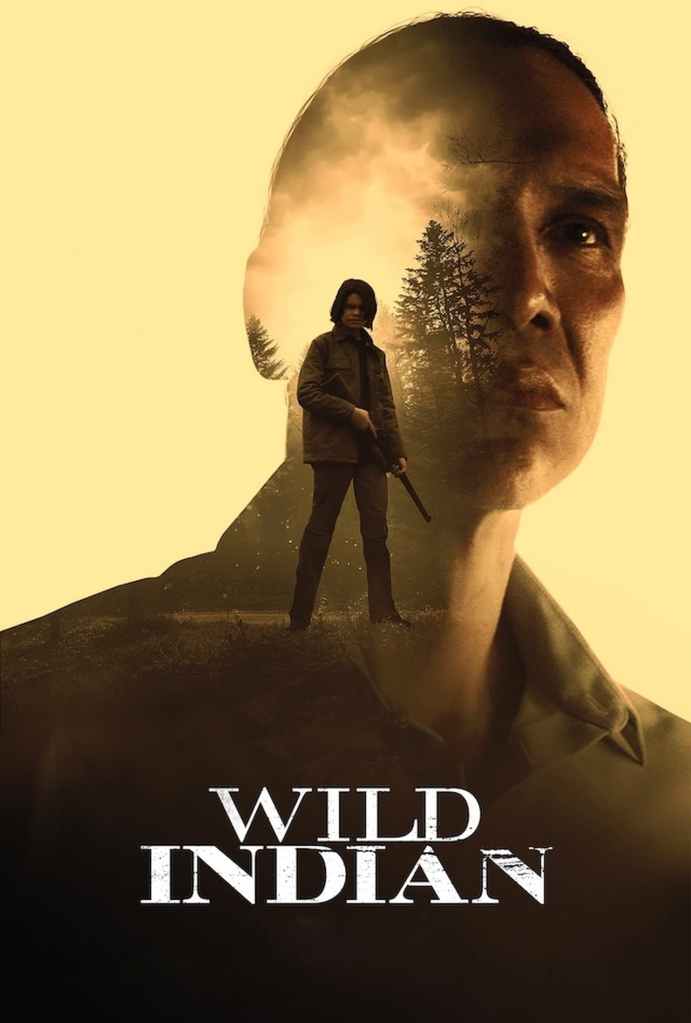
Wild Indian, questionable name and all, begins with a couple teenage Native American boys named Makwa and Ted-O. Makwa is getting abused at home, and showing early signs of emotional detachment, bordering on psychosis. One day he takes his dad’s rifle out in neighboring fields, and shoots a classmate. Ted-O sees it happen and freaks out, but the detached Makwa explains they’ll just bury the body and know will ever know. Fast forward 30 years to the present day, and we see an adult in jail. The one surprise of the film is it’s not Makwa, but Ted-O, who has spent 10 years behind bars for various drug and assault related crimes. He is finally being released, and goes to stay with his sister and nephew. When we see Makwa, we find that he has built a career, with wife and child at home, but the successful veneer still hides a violent underbelly, urges that Makwa, who now goes by Michael, takes out on prostitutes. He doesn’t think about that day decades ago, but Ted-O still does, and he seeks out Makwa for resolution. This film has a solid scenario, but there’s just not enough here to really make it stand out. Makwa seems to be the primary focus of the film, but I’d much rather have seen more of Ted-O and his struggles to make his life right. ★★
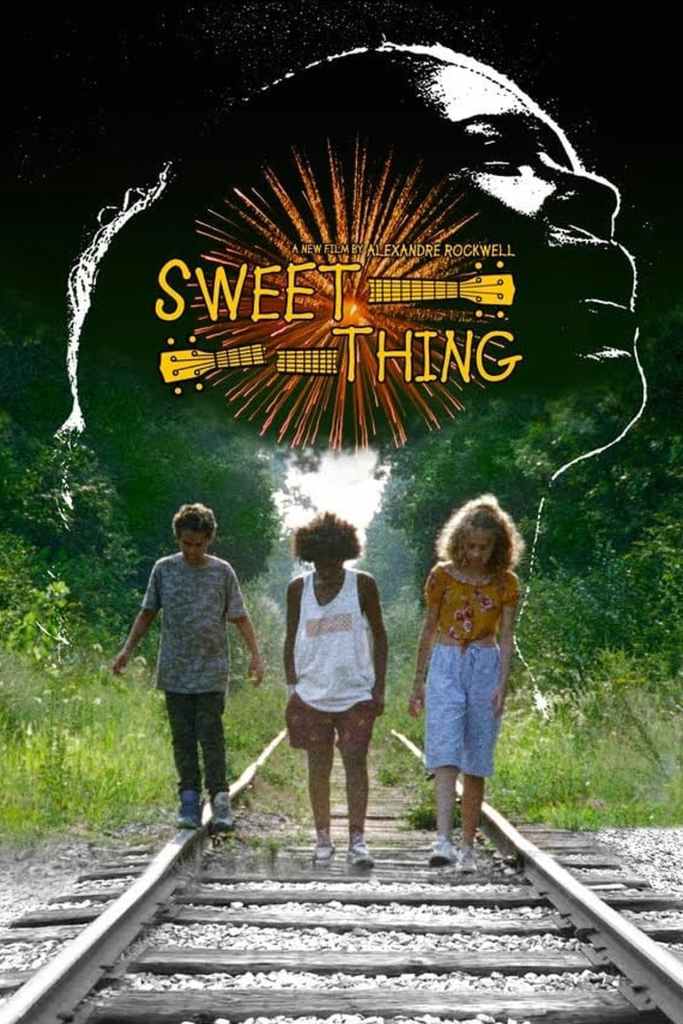
Sweet Thing is sort of a throwback to the late 90s indie films, movies that, at least gave the impression of, a group of buddies coming together on a weekend and saying “Let’s make a movie.” It’s either super low budget, or it gives that feeling anyway. But that doesn’t mean it isn’t any good. Unknown actress Lana Rockwell gives a fantastic performance as Billie, a teenage girl looking after her younger brother Nico, as their father Adam (Will Patton) is a barely-functioning alcoholic. Adam’s a good father until his drinking makes him not so, and while he doesn’t get violent, he’s a bit too much of a happy drunk, which is just as bad in the wrong scenarios. When Adam is finally cornered by the cops and sent to rehab, Billie and Nico are shipped off to live with their mother and her new boyfriend. The boyfriend can’t blame alcohol for his bad deeds, and when he threatens the kids with unspeakable trauma, they run away. Teamed up with another outcast in search of his mythical father, the trio hit the road, but what awaits is no better than what they are running from. Shot mostly in black and white with just a few color sequences when the individuals find small slivers of joy in their lives, it’s a stark and well put-together movie, with Rockwell’s performance being the highlight. The filmmaker’s decision to have some scenes improvised is telling at moments with the younger, inexperienced cast, but on a whole, I really enjoyed it. ★★★½
- TV series currently watching: Star Wars Rebels (season 1)
- Book currently reading: Hades by Mark Danielewski

 Jons Movie Takes
One thought on “Quick takes on The Humans and other films”