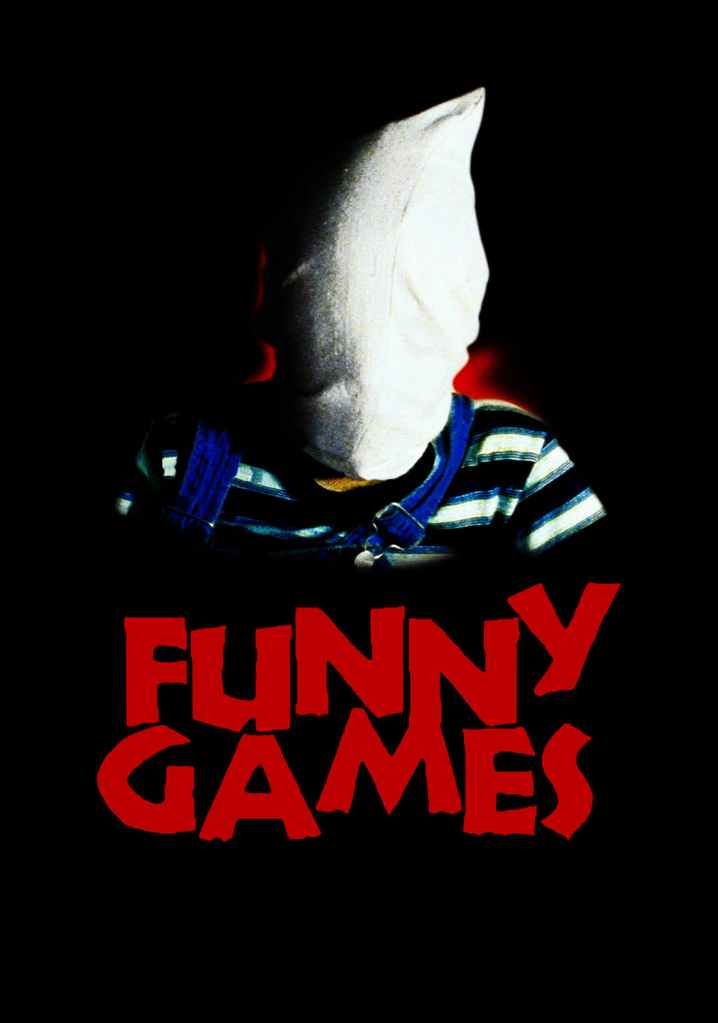
I’ve never seen a single film by celebrated and decorated Austrian director Michael Haneke, so it’s time to fix that, starting with maybe his most controversial and the one that put him on the map, 1997’s Funny Games. This is a disturbing film to watch, about a family of three terrorized over the course of an evening by a pair of emotionless young men, who make a game of their brutality. When Georg, Anna, and their son Georgie arrive to their lake house, they are expecting a couple weeks of relaxation, but Peter and Paul disrupt those plans in a terrifying way. When the pair show up at the door, at first they seem innocent enough, if a bit awkward, but things turn ugly quick when Georg slaps Paul for being disrespectful, and Paul retaliates with a golf club to Georg’s knee. The family now know something is very wrong with their visitors, but they have no idea how bad it will get. As the evening progresses, they are degraded and made to play games in order to survive. There’s a truly frightening scene where Georgie is able to escape, only to be hunted down by Paul. What sets this film apart from others like it is Haneke’s decision to not show most of the violence on screen. We hear them attack Georg off camera while we only see Anna’s face and reaction, and the same goes for each of their acts. As a viewer, of course I felt like I was missing something, and I’m sure that was Haneke’s intent: what does it say about us as a people when we want to see the violence? It made me feel dirty, that’s for sure. There’s also a lot of breaking of the fourth wall, as Paul turns to the camera and lets us know that he is aware we are watching him and Peter inflict pain, and another scene near the end showing this is a work of fiction, but all that felt a bit gimmicky to me. A very hard film to watch, but no doubt there is talent in this filmmaker. As an aside. Haneke remade this film 10 years later, in English with a new cast, and from what I hear, it is nearly a shot-for-shot remake, same dialogue and all. ★★★
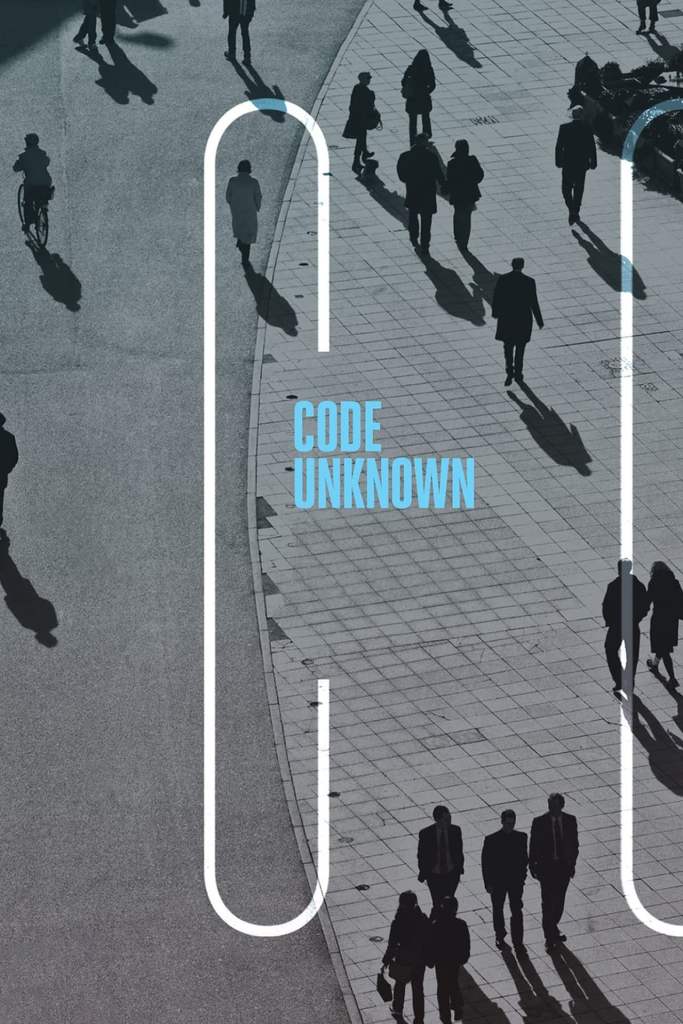
Code Unknown is one of those films which, I’m sure is great, but it’s either too smart for me, or just not my jam. The set up is thus: a teenager has run away from home and has come to the city to maybe live with his older brother and his girlfriend. The brother isn’t home, but the girlfriend tells the teen that she can get him something to eat, but that he can’t stay in the tiny apartment, as there just isn’t room. She heads off to work, and the teen, having finished his on-the-go breakfast, throws his trash in the lap of a homeless woman begging on the corner. A black man witnessed it, and confronts the teen to apologize, but the teen refuses. The altercation gets physical, and bystanders and cops get involved, as does the returning brother’s girlfriend. Most take the side of the white teenager, not knowing the whole story. At this point, I’m thinking, “Great setup for a film on race!” And I guess it is still that, but the movie takes a winding, sometimes bewildering path that, while easy enough to follow, doesn’t seem to build a complete picture. After the opening, each successive scene cuts back and forth among all those involved in the beginning, as we see where life takes them. I didn’t pick up on any overarching themes, and there wasn’t even a good denouement to go out with a bang to match the excitement of the start of the film. Again, I think this one’s just too intellectual for my measly brain. ★½
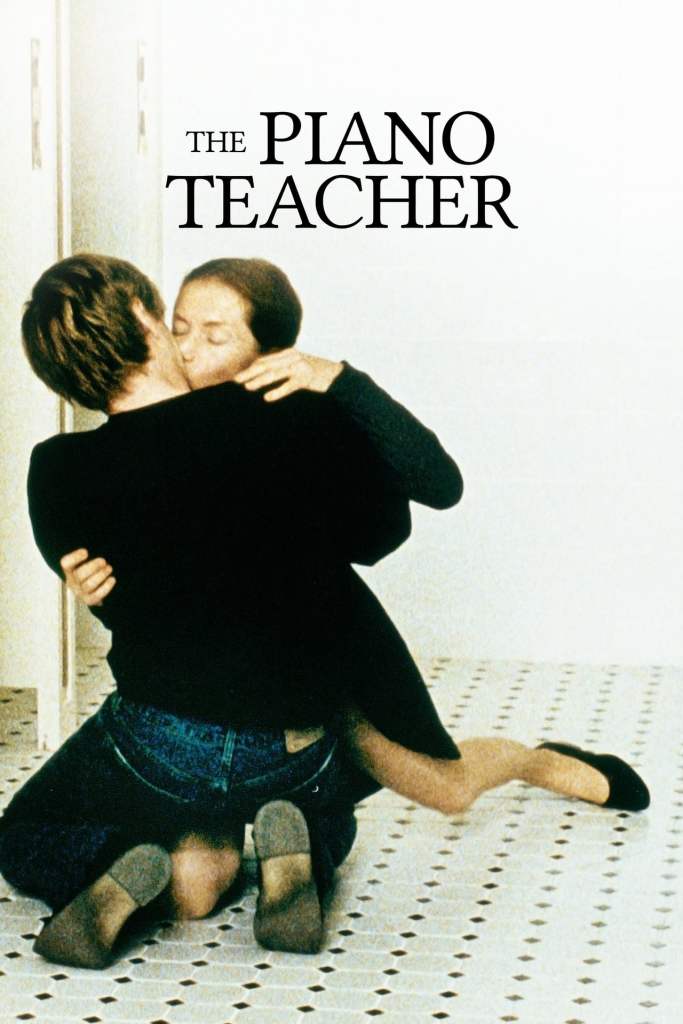
The Piano Teacher is one of those films which is a fantastic movie, but due to my own personal moral code, really turned me off. The great Isabelle Huppert plays an outwardly staid and uptight professor at a music school. Erika is strict and demanding with her students, to the point of abuse (anyone who has seriously studied a musical instrument know’s what I’m talking about; we’ve all had one of those instructors). She lives with her aging mother in a tiny apartment, and five minutes with her mom tells us where Erika gets that demeanor, as her mother is as mean as they come. What Erika is hiding though is her escapades. She visits voyeur rooms in sex shops to watch graphic porn, and practices sexual mutilation on herself for release, none of which she seems to enjoy, but that and her control over her students is the only relief she gets in her life. Enter into this picture Walter Klemmer, a very talented young man who sets his eyes on Erika. He’s a gifted pianist but doesn’t seem to have the drive for greatness that Erika insists upon her students. Walter is immediately infatuated with Erika, but she doesn’t even know how to reciprocate love or affection; she only knows the domineering masochistic sex she’s seen in porn. A typical film by any other director would have Erika learn how to love and enjoy her relationship with Walter, but Haneke is obviously not your typical director. This is a startling and oftentimes hard to watch movie. A marvelously well done picture, but not one I could stomach a second time. ★★★½

2005’s Caché is the first of Haneke’s films that I really enjoyed start to finish. The movie gets you into the action right away: Anne and Georges are an upper-middle class couple watching a video tape someone left on their doorstep, a tape showing the front of their own house as the couple comes and goes. Creepy, but otherwise harmless. However, the tapes keep coming, and become more sinister, as they are accompanied with drawings of faces or objects covered in red crayon, and of course the couple thinks of blood. The drawings even get sent to their son Pierrot’s school. The police are unhelpful. Georges begins to suspect a person from his past, a boy named Majid who lived with him and his parents at their sprawling estate when Georges was growing up. Georges begins having nightmares about Majid covered in blood, and when a new tape arrives showing a tiny apartment, Georges goes there and is unsurprised to find it is Majid’s home. Majid denies any knowledge of the tapes, but the plot thickens as new tapes continue to come forward. Over the course of the film, we learn exactly who Majid is and his ties to Georges. The movie is a fantastic psychological thriller/drama. It doesn’t give all the answers (it doesn’t give many answers!), but it is gripping from start to finish and is a great view into human’s ability to lie to ourselves for self preservation. Also wonderfully shot: even the look and lighting of the film often has a home video-like quality to it, making the viewer feel like any moment we are watching could be taped to shown to the couple. ★★★★½
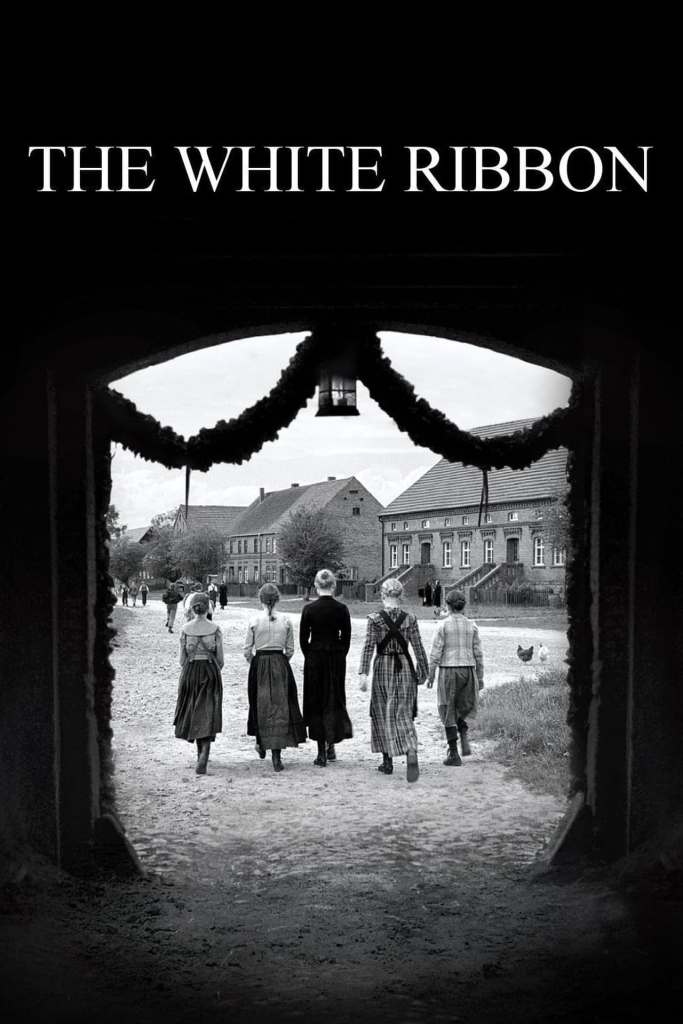
The White Ribbon hit it out of the park for me too (after an uneven start, for my tastes, Haneke is rocking now!). This movie is told as a story by an elderly man, unnamed, about a year he spent as a schoolteacher in a little town in Germany in the early 20th century. The movie is about many things, but one of my takeaways was the feelings of animosity between the haves and the have-nots. The haves in this town are wealthy and socially powerful men, namely, the pastor, the doctor, and the baron, whose household and lands employ half the town. In the beginning of the film, the doctor has an accident while returning home. Someone strung a thin, heavy wire between two trees, and the doctor’s horse ran right into it, spilling him and breaking his arm and collarbone in the process. The town goes into an uproar over who would do such a thing. Shortly after, a wife in a poor family dies by falling through a rotting wooden floor in the sawmill. Her widowed husband urges calm, but their son is convinced it was retaliation against the poor by the wealthy (the baron of course owns the sawmill). The son goes out and destroys the baron’s cabbage field. The baron’s son is also kidnapped and beaten, before returning home. Other events continue, pitting the people against each other. Throughout the course of the film, we also see how the pastor isn’t nearly as holy as he claims, severely abusing his kids in the name of righteousness, and the doctor isn’t the upstanding man people believe him to be either. But who is causing all the mischief in town, and is it simply pranks in poor taste, or something more sinister? Shot in stark black and white and told as a slowly developing tale, this is a movie to bring your patience for, but it is undeniably memorable. It paints a picture of a little slice of the world just before the first world war, where sins are committed out in the open and, more often, behind closed doors. ★★★★
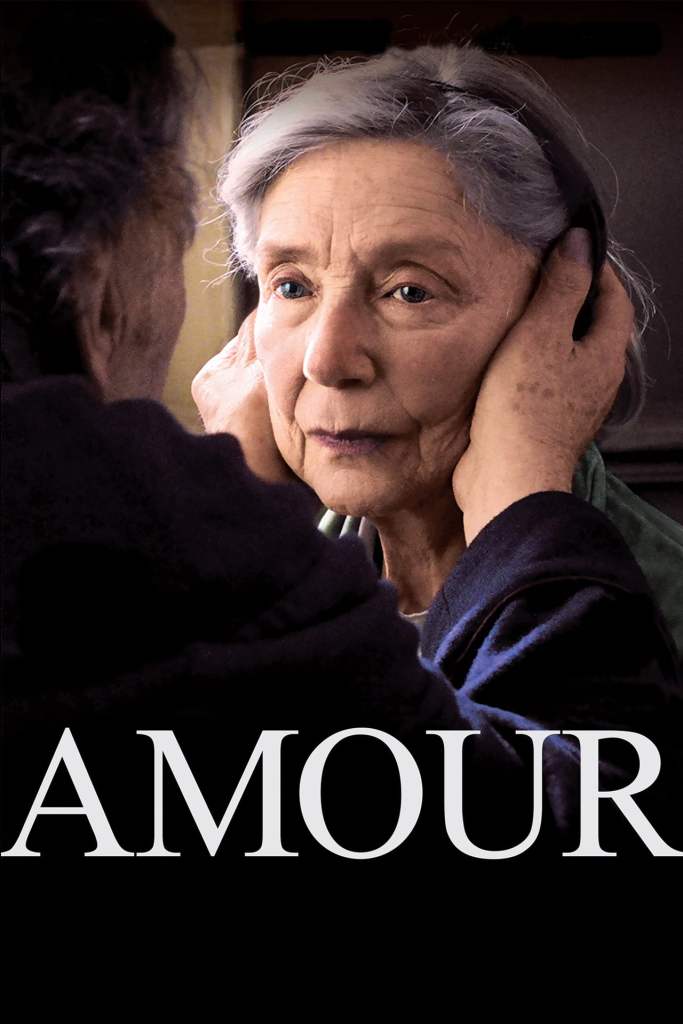
Amour is a much quieter film. The film’s subjects are Anne and her husband Georges, an elderly couple living in a posh Paris apartment. Georges can be a bit cranky at times, but after a life together, Anne knows his bark is worse than his bite. One morning, Georges is at the sink, talking to Anne as she sits at the table, when she stops responding. He walks over and notices that Anne is just staring off into space, and doesn’t react to Georges’ words or actions. A trip to the hospital confirms Anne has suffered from a stroke, and while surgery removes the blockage, Anne is left paralyzed on her right side and forced to a wheelchair. At home, she makes Georges promise that he’ll never leave her in a hospital again, and he intends to keep his word. Over the ensuing weeks and months, Anne’s condition worsens. Georges hires temporary nurses to help care for her, but despite his daughter’s pleas, he refuses to consider putting his wife in a home. Eventually Anne has another stroke, removing her speech and much of her coherency, making Georges job that much tougher. A movie about the lasting legacy of love and a bleak idea of what awaits some of us at the end of life, it’s an at-times powerful film, though it did start to wear on me. Much as Anne’s condition started to wear on Georges, which I’m sure was the director’s desire. ★★★
- TV series currently watching: Foundation (season 1)
- Book currently reading: Hades by Mark Danielewski

 Jons Movie Takes