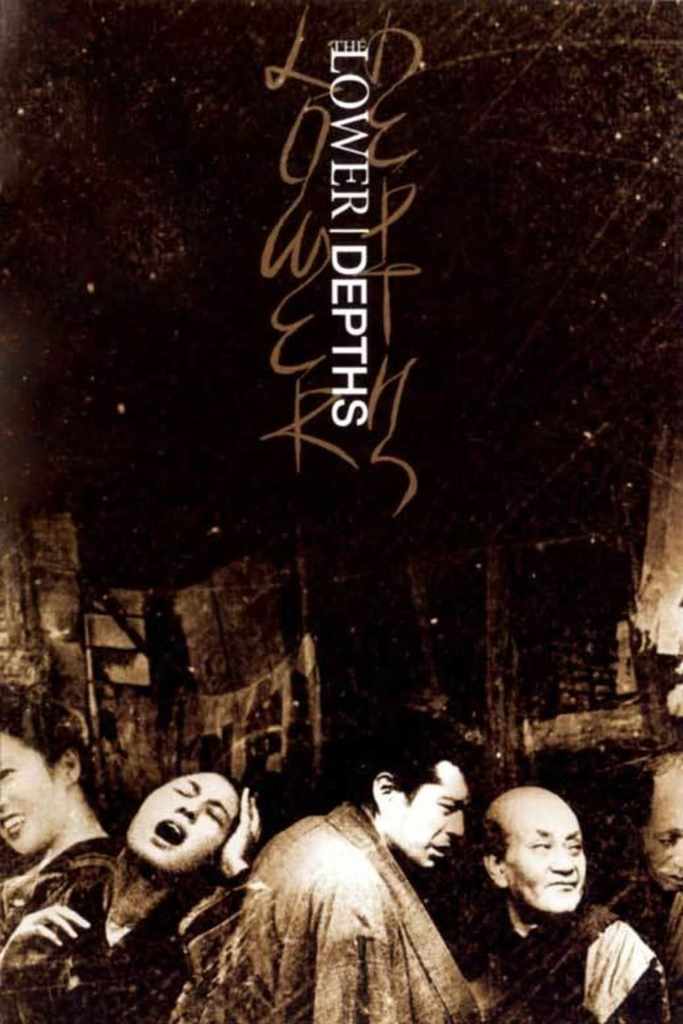
Been a year since I last watched some Kurosawa films, so today I’m digging more through his filmography. In a twist of fate, I’m starting with a different version of a film I just recently saw. Akira Kurosawa’s version of The Lower Depths is a much darker tale than Renoir’s. Jean Gabin’s Pépel is replaced with Toshiro Mifune’s Sutekichi. His relationship with the landlord’s wife (Osugi) and later, her sister (Okayo), is similar, but there are harsher realisms for the likable thief this time around. The film also seems to be more closely aligned with the original play, as most of it takes place on a single set, and the characters never stray far from it. Sutekichi never goes to a Baron’s house, and this version of the Baron, an ex-samurai who claims to once come from a powerful house, is already living in the ramshackle building with the others from the beginning. Kurosawa’s Depths also spends a lot more time with all the others in the house, sometimes for comedic relief, but also to really hammer down the dire situation of all those living there. There is a real sense that these people are barely squeaking by at the bottom rung of society, and they have no hope of escaping. About half way through this film, a sick wife dies in their communal room, and you get the sense that if the movie continued, the others would follow her, one by one. ★★★½
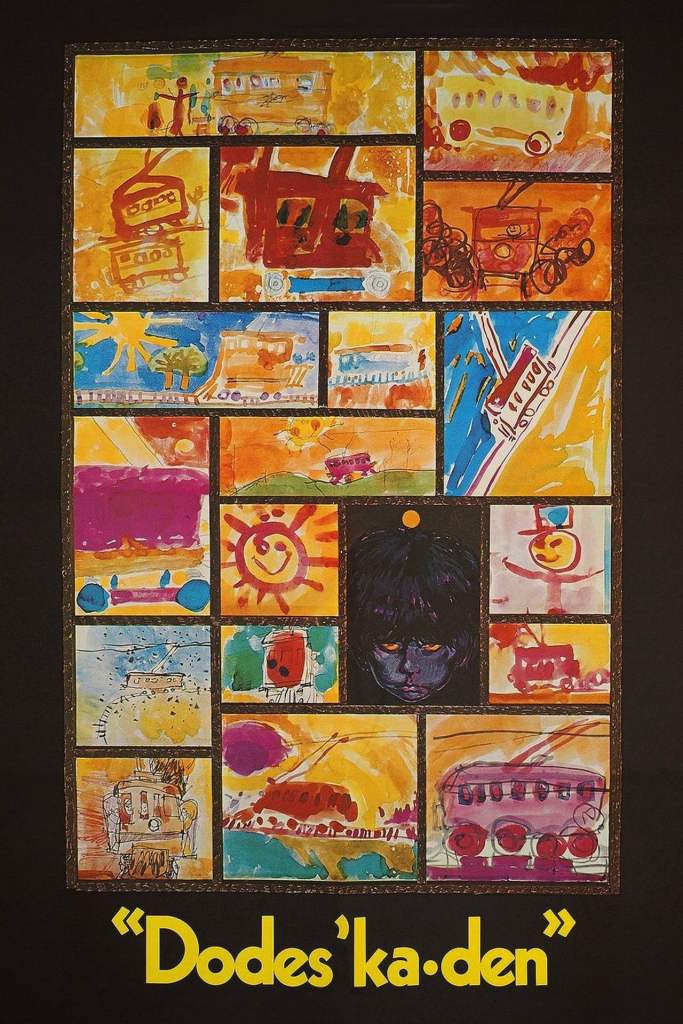
Dodes’ka-den continues looking at people at the fringes of society, this time the communal residents of a shantytown, assembled literally around and among a trash dump. There’s a big cast of characters here, some for comedy, some for tragedy, but all sharing the same background. The title comes from a young man of mental deficiencies, who, every day, gets in his pretend trolly and “drives” it around the haphazard town, ignoring the cruel taunts of children and waving to the kind and knowing inhabitants; the whole time, he’s muttering “dodes’ka-den,” in mimicking the sounds of a beat-up old bus. Other residents include a young boy who goes out begging for food at the local eateries and bars, so as to provide food for himself and his daydreaming father; a pair of wives whose husbands drink together (and who end up swapping wives one night, much to the delight of the gossiping ladies at the water well); an old man who willingly gives money to a thief, rather than see his tools stolen; and others. It’s a hard life for the inhabitants, and they often don’t make it any easier on themselves. There’s a lot of ugly, but that makes the beautiful moments that much more so. There isn’t really an overarching plot here. It just plays out as a glimpse at a few days in the life of people struggling to get by with the hands they’ve been dealt. ★★★

The director returned to war epic genre in 1980’s Kagemusha, which literally means “shadow warrior,” but it is a term for a political decoy. The decoy in question is a thief, brought in because he resembles identically the current lord, Shingen. Shingen’s brother and confidant, Nobukado, found the thief and saw his use as a double for Shingen, and scooped him up (the thief’s name is never given). Not long after, Shingen is gravely wounded by a sniper during a battle, and it is time for the former thief to earn his keep. The kingdom is currently in a sticky situation, with skirmishes on all sides, and Shingen’s son Katsuyori bristling that his father passed him over as future ruler, choosing his son (Shingen’s grandson) as his heir instead. Trying to keep the status quo for a bit longer, Nobukado installs the kagemusha as a fake Shingen; only the generals and the former lord’s closest guards know of the secret. But the new Shingen quickly realizes that danger doesn’t exist only on the battlefield, as political dangers await at ever corner. And rumors of Shingen’s death have circulated among the nation’s enemies, so they send spies trying to determine if Shingen is real and alive, or in fact a double. This is a great 3 hour long epic, with wonderful battle scenes, plenty of drama at court, and apprehension throughout. It’s a slow moving film, but with Kurosawa using the pace to build tension, I never grew bored, or even felt the length of the movie draining on me. ★★★★
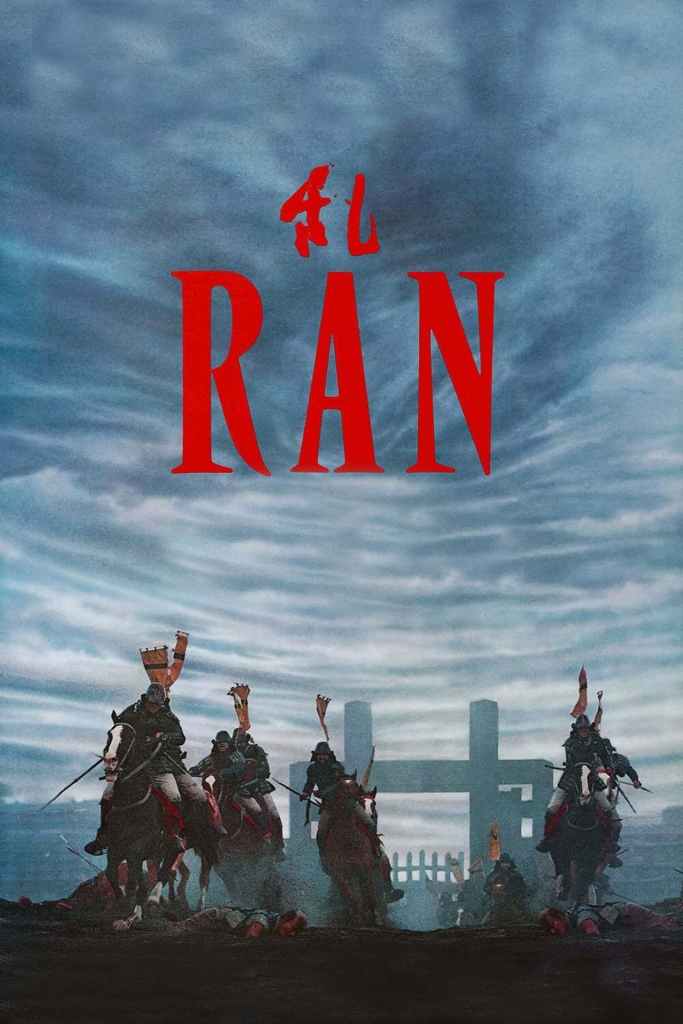
For a director with so many accolades, it is hard to peg his “best film,” but 1985’s Ran is certainly in the discussion. Supposedly based on Shakespeare’s King Lear (which I ashamedly have never seen nor read, so I can’t comment), it follows the Ichimonji family, and chronicles its downfall from a powerful ruling warlord to the family’s complete destruction in a short period of time. Hidetora has ruled the surrounding lands for decades, having brutally conquered the local lords in battle many years before. Now he is an old man, and ready to “retire.” He has 3 sons, all aged close to each other, but as with tradition, he names the eldest, Taro, as his successor. For the middle and youngest sons, Jiro and Saburo, Hidetora bequeathes the second and third castles and their lands, but neither is too happy with the situation. Jiro eyes the whole of the kingdom, and Saburo, the only wise one of the three, anticipates the weakening of the family, as he sees his brothers jockeying for power. Saburo arguing with his father’s decision results in getting himself banished, and he is joined by Hidetora’s longtime friend and advisor when he too questions his master’s choice. That is just the start of the splintering of the family. When Hidetora returns to the first castle, with Taro now in control, he finds himself powerless, and he doesn’t like it one bit. He fights with Taro and leaves in a huff, riding with his retinue to the second castle. There, he finds a cold shoulder from Jiro as well, who doesn’t want to see his own power limited either. Hidetora ends up a wanderer, and though his loyal followers stay with him, they all begin starving, even as Hidetora sinks into madness. Meanwhile, skirmishes between the brothers turn to all-out war. A fantastically epic tale, beautifully filmed in vibrant colors and with a subtle soundtrack that belies the violent battles on screen. I have rated so many of Kurosawa’s films in the 4+ range, I’m like a broken record here. ★★★★★
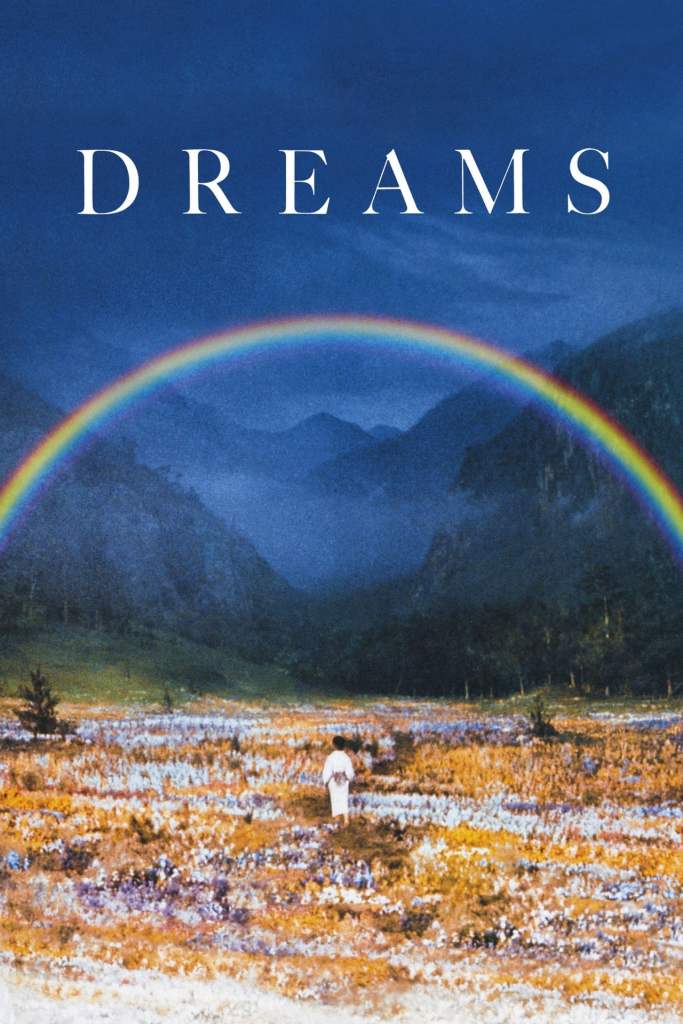
Five years after Ran and at 80 years old, Kurosawa followed up with a much “quieter” film, Dreams. Supposedly based on some of his own dreams over the years, this isn’t a narrative film per se, but is made up of 8 short vignettes, unrelated to each other. In each, the lead is supposedly Kurosawa himself at different points in his life. There’s a boy who witnesses a marriage between foxes in the woods, and later sees dead peach trees become spirits, who perform a dance for him. As a young man, he leads an expedition up a snowy mountain, only to nearly freeze to death. In another, he is haunted by soldiers killed under his command during a war, and in another, visits Van Gogh, while traversing trough his paintings in a colorful landscape. The latter dreams deal with death and the destruction of the world, as an older lead character sees nuclear reactors blow up and kill everyone around, or demons play along a mountainside. The film is inarguably beautiful, with rich colors that pop on screen, but it’s not my cup of tea. The dreams are either too obtuse or too blunt; Kurosawa is either trying to get you reach into deeper meaning or hitting you over the head with his views, with little ground in between. This director is often known for the action in his films (though Ikiru is my personal favorite), so I appreciate the different approach, but this one’s just not for me. ★½
- TV series currently watching: Star Wars The Clone Wars (season 7)
- Book currently reading: The Wishsong of Shannara by Terry Brooks

 Jons Movie Takes