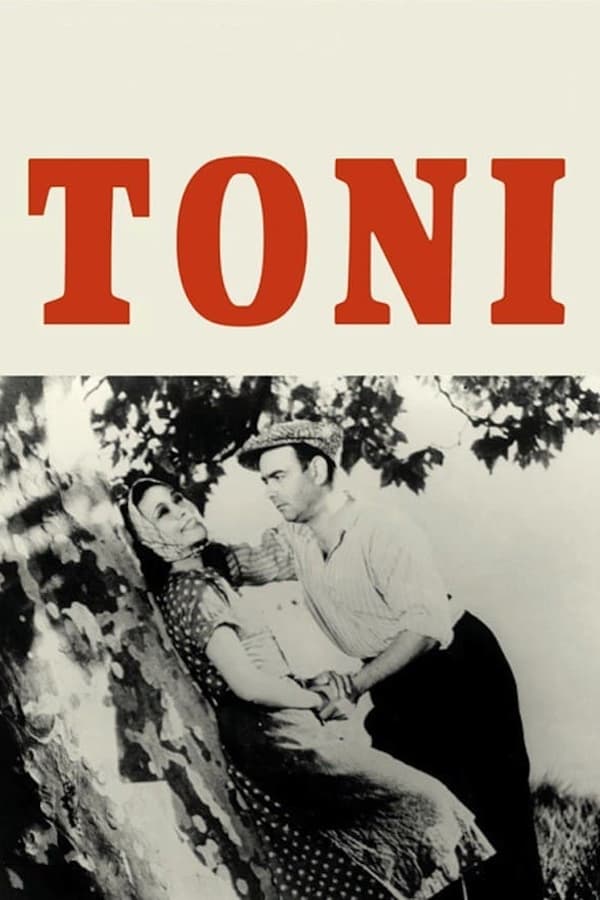
I can’t believe it has been over 2 years since I last sat down to watch some of the great French director Jean Renoir’s films. Well past due for more, I’d say! Starting today with 1935’s Toni, a lesser known film of his using non-professional actors. Unfortunately it tells. The eponymous Toni is an Italian immigrant working as a laborer in southern France. He starts with a relationship with his boarding lady, Marie, mostly to get a place to stay, but as time goes on, it is clear he isn’t interested for the long term. He has his eye on Josefa, a Spanish immigrant, but she gets involved with another man, leaving Toni to settle for Marie. A couple years down the line, things haven’t changed, but Josefa is ready to leave her abusive husband, and Toni sees his chance. Unfortunately the story is altogether forgettable, and some of the actors are downright bad, like Josefa’s husband, who can’t seem to stop grinning in every scene he’s in, whether he’s being cruel or loving. I’ll give Renoir a pass on this one. ★½

The Lower Depths followed a year later, and is based on a Russian play. Thankfully we bring out the stars this time, led by French superstar Jean Gabin as Pépel. Pépel is a thief living in a flophouse. He’s been shagging the boarding house owner’s (Kostylev) wife Vassilissa, but admits later that his heart isn’t in it anymore. Pépel makes a true friend in an odd way: while robbing the local Baron one night, he is discovered, and Pépel and the Baron hit it off. The Baron invites Pépel to take what he wants, as he is heavily in debt and his creditors will be by in the morning to take all his belongings anyway. Now penniless, the Baron ends up living at Kostylev’s building too, and he and Pépel continue their friendship. As the story plays along, Pépel grows feelings for Vassilissa’s younger sister Natasha, but she doesn’t want to be with a thief. Pépel laments to the Baron that he is only a thief because his father was one, and it is all he has ever known. As he tries to prove himself to Natasha, Pépel must break the mold or risk dying in jail as his dad did. A much better film than Toni, with a fantastic turn from Gabin. Lots of humor too, supplied mostly by the various characters living in the flophouse with Pépel. ★★½

Jumping ahead to 1951 and Renoir’s film The River, which was shot in India and had that country’s soon-to-be-celebrated director Satyajit Ray assisting in finding filming locations (his breakout Pather Panchali was still 4 years away). Based on a novel, the movie follows a British family living near the Ganges River in India, and is narrated by the eldest daughter, teenager Harriet. Harriet begins the film by introducing her family and friends, throwing names at the viewer in a whirlwind, and I’m glad I didn’t have to remember them all! The important ones are Valerie, Harriet’s friend, and Captain John, the neighbor’s cousin who is visiting from America. Harriet is immediately infatuated with John (to be honest, she doesn’t have many other options), but so is every other girl in the area. Valerie has been Harriet’s childhood friend, but being a year or two older, she already has the body of a woman, and competes for John’s attention, as does John’s benefactor’s daughter, Melanie, a young woman of mixed heritage, from her English father and Indian mother. All of the drama takes place along the Ganges, where everyone from the lowliest peasant to the richest landowner does business, and on which they rely for their livelihood. It’s a very good drama, and like most Indian films I’ve seen from this era, shot in beautiful technicolor that pops on screen. I’m really liking Renoir’s style of humor too. ★★★
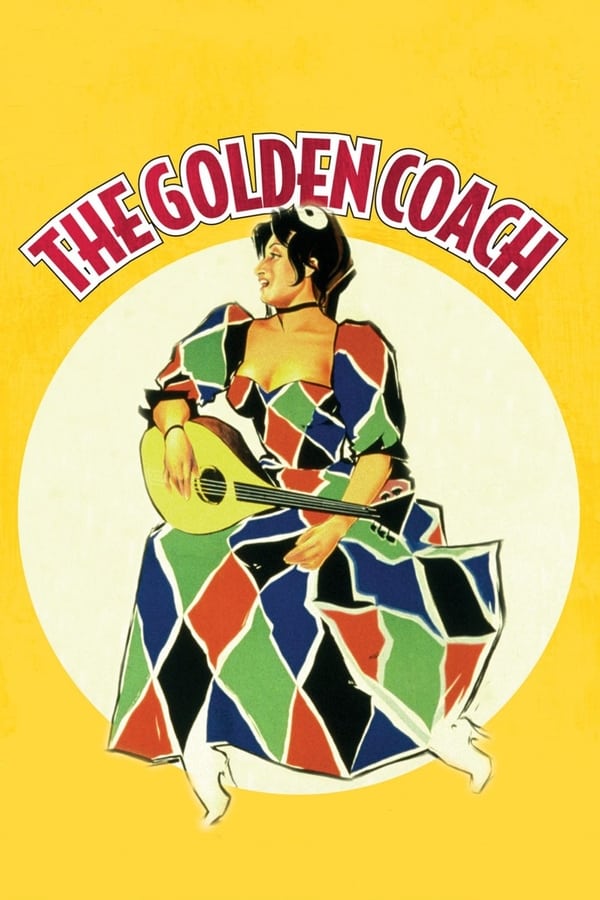
The Golden Coach came the next year, and brings to the screen the great Anna Magnani (of Rome Open City and Mamma Roma fame; I still need to see her Oscar winning performance in The Rose Tattoo). Shot in Italy, it is an English language film about a traveling troupe of actors who’ve been commissioned to come to Peru for entertainment. They arrive to see much lesser accommodations than what they were used to in Europe, but try to make the best of the situation. On the same ship that brought them was also transported a golden coach, which the local Viceroy originally purchased to give to his mistress, but has decided instead to use public funds to pay for it so it can be paraded in front of the locals. To throw a further wrench in the Viceroy’s grand scheme, he falls in love with Camilia (Magnani), one of the actors. Camilia has also caught the eye of a local celebrity, Ramon the bull fighter, and she already has a boyfriend among their travelers. Between the Viceroy’s love triangle and Camilia’s love quadrangle, there are plenty of laughs to be had. Though the film petered out just a bit by the end, I still really enjoyed the fun along the way. Great cast up and down. ★★★½
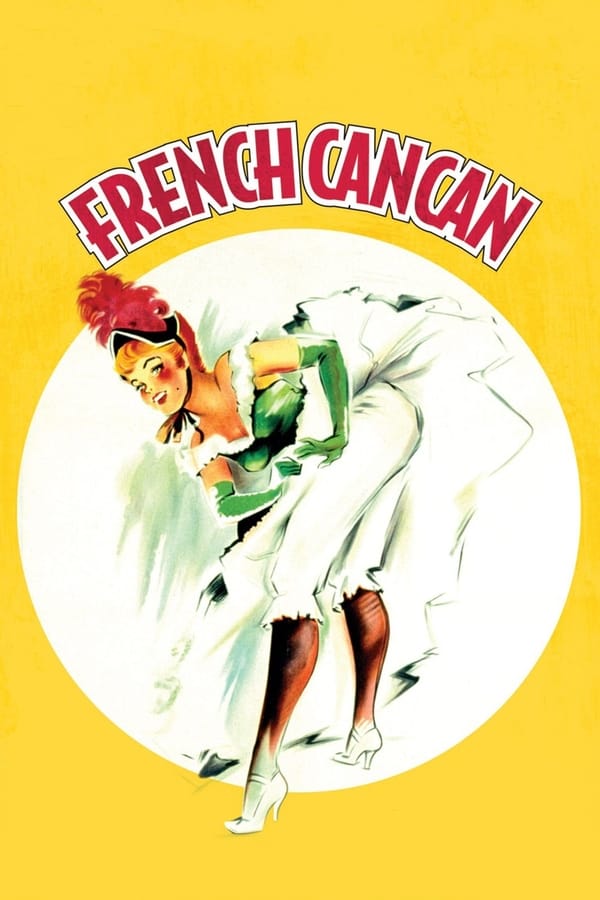
French Cancan is a fictionalized telling of the opening of the famous French cabaret Moulin Rouge. Jean Gabin plays Henri Danglard (a fictional version of Charles Zidler), a night club owner who sees his small club struggling, despite good talent, which includes his mistress Lola, a belly dancer. One evening, Henri and Lola go to a dance hall where the working class kick back at night, and Henri is immediately intrigued by a young woman named Nini. She loves to dance, and particularly likes the old fashioned cancan style. Pursing an idea, Henri secures financial backers to renovate the old dance hall and turn it into the Moulin Rouge, a new venue where average people can feel like nobles, drinking champagne and watching premier entertainment. Henri hires a dance instructor to teach Nini and other dancers a new style of the cancan that will bring in the people. While he tries to get the new club open, he faces jealousies between Nini and Lola, as well as each of their lovers/significant others having their own jealousies over Henri. Sound intriguing? Unfortunately it’s not. For a quasi-musical about a famous (or infamous?) institution, the movie is quite dull. I couldn’t get too excited about any of the characters, and the film feels too much like a standard 1950s American drama. Maybe Renoir had had a bit too much Hollywood influence by this point in his career, as I felt much the same about the next film… ★
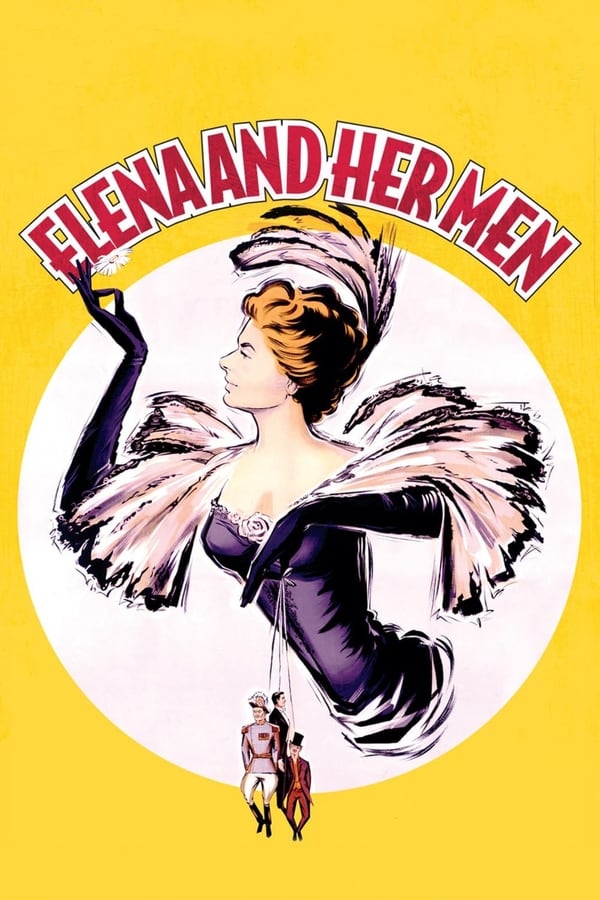
Elena and Her Men carries that same kind of feel and texture (overly-played Hollywood romantic comedy), but at least it is a lot funnier. The eponymous Elena is portrayed by the great Ingrid Bergman. She’s a Polish noble with a good family but no money, living in France in the late 19th century. Elena has a way of turning every man’s head, and has no shortage of suitors. Knowing her family’s situation, she promises to marry an affluent businessman, but immediately regrets her decision. During a parade to celebrate Bastille Day, she meets a Count, and is swept off her feet. The Count is a longtime friend to General Rollan, a war hero who is being pushed by advisors to take over the unpopular government. Rollan too is smitten by Elena, and seems to always have good luck in life, both professional and personal, when she gives him her favor. Now with three men clambering after her, Elena has her hands full. As does everyone else in this cast, which is full of cuckolded lovers and unrequited love. I can’t say I ever laughed too hard, but I chuckled and grinned a lot, and Bergman is charming as always. ★★½
- TV series currently watching: Star Trek Lower Decks (season 2)
- Book currently reading: The Wishsong of Shannara by Terry Brooks

 Jons Movie Takes
2 thoughts on “Quick takes on The Golden Coach and other Renoir films”