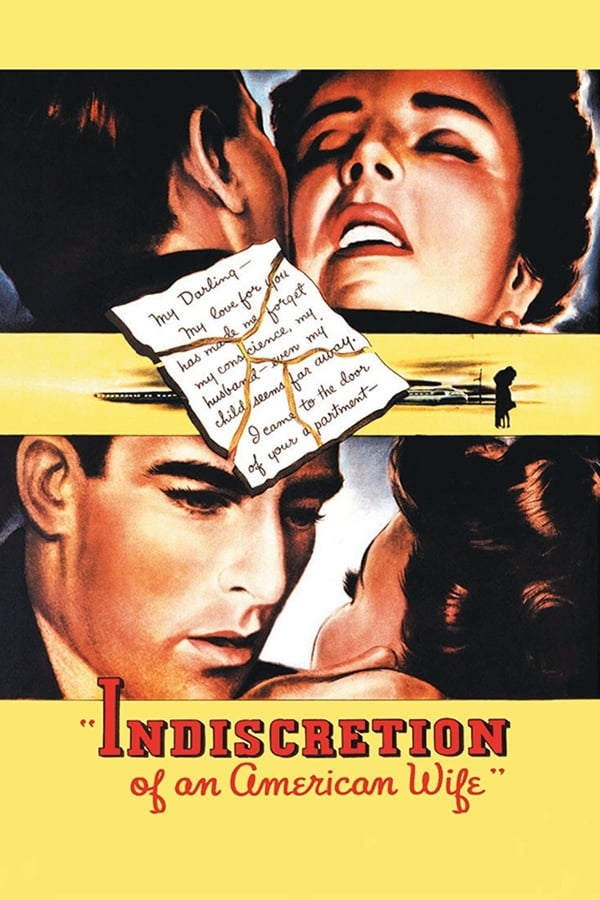
I usually space my films sets by same directors out a bit, but I had such a good time with Vittorio De Sica recently that I dove right back in. Up first today is Terminal Station, a 1953 Italian/USA co-production, directed by De Sica and produced by the legendary David O Selznick. Mary is an American housewife who’s been visiting her sister in Rome, but at the beginning of the film, she suddenly and without warning goes to Rome’s main railway station, Stazione Termini, to book passage out of town on the next available train. She wants to catch a flight out of Paris to return to the USA, but despite being told there’s an 8:30 train direct to Paris, she opts for the earlier 7:00 train to Milan, and will connect from there. The reason for her sudden departure becomes clear when Giovanni arrives. Mary has been having a month-long affair with the Italian (who strangely doesn’t have an Italian accent… welcome to 1950’s Hollywood), and has finally gotten cold feet. The guilt has reached a level that she wants to return to her husband and daughter in Philadelphia. I think the film tries to be Brief Encounter with some more lurid details and a couple thrills thrown in, but never reaches those heights. The actors (celebrated Jennifer Jones and Montgomery Clift, respectively) come off as cold to the camera and to each other, and I never felt the simmering, burning desire. Behind the scenes, despite an all-star team of De Sica and Selznick, as well as De Sica’s longtime screenwriter Cesare Zavattini and even Truman Capote, production was plagued by problems. The known perfectionist Selznick, now late in his career and having never been able to get away from the shadow of his triumph Gone With the Wind, rubbed De Sica the wrong way constantly, and ended up chopping 15 minutes off the film and releasing it in the USA under a new title, Indiscretion of an American Wife. ★★
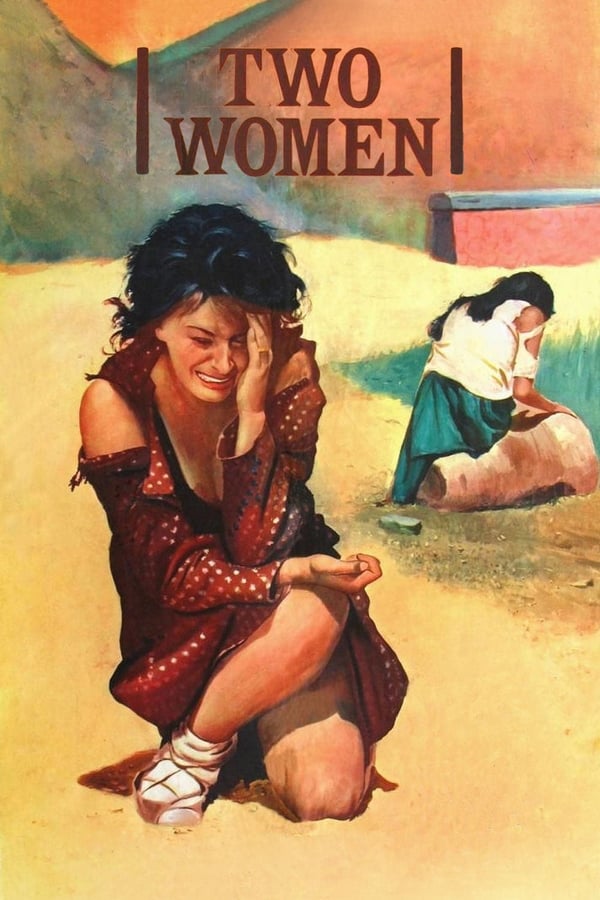
Two Women (Italian: La clociara) gets us back on track. Cesira (Sophia Loren) is a single mother and shopowner in Rome during World War II, but as the war is turning against Italy and the city is constantly under threat of air raids, she wants to move her 12-year-old daughter out of the city and to the safety of the mountains. Her daughter Rosetta (Eleonara Brown) is very religious, and very innocent, and Cesira would like to keep her that way as long as possible. After asking a friend to watch the shop for awhile, the two up head up to Cesira’s childhood village in a rural part of the country, where they still have family. Many people have fled to there, including a college graduate named Michele (Jean-Paul Belmondo). Michele is a smart guy, deep in his studies, and is able to have conversations about everything from the Bible to the government to society. He becomes a father figure of sorts to Rosetta, even while he falls in love with Cesira. But before long, he is taken prisoner by German soldiers and forced to be their guide. Now lonely, and with Allied forces having recently captured Rome, Cesira decides to take Rosetta back to the city. Unfortunately they are attacked on the road, and the brutality of the event will take Rosetta’s innocence and forever change the trajectory of their lives. Loren is fantastic as always, and Belmondo, having recently come off his breakout hit Breathless (just released earlier in the year) is wonderful in a much different role than he was typically cast. De Sica is able to inject humor early in the film, which balances out the darkness that comes later, and the climactic attack is gut wrenching. ★★★½
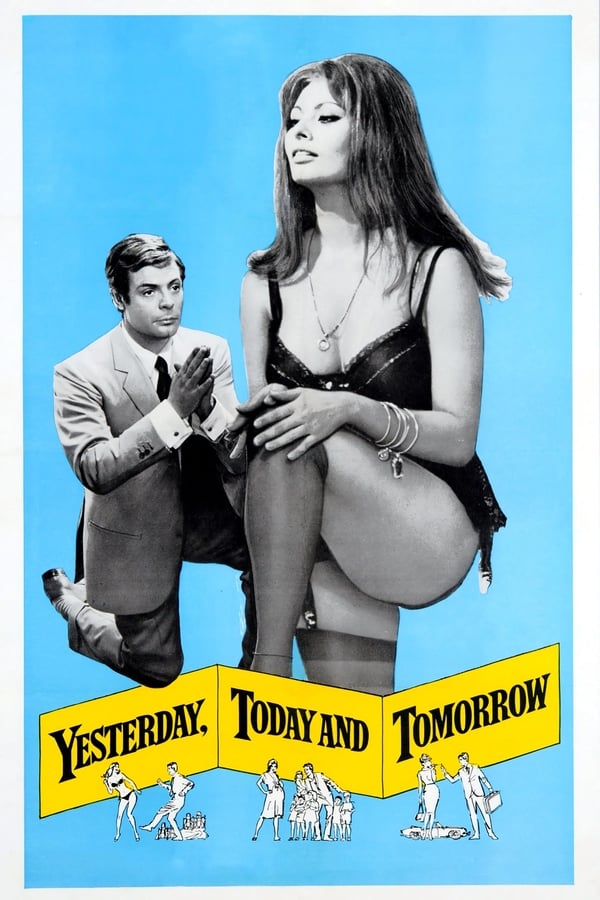
Yesterday, Today and Tomorrow is an anthology film consisting of three stories, each starring superstars Sophia Loren and Marcelo Mastroianni in different roles. In the first, Adelina is a woman who’s been fined for selling cigarettes on the black market. Police show up to arrest her for not paying the fine, only to see that she’s pregnant, and a law on the books says a woman can’t be jailed while expecting, or for 5 months after while she’s nursing. Seeing a way out, Adelina gets her husband Carmine to keep her “in a family way” to avoid jail time, until they have 7 kids in tow and Carmine can no longer physically keep up his end of the bargain. In the second short, Anna is a rich housewife driving her husband’s Rolls Royce around town, with her new lover Renzo in tow. Until he wrecks the car and we see where Anna’s true love lies. The final act focuses on a high-end prostitute named Mara, who’s become the fascination of a young clergyman-to-be, much to the consternation of the boy’s grandparents, as well her horny client Augusto. The first and third segments are the best, but all are lighthearted comedic acts, allowing Loren and Mastroianni to show off different skills that you don’t always see from them. The laughs weren’t always to my taste, but there’s enough here to be entertaining. ★★★
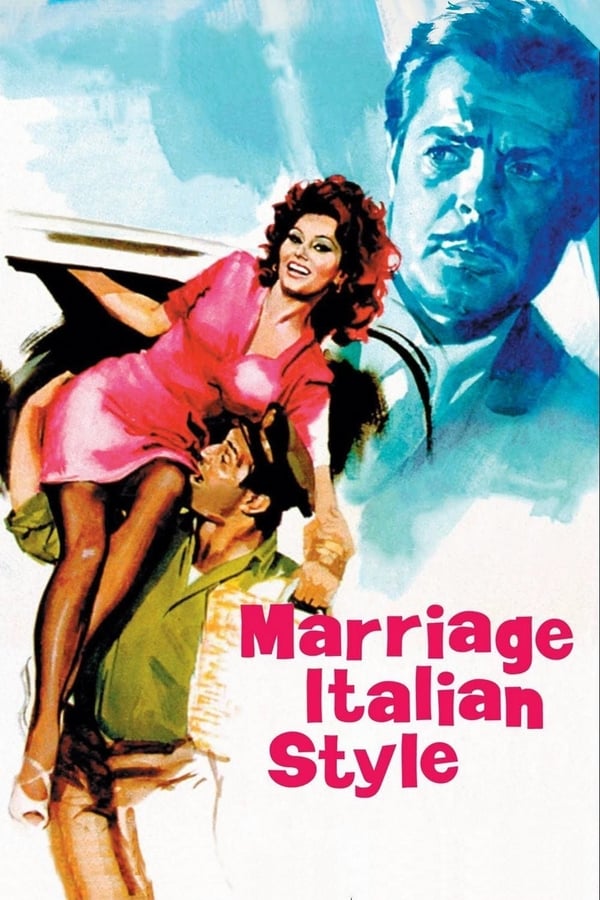
Marriage Italian-Style brings Loren and Mastroianna back, in a role that really allowed Sophia Loren to shine. The film begins near the end, so to speak, with a middle aged Filumena suffering from a mental breakdown because her boyfriend, Domenico, is about to marry another woman. We then get flashbacks showing how they first met during World War II. Domenico is visiting a brothel when an air raid siren goes off. He finds Filumena, a young 17-year-old at the time, hiding in a closet, and they strike up a conversation. Over the intervening years, she falls in love with him, and while he takes care of Filumena financially (putting her in an apartment, etc), he continues to have dalliances with other women. Her “sickness” in the present day is just a ploy to trick Domenico to marry her instead of the other woman. And boy does he have another thing coming, when he realizes that Filumena has mothered 3 kids over the years, and claims one of them is his! This film is very funny, but also full of emotion. Watching the household rally around Filumena is hilarious, as all of Domenico’s own servants take her side in all their arguments. While the ending is a little too “clean” for a movie that can be a bit messy at times (purposefully so, for its subject material), it’s a thoroughly well made picture. Loren received her second Oscar nomination, after having won it previously for the above reviewed Two Women. She is certainly deserving for this performance. ★★★★

The Garden of the Finzi-Continis is a much different film from those above, in both look and feel. It follows a community of Jewish Italians in Ferrara during the years leading up to, and start of, World War II. The Finzi-Continis are a family of wealthy aristocratic Jews who have, for a generation, walled themselves off in their huge estate, rarely leaving, and only allowing friends in for visits. Brother and sister Alberto and Micol are the newest generation, themselves young adults getting ready to graduate from school (mostly home schooled from private tutors). That is, if they will be allowed to graduate, as more and more limitations are being set upon the Jewish community from the fascist leaders. One of Alberto’s friends is Giorgio, who is really the focus of the movie. His dad is in the fascist party, but even so, as a Jew, he isn’t given any special privilege, and yet he refuses to believe the worst is yet to come. Giorgio has had a crush on Micol all of his life, sneaking over the wall into her family’s gardens as a kid, and now hoping to marry her as they are getting older. She obviously has feelings for him too, yet she rebuffs him when their moment comes, explaining that they are too alike for a romantic relationship to work. The backdrop for this romance is the coming war, and even on their estate, the Finzi-Continis can’t keep out the hate growing for their people in their own country. It’s a fascinating film. A little slow at times maybe, but made me think of some of the classic period films made by Merchant Ivory. This movie won De Sica his second Oscar in the Foreign Language category. ★★★½
- TV series currently watching: Superman & Lois (season 1)
- Book currently reading: Honeysuckle & Pain by Mark Danielewski

 Jons Movie Takes