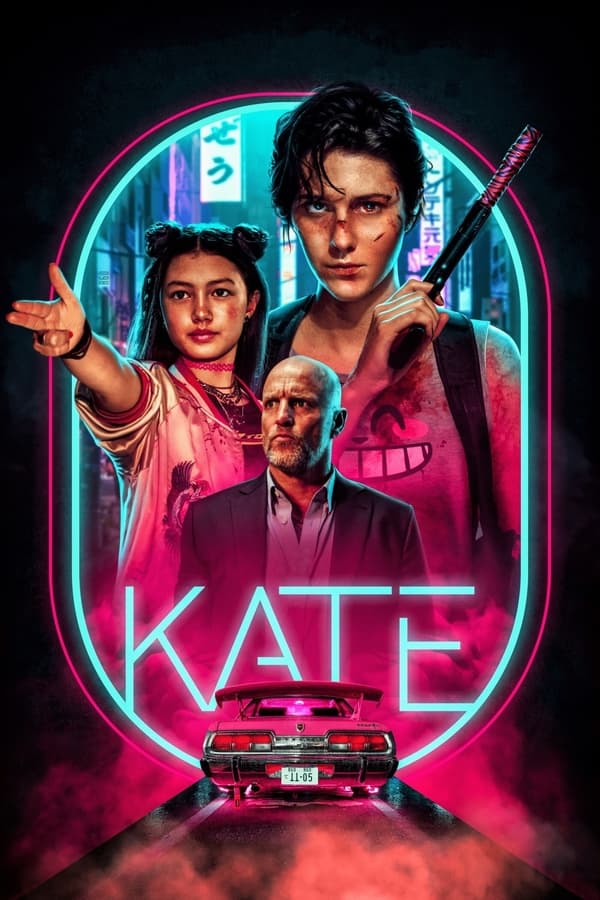
David Leitch has made a name for himself in the last decade. He co-directed and produced the first John Wick, directed Atomic Blonde, the Deadpool Sequel, and Hobbs & Shaw, and produced the surprise (or not-so-surprising?) hit Nobody. Unfortunately his latest production, Kate, directed by Cedric Nicolas-Troyan, doesn’t reach the heights of any of those previous films. It is very much in the same vein as John Wick, Atomic Blonde, and Nobody, with a badass assassin as the lead figure, this time helmed by the always arresting Mary Elizabeth Winstead. Kate is a sniper with a slew of martial arts skills to back up her gun. Her handler is Varrick (Woody Harrelson), who has trained her from a young orphan to be a killing machine. But her latest mission has gone sideways, and she misses her target for the first time in her career. Someone seems to have set her up, as she’s been given a lethal dose of radiation, which will kill her in 24 hours. Can she hunt down her own killer before her time runs out? This movie has all of the bad-ass-ery hand-to-hand fighting of the previously mentioned films, but none of the personality. By the time Keanu Reeves and Bob Odenkirk’s body counts started skyrocketing, we really cared for their characters and wanted to see them win out over their nefarious bad guys. Kate’s own story is just cobbled together and all of the characters in this film are paper-thin and not nearly as fleshed out. 4 stars for action, 1 star for story and direction, combines for a very average ★★½
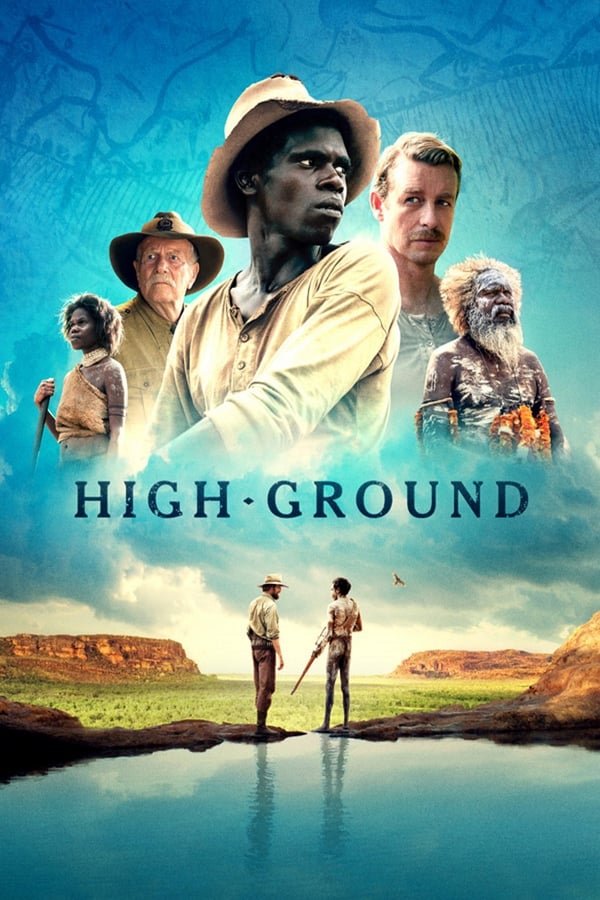
Let’s get one thing straight about High Ground, a film taking place in Australia in the early 20th century: this may be one of the most beautifully shot films I’ve seen in a long time. The panoramic views of the Australian outback and its introspective-inducing vistas are as good as you’ll find. I had to look up the cinematographer to see who the hell this was (Andrew Commis btw, ever heard of him?). You’ll know what I mean from the very opening shot, and the rest of the film doesn’t disappoint either. The film covers skirmishes between Aboriginal people and Australian white men, soldiers fresh off fighting in World War I. Travis is a sniper, overseeing a meeting between his people and a local tribe from a high vantage point, when the meeting goes sideways. Someone shoots off a gun in surprise, leading to a massacre of the tribe. There are only two survivors: a young boy given the new Christian name of Thomas (“Tommy”) and later raised in a village by a priest, and Tommy’s uncle, Baywara, who is left for dead but survives. A decade later, Baywara has united various tribes and they are attacking white settlements, setting them on fire. A white woman is killed in one such raid, bringing down the wrath of the government. Travis is approached to try to bring Baywara in before things get worse, but he has to ask himself if he is on the right side of this conflict. The story is riddled with cliches, but that doesn’t make it a bad movie. There are some very powerful moments too, like a meeting between a tribe elder and an Australian dignitary. The white man talks about how a law has been broken (the murder), but the elder asks who’s law? The elder is living by the laws of his people, which have been on this land for far longer than the “interlopers.” The movie is good, in the 3 star range, but again, damn it is gorgeous, from beginning to end. That alone bumps it up to ★★★★
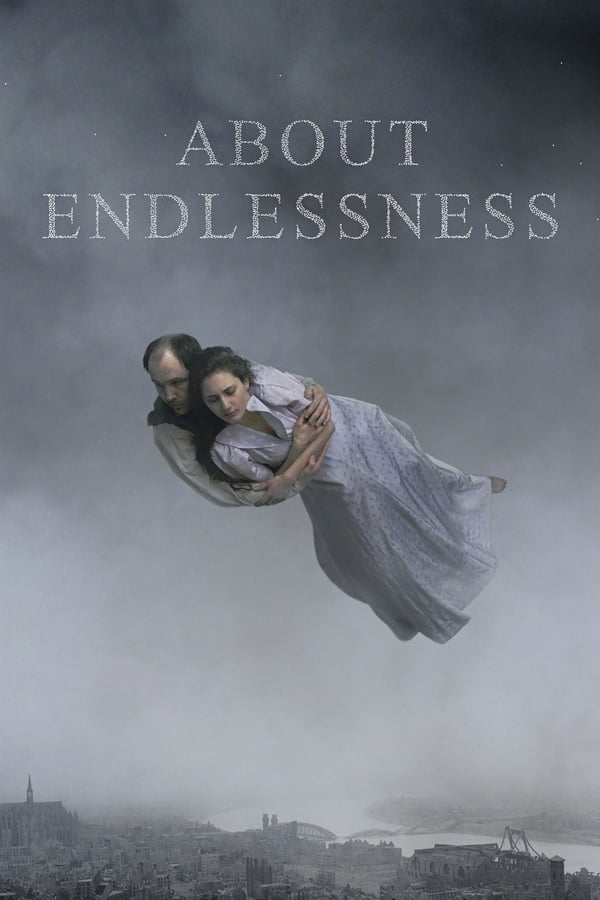
About Endlessness is an interesting movie. A Swedish film from celebrated director Roy Andersson (with whom I’m unfamiliar), it isn’t a narrative piece, and is instead made up of a bunch (a couple dozen) small vignettes, sometimes with voiceover, showing humanity in all of its forms: innocuous, hateful, loving, hurt, lost, and everything in between. The pieces are short, usually just a minute or two, and are mostly unrelated, though a few characters are shown more than once. For example, we see a legless man busking in a subway station, with a man watching on; an older couple visiting their dead son’s grave; a woman arriving by train to be greeted by her husband; a priest who has lost his faith and turned to drink; a father tying his daughter’s shoes in the pouring rain; and so on. There are tender moments of love and heartbreaking moments of pain. The one thing shared by them all is the absolutely gorgeous filming of them. Shown in muted colors, dominated by many various shades of grey, the film as a whole depicts sadness and grief, even during moments of hope. It is short at only 78 minutes, which is good as this kind of piece would get old if it were too long, but in this length, it works, and works well. ★★★★
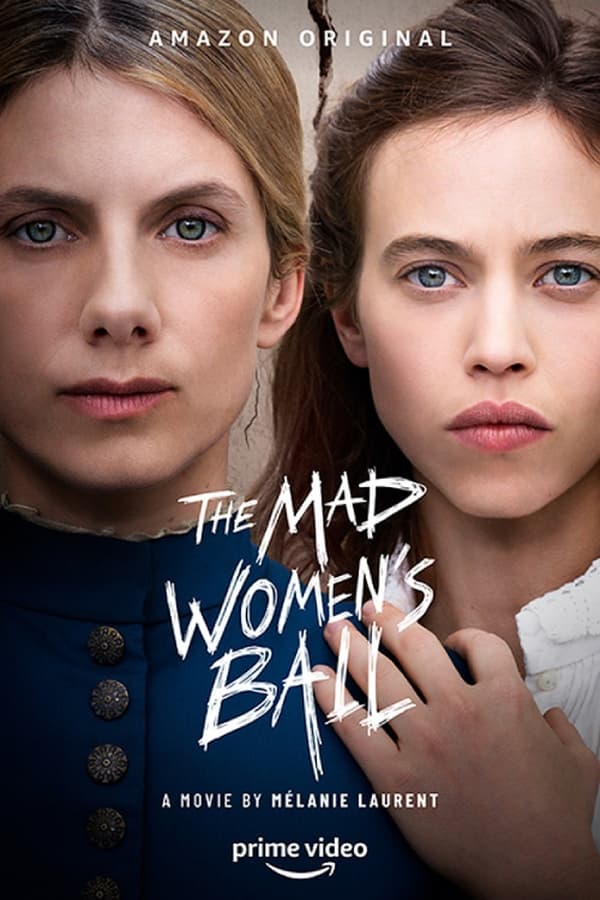
The Mad Women’s Ball is wonderfully acted French film, directed by Mélanie Laurent, who also has one of the starring roles. The main character is Eugéne (Lou de Laâge), a young woman in the 1800’s who is having disturbing visions. Her family thinks she is going crazy, and stick her in an asylum for women. She’s not crazy though, she really is hearing voices from the dead, who only want to get messages to loved ones still living. In the asylum, she finds that most of the committed women don’t belong there. Most are just commoners who were sent there against their wishes, either for wronging a man, or being too willful, or just being poor with no other options in society. No matter what got them there, once inside, they have little hope of ever getting out, and are treated to terrible conditions and torture by the doctors. The only thing they can look forward to every year is the ball, an event held at the hospital where society comes to laugh at the unfortunates. The women don’t care, as it breaks up the monotony of their lives. Mélanie’s gifts are immediately targeted by the doctors, who call her insane and torture her relentlessly. However, she is able to convince the head nurse, Geneviève (Laurent), that her voices are real. In a time when women have little power compared to men, Geneviève is very limited in how she can help make Eugéne’s life any better. There’s some great moments, both thrilling and sometimes downright chilling, and the acting from de Laâge is especially impressive. I recognized her from another film I’d seen a few years ago, The Innocents, which is another worth checking out. Though the ending of this one isn’t as satisfying, it is definitely worthy of a look for the performances. ★★★½
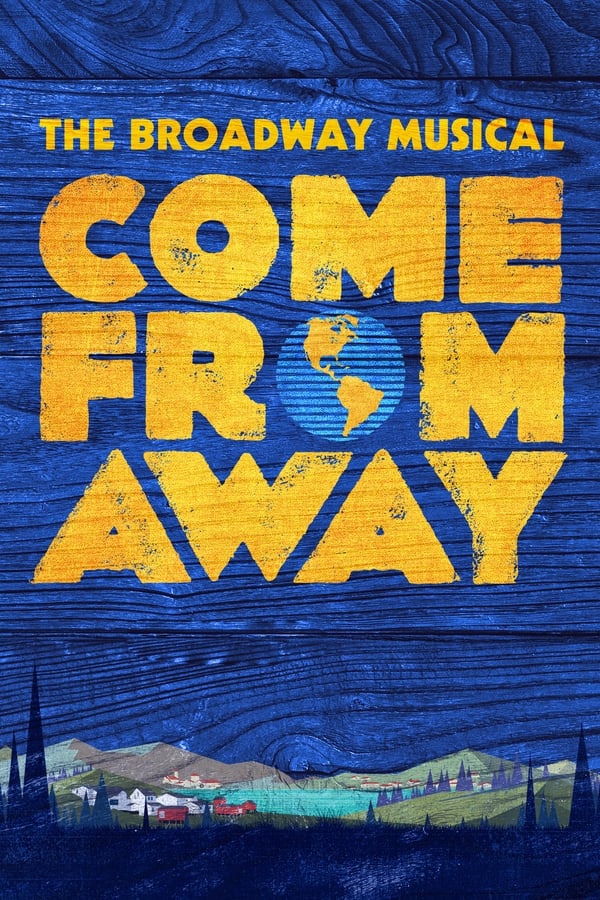
As a diehard musical fan, I could not help but watch Come From Away when it was released on Apple TV+. Based on a true story, it tells of the day, and following week, of September 11, 2001, not in New York, but in Gander, Newfoundland. The tiny Canadian town with a big airport, it saw 38 planes grounded, nearly doubling the population of their area, and having to care for all these people from all around the world, in the uncertainty of those first few days after the attacks. The show is short for a Broadway production, just 1 hour 40 with no intermission, and is shown on a single set, with a small cast of only 12 actors, each taking on multiple parts. In the musical, portrayals are made of the inhabitants of Gander and the nearly 7000 stranded passengers and crew of those 38 planes. It is nearly entirely sung through, and is a marvelous show. The talented cast switch roles in mid-song, often with just a few seconds to put on a hat or new shirt (while staying on stage), and pull it off seamlessly. It’s a brilliant production: it’s funny, sad, and with a heartwarming story, showing that, in the darkest of times, people can still reach out to help those in need. Restores a little faith in humanity. ★★★★½
- TV series currently watching: Stranger Things (season 3)
- Book currently reading: Crime and Punishment by Fyodor Dostoevsky

 Jons Movie Takes