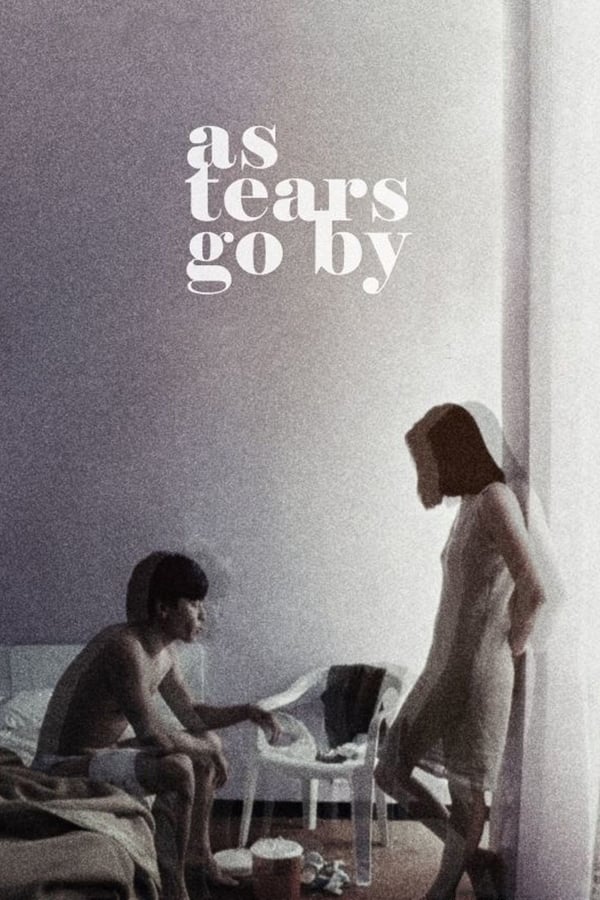
The heralded Hong Kong filmmaker Wong Kar-wai has been on my radar for awhile, and I’m excited to finally check off most of his films thanks to the excellent, recently released Criterion set. His first picture was As Tears Go By, released in 1988. It follows a small-time mob enforcer named Wah, who exudes cool in his every mannerism. In the hierarchal system, Wah is a mid-level “big brother” to Fly, who has none of Wah’s skills or charisma, but he dreams of being a big shot. However, Fly can’t help but always get into trouble with other members in the gang, and while higher ups would frown on Fly being killed, that doesn’t stop him from getting beat up a lot. Wah is always there to rescue him though, that is, until Wah falls for a woman. Ngor is a distant relative who comes to stay with Wah for a short time so she can see a local doctor, and Wah is smitten right away. When she returns home, Wah tries to go back to his life on the streets, but misses her too much. He finally goes to Ngor to resume their relationship, but is called back when Fly gets in over his head once again. Who he ends up with is the big climax in the film. This movie has some great scenes and some beautiful, colorful camerawork, so there are, I think, glimpses of what is to come, but it comes off as a rather forgettable 80s Hong Kong action film. But everyone starts somewhere! ★★½
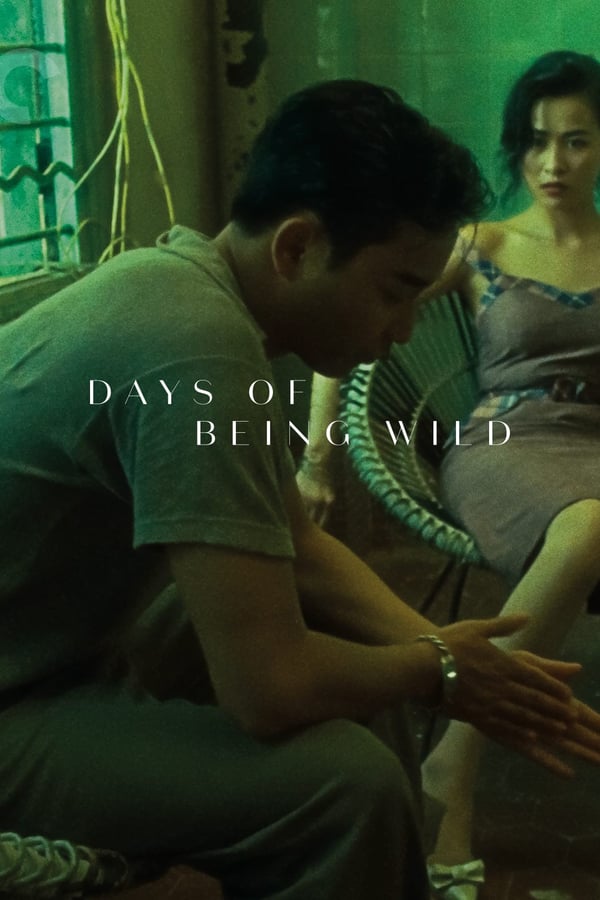
Days of Being Wild followed in 1990. Taking place in the 60s, there are a few main characters, but they all revolve around Yuddy, an aimless 20-something with serious attachment issues. He woos women, sleeps with them for a time, and then discards them. The first of these in the film is Li-zhen. She sees through Yuddy’s nature from the start but can’t resist him when he turns on the charm. When his appeal fades, Li-zhen leaves him, but misses him terribly afterwards. While she is moping around, Yuddy is already onto the next girl, a dancer named Mimi. She falls for him hard too, but unlike Li-zhen, Mimi is unable to walk away on her own when Yuddy drops the flirtatious act, and demeans herself to keep him in her life. You think through all of this that Yuddy is just a bad dude, but we learn later that his attachment issues stem from being abandoned by his birth mother, and being raised by a fairly careless adoptive mother, a former prostitute. Lots of good stuff to unwrap here, and all of it is shot amazingly well. The colors pop, the smoke seems to waft through the screen, and the sweat pouring from the actors, with fans blowing in a failed attempt to stave off the humidity, all create vivid moments that permeate every scene. ★★★½
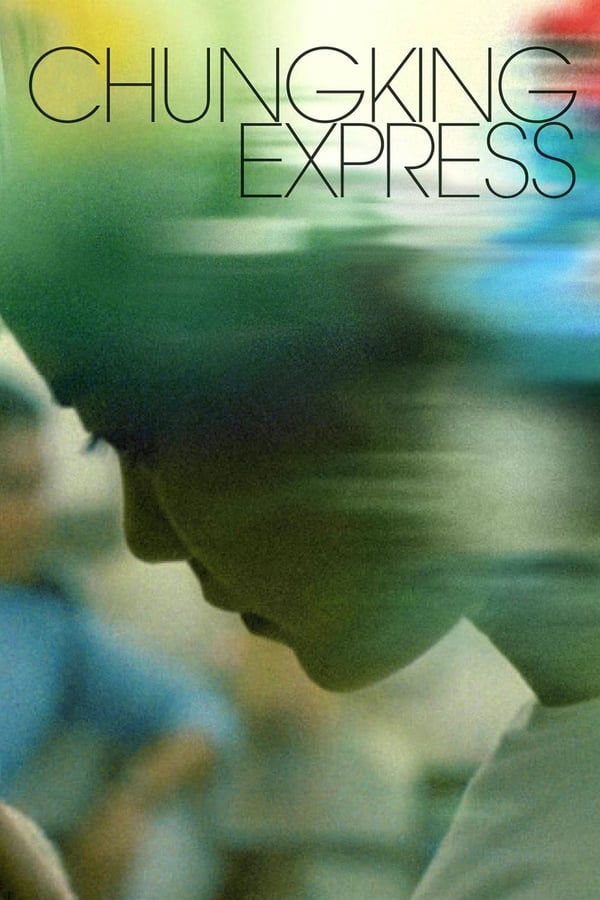
The flashes of brilliance in the first two films come to the fore in Chungking Express. A movie of two parts, the first half follows a police officer who’s just been dumped by his longtime girlfriend. He mopes around, missing her, but is drawn to a woman wearing a bright blonde wig and sunglasses, even inside (because it’s always sunny in the land of cool?). Little does the cop know that she’s been putting together a drug smuggling operation, but her mules escaped out on her with the goods, leaving her in tons of trouble with her higher-ups. The second part of the film focuses on another cop, and he’s been dumped too. He’s also taking it rough, wallowing in his dreary, dirty apartment when he isn’t working. While on his beat, he visits a food stand every day, and has caught the eye of a young worker there, Faye. One day the food stand is given a letter for the cop from his ex-girlfriend, returning the keys to his apartment. Faye holds on to them, and starts visiting his apartment while he’s working. She cleans it up, replacing tattered towels and sheets with new ones. In his depressed haze, the cop doesn’t immediately see the changes that come, but his mood does improve. A dazzling film with beautiful characters, gorgeously shot scenes, and a fun soundtrack of pop hits from several eras. There’s deeper meaning here too, like the first cop’s obsession with buying canned pineapple that expires on May 1. Ostensibly because his ex liked pineapple, it is hard not to see the correlation with the impending handover of Hong Kong from Britain to China, and the sense of foreboding that is coming with it. Just about the perfect movie, it’s fun, funny, romantic, suspenseful, and engaging from beginning to end. ★★★★★
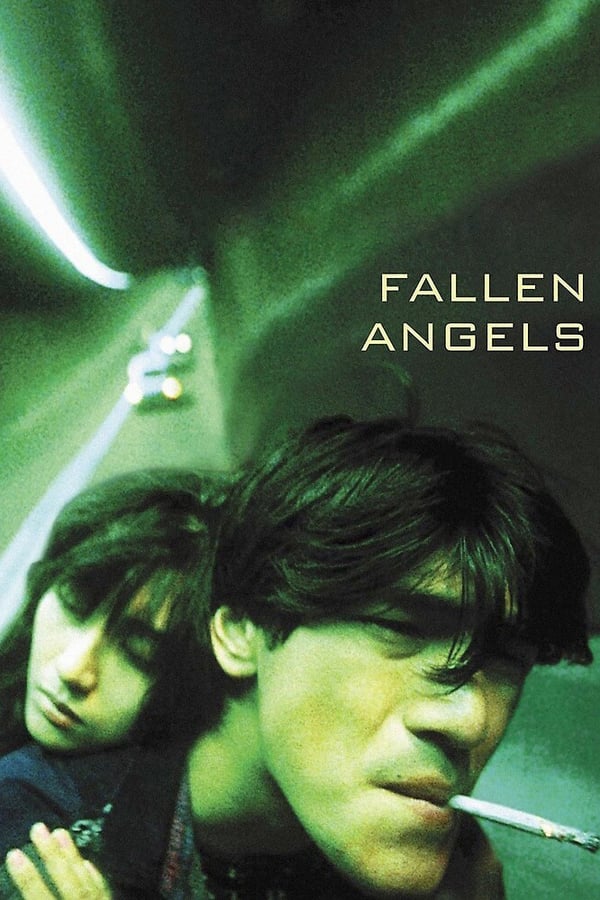
There are many films where you are having a great viewing experience until a letdown in the end (cough, Come True), but rarely does it happen the other way around. I was not into Fallen Angels for a good portion of the movie, in fact, until nearly the final minutes. It’s not that it’s a bad movie by any stretch. I liken it a bit to Chungking Express on LSD. Again, two seemingly unrelated stories (though a bit more tied together than the previous film), but this time, we are heavier on art (big time visual splendor from start to finish) and lighter on plot. In the first half, a hitman and his partner plan and execute (see what I did there?) attacks on underground gambling rings. The girl partner wants more than a professional relationship, but the man is all business with her. In the second half, a seemingly crazy, mute man, on the run from the police, tries different trades as a form of business, but has a hard time taking “no” for an answer. He forces a family to eat ice cream all night in his ice cream van, forcibly cuts the hair and shaves a man who only wanted a little off the top, etc. The man has an on-again, off-again relationship with a bizarre woman, who he enjoys consoling when she needs a good cry. This film is a crazy, chaotic blur, with a lot of funny moments, but for much of the picture, I felt there was too much going on for me to keep track of everything. But then the denouement came, and it tied it all together beautifully. I was in the 2 star range until the last minutes, and then suddenly I wanted to start back at the beginning and watch it all again! ★★★★
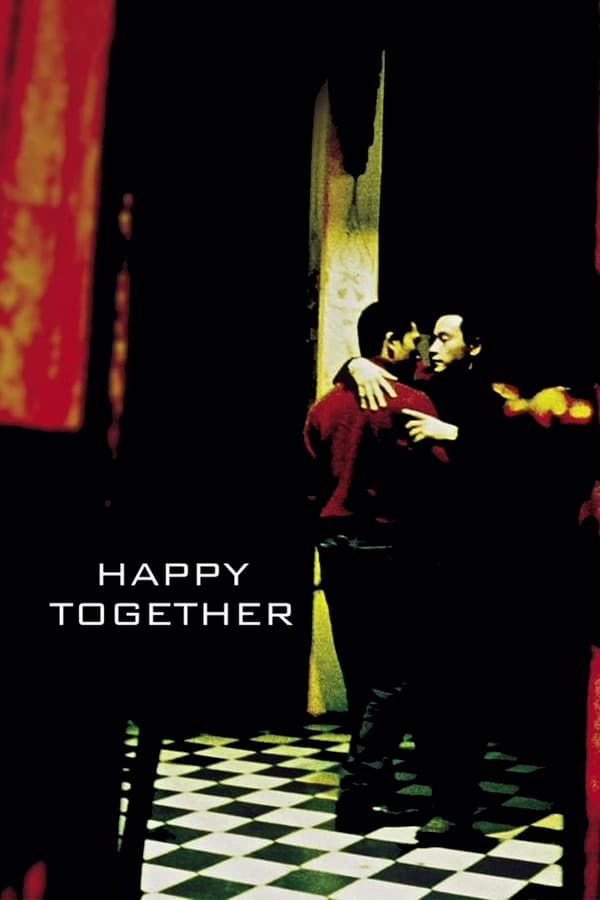
Some criticisms of Wong’s films were that they were “too pretty” and viewers forgave some things due to visual spectacularity of it all. Maybe to thumb his nose at those detractors, Happy Together starts in black and white, and even then, it is still beautiful. It is about a gay couple who are in a perpetual circle of breaking up and getting back together (haven’t we all had one of those?). Ho Po-Wing is all emotion and definitely the more unstable of the couple, while Lai Yiu-Fai is more composed and analytical. In their most recent attempt to “start over,” they’ve tried for a new locale; they’ve moved from Hong Kong to Argentina. They’ve barely arrived there when they break up again, and some time later, they are each stuck in Buenos Aires with no money to return home. Yiu-Fai is working at a crappy job, and Po-Wing has become a prostitute of sorts, hanging with older men in exchange for money and favors. One of these men beats him up pretty badly one night, and Yiu-Fai feels sorry for him, allowing him back into his life while he recovers. But once Wo-Ping is better, he goes back to his violent behaviors. Yiu-Fai has to make his own decision on where his life will take him, and if he has the courage to finally leave Wo-Ping for good. On its own merits, I think the movie is just ok. Certainly not bad, but I don’t think it left a lasting impression on me. However, as a commentary on the upcoming reunion of China and Hong Kong (the movie was released in May 1997, just weeks before the June handover), it is much more important. Are we talking about a couple being happy together, or “one country, two systems”? My rating is based on the film itself, but you can spend a lot of time analyzing various aspects of it and thinking about the bigger picture going on politically. ★★★
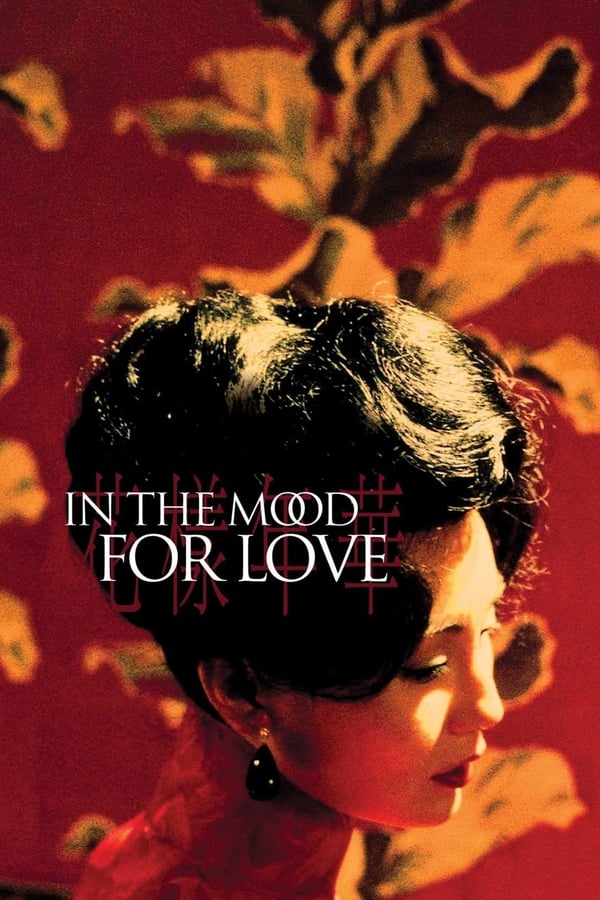
In the Mood for Love is a love story, or at least, Wong’s version of a love story, and a semi-sequel to Days of Being Wild. Chow Mo-wan and Su Li-zhen (Yuddy’s first girlfriend in the above film) separately move into adjoining apartments on the same day. Their respective spouses are rarely home: Mrs Chow works late hours at her job, and Mr Su is often out of town on business. As such, each is often alone in their apartments at night, and pass each other on the way to the local noodle stand for dinner. After a time, Mo-wan invites Li-zhen to dinner. You would think this is the start of an affair, and in a way it is, but it comes out of an unlikely event. At dinner, the duo share with each other that they, each, have come to the realization that their spouses are having an affair with each other. Mo-wan and Li-zhen then begin spending more time with each, at first as a support system over this shared hurt, and later, as something more, as they develop feelings for each other as well. However, in typical Wong fashion, much of their relationship remains enigmatic to the viewer. We don’t know how far they go physically, and the ending doesn’t provide much satisfaction, at least, not one if you are looking for a happy life for all involved. In ends as real life often does, without tidy conclusions. I love this picture. It is true heartfelt love story, achingly so, and mesmerizing from the opening moments. For a long while, the film has a bit of a chaotic feeling with very quick scenes and lots of dialogue, and before you know it, half the movie is over. But I think all those little moments give the viewer an in-depth look at our two main characters. Also really enjoyed how we never see their spouses. When they are in the scene, we only see the backs of their heads, or they are talking from off camera. The focus is always on Mo-wan and Li-zhen and that’s always the centerpiece for the viewer. ★★★★½
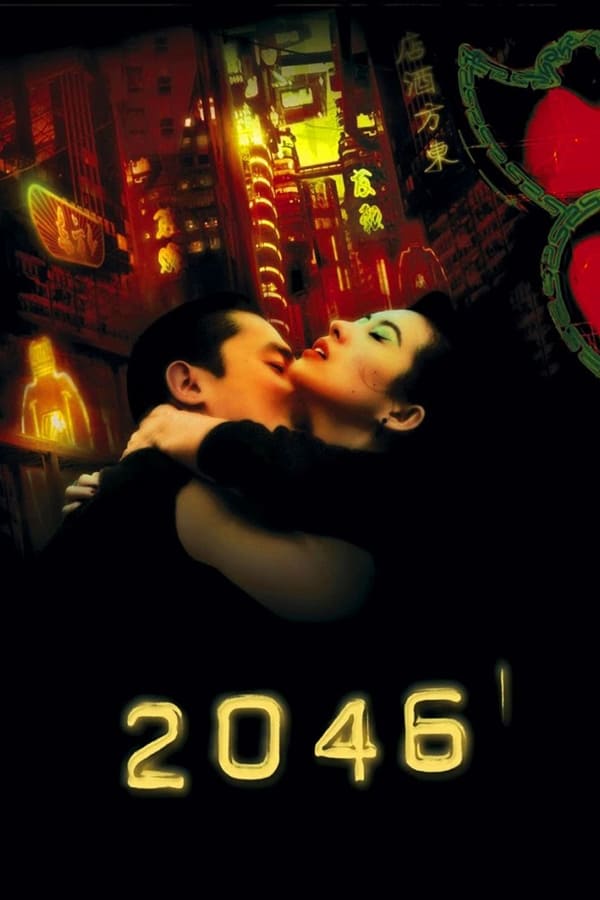
2046 is more of a direct sequel to In the Mood for Love, so there will be some spoilers here for the previous film. At first, you don’t realize it is a sequel, because it starts in the year 2046. A voiceover tells you that people go to 2046 to find lost loved ones, and no one ever returns. No one except the person speaking. We soon learn that the whole concept of 2046 is actually a science fiction novel written by Mo-wan. After being unable to hook up with Li-zhen at the end of the previous film, he’s pretty much given up on love, and lives life as a playboy, bouncing from girl to girl. One girl he takes home one night is Lulu, who happens to be one and the same as Mimi from Days of Being Wild. When she’s sleeping, Mo-wan finds her apartment key, apartment # 2046, which is the same one he and Li-zhen had rented during their affair. He goes to the building and ends up moving in next door, to # 2047. As the movie progresses, he spies in on the various people who live in # 2046, the latest being a prostitute named Bai Ling. Mo-wan woos her to start a regular affair, but when Ling starts to really fall in love with him, he dumps her. In various spots in the film, we see the shape of 2046 in Mo-wan’s head, including his alter-ego as he searches for someone to love him and leave 2046 with him. All of the references to the coldness of 2046, a place that people can’t escape, reference again the relations between Hong Kong and China. As 1997 approached, Wong made movies about the impending sense of trepidation. 2046 is the final year of the current 50 year “experiment” of one country, two systems. Once again, the citizens will, rightly, have some apprehension as that year approaches. Without the context of the previous films in this trilogy, 2046 is still a solid movie on its own merits. Factoring in those movies, this becomes pure perfection. ★★★★★
- TV series currently watching: The Handmaid’s Tale (season 4)
- Book currently reading: The Elfstones of Shannara by Terry Brooks

 Jons Movie Takes