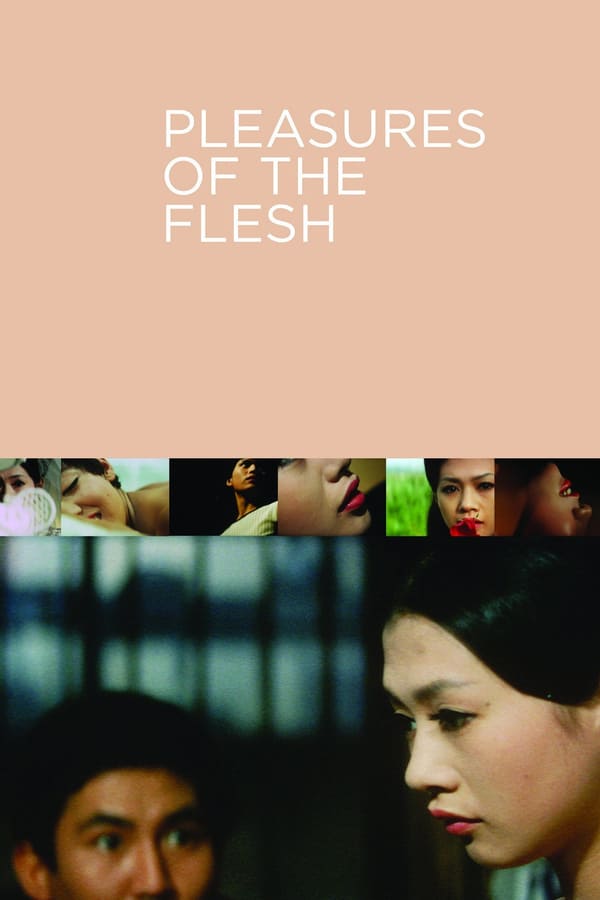
I have two previous experiences with Japanese director Nagisa Oshima, and wasn’t blown away by either (maybe a poor choice of words, for this director). I’m trying again though, keep hoping for something to warrant his reputation. I’m starting with Pleasures of the Flesh, released in 1965. Despite the title and Oshima’s reputation, there’s no nudity here. It’s about a man, Atsushi, who’s completely infatuated with a young woman he used to tutor. She was molested as a child, and Atsushi kills her molester. Unfortunately for Atsushi, someone witnesses the crime, and blackmails him. His blackmail has a weird twist though: the blackmailer is getting ready to be arrested for embezzlement, and tasks Atsushi with holding 30 million yen for him, for a period of 5 years. In 5 years, he’ll be out of jail, and can collect his money and live his life. If Atsushi tells anyone, or spends the money, the blackmailer will go the police with Atsushi’s murder. Atsushi plays it safe for 4 years, but then his love marries another man anyway. Atsushi decides to live it up for the final year, spend all 30 million yen on women, and then kill himself before he can go to jail for his crimes. While the premise is out there, it’s a pretty good setting, but the movie doesn’t take it well from its launching point. Atsushi seems to crave a woman who needs him, even if it is just for his money, and he can never get the right match. He gets more desperate as the year draws to a close, throwing huge sums at women and their pimps, but nothing sticks. The ending is decent, but just enough to bring my rating up a hair. ★★
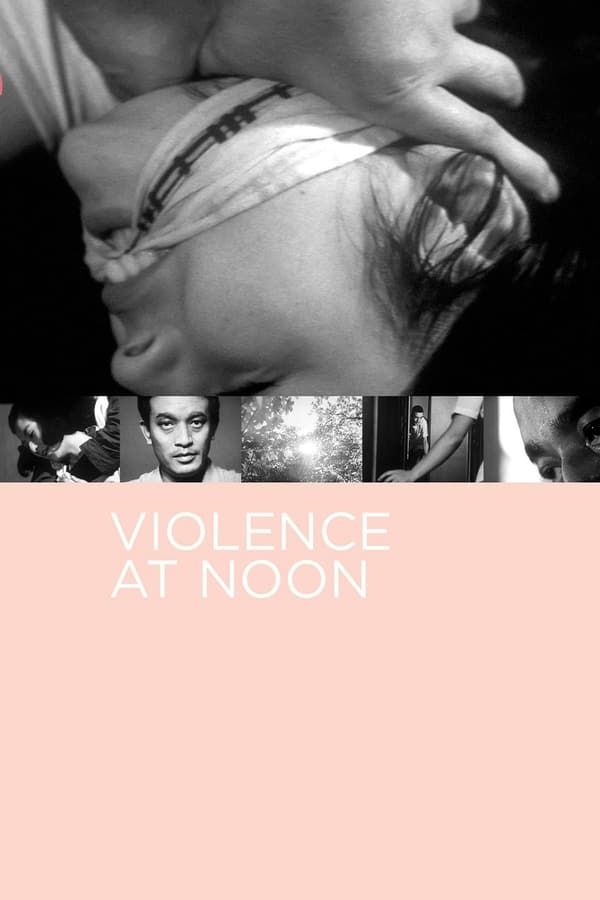
Violence at Noon (also called Violence at High Noon) is a lot better, but equally disturbing in measure. Shino is a young woman working as a servant when she is approached by Eisuke, a man from her past. After a brief discussion where we learn of some sordid previous experience between them, Eisuke attacks Shino and knocks her unconscious. It is implied that he rapes her while she’s out. When she comes to, she finds that he also raped and then killed Shino’s employer. From the police, Shino learns that is the same M.O. as the “high noon attacker.” She doesn’t tell the police that she knows him, but does reach out to Eisuke’s wife, Matsuko. Shino asks Matsuko if she has been aware that her husband is the serial rapist everyone’s been talking about, and this leads to flashbacks to when the three of them were all living in the same village. Another man is there, Genji, who loved Shino, making Eisuke jealous at the time. The movie jumps between past and present from here on out. Ostensibly about Eisuke as the attacker, the latter half of the film focuses more on those 2 women, and the circle of Eisuke and Genji around them. The story is better than The Pleasures of the Flesh, and much more detailed. The film chooses to examine the power that obsession can have over a person. There’s no denying that Eisuke is a monster, but he’s always very deliberate; there’s no mindless or crazed actions from him, and he definitely knows what he’s doing. The film also has an almost Godard-like approach to its camera work. ★★★½
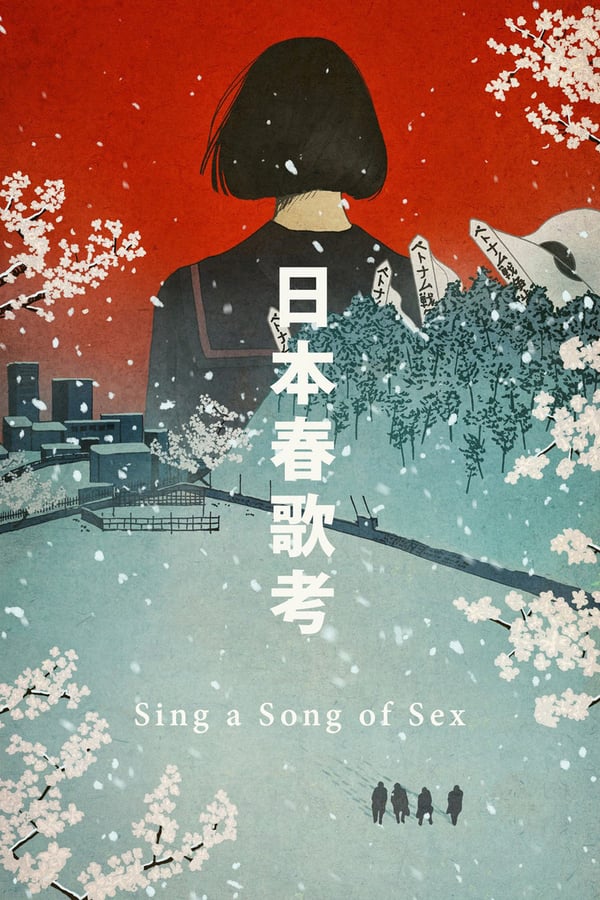
Sing a Song of Sex follows 4 young men, just out of high school, who are following their raging hormones wherever they take them. As most adolescent boys are prone to do, their bark is worse than their bite. They act all tough and macho around each other, talking about how they’d do this and that with this or that girl, but when coming face to face with a person of the opposite sex, they freeze. One night, they go out drinking with a former high school teacher, along with 3 girls who have obvious school-girl crushes on him. The teacher gets drunk, and teaches them a bawdy song. They boys eat it up, and for the rest of the film, sing it to themselves, and grow increasingly bold in their actions with women. They fantasize about raping the prettiest girl in their class, and one of the four men later becomes ashamed of their thoughts. Through all of this, while the boys are in their own little world of sexual desire, around them (and mostly unnoticed by them) are various protests and antiwar sentiments, where fellow classmates are singing American songs like “This Land is Your Land” and “We Shall Overcome.” As the end of the film approached, I got the idea that the boys were too tied up in their emotions to see the greater picture of the world around them, but I also felt I was tantalizingly close to some deeper message that Oshima was trying to convey. Is he lamenting the state of today’s youth? Is he making a statement about human fallacies, impulses, or something else? I didn’t quite get it, but I enjoyed the movie, and wouldn’t mind giving it another go at some point in the future, to see what else I can glean from it. ★★★½
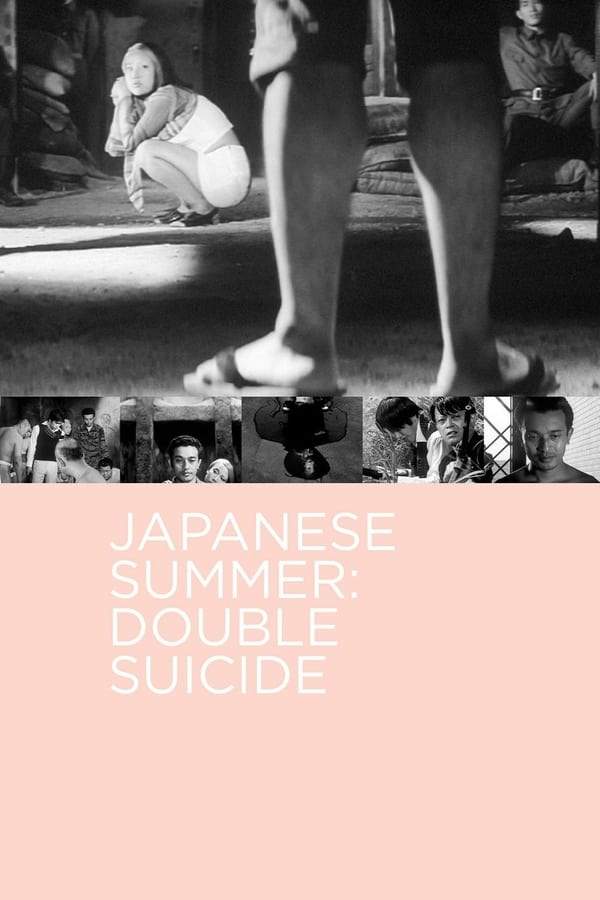
Japanese Summer: Double Suicide is a tale of two halves. The first half (or more), I was really into. It’s sort of an absurdist, quasi-surrealist film, and though strange, I was really digging it. A young woman, hair half colored, half shorn close, and one eyebrow shaved off, is walking down a street trying to get any man to sleep with her. She stumbles upon an aimless man sitting in the street. He shows no interest in her, but she latches on to him and starts following him around. They get picked up by a gang and brought to their hideout, where some more prisoners are being held. The gang is prepping for a battle with a rival group. A teenager also stumbles into the middle of it all, a young man who’s looking for a rifle because he wants to kill someone, anyone. By now, we’ve learned that the first man is looking for someone to kill him. Despite all these converging stories, no one gets their way: the first man can find no one to kill him, the second man can find no one to kill, and no one will sleep with the girl. This includes everyone else in this absurd little group. Despite being really out there, I was eating all of this up, but the final third of the film lost me. An American (whom they call “the foreigner,” maybe so as to not ruffle any feathers) starts terrorizing the streets of the Japanese city, shooting civilians while evading the police. Our ragtag group goes to where he’s holed up, and join him in his reign of terror. I was into the buildup, but didn’t care much for the payoff. Very strange film, about society’s obsession with death. ★★½
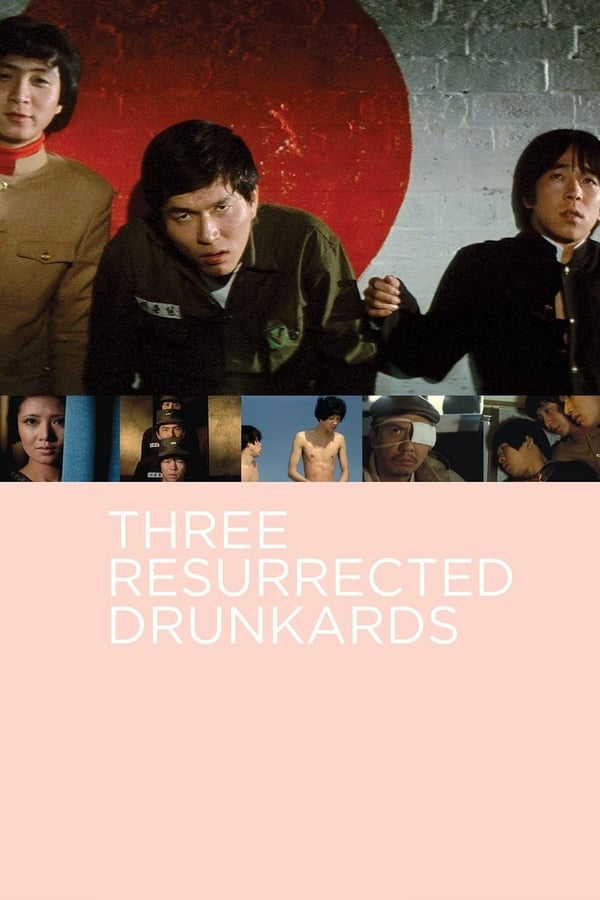
Three Resurrected Drunkards is entertaining, even if it seemed like a lot of fluff to me. Oshima’s rant against his own country’s treatment of Koreans, it is a comedic film about three young rascals who get caught up in a wild adventure. While frolicking on the beach, they come back to their clothes to find that someone has stolen them and replaced them with other attire. The three put on their “new” clothes, and soon realize that the clothes belonged to three Korean immigrants who’ve come to Japan illegally. In a case of mistaken identity, our three young men are now the targets of the police. At the same time, the aforementioned Koreans, when finding that the men have been easily evading the inept cops, decide to kill the men and leave the “Korean” bodies for the cops to find. Our three heroes evade them for awhile, but are eventually hunted down on a train. When they finally meet their untimely ends, the film restarts back at the beach, but this time, the men are prescient about what’s going to happen, and do their best to avoid it (though in a twist of fate, end up back in the same place). Very funny, but it’s one of those comedies that doesn’t stick long. I chuckled and snickered at their antics, and was reminded again of some Godard tactics, with maybe a bit of The Monkeys thrown in, but it’s not a movie I’d watch again. ★★
- TV Series currently watching: Gotham (season 4)
- Book currently reading: The Dark Tower by Stephen King

 Jons Movie Takes
One thought on “Quick takes on Violence at Noon at other Oshima films”