Unbelievably, I’ve never seen a film by the acclaimed and prolific director Agnès Varda (though a couple years ago, I did watch many of her husband’s movies). Often called the mother of the French New Wave, Varda was right in the thick of it with Godard, Rohmer, and the others. Today I’ll be looking at 5 of her earlier films.

La Pointe Courte is “unofficially” considered the first film of the French New Wave. Released in 1955, it preceded by three years Claude Chabrol’s Le Beau Serge, which is generally credited as the first of the new movement. La Pointe Courte definitely has the style down though, in its documentary-like approach, off-beat soundtrack, and the now-classic camerawork. The movie has two overlapping plots. Centrally, we meet a couple who are on the eve of ending their four-year marriage. The girl thinks she has fallen out of love with her husband, and has met him at La Pointe Courte, the quiet seaside fishing village where he grew up, to see if they can make it work or not. In the bigger picture, the film is about the residents of the village. While the couple is secluded in their thoughts and conversations with each other, life goes on in La Pointe Courte. Women gossip about the town whore being pregnant again and wondering as to who the (un)lucky man is. The mothers gather in solidarity when a child dies. The men are harassed by local authorities about where and what they can fish. There are plenty of laughs, like when a 16-year-old girl is slapped by her father for wanting to date, and when she retorts that mother married him when she was 19, the daughter gets it on the other side of the face too. I loved the juxtaposition of the couple in their own little world, oblivious to what is going on around them, and the everyday events that seem like big deals to the villagers (even when they may not always be). Gorgeous cinematography on the coast, and a very enjoyable picture. Makes me hungry to see more from this director! ★★★★½

After her first film did not do well (how can that be?!), Varda waited 7 years to make her followup. Cléo from 5 to 7 follows 90 minutes in the life of pop singer Cléo, as she awaits news from her doctor of a biopsy. The film starts at 5pm on a Tuesday evening in Paris, with Cléo receiving a dire tarot card reading. Shaken, she goes about town with her assistant, Angèle, before arriving to her posh apartment. All she can do is worry, knowing in her heart she has stomach cancer. At Cléo’s apartment, she is visited by a songwriter to work on some new tunes, but Cléo feels she is becoming a pawn for the music industry and leaves, upset. This is at the halfway point in the film, and we see a definite change come over Cléo. Until now she’s been a bit of a diva. She lets clothes drop to the floor for her assistant to pick up, she disregards others’ opinions, etc. Now out on the streets of Paris alone, and later with an old friend, she begins to see more of the world around her. Still worried over her impending diagnosis, she starts to open up and live a little. Finally, she meets a man in the park, a soldier, himself worried because he is being shipped off to fight in the Algerian War. He is able to break through the clouds surrounding Cléo and when she finally gets her news, she is in a much better place. A great film with a feminist perspective, a woman who feels no one listens to her exactly because she is a woman, and the scenes of the bustling Paris in the ‘60s act as a time capsule for modern viewers. I ate it all up. ★★★★
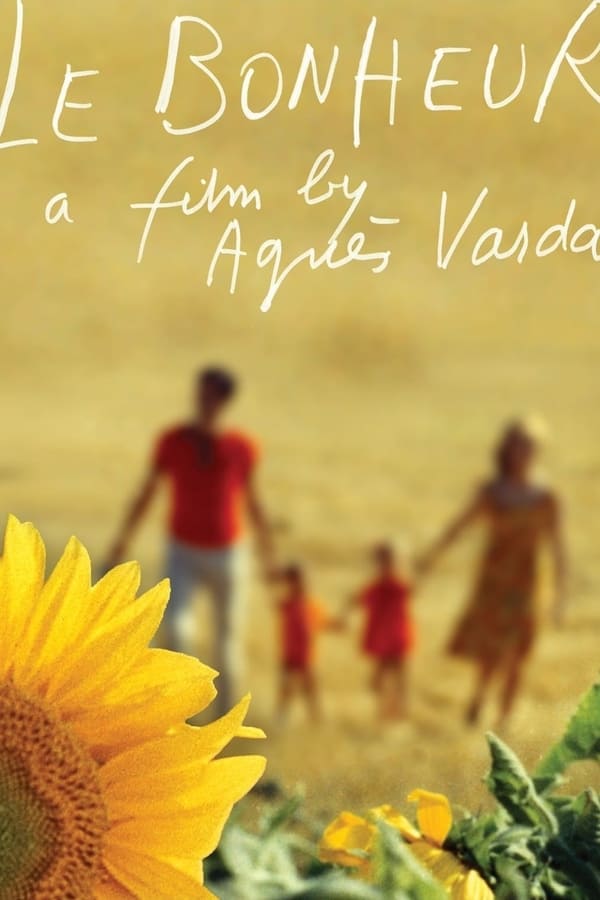
Le bonheur was Varda’s next feature. François seems to have the perfect wife and perfect life. A carpenter by day, he goes home to a loving wife with a couple kids; Thérèse is obviously devoted to him, and they are obviously in love. So why does the young, pretty Émilie catch his eye at the post office? Before you know it, he’s started an affair with her. François is completely honest with Émilie, admitting that he loves his wife and could never leave her, but that he loves Émilie equally as much. Whereas Thérèse is familiar, comfortable, and the perfect mother to their kids, Émilie is young and wild, more adventurous in bed, and an element of excitement to François’s every day life. But François feels an increasing need to be honest with his wife and admit his infidelity. When he does, things do not go as he planned. The movie takes on an almost horror-life feel in the end, and ultimately, I think it is a pretty damning discourse on François’s dominating ego, and the subservient lives that wives are often forced to play to their husbands. ★★★½

Les créatures is a weird movie. It’s the first of these films that I’ve seen that had some bonafide stars (Catherine Deneuve, Michel Piccoli, and Eva Dahlbeck of the Ingmar Bergman troop, in one of her final appearances), but that star power can’t save this strange film. Edgar and Mylène are new to a tiny seaside village, and they keep to themselves, thus fueling rumors in the gossipy town. When alone, Edgar starts writing a story about the people in the village, and the movie starts to crossover between reality and fiction. A strange metallic object is passed around, and whoever has it in their possession, begins to behave erratically, and sometimes violently. In investigating it, Edgar finds that people are being controlled by a crazy scientist in a solitary tower, a man who likes to see people clash with each other. Edgar challenges him to a contest to try to save some people in the village from this behavior. All of the town’s inhabitants appear on a chess board between the two men, and they take turns moving them around and watching their interactions play out on a screen nearby. Can Edgar prevent total chaos, and what parts are real and which are just part of his story? Just a little too weird for me. ★★

If Les créatures is weird, Lions Love is off the deep end. This completely inane movie follows an insipid love trio living a ménage à trois lifestyle in late 60s LA. They are each actors (and in fact, playing semi-fictionalized versions of themselves, you can look them up if you care), but mostly just lounge about enjoying the hippie, carefree life. At least, I assume that’s all they do for the 2 hours length of the film; that’s all they did for the first 30 minutes, until I turned it off. There was no hint of a plot developing, it just seemed like a long string of improvised, stupid dialogue by pretentious idiots, being given free rein by a director unwilling or unable to reign them in. A complete waste of time. ½
- TV series currently watching: The Outsider (miniseries)
- Book currently reading: Anna Karenina by Leo Tolstoy

 Jons Movie Takes
2 thoughts on “Quick takes on Cléo from 5 to 7 and other Varda films”