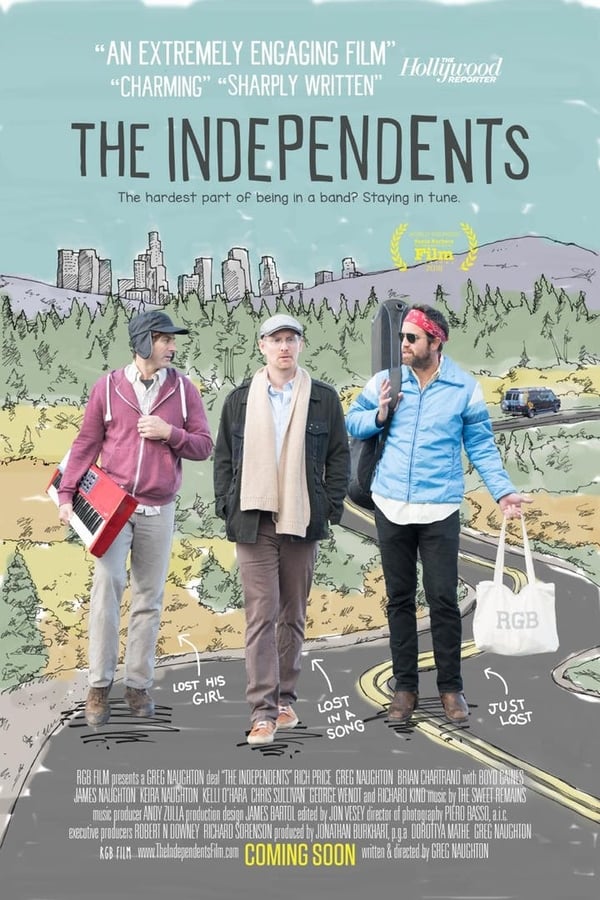
The Independents follows a trio of singer/songwriters in their 30’s. All are struggling professionally and in their private lives, and each has considered giving up their love of music to get “real jobs.” Through a random chain of events, they end up together and form a folk rock trio and try to take it on the road, looking for gigs. Things do not go as planned. The movie is loosely based on the group The Sweet Remains, whose members are the actors and it is their music in the picture. And there is a lot of it. Like director John Carney’s films (Once, Begin Again, Sing Street), music dominates this movie, to the point that the plot takes second row. Decent enough music if you are into the folk rock scene, but not enough meat and potatoes for my taste. ★★
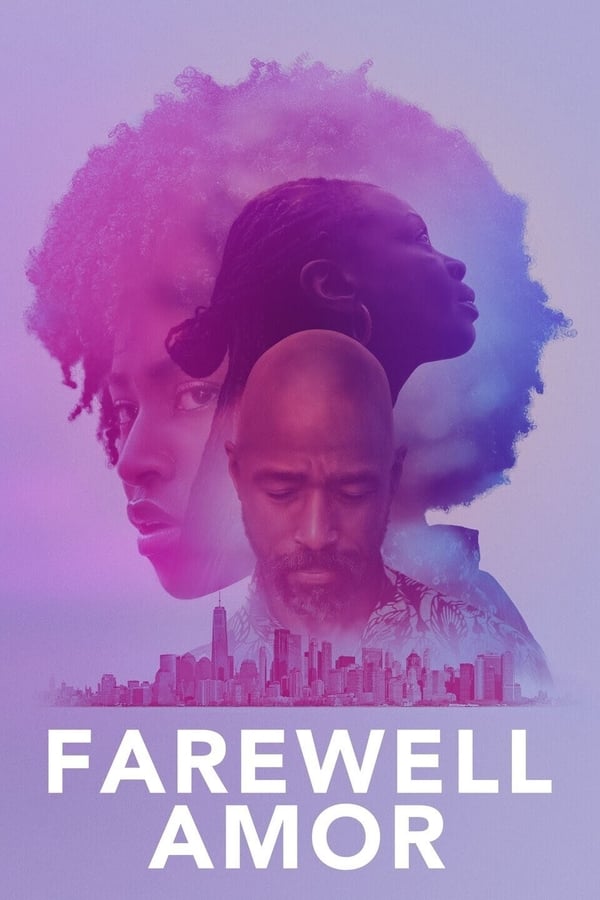
Farewell Amor follows a family of immigrants who’ve finally come together after a long time apart. Originally from Angola, Walter fled during the country’s political (and dangerous) upheaval. He came to the USA to make some money, to pave the way for his wife and daughter to follow. Unfortunately 17 years passed before the two of them could join him. The movie begins with Walter finally reconnecting with his family. The film is made up of 3 parts, one from each of the family members. Walter is a good man; while he did find the company of a woman while living alone in the USA all those years, he left her as soon as his wife was able to come. He expects to pick up exactly where they left off, but his wife is changed. Esther has found religion in those intervening years, and is not the same person. Sylvia is a teenager now and barely remembers her dad; he is a stranger to her. Unlike her mom, she is open to American culture and loves to dance, but is restricted by her conservative mother. The film does a great job of showing a story that is probably very common today, and told well. It doesn’t always hit the right notes, but it is a touching story. ★★★½
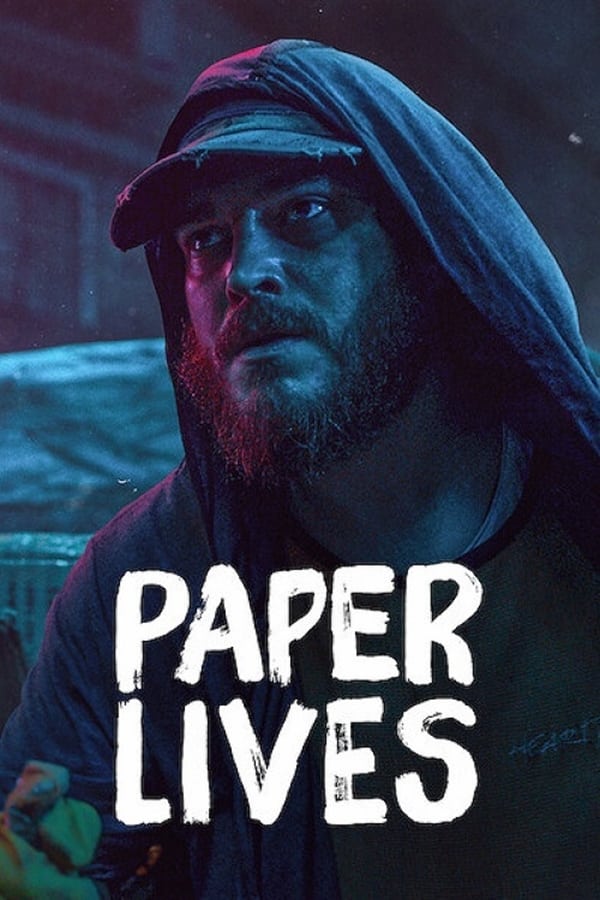
Paper Lives is a film out of Turkey, following a man named Mehmet, who finds a young homeless boy. Mehmet himself was an orphan, and he runs a recycling business whose workers are made up on men and teens just him, all without parents. It’s a hard job, scrounging the city’s trash daily for items to turn into money, and it is made tougher for Mehmet in particular, as he has failing kidneys, and he’s way down on the donor list. It’s at that dark and dingy warehouse where he finds Ali one night. The young boy was apparently thrown in one of his bins. With bruises all over his arms, legs, and back, it is obvious the boy has been abused. He doesn’t want to return home, nor go to the police. Because of their similar backgrounds, Mehmet takes an instant liking to Ali, and becomes a fatherly figure. It’s a touch movie through most of its length, until the end, where it takes a weird turn. As such, the experience was a bit unsatisfying for me. It’s always a bummer to be let down at the very end. ★★

Long time readers of my blog know that I favor the Marvel films to DC’s, and by a pretty hefty margin. But I was intrigued by Zack Snyder’s Justice League, the newest director’s cut of the disappointing 2017 film. Diehards will know this story, but for those casual movie-goers, here’s how it went down. Zack Snyder directed the first two DC Universe films: Man of Steel and Batman v Superman. Many thought the second film was too dark, so on Justice League, he was given a shorter leash and told to make it more appealing to a younger audience. When some of edits still didn’t do it for the higher-ups at Warner Bros, Joss Whedon (who’s Avengers movies were making money hand over fist) was brought in to make changes. When Snyder had to step away from the film over the sudden death of his daughter by suicide, Whedon finished up, making sweeping changes that changed the entire film. This is what was released in 2017, and it bombed. When I saw it the first time, I thought it was a bit of a mess (though I did enjoy the big climax). Big-time comic fans have been yelling ever since, to see what Snyder’s original vision would have brought. After so much clamoring, Warner finally gave Snyder his chance. They gave him a bag full of cash to shoot some new scenes and finish his “vision.” This time through was a completely different story. I loved this new cut, and I had no problem with the 4 hour runtime. The backstories make sense. The characters are fleshed out. The story isn’t rushed. Yes, it is far darker and gorier; gone is the campiness I thought Whedon’s final film brought. It now has the feeling of a true superhero team-up to prevent the end of the world, a la Avengers, which is what they wanted in the first place. I’m not sure Snyder will ever get a chance to make more DC movies, but I’d love to see what else he can bring if given the chance. ★★★★★

Isabel isn’t a true movie, but it is just a 3 part miniseries (airing on HBO), and with each episode at just an hour, it’s the same length as a long movie. A biopic, it tells the life of Chilean writer Isabel Allende, a name I was familiar with, but didn’t know much about. I went in blind, and was well rewarded. The film begins with Isabel as a young adult and a housewife, with a couple kids at home. She is approached by a friend to become a writer for a start-up women’s magazine which will focus on pertinent modern-day topics. Though Isabel has zero writing experience, she’s creative and a wiz for storytelling, always making up grand narratives for her kids at play. Isabel is an immediate success at work, but that doesn’t protect her when the country falls apart. A military coup happens in Chile in 1973, and in the beginning, Isabel helps smuggle people out of the country. When attention focuses on her though, and she gets threats against her kids if she doesn’t step in line, Isabel is forced to flee Chile for Venezuela, leaving her family behind. In flashbacks to her childhood, we see her feeling abandoned when her father leaves the family for another life.
Episode 2 picks up there: Isabel is alone in a new country, and with the unrest continuing in Chile, she is unable to get in touch with her family to even check in on their well being. When they finally do join her, her marriage to her husband becomes strained. His only work is back in Chile, so he’s away for weeks or months at a time. Isabel falls for another man, and leaves her family to go to Madrid with him, casting aside her family as her father once did. When she is forced to come back for lack of work in Spain, it looks like her relationship with her daughter in particular will never be the same. The episode ends with a burst of inspiration for Isabel in the early 80’s, and she writes her first novel. The final episode takes place mostly a couple years further down the line. Isabel is a successful writer, but her marriage has failed, and the main plot now is the health of her daughter Paula, who is near death. I found the first two episodes better overall, but still, I mostly liked the miniseries. While the show does show some of her faults a bit, it does try to always paint Isabel as a sympathetic figure, and I wasn’t always buying what they were offering. Daniela Ramírez is absolutely fantastic in the lead role; I hope to see her in something else in the future. ★★★½
- TV series currently watching: Cobra Kai (season 2)
- Book currently reading: The Sword of Shannara by Terry Brooks

 Jons Movie Takes
2 thoughts on “Quick takes on Farewell Amor and other films”