When I first started getting into art house films a couple years ago, one of the big names on the list was Ingmar Bergman. I had never seen a movie by him before, and he quickly grew to be one of my favorites. Readers of my blog know I love a good story, and no one weaves a story with such emotion as the great Bergman. I’ve now seen all of his major works (and many of his lesser-known pieces as well), and I’m finishing up with his celebrated Scenes from a Marriage, as well as two films related to it.
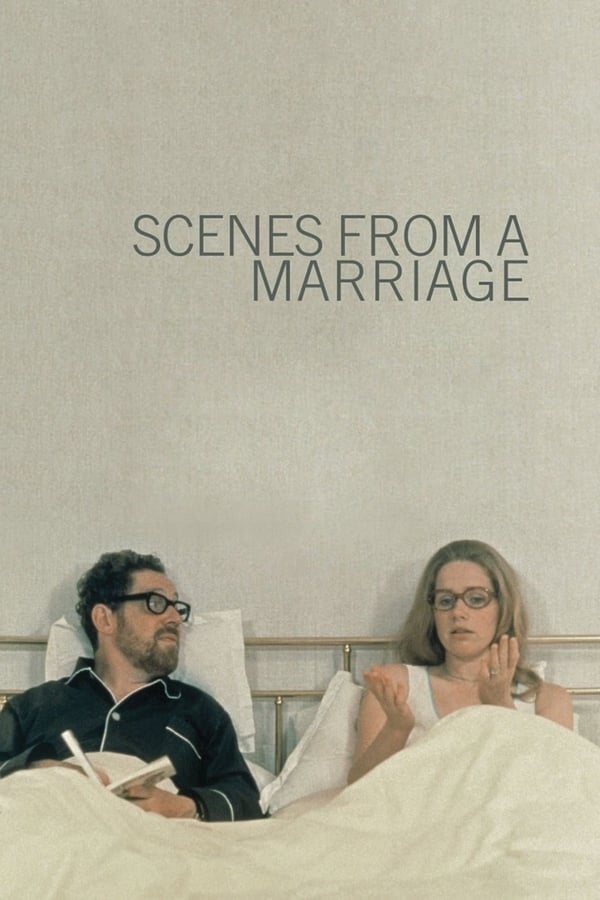
Scenes from a Marriage can be viewed one of two ways: originally released as a 6 part TV miniseries, it was later edited down to a sub-3 hour theatrical film. I, of course, went all in and watched the long version. The series follows Johan (Erland Josephson) and Marianne (Bergman’s longtime muse, Liv Ullmann). The couple have been married for a decade, and seem to be in love, but there are obvious chinks in the facade. We get to know them pretty well in the first couple episodes. Both are working professionals (he a professor, she a lawyer in family law), but Marianne also runs the household, caring for their two girls. She seems completely devoted to Johan, and Johan knows it, holding a position of power in the house, and dominating conversations when friends are around. Marianne does begin to doubt her loyalty after she and Johan witness the breakdown of a marriage of their friends, as well as when Marianne, through work, talks with a woman who is divorcing her husband of 20 years, because she never really loved him. In the third episode, their marriage falls apart, though not on Marianne’s part; Johan admits an affair with a 23-year-old, and abandons Marianne and the kids.
A year or so has passed at the start of the fourth episode, when Johan is visiting Marianne at their former home together. He has not been a good father, even forgetting (or not caring) to send gifts for their daughters’ last birthdays. In conversation, Johan admits that he is tired of Paula and her jealousies; in return, Marianne admits that she still loves him, but through therapy, she has attempted to move on. She has redecorated the house, moved Johan’s old things to storage, and has a new lover. They leave on uncomfortable terms, not knowing what comes next, as Johan has been offered a job in the USA. The penultimate episode is a couple years further down the road, with Marianne finally getting Johan to agree to the divorce. Their situations have reversed: Marianne has become a strong and independent individual, and Johan’s life is in shambles. The turbulent night turns violent before they sign the documents. I’ll leave you there, to watch the finale if you like. It is a tremendous series, and only about 5 hours if you want to watch it in a week (or weekend, or day…). Outside of a couple characters in the early episodes and in the final one, nearly the entirety of the show is just Josephson and Ullmann, and that is not a bad thing. They are each on top of their game, and there are whole minutes when the camera will never leave one or the other’s face, showing their highs and lows, love and anger, triumph and heartache. You will not see a better acting clinic. ★★★★★
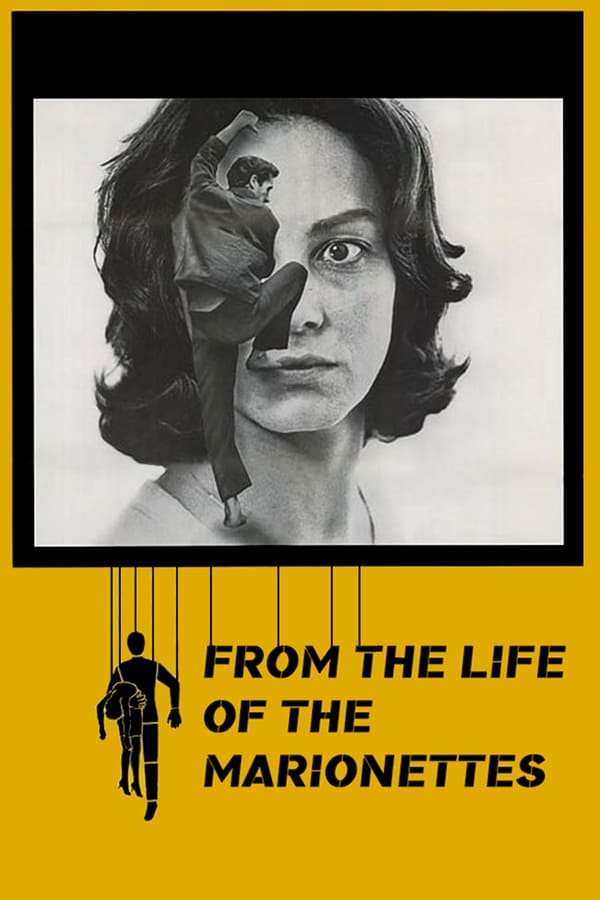
From the Life of the Marionettes is a quasi-sequel involving friends of Johan and Marianne, named Peter and Katarina. They were in the first episode (played by Jan Malmsjö and Bibi Andersson), as a dysfunctional couple who couldn’t stand each other, only staying married because they enjoyed the lifestyle they led, afforded by their careers, and didn’t want to split it all up. Marionettes was filmed while Bergman was in exile from Sweden, trying to get out of paying taxes, and was made in Germany with different actors as Peter and Katarina. The film starts with Peter murdering a prostitute, and then jumps back in time to show the events that led up to that day. We get some events from days before, others from weeks prior, in a seemingly random order. Sometimes this non-linear storytelling grips you and keeps you wanting more, but in this scenario, it created a jumbled mess. There’s been a couple Bergman films I hated (The Serpent’s Egg and The Touch off the top of my head), but at least I made it through those films. I got 2/3’rds through this one, and gave up. It wasn’t going anywhere, and just comes off as a poorly made, poorly written, thrown-together mess of a movie. You don’t have to always like the main characters in a film, but you at least have to be interested in them. There’s nothing of interest in this picture. You are warned: don’t waste your time. ½

Saraband is a true sequel to Scenes, released 30 years later in 2003 and bringing back Josephson and Ullman as Johan and Marianne. Though called a sequel, I think it more of a coda, as it introduces other characters who are equally important. Johan and Marianne have spent the intervening decades apart, each remarrying, and their respective spouses are now dead. Marianne decides on a whim to go visit Johan, whom she hasn’t seen in years. He’s become wealthy on an inheritance, and lives in a beautiful lakeside cottage with a maid to care for him in his 80’s now. His adult son Henrik lives in nearby house, ironically, Johan and Marianne’s old summer cottage. Henrik is overprotective and overloving of his daughter Karin (Johan’s granddaughter), to the point that incest is suggested though never clearly stated. Johan enjoys Karin’s company but is extremely estranged from Henrik. Marianne just wants to know where she sits with Johan after all these years. At times overly sentimental, it is still a good, and sometimes very good, film. I think the ultimate moral of the story is that people don’t always change no matter how much you want them to. Marianne obviously came a long way from the beginning of Scenes to the end, but Johan is much the same. This picture was Bergman’s last, and as awesome as Scenes is, it is a decent farewell. ★★★½

 Jons Movie Takes
One thought on “Quick takes on Bergman’s Scenes (and related films)”