Éric Rohmer was an influential director who came up late in the French New Wave. He first gained attention for his Six Moral Tales, a series of films about relationships. Four of those are reviewed below (the first 2 were shorter films, which I watched but did not write about), in addition to his heralded film The Green Ray.

La collectionneuse (The Collector) was released in 1967. It is about a trio of people vacationing at a large beach estate on the French Riveria. Adrien is there to relax, having seen his fiancée leave for a prolonged trip to London. Adrien and his friend Daniel are supposed to have the place to themselves, but find that they have an unwanted third, Haydée. Haydée is just hanging around, after having slept with the house’s owner before he left. Adrien wants to enjoy morning swims in the sea, going to bed early, and no drama, but the young and sexy Haydée has a different man over every night and keeps the household up with her amorous noises. Adrien can’t help himself but be attracted to her, but refuses to give in to his desires, and instead devises a set of tests to make sure Haydée really likes him, or if she just wants to add him to her “collection” of lovers. He gets Daniel to sleep with her, and later, an art collector and business partner of Adrien’s as well. I think the character of Haydée was done very well; Adrien keeps trying to paint her as a slut, but if he would just stop and listen, he would see that she is trying to seek a partner in life just like everyone else, in her own way of course. Adrien’s narcissistic attitude is tough to bear at times, especially at the end, but it all comes out OK, for everyone involved. Though was this on purpose, or merely by chance? A very well written picture. ★★★½
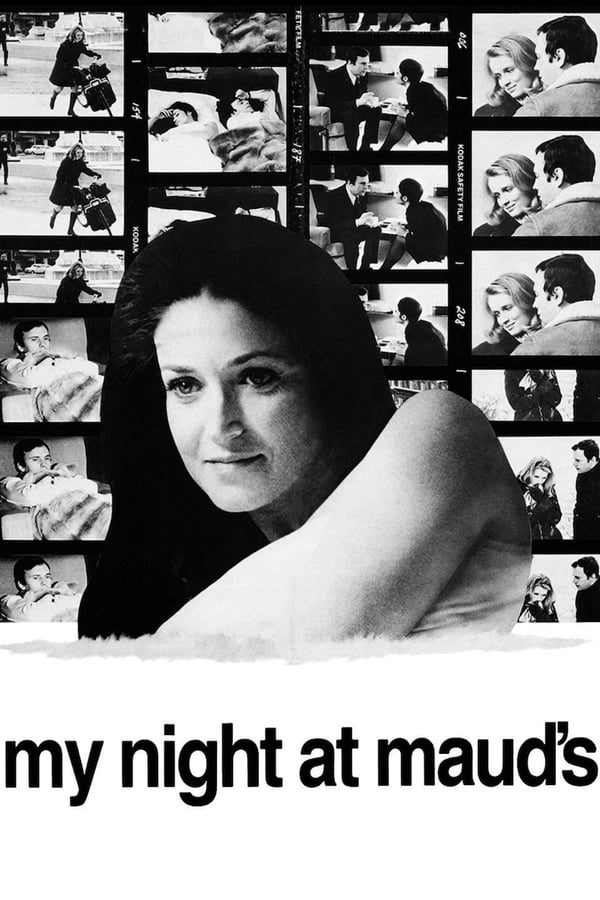
I really shouldn’t have liked Ma nuit chez Maud (My Night at Maud’s). I’m a “story” kind of man and love a good plot I can sink my teeth into; this film has none of that. But what it does have is an extremely engaging delve into the complexities of a man and what is important to him in finding a partner. Jean-Louis is a loner with few (any?) close friends, but he seems to know what he wants in a life partner, if he can only find her. While not especially devout, he’s attending Catholic mass one day when he is smitten by a pretty blonde woman, and tries to follow her afterwards until he loses her in traffic. Later that day, he runs into an old high school buddy, Vidal, and is roped into going with him to a girl’s apartment to hang out. The girl is the epynomous Maud, and she spins Jean-Louis’s head right around. She challenges his way of thinking about religion and moral beliefs vs finding love, fate vs chance, etc. She’s everything that he shouldn’t want in a partner, but her sexual allure is more than Jean-Louis can take. He ends up staying the night (chastely sleeping at the edge of the bed, as far away from Maud as he can be, because she delights in stating she can only sleep nude). The next day, he by chance runs into the blonde from church again, and so his adventures continue. Virtually no story to follow, or at least, not one that can’t be told in 2 sentences, but the film is more about the philosphical discussions that take place between Jean-Louis and Maud on that long night, and their repercussions for his life moving forward. As I said, I shouldn’t have enjoyed this one, but I did. Incredible film, just have the patience to sit back and dig into the enlightening conversations. ★★★★
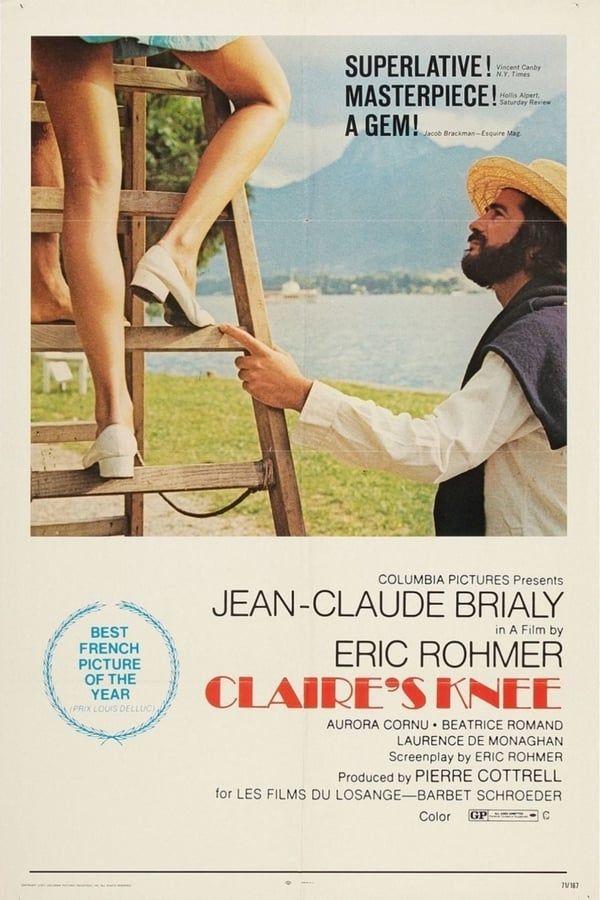
Le Genou de Claire (Claire’s Knee) is very similar to My Night at Maud’s, in that the dialogue between two central characters carry most of the film. In this one, Jerome is vacationing at Lake Annecy when he runs into an old friend, Aurora, who is a writer. Aurora is staying at another friend’s, Madame Walter’s, house, and she invites Jerome over. He meets Madame Walter and her 16-year-old daughter Laura, and the perceptive Aurora sees that Laura is instantly smitten by the older, rugged Jerome. As such, Aurora proposes making Jerome her guinea pig in an experiment, to see if Laura will profess her love if egged on. Jerome is hesitant at first, not only because of Laura’s age, but because he is engaged to be married, but he relents and has fun with it. Laura does take the bait eventually, though nothing untoward happens, but shortly thereafter, the eponymous Claire (and her infamous knee) come into the picture. Claire is Laura’s step-sister from their parents’ previous marriage, and whereas Laura is a bit awkward and gangly, Laura oozes sex appeal. Jerome is enraptured by her long legs, and wants to shift his game from Laura to Claire, but Claire isn’t interested. Maybe because I just saw the previous film and I wasn’t ready for a similar one right away, I didn’t get into this film as much. Still interesting, but it hasn’t aged well, what with the whole grooming young girls thing, which was very off-putting. And yet again, the male lead is very narcissistic, but at least this time, Aurora is there it knock him down a peg. ★★★
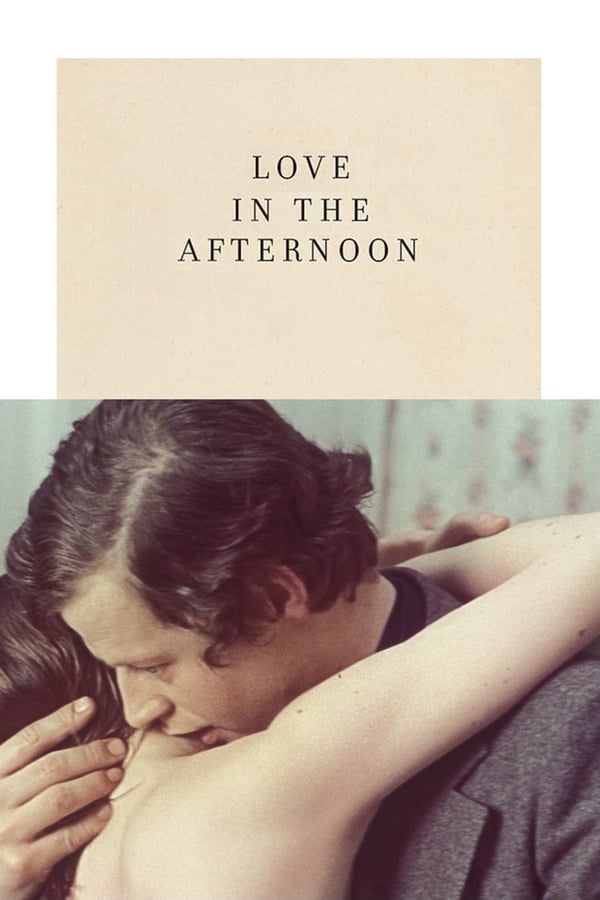
L’Amour l’après-midi (literally Love in the Afternoon, but also called Chloe in the Afternoon) is the best one yet. In this one, Frédéric is a busy worker at day and a homebody at night, deeply in love with his wife Hélène, with a child at home and another on the way. The idyllic life, and Frédéric is happy with it, until Chloe shows up unexpectedly one day. Back in his college days, Frédéric and Chloe ran in the same circle of friends, and Chloe was dating one of Frédéric’s good friends (and there are whispers of the poor guy ending up in a very bad emotional state after the break-up). While Hélène is fairly boring (supposedly one of the things Frédéric likes about her), Chloe is strong willed, sexy, and commanding. Frédéric’s head starts spinning with the possibilities, as the two start hanging out in the afternoons during his lunch breaks. Unlike the other films, which revolve around the male as the dominant figure, Chloe is most certainly in control of this relationship. She keeps leading Frédéric along, tantalizing him and getting him to come around to the idea of an actual affair and not just flirting. The final decision is Frédéric’s to make, but does he? It’s a great film. Though Hélène’s character is unfortunately very one-dimensional, Chloe and Frédéric are fantastic, and the movie offers a lot of discussion about faithfulness in marriage and the definition of true love. ★★★★½
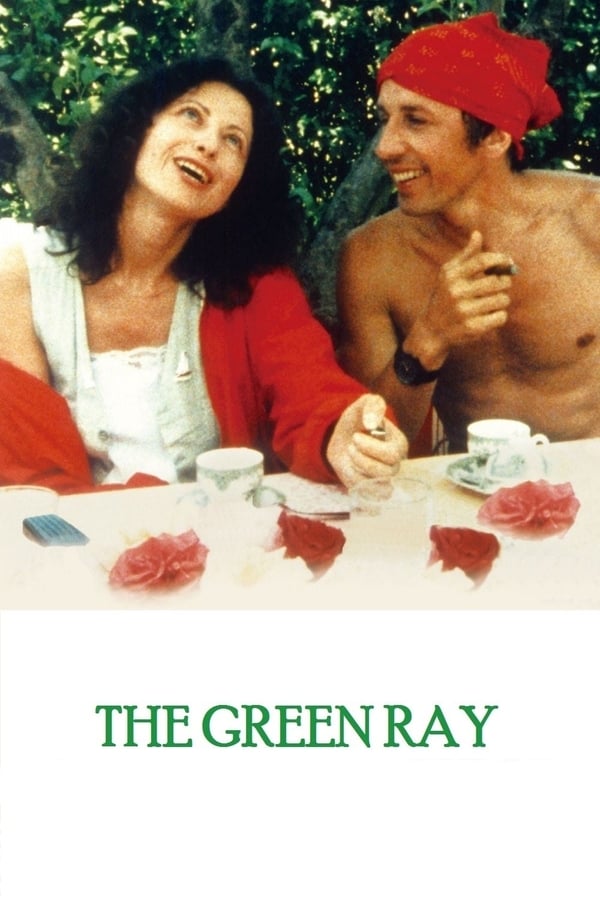
The final film today came in another series Rohmer did, called Comedies and Proverbs. Unfortunately it seems I saved the worst for last. Le Rayon vert (The Green Ray) is a complete and utter snoozefest. It’s about a woman, Delphine, who’s just getting over a break-up and had a girls’ vacation planned with a friend, but the friend drops her to go hang with her new boyfriend, and Delphine is left alone in Paris. The film follows her as she goes from place to place seeking something to do, but for Delphine, the old adage of “wherever you go, there you are” holds very true. Delphine goes with a group to a villa, but she’s the only single there with a bunch of couples, and feels left out. She next heads to the Alps where her ex has a ski house that she’s been allowed to use, but she only stays a day since she doesn’t know anyone well. Finally, Delphine goes to the beach, and does make a friend with a Swedish woman, but the new girl is there to party and hook up, and Delphine wants something more lasting. The film is 90 minutes of people watching, and if I wanted to do that, I could go hang at a park and do it myself. There is a cute little ending relating to the Green Ray, referenced as a book written by Jules Verne, but it doesn’t make up for the rest of the picture. ★

 Jons Movie Takes
One thought on “Quick takes on 5 Éric Rohmer films”