I’m finishing off my journey through Federico Fellini’s filmography with his last 5 films, and it will mean I’ve seen all but 1 of his movies. Except for some standouts, like Amarcord, I generally liked his earlier stuff much more consistently, but I’m hoping for some gems here in the end!

Well, we aren’t starting off on the right foot. City of Women is overly long, downright silly, and honestly a pretty terrible movie, which is funny since it combines Fellini and (arguably) Italy’s most famous actor of all time, Marcello Mastroianni. It begins with his character, Snàporaz, on a train. He spots an alluring woman and makes a move on her, but she gets off at the next stop. He follows, and she leads him to a feminism seminar at a hotel in the middle of nowhere. The building is full of women hating on men, decrying fellatio, etc., the far end of the spectrum kind of stuff. The women eventually chase Snàporaz out, and he has further adventures in the countryside, including a run-in with a horny farmer and a car chase full of young lesbians. He ends up at a mansion owned by a man living on the other side of the coin from his earlier experience, a man who is celebrating tonight his 10,000 “exploit.” In fact, he has a shrine to all of the women he’s slept with. Oddly enough, Snàporaz’s wife is in attendance at the party. The whole film is strange and over-the-top, and has hardly a plot in sight. A major farce and nothing worth spending time on. ½
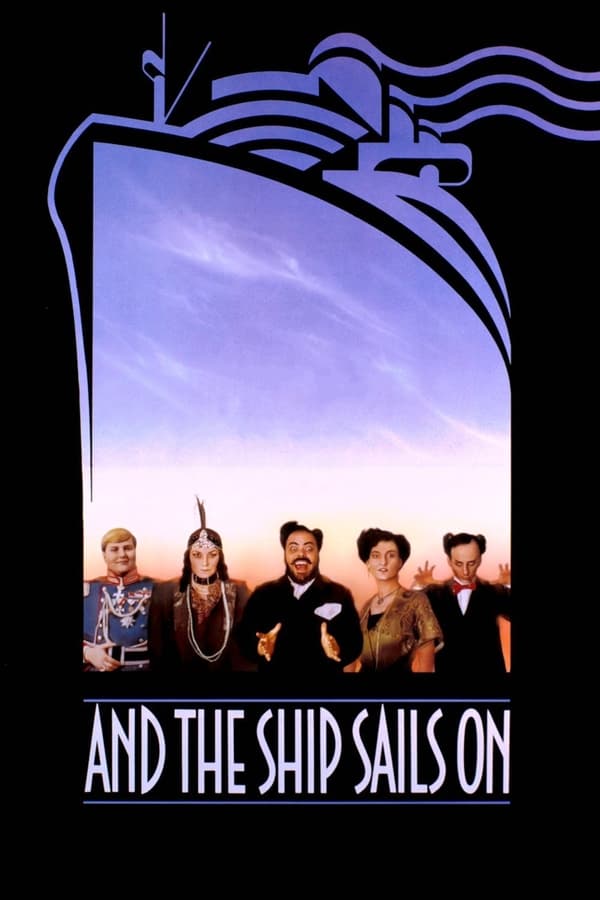
And the Ship Sails On righted the ship (as they say). After a slow start, this film was great. It takes place in 1914 on the eve of the first World War. Europe’s most celebrated opera singer, Edmea Tetua, has died, and it was her wish to have her ashes spread near the Mediterranean island of Erimo. A cruise ship is going to transport her remains, and all of her biggest fans have turned out, including aristocracy like counts and princes, as well as fellow singers and artists. The first hour of the film introduces everyone to the viewer, and there is a big cast. They all have weird idiosyncrasies, and after City of Women, I thought, “Here we go again…” But then the third day of the trip dawns. During the night, the captain of the ship took on a whole ship full of Serbian refugees, whose own ship was floundering. They were fleeing their country after the assassination of Archduke Franz Ferdinand in Sarajevo, the event which would ultimately start the World War, for fear of the impending doom. At first, the high class Italians don’t want to mingle with the refugees, but slowly the two groups come together, culminating in a party where everyone shares food, dances, and has a great time. Just when you think things may be good, an Austro-Hungarian battleship approaches, demanding the Serbs be handed over as prisoners. The ending is not expected, and beautifully sad. It’s a touching and endearing film about humanity, our differences and similarities, and the wrongs that come in separating by class. I’m giving it 3 1/2 for my first viewing, mainly because I was unprepared after the slow start, but will watch this one again one day and probably rate higher. It’s great social commentary from nearly 40 years ago, which is still timely today. ★★★½
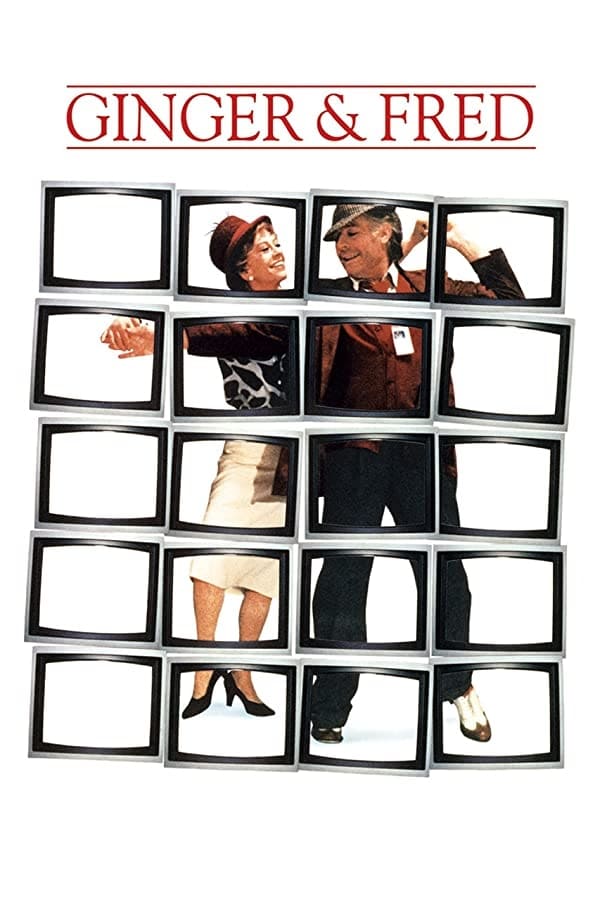
Ginger and Fred brings back Marcello Mastroianni again, and pairs him with Fellini’s longtime wife, and star from his earlier films, Giulietta Masina. I adore her, she always had an infectious smile, and she hadn’t lost anything from this film and La Strada, made 30 years prior. The duo play a pair of entertainers who had a successful 15 year run imitating Ginger Rogers and Fred Astaire, but that was 30 years ago. They’ve been apart for decades, went their own ways, but are now being reunited to participate in a variety television program. Amelia is excited from the get-go, but Pippo is more reserved, and he seems to be holding something back. The first half of the film is a lot of jokes that Fellini throws at the state of television entertainment, of which he obviously held little regard. It’s a lot of outlandish, foppish fake celebrities doing stupid tricks to gain attention, not much different than what you can see on social media these days. Which is all the more stark when Amelia and Pippo, true entertainers, take the stage. Leading up to their show, as Pippo shows more anxiety, we learn what happened between the two all those years ago, and the consequences from it. It’s a delightful film, though a bit melancholy in the end, only because the page has turned on our star duo, and it doesn’t seem like that way of life will ever be felt again. Outstanding performances from both Masina and Mastroianni. ★★★★
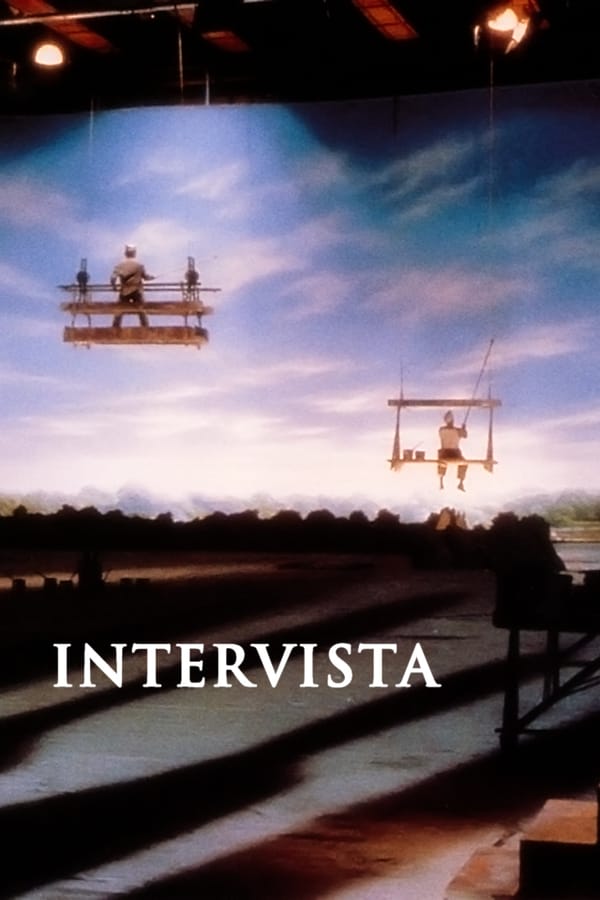
Intervista (“Interview”) is a very interesting film, and one that you should only watch if you are very familiar with Fellini’s films. Since I’ve seen so many, I was well prepared. What makes this film different is, it is basically a film within a film within a film, and the lines between them blur quite a bit. Fellini, who plays himself, is making a film at the Cinecittà film studios in Rome. During production, he is being interviewed by a Japanese crew, who are making a documentary about Fellini and his film-making process. Throughout this process, Fellini and his friends are reliving moments and memories from their past, and here is where lines are really blurred. For instance, Fellini hires a young actor to play himself in these memories, and the actor takes over during stories Fellini tells to the Japanese interviewers. It can lead to some chaotic moments where I didn’t know exactly what timeline they were in, but it is a fun, wild ride. Fellini is also visited by actors from his previous films, most notably by the famous Marcello Mastroianni, who is at Cinecittà filming a commercial. Marcello and Federico ride out to the country to visit Anita Ekberg, and Marcello and her sit down to reminisce about their famous scenes in Fellini’s La Dolce Vita from 25 years prior. It’s maybe a bit self indulgent, but it is a very touching scene. Moments like this make the film and cover up some of the chaos found in other places. I consider Fellini one of my overall favorite directors, and I ate it all up. ★★★½
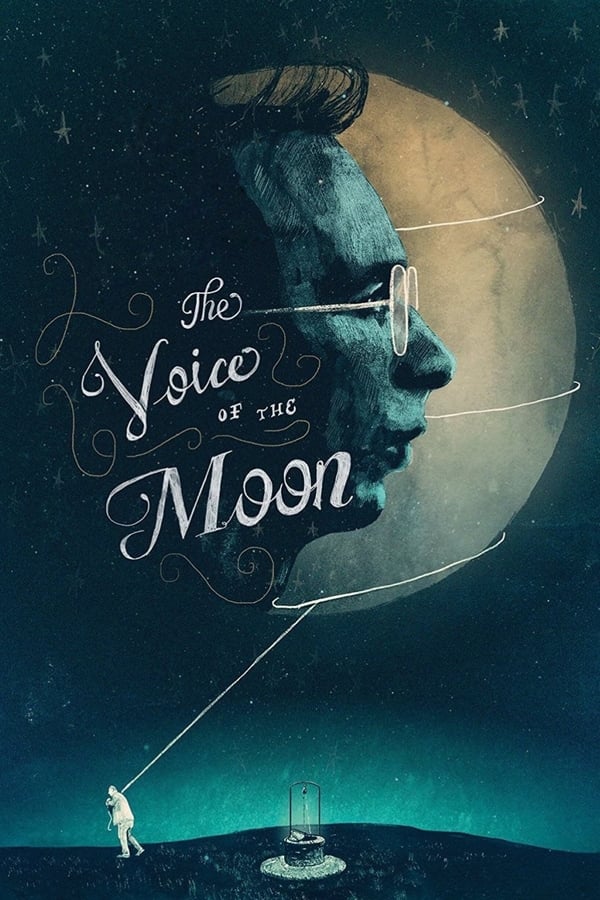
I’m a bit torn on The Voice of the Moon. I don’t think Roberto Benigni does a very good job in the lead role; he has that kind of face where you keep expecting him to crack a joke, but it’s not that kind of movie. But there are some great moments, mostly from the supporting cast. In the movie, Ivo has just been released from an insane asylum, and finds himself wandering a field at night under the stars and glow of the moon. He is drawn to a well, where he is recognized by a passerby and bluntly asked if he still has a thing for wells. Ivo can only shrug and admits to the viewer that he hears voices calling him there. That sets up a surreal, sometimes dreamlike picture, where Ivo isn’t the only one living on the cusp of sanity. Ivo finds a man living in a cemetery; once a successful musician, he decided that his oboe needed to be buried, and now he can’t live without it. Another man, Nestore, relates to Ivo his conquest of Marisa, the town hottie. In love (or at least in lust) with her for a long time, he finds that once married, he can’t handle her sexual appetite. Then there’s Gonnella, the former magistrate in town who was fired when he started getting caught up in conspiracy theories. Ivo listens to anyone who will tell him their stories, but his ultimate goal is the love of Aldina, a pretty young woman who seems to not know Ivo exists. These secondary characters are much more interesting than Ivo himself, who just sort of meanders along. I did enjoy the the bizarre ending (not giving that away!), but it’s a fairly forgettable movie. This was Fellini’s final film, released just 3 years before his death from a heart attack in 1993; he was 73 years old and had just celebrated his 50 year wedding anniversary with Giulietta Masina. ★★

 Jons Movie Takes
One thought on “Quick takes on Fellini’s final films”