
Il bidone (doesn’t translate well from the Italian, but often called The Swindle in English) was released in 1955 and was director Federico Fellini’s followup to La strada, which I absolutely adored. This film follows a trio of con men, who run a racket swindling money out of the poor with various setups and schemes. Augusto is the venerated leader of the group; as the oldest, he’s been “in the business” a long time and has a reputation among the thieves of the city. Roberto is a young hotshot without any scruples, he’ll steal from anyone. And Picasso is a thief with a heart; rather than blow his money on parties and girls like the other two, he gives it all to his wife, who thinks he is an honest salesman. The film is mostly about the seedy underworld around Rome, following these three in their cons, and particularly Augusto’s (maybe?) change of heart in his game after he reconnects with his daughter Patrizia. Like any Fellini film you’ve ever seen, it is beautifully shot, with playful, fun music and an easy story to follow, though it is overall more straightforward than some of his “dreamy” poetic films. Maybe for that reason, it’s probably not my favorite, but it is still an entertaining piece. ★★★
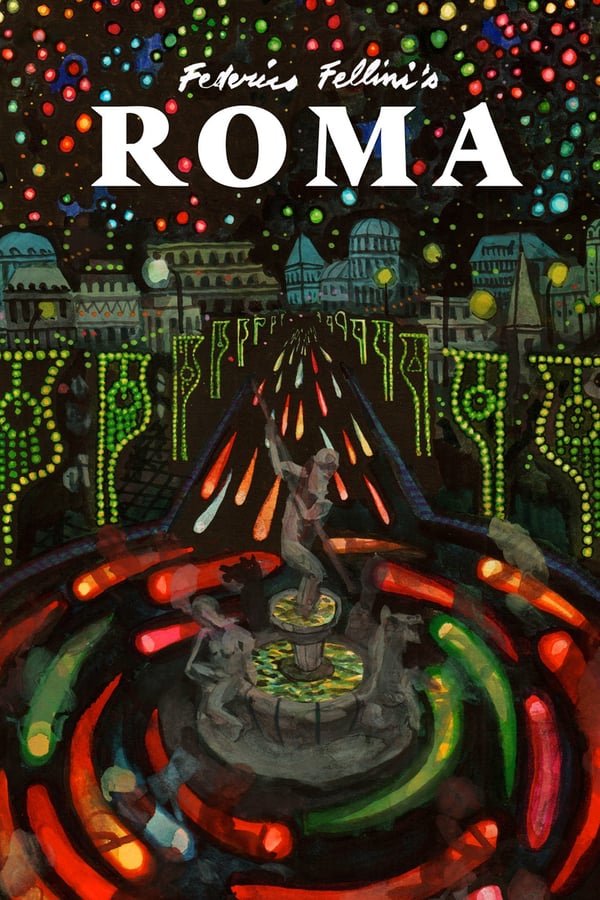
Roma (not that Roma) is a strange film. In fact, I didn’t really know what it was about until about 45 minutes in, when Fellini directly laid it out for the viewer. It’s a movie literally about Rome and its people. Narrated by Fellini, it is a film with a documentary feel, as he looks at Rome in its current day (1972) and also in flashbacks when he was a younger man, coming to the city for the first time in the 1940’s. In typical old man fashion, he bemoans the state of the younger generation (I think there was even a moment where he said something like, “Kids these days.”), and looks fondly back at his younger days in the city, though he does gloss over Mussolini’s regime a bit. In the old days, we see a younger Fellini visit a brothel, a theater, and in present day, we see a construction crew unearth old abandoned tunnels under the city. The film is interesting in a time capsule sort of way, but without any central characters to get behind (even “young” Fellini is only in maybe 5% of the film), and no story to follow, it is more like watching snapshots of Italy at different points. And as you know, I like stories! ★½
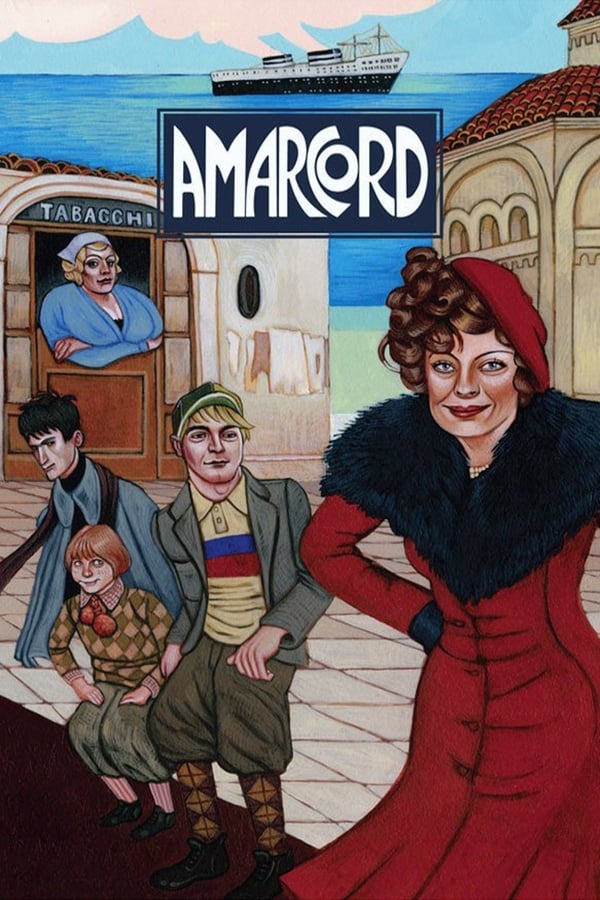
Amarcord is called a semi-autobiographical film about Fellini’s young life, and revolves around the Biondi family in a provincial Italian town in fascist Italy in the 1930s. While the “main” character is teenager Titta, his mother, father, uncle and aunt, and the other eccentric villagers, all play important roles in the film. In the little town, where everyone knows everyone, several events are shown, such as a yearly bonfire where they burn a witch in effigy; the schoolboy crushes amongst the kids; and the increasing presence of the fascist military, to whom the villagers show an almost reverence. The film is made up of a lot of events in Titta’s life over the course of a year, but equal screen time is given to other people, including Gradisca, the town’s most beautiful woman; Volpina, the town slut; and Giudizio, the town idiot, who occasionally breaks the fourth wall to give viewers some narration about the village and its people. And it wouldn’t be a Fellini film without a couple dream sequences mixed in. What this film does so well, and what sets it apart from a lot of coming-of-age pictures, is the feeling of “realness” of the townspeople. Even though they are eccentric, they feel tangible, and we get to know so many of them throughout the course of the movie. When the Biondi family visits Uncle Ted at the insane asylum, we laugh and cry with them. When Biscein starts telling a story, we know he’s talking out of his ass. When the puffballs start blowing through at the end of the movie, we know exactly what that means. I feel like I could walk down the streets and greet everybody, and be welcomed. ★★★★
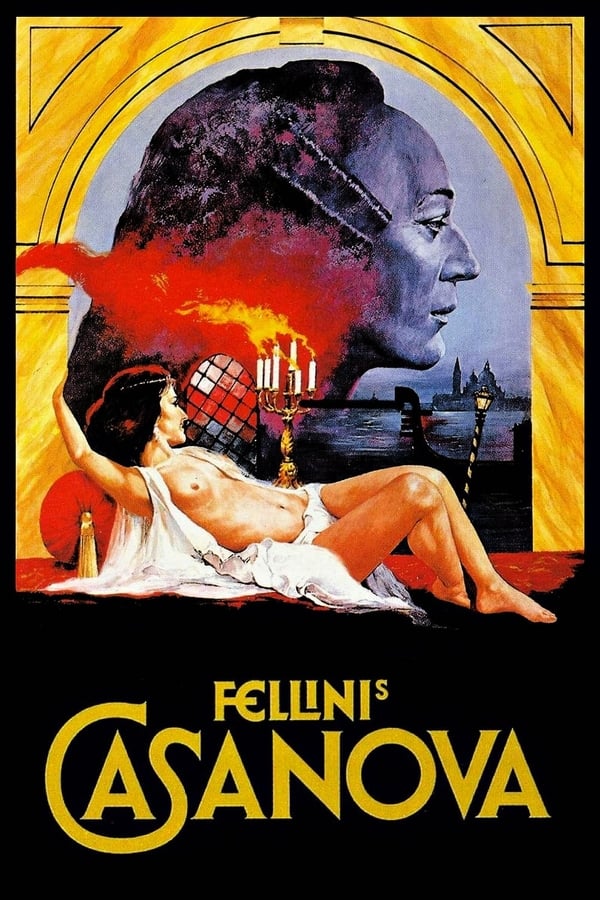
I’m not sure what to make of Fellini’s Casanova, the director’s take on the famous womanizer Giacomo Casanova. With Fellini behind the helm, it is more akin to his Satyricon than a historical drama, which isn’t a bad thing (I did enjoy his wild and bizarre Satyricon), but it is a bit out there. Casanova stars Donald Sutherland as the title character, and portrays his life bouncing around Europe in the 18th century. His dalliances and exploits are shown in outlandish fashion, and Fellini takes the debauchery to extreme levels. Throughout it all, Casanova cannot find true love for himself. Those times that he does find a woman he is intrigued by, she never reciprocates his advances. He’s also constantly trying to land himself a job at court, in either sciences or math, and fancies himself an educated man, but his lifestyle keeps him in company with the lowest of the lords, who only like to keep Casanova around for his reputation. As was Fellini’s custom, dating back to his early days in the Italian film industry, the international cast has all of the dialogue dubbed in post-production, so while Sutherland is acting, it isn’t his voice we here (as far as I know, he doesn’t speak Italian). The fact that the lips don’t match doesn’t bother me, it is common for Italian films, but I have to think that it hampered Sutherland’s acting skills, as he seems very wooden in many scenes. Also, there’s little flow, and the film as a whole is very choppy. I will say the period costumes and sets are extraordinary, and in fact it won an Oscar for costume design. Some good moments, but unfortunately it is bogged down by the bad. ★★½
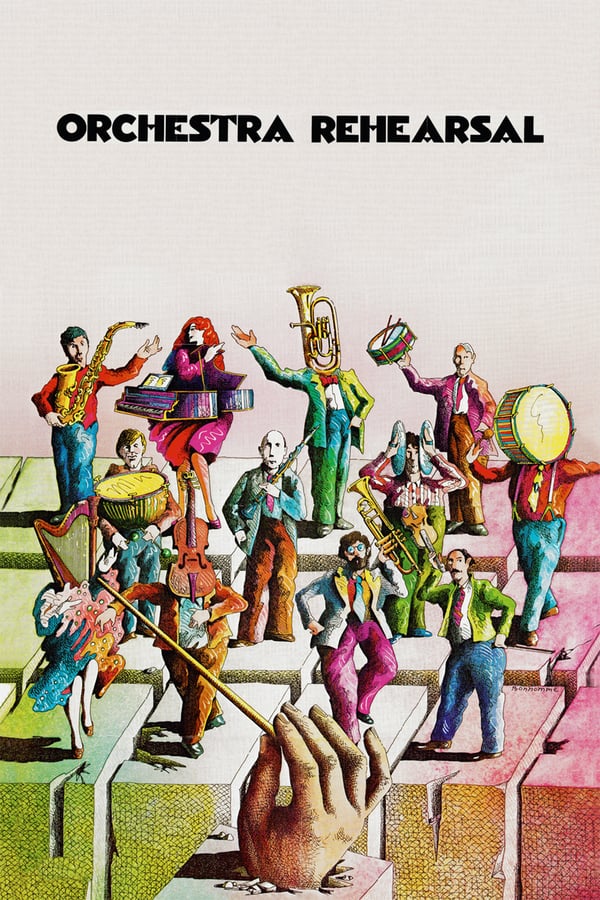
I wasn’t into Orchestra Rehearsal for a good portion of the film. A made-for-TV movie from 1978, it’s sort of like Roma in that it is a fake documentary, following members of an orchestra as they come together for a rehearsal, to be filmed by a camera crew. The movie begins with the players all arriving at their rehearsal space, and various individuals being interviewed by the crew. Immediately, we see the individualistic nature of the musicians, as the orchestra represents people from all walks of life: young and old, rich and poor, outgoing and shy, etc. They get down to brass tacks once the conductor comes to the podium and the rehearsal begins. He berates the group constantly, pointing out flaws even if there are none. After the run through of a tune, he calls for a break, and goes back to his dressing room to freshen up. While he is away, the orchestra devolves into chaos. Young, brash members call for the end of a director, saying they’d be better served to have an unemotional metronome run things, while the older musicians sit uncomfortably by. Some people go to spraying graffiti on the walls, while others engage in sex acts under the piano. When the conductor comes back, things do not settle down right away, until a tragedy finally wakes everyone up. The tagline of the film was “The Decline of the West in C Major,” and understanding the film as a piece of political satire does make it much more enjoyable. I’m not saying I’d watch it again, but it is an interesting piece. ★★½

 Jons Movie Takes
One thought on “Quick takes on 5 Fellini films”