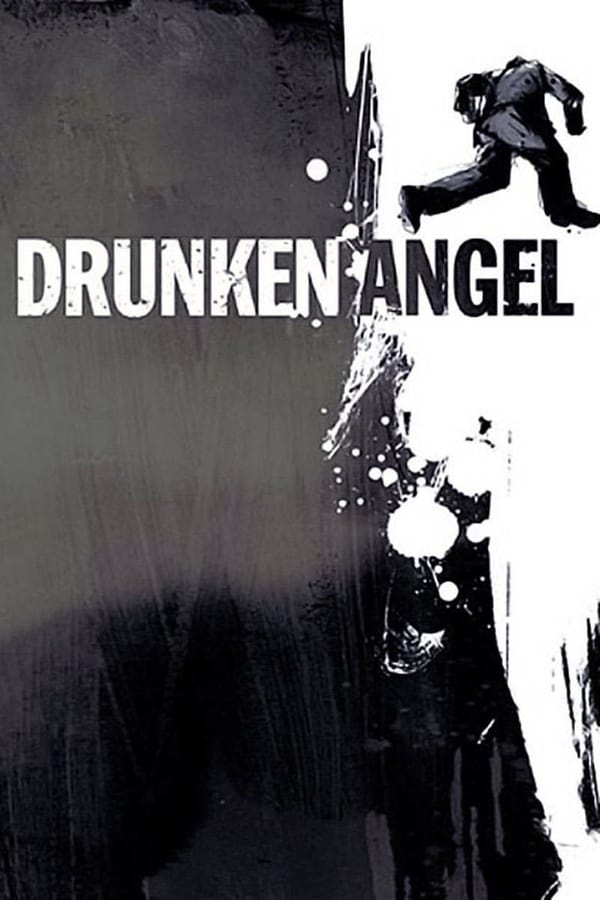
I’ve seen quite a few of acclaimed Japanese director Akira Kurosawa’s films, from his earliest pictures to some of his biggest hits (and more). I just can’t get enough. Five more on the docket today, starting with 1948’s Drunken Angel. This one is considered his first major work, perhaps partly because it was the first to star Toshiro Mifune, one of Japan’s greatest actors of all time, in his breakout role (he would go on to make 15 more films with Kurosawa as well). Drunken Angel was released and takes place in the years after WWII, and its setting is in a poor area of a city next to a polluted stream. Mifune plays Matsunaga, a young and good looking thug who works for the local yakuza boss. Matsunaga is locally powerful and is used to getting his way, but his celebrity status has taken a toll on his body, from both drinking and womanizing. He’s also suffering from tuberculosis, and is advised by the local doctor to take it easy if he doesn’t want to die young. The doctor is the other main character in the film. Sanada (Kurosawa legend Takashi Shimura, another one of Japan’s greats) runs a small clinic catering to the poor, and while he does greatly care for those who may not be able to get treatment elsewhere, you realize he’s also there because he has a drinking problem of his own. Sanada senses a kindness under Matsunaga’s rough exterior, and wants to help him, but Matsunaga can’t seem to get out of his own way. Also under Sanada’s watchful eye is his assistant, who is the former girlfriend of Matsunaga’s former boss, before he went to jail. Now getting out of the clink, Okada seeks his past love, and Matsunaga must decide on his definition of honor. Really good film, showing a young Mifune coming into his own, and Kurosawa really honing his craft. Interesting to read how Kurosawa snuck some stuff past the USA censors while Japan was still under occupation too. ★★★½
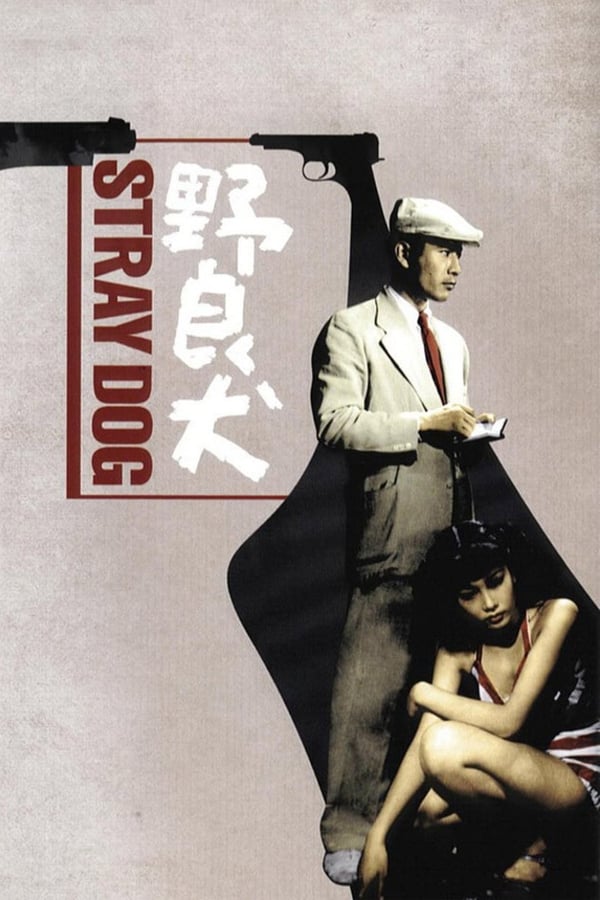
Stray Dog was released the next year, in 1949, and brings back the same 2 stars. This time, Mifune plays Murakami, a young cop who gets, of all things, his gun stolen during a ride on a crowded public bus. While awaiting the inevitable punishment, he goes on a quest to try to hunt down who took it. He gets a good lead, but being a bit inexperienced on the ways of the streets, he teams up with an older detective, Sato (Shimura), who knows all the street dwellers and their routines. When the gun is used in a robbery, confirmed so by forensics matching the bullet to a victim shot in the arm, Murakami is wracked with guilt. He becomes even more driven when it is used again, and this time, there’s a fatality. Knowing there are still 5 bullets in the gun, it’s a race against time to find the culprit before his stolen money runs out, and he robs and kills again. Like Drunken Angel, this film examines the seedy underworld of Japan in the post-war environment. It also asks the age old question that is so often a source of controversy in my own country: do guns kill people or do people kill people? When Murakami is devastated at the murder scene, he cries out that his gun did this. Sato tries to sooth him, telling him that the gun didn’t kill, the bad guy did. The final 20 minutes or so, when the cops are right on the villain’s heels, is some high tension theater, and the interplay between 2 of Japan’s finest actors of all time is must-see. Kurosawa has stated that he was inspired by Dassin’s The Naked City, another classic crime procedural film that I really enjoyed. ★★★★
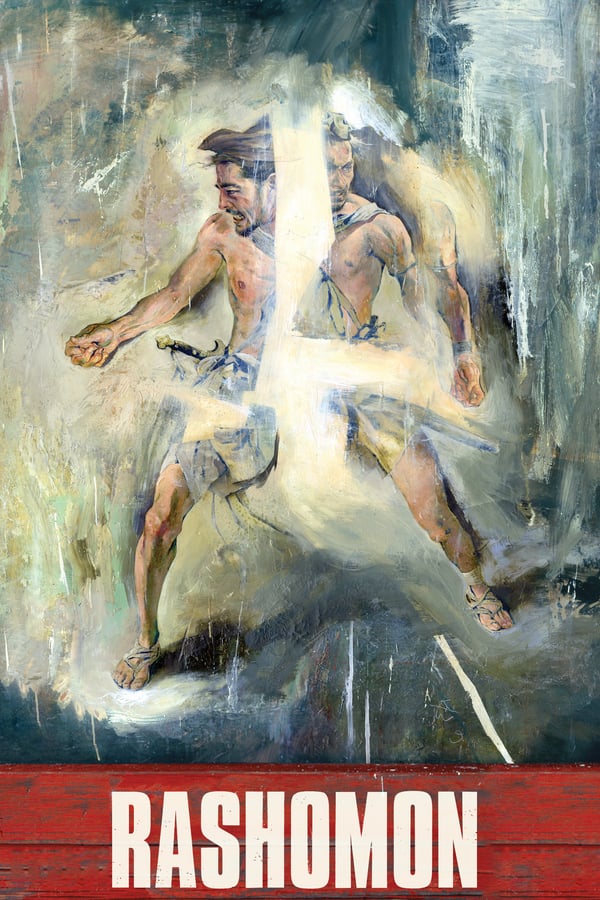
Rashomon has become one of Kurosawa’s most famous films, and it is one of his most thought-provoking. It begins with a man seeking refuge from a downpour in a broken down temple. He finds there a woodcutter and priest, who look shaken from a recent experience. They admit they’ve just been witnesses to a tragedy that neither can forget, and they begin to weave their tale. It tells what should be a straight-forward, tragic story about a woman raped and her husband murdered, as recounted by witnesses and the guilty killer, but as we learn, nothing is as straight-forward as it should be. Each person tells a different version of what happened. There’s the woodcutter, who initially found the body of the samurai husband, the bandit who committed the rape and murder, the widow/victim, and even the slaughtered man, with his side of the story told through a medium. Each version varies greatly from each other, and the viewer is shown the depths a person will go to for self preservation, or even just to save face in their own eyes. The wife wants to stress how she was a victim, the bandit wants to portray himself as a brave warrior caught up in emotion, etc. Even the priest’s faith is shaken, as he sees the darkness of humanity. All the parts of a great film are here: gripping story, amazing acting, a swelling and emotional soundtrack, and the lighting and cinematography are top notch. At its conclusion, I wanted to watch it again to see it all play out from the beginning! ★★★★½
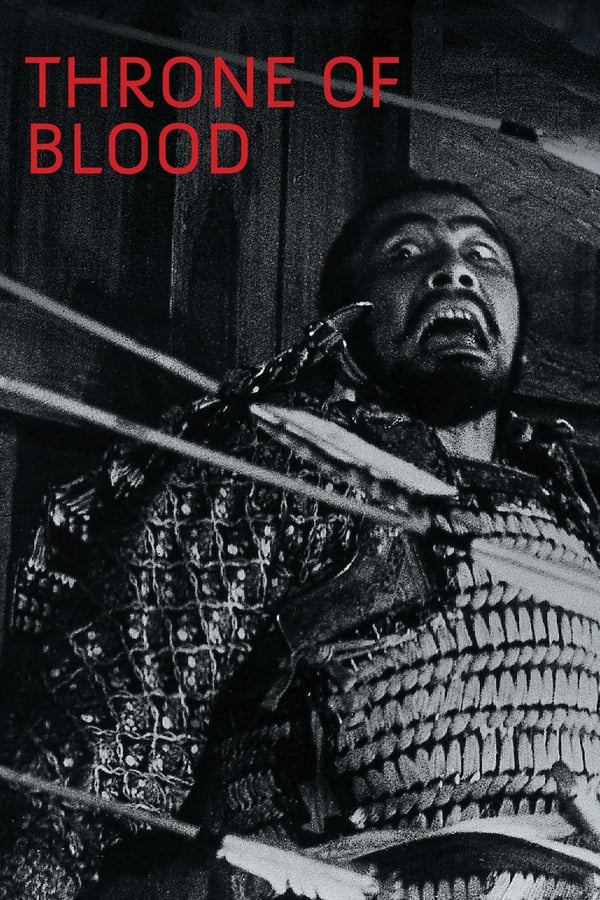
Throne of Blood is Kurosawa’s version of the classic Shakespeare play Macbeth, told inside a feudal Japan setting. Mifune plays the Macbeth role, Washizu. Washizu and his friend Miki have just squashed a rebellion and are returning to Lord Tsuzuki when they get the famous prophecy, this time from a spirit of the wood instead of 3 witches. Washizu’s eyes light up at the chances that he will become lord in Tsuzuki’s place, but it takes his wife Asaji’s (Lady Macbeth) nudging to get him to kill Tsuzuki, after she drugs the guards. Once in power, Washizu begins to become more and more paranoid of others trying to usurp him, going so far as to kill Miki, which sets off a turn of events leading to open rebellion. This film was lauded for its style and feel, and while there are some fantastic visuals (when Washizu kills the assassin who took down Miki for him is particularly startling), I was honestly a bit bored through much of the picture. I’m not a purist, so the liberties taken with the Macbeth story don’t bother me at all, but it’s been done better (I’m looking at you Polanski). And the character development is really poor, which is odd for a Kurosawa film. I don’t feel like I got to know anyone involved, even Washizu. A rare let down. ★½

Red Beard returns to form. “Red Beard” is Dr Niide (Mifune again), head doctor of a clinic which caters to the poor. Yasumoto is a young doctor who’s just graduated from med school. He’s been sent to the clinic for what he thinks is a quick session to share ideas, but once there, he finds that he’s been assigned to work at the clinic. Yasumoto wanted a stepping stone to become the shogun’s personal physician, and he sees the clinic as a dead end, so he’s incensed. At first, Yasumoto refuses to change into the doctor’s clothes or help with patients. Niide gradually brings him around, by showing him some of the tragedies the poor face, and how the clinic is the only place they can go for help. After hearing a couple patients’ touching stories, Yasumoto is assigned to help a particularly tough case. Otoyo is a 12-year-old girl who has never had a moment of joy in her life. She’s been beaten and derided, and is about to start her new life in a brothel when Niide rescues her. He brings her to the clinic and giver her over to Yasumoto. The two come to life slowly by coming to trust each other. This is a 3 hour film, but it doesn’t feel like it. It’s a touching, heartwarming (and heartbreaking) picture, a lovely film about the human connection from person to person. If the ending is a little too rosy, I can look past that for the warm fuzzies I got watching it. This was the last collaboration of Mifune with Kurosawa, as egos got in the way and the two had a falling out afterwards. ★★★★

 Jons Movie Takes
3 thoughts on “Quick takes on 5 Kurosawa films”