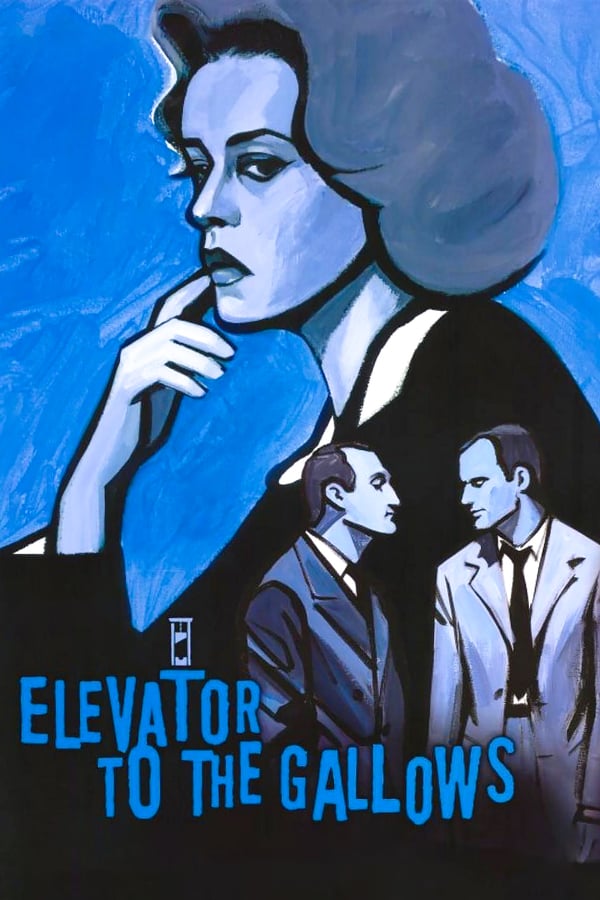
My only previous experience with French director Louis Malle was one of his later English films, Black Moon, which is a very out-there film that I really enjoyed. Today I’m going back to his earlier French pictures, starting with his debut, Elevator to the Gallows, a crime movie from 1958. What a wonderful start to a career! This film is great, about a woman, Florence, who is having an affair with an employee of her husband’s company. Florence and Julien’s plan is to kill her husband but stage it to look like a suicide. The murder comes off without a hitch, and Julien exits the building to his car. Unfortunately when he looks up at the high rise before pulling away, he sees he left his grappling rope on the side of the building, which he had used to climb a floor to the husband’s office. He runs inside to take care of it, but while in there, the building security closes it up for the weekend, thinking it is empty, and shuts off the power to the building. Julien is stuck in the elevator. To make matters worse, he had left his car running outside. The car is recognized by a local hoodlum and his girl, who knows Julien, and they take off in it. They drive off to a motel where they give Julien’s name, and end up killing a German tourist during the night. So now Julien is wanted for a different murder, and he is completely unaware. Meanwhile, throughout the long night, Florence wanders the streets of Paris, thinking Julien has dashed off without her. There’s a great ensemble cast of well-known names from this era, including Jeanne Moreau, Maurice Ronet, and Lino Ventura, and the film was scored and performed by the great jazz trumpeter Miles Davis. The picture has suspense, mystery, and even some laughs to lighten the tension. Great all-around flick. ★★★★

Zazie dans le metro (“Zazie in the Metro”) is a zany comedy about when Zazie, the most precocious 10 year old on the planet, goes to stay with her uncle Gabriel in Paris for a couple days while her mom visits her boyfriend. The only thing Zazie wants to do is go on the subway, but it is currently closed while the workers are on strike, so she entertains herself in other ways over the course of 2 days. It is a wild, absurd film where nothing makes sense. Buffoonish characters pull off visual jokes aplenty throughout the 90 minute picture. I laughed quite a bit in the early going, but the relentlessness of Zazie’s escapades wore on me after awhile. The film plays out in a frenetic pace that doesn’t let up until the credits roll in the end. Released in 1960 and certainly French New Wave-esque, Malle pokes fun at himself in an early exchange between Zazie and her uncle, when Gabriel points at the taxi meter rolling and says, “Here that? It’s new wave!” Zazie quips back, “You can take your new wave and —.” Funny for sure, but don’t watch it expecting anything resembling a plot, just a bombardment of visual and verbal gags. ★★
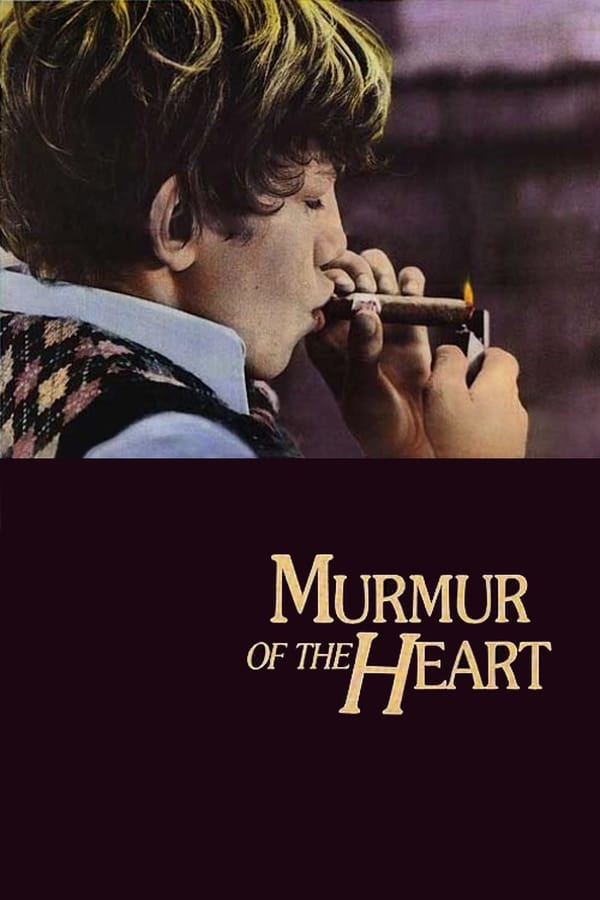
Murmur of the Heart is called a coming-of-age film, and it is that I guess, albeit tied up with a lead character with serious mommy issues. Laurent is a 14 year old boy with two older brothers, both bad influences, and a mother who dotes on him far too much. Laurent is a good student, and at 14, he’s increasingly aware of the opposite sex, but has no idea how to go about his feelings. His interactions with girls are awkward at best, borderline sexual assault at worst, and it doesn’t help that his first sexual experience is with a prostitute, set up by his brothers. Meanwhile, he gets little affection from his father, a successful gynecologist from “old money,” and too much affection from his mother Clara. Clara had her first child when she was just 16, and is quite a bit younger than her husband, and still looks great in her mid-30’s. Originally from Italy, she’s full of sexual energy, and is in fact having an affair on her husband, which Laurent is aware of. All of Laurent’s friends are attracted to her, and unfortunately, it seems Laurent is too. The physical affection shown between these 2 even from early in the film was cringy to watch for me. After Laurent gets scarlet fever on a camping trip, and he and his mom go to a sanatorium for a little while for some rest and relaxation, their relationship takes a turn beyond normalcy. I’m not arguing it is an extremely well acted, well directed, well shot film, all aspects are top-notch, but the material was rough for me to watch. Not sure why the professional critics are OK with it. ★★½
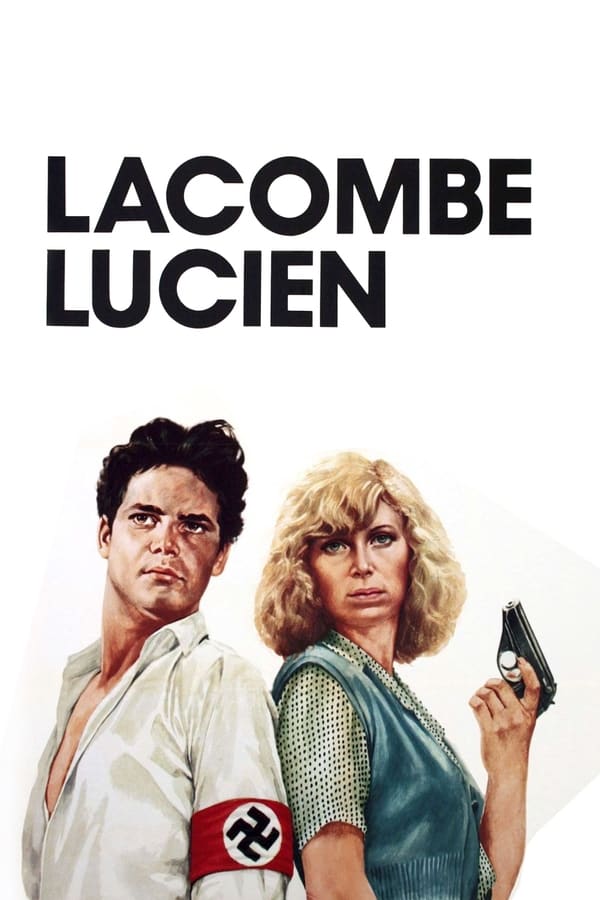
Lacombe, Lucien was another controversial film in Malle’s home country, as it tells a story of a young man who became a collaborator with the Germans during the war. Lucien is from a rural community. He’s tired of the daily grind, and approaches the schoolteacher, the local contact for the French Resistance, about joining. He is refused due to his young age. Shortly thereafter, while riding his bike near a large estate, he finds himself ushered in. Turns out it is headquarters for the French arm of the Gestapo. During a drunken evening, he lets slip that the local teacher is in the Resistance, and the next day, the teacher is brought in and tortured. For his help, Lucien is initiated into the group. While once wanting to fight the Germans, Lucien finds he loves the power that comes from his new position with them. He suddenly has fine clothes, and people rush to give him things when he mentions he’s with the German Police. He uses these new powers to get close to a girl he likes, France (the name is not a coincidence, I’m sure). However, France is a jewish girl, daughter to a tailor, who’s been allowed to stay so far because of his connections, but is seeking a path to Spain for safety. Lucien bullies the family to keep France close to him, and ultimately this connection has dire consequences for them all. As the German army is driven back from France, Lucien gets plenty of warnings that collaborators will end up shot, but he stays his course. It’s a beautifully shot picture, the grit and feel of a 1940’s France in turmoil pervades throughout, but Lucien is such a terrible bully, that I couldn’t force myself to like him. Whether he redeems himself in the end, or if he continues his selfish ways, is up to viewer opinion. Call me old fashioned, but I like a hero I can get behind. ★★½
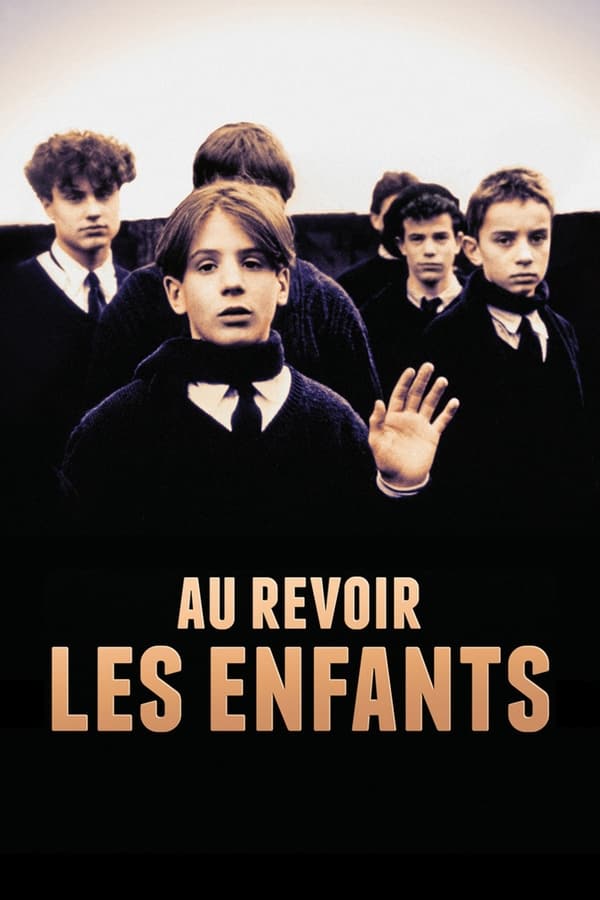
When Louis Malle was a boy attending a Catholic boarding school in France, he was witness to a raid in which German soldiers rounded up 3 jewish children, one of them a close friend of his, and taking them off to concentration camps. The boys had been hidden in the school by the headmaster, and he too was arrested. This episode affected Malle deeply, and he filmed the story for his 1987 movie, Au revoir les enfants (“Goodbye Children”). This autobiographical film is the best one yet. Starting in the fall of 1943, Julien is returning to school for a new school year. From a wealthy family, he and his classmates have been pretty secluded from the war going on in their country, other than the routine air raids, during which they take shelter in the basement. This year though brings a new classmate, Jean Bonnet. Jean is picked on as the new kid, but slowly over the course of the film, he and Julien become friends. One of the things that brings them close is when Julien learns of Jean’s secret: his real name is Jean Kippelstein, and he is a Jew. This secret strengthens the bond between the two boys, even as Germans continually become more suspicious of the goings on at the school. Readers of my blog know I am generally not a fan of child actors, but the 2 leads in this picture, aged 11-13 during filming, are equally spectacular. Heartwarming, funny, and yes, of course full of pain and terror too, this film will move you. And kids these days (myself included once upon a time!) think they have it hard. ★★★★½

 Jons Movie Takes
4 thoughts on “Quick takes on 5 Louis Malle films”