Masaki Kobayashi was a Japanese director who made films based on his socialist and pacifist views, as well as the human cruelty and suffering he personally saw and experienced in World War II. His most famous piece is a trilogy called The Human Condition, but since it totals nearly 10 hours, I thought I’d save that for a rainy weekend, and instead watch 5 of his other films.

The Thick-Walled Room was one of his earliest pictures, completed in 1953, but not released until 1956 due to its controversial material. It takes place in a prisoner of war camp in Japan around 1950. The detainees are Class B and C war criminals, meaning, for the most part, soldiers who were “just following orders.” In the cell of 6 men, each is dealing with the guilt of things they did during the war, while also holding animosity towards their superiors, many of whom were able to buy or negotiate their freedom from the Americans, despite being the ones calling the shots during the war. It’s an eclectic group of young, middle aged, and even foreign born soldiers, including a Korean who laments the current state of his country, now in a new war with itself. The main character is a man named Yamashita, who was jailed for stealing food, but is most beset by guilt for killing an innocent Philippine civilian on orders. The captain was later the star witness against Yamashita on the food-stealing charge, proof of the corruption going on. All of the prisoners are waiting for a final treaty between Japan and the USA, which will finally get them out of jail, but when the treaty comes and they are still not freed, they begin to organize and petition the powers above to free them. It is a heartfelt picture of the impacts of war to all aspects of society, with many flashbacks showing how everyone is affected. As mentioned, the film was shelved for a few years, in fears that the subject matter would piss off Americans still stationed in Japan, and while it doesn’t paint the USA in a great light, the focus is more on the treatment of Japan’s citizens by itself. ★★★
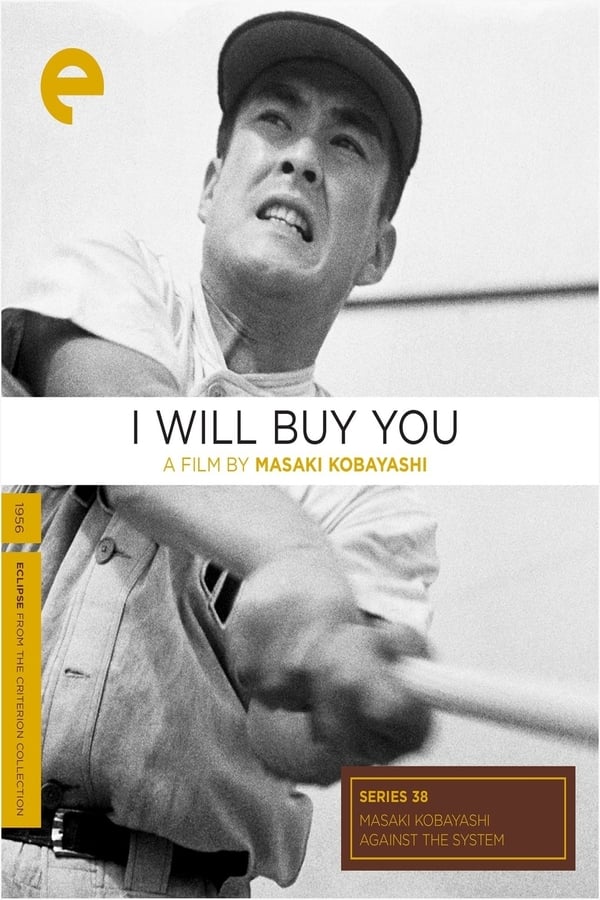
I Will Buy You centers around a star college baseball player, Kurita, who is being heavily recruited by professional teams. The main characters are Kishimoto, a scout trying to sign him to the Toyo Flowers, and Kurita’s college coach, Kyuki. Kyuki paid for Kurita’s college tuition, coached him up to be the player that he is, so Kurita is indebted to him, and is letting all the scouts deal with Kyuki. Kyuki is pretending to be humble about it, but you can tell pretty early on he is taking advantage of the situation, being peppered with gifts and cash. He’s suffering from a stomach ailment, and Kishimoto is helping pay for treatments, and over time, it seems his team has the leg up on the competition as far as signing Kurita goes. However, when Kishimoto learns that Kyuki may be faking his illness, Kishimoto doesn’t know who to trust anymore. As Kurita’s college career comes to a close, and all the teams’ scouts and owners keep upping their offers, it is readily apparent that no one really cares what Kurita himself wants. Kyuki entertains all of the offers, and Kurita’s siblings and family get in on the act as well, with everyone clamoring for a slice of the pie. Coming from the socialist director Kobayashi, it is a pretty harsh criticism of free market capitalism at its worst. It’s a decent enough film, felt a bit long. There was definitely a point near the end, when the teams kept trying to outdo each other with lavish offers to various family members under their swing, when I just wanted to skip ahead to see what happened. I’m glad I let it happen naturally, because the end does flip the script on the viewer. ★★½

Kobayashi’s next film was Black River, in 1957. This is his seediest film so far, about a college student named Nishida who rents a poor room in a rundown building near a USA army base. With the rampant prostitution and gambling going on near the base, all the lowliest sorts are attracted to the area, but Nishida seems to be a good guy and studies hard. A young waitress named Shizuko catches his eye, but she also has the attentions of a piece of scum named “Killer Joe.” Joe runs a gang of hooligans in the area, and he sets them up to attack Shizuko one night, pretending to rush in and be the savior. When Joe tries to then get his “rewards,” Shizuko fights back until she falls unconscious, at which point Joe rapes her. The next day, Shizuko demands marriage to save her honor, but Joe refuses, keeping her around as his pet. In the background of all this, the landlady who owns the dilapidated apartment building Nishida rents from wants to sell it to another sleaze, Joe’s boss. This guy wants to tear it down and build a new brothel to treat the American soldiers. One of Nishida’s neighbors in the building is a communist, and he tries to get the other tenants to band together to fight the tyranny going on by the wealthy landlady, etc. I liked the film for the most part, and there’s some great villainy that plays out, but some stuff definitely could have been done better. Despite being a central character, we never really get to know Nishida or what makes him tick. Shizuko plays a great damsel in distress and her motives are clear from the beginning, but you wander why she doesn’t try to help herself out of her situation before it’s too late. When the (multiple) climaxes come in the end, nothing gives the viewer a satisfying ending. Some good moments, but I wanted more. ★★½
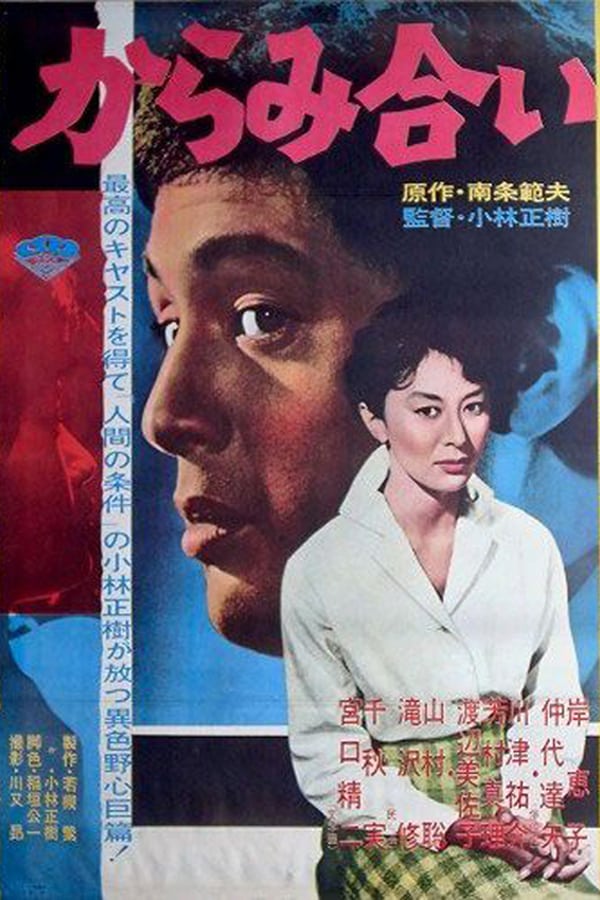
The Inheritance is yet another poke at unbridled greed. Kawara is the wealthy president of a company who’s just found out he is dying of stomach cancer. He doesn’t have any legitimate children to leave his wealth to, but he does have a penchant for the ladies and, as such, has 3 illegitimate children ranging in ages from 7 to 20. They are to 3 different women, and don’t know anything about Kawara or his wealth. On his death bead, Kawara tasks his employees with finding those three children, and bringing them to him to see if they are worthy of inheriting a chunk of his dough. The scheming starts immediately. Kawara’s much younger wife, formerly his secretary, wants to make sure she ends up with the lion’s share, so she goes in cahoots with Kawara’s right-hand man to steer the youngest child to her, so that she’ll be guardian of the kid and her wealth once the old man is gone. Other similar plots are set out for the other 2 older children. Meanwhile, the only person showing true kindness to Kawara is his current secretary (the wife’s replacement), but as the film goes along, she becomes a replacement in more ways than one, and is she truly looking out for Kawara or herself? It’s a very intriguing film, and as gripping as a dialogue-driven film can be. The final 20 minutes or so, when everyone’s plots are revealed, are fantastic. It’s a solid drama which should be seen more than it has. ★★★★

Harakiri is perfection, and out of these 5 films, the one I would most urge anyone to see. This is a dynamic and enrapturing film, full of suspense and intrigue. Taking place in the early 17th century, Tsugumo Hanshiro arrives at a large compound seeking the head counselor for the samurai under the local lord. Hanshiro states that for many years, he has been a ronin (masterless samurai), and he wishes to commit harakiri (often called seppuku), or ritual suicide, in their courtyard, in order to retain his honor. The counselor, Kageyu, tells Hanshiro a tale of a similar ronin who came not long ago for the same purpose. Motome had previously arrived with the exact same story as Hanshiro. At that time, Kageyu suspected that Motome was not serious about going through with the act, and was doing it because other ronin had been showing up at houses professing the same intent, and were just looking for a handout to make them go away. Kageyu forced Motome to go through with the act, and what’s worse, he made him do it with bamboo swords, since Motome had long since sold or lost his steel ones. Obviously a very painful way to die, trying to slice open your stomach with a bamboo knife. In the present day, Kageyu asks Hanshiro if he too is just seeking money, and Hanshiro relates his story. And oh boy, is it a good one. He knew Motome, and knew of how he died, and he’s there for more than just his harakiri. This is a tremendous film. The pace that Koboyashi set in previous films may not have always worked there, but in this setting, it adds tension to Hanshiro’s tale. By the end, I found myself on the edge of my seat, breathlessly awaiting the conclusion. Doesn’t get any better! ★★★★★

 Jons Movie Takes