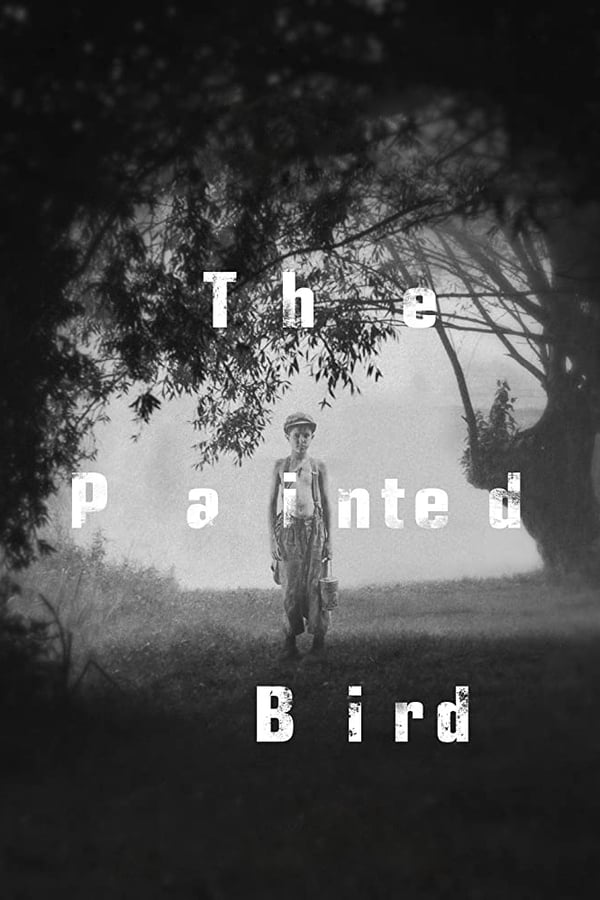
Is The Painted Bird a brilliant, powerful film? Yes. Is it entertaining? I have to say no. It is the story of a young, unnamed boy, who can’t be more than 11 or 12 tops, as he endures a year of torturous experiences at the tail end of World War II. He’s been sent to live with his aunt in a rural area in some unknown section of eastern Europe. When she dies unexpectedly one night, and in his fright the boy sets the house on fire and it burns to the ground, he is left homeless in an uncaring and unforgiving world torn apart. For nearly three hours, we see him bounce around from village to village, person to person. He is degraded, beaten, mentally and sexually abused, until he has no emotion left for this world. For the year or so covered in the film, he never has a moment of joy, only small moments of respite from the ongoing abuse that each “caregiver” gives him, before he can run away to a new person to torture him. To say it is hard to watch is an understatement, and the only impression I came away with is the filmmaker must have very little hope for humanity. It is certainly a dynamic and powerful picture, but not one for those with a weak stomach, and most definitely not one you’d want to see more than once. ★
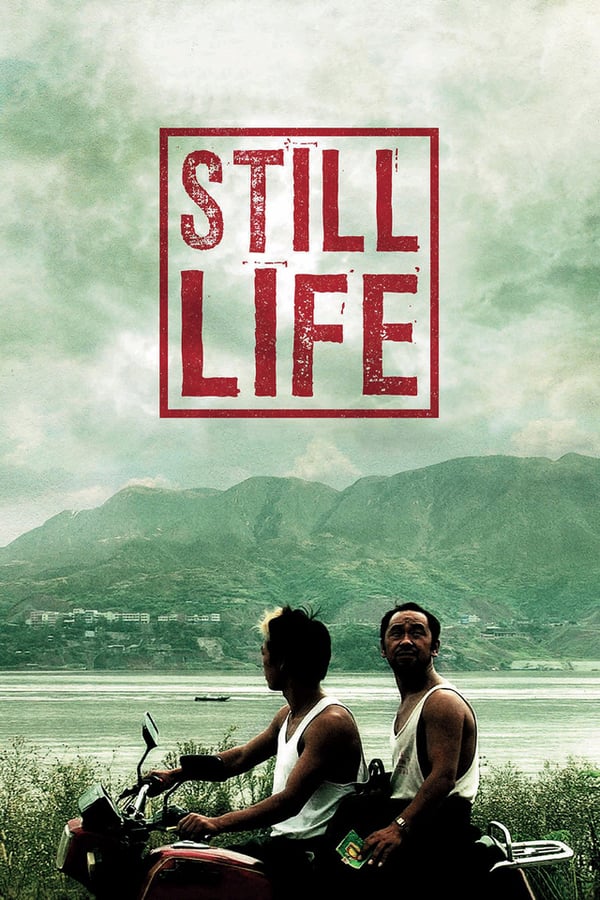
I hated Still Life for much the same reasons that I hated another of this director’s movies, Ash is Purest White: it’s too slow, nothing really happens, etc. Set in modern China, this movie is about 2 people searching for their significant others in a disappearing town in China. A new dam has been built, and the town is slowly being deconstructed to allow the river to flow through, which will then generate the hydroelectricity needed to power China’s rapid modernization. Han Sanming has come to find his wife, who left him 16 years ago, but finds that their old neighborhood is already under water. He finds her brother though, who says she is working south, but asks him to hang around for her to return. Han begins working on the deconstruction project with the brother. The other person is a lady, Shen Hong, also looking for a spouse, who she hasn’t seen in two years. She finds, him, only to find out he’s become a successful business and has a mistress on the side. The film’s final act is the resolution of Han’s search. There’s not much I did like about this picture. Slow to the point of exhaustion, it also looks like it was filmed on Uncle’s Jim’s handheld camcorder in 1999. I don’t know if it was a low budget picture or a if that was the style on purpose, for realism, but it is not enjoyable, and there were so many amateurish panning shots across our characters that it became comic after awhile. ½

I’m breaking a rule of mine and blogging about a film I’ve seen before, but it’s because it’s been ages, and I’d never seen the two sequels. I saw L’Auberge Espagnole (The Spanish Apartment) back in the early 2000’s, before I was really into foreign films at all. Only watched it because Audrey Tautou was in it, and like a lot of people around that time, I had loved her in Amélie. So I watched it again, as a refresher, and I think I enjoyed it more as a 40 year old with some perspective than a young 20 something. It follows Xavier, a French grad student who moves to Barcelona to study for a year. He moves into a large flat with roommates from all over the continent: England, Germany, Denmark, Italy, and a local Spaniard. Following the roommates and their visiting siblings and significant others, the film has all of the energy and excitement of a group of people with their whole lives in front of them, enjoying the last time before they have real adult worries and responsibilities. The apartment is a cultural and sexual hotbed, exposing each of them to ideas they had not seen before. It’s just a fun comedy, sort of like an international version of the classic 90s coming of age pictures. I’m not giving anything away, but there’s a scene in the end when the year is up, and Xavier is getting ready to head back to France, where he’s reflecting back on the last year. As he’s walking down the street with a wistful look on his face, you know he’s looking at the conclusion of a moment in life. I think we’ve all been there, when we knew one journey was ending, and we are filled with happiness and already maybe a sense of loss, knowing you can never relive those moments again. ★★★★★

Since this is a sequel, there will be spoilers for the previous film. Russian Dolls picks up five years later, and Xavier’s career as a writer has not taken off. Despite great intentions (as we all do in such moments), he and his flatmates from Spain did not keep in touch, but they are reuniting in Russia to see Wendy’s brother William get married. Xavier admits in narration that not only is his professional life a mess, but so is his personal life, and he flashes back a year to get us caught up. Xavier is still friends with his ex, Martine, but the only one of his old roommates he’s kept up with is the one he was closest to, the lesbian Isabelle, who he lives with for a time when he loses his apartment. Xavier has been ghostwriting and writing scripts for a tv show, which leads him to reunite with Wendy. She’s a more successful writer in London, and when Xavier gets a chance to write a holiday made-for-TV film in English, he tags her to help. At the same time, he is given an assignment to ghostwrite a biography for a famous model in Paris, so he spends his days taking the train back and forth between London and Paris. Xavier and Wendy start to fall for each other, but can Xavier, who’s spent 5 years sleeping around and not committing to anyone, manage to not screw it up? The film is not as whimsical as the first, probably because everyone is a little older, but not all are wiser. While it felt a little long, it manages to be a very human story, and feels real. I’m hoping for a strong conclusion. ★★★½
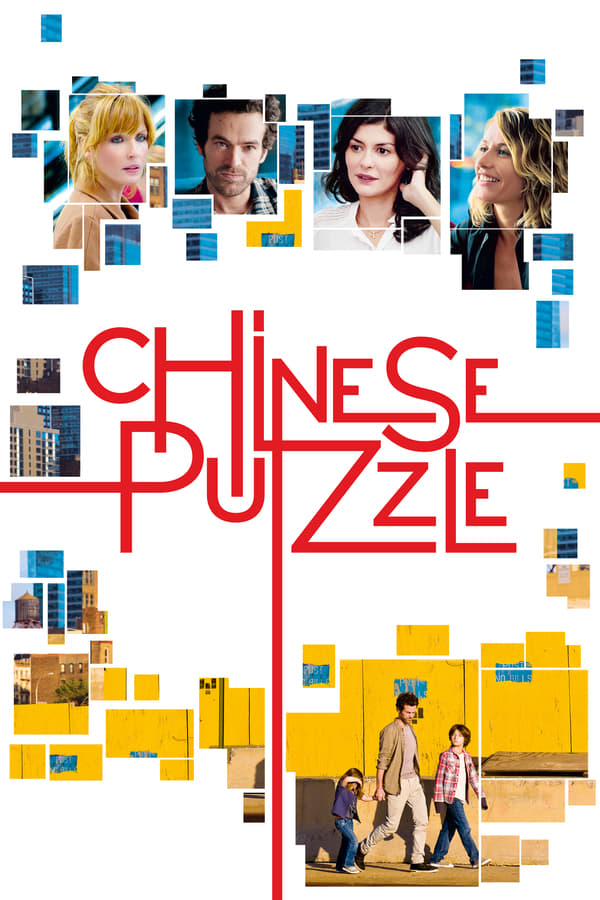
More incoming spoilers obviously. Whereas the second film jumped 5 years, Chinese Puzzle leaps us forward 10. Xavier and Wendy have had 10 years of a good, loving marriage, with 2 kids, but very suddenly the marriage fell apart. The final nail in the coffin was when Xavier’s best friend Isabelle, now with a life partner and wanting children, asks him to be a sperm donor. Wendy doesn’t like it, and when she’s off working in New York for a couple weeks, she meets someone, and eventually moves there with the kids. Xavier’s life in Paris feels empty, so he decides to follow to New York to be close to his kids, and once there, finds himself once again on Isabelle’s couch. As he and Wendy approach their divorce, Xavier’s lawyer recommends that, if he wants to stay in NY to raise his children, the easiest way is to marry an American for his green card. As luck would have it, shortly thereafter, Xavier saves a taxi cab driver’s life. The driver, a Chinese immigrant, begs to let him return the favor in some way, and before you know it, Xavier is marrying the cabbie’s American-born niece. It’s a complicated story for what has been a complicated life for Xavier, but the film never finds solid footing. There are even recycled plot elements from the previous two pictures, some things are introduced but never explored, and the writing comes off as pretentious and unrealistic, which is a total letdown from the fun atmosphere of where this trilogy started. And worse yet, the end is exactly what Xavier railed against in the second film: it’s cliche. There’s some nice, humorous moments, but the movie just made me want to go back and watch the first again. ★½

 Jons Movie Takes