I was originally going to watch just a set of French language films, but I enjoyed this first film from director Marcel Carné so much, that I decided to check out some of his other pictures. Carne lived from 1906 until the ripe old age of 90, dying in 1996. He started during the silent era as an assistant, and learned from some of the greats in his early career, including René Clair and Alexander Korda. Coincidentally, 5 of these 6 pictures came from the same screenwriter as well (Jacques Prévert).
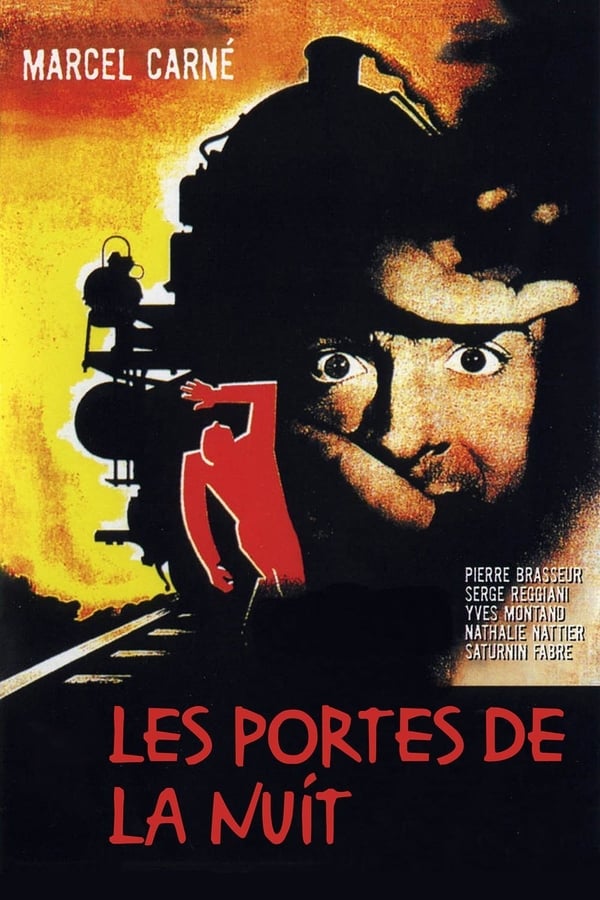
Les Portes de la nuit (Gates of the Night) was released in 1946 and takes place in early 1945, in a Paris that has just been liberated and getting used to being a free nation again, while the war in Germany is still raging. It depicts one long night on the streets of Paris, where worlds collide among many characters, and Destiny himself, in the guise of a vagabond, roams the avenues. There’s a good 8-10 players involved, whose lives intertwine in a multitude of ways, though they might not know it from the start. Included are some old war buddies, one of whom falls in love-at-first-sight with a girl, who is returning to France to see her estranged father and brother, the father who owns the building they all live in, and the brother who ratted on one of the aforementioned soldiers to the gestapo during the war, etc. Lines like these criss-cross throughout, but don’t stress; it never feels convoluted, and is easy to follow. Against the backdrop of a shelled out Paris, and with smokey haze rising from the evening and then pre-dawn streets, the film could easily stray to the very dark, but humorous dialogue and engaging characters keep it from feeling like a dirge, despite an obvious feeling of loss of hope in a dark world destroyed by war. It is a delightful film, and I’m excited to see more of Carné’s works! Incidentally, this film’s most lasting legacy is it introduced the song Autumn Leaves, which would go onto become a much-recorded jazz standard (and show up in the film La La Land decades later). ★★★★
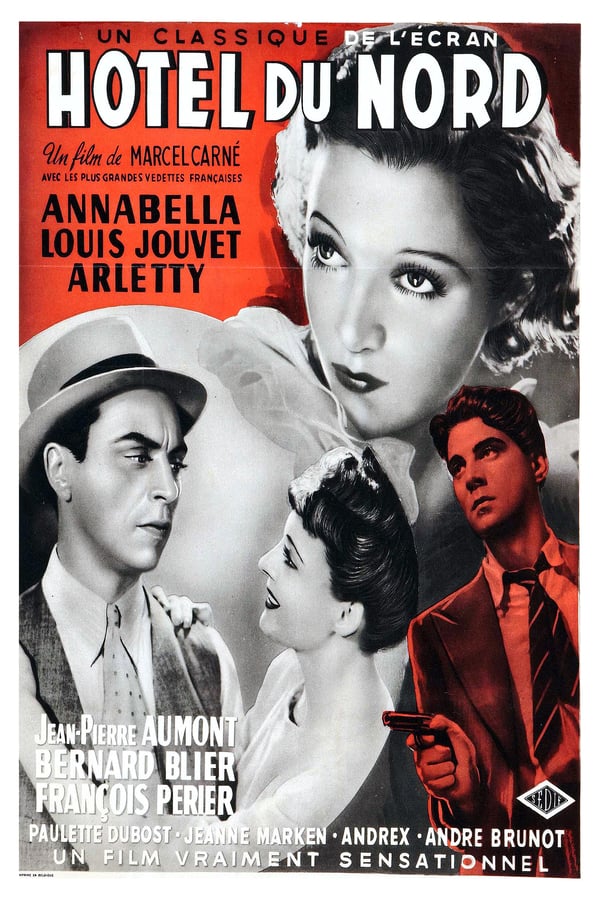
I next went back in time to before the war, with 1938’s Hôtel du Nord. Once again, a lot of characters, this time floating around the eponymous hotel. Renée and Jean are a pair of star-crossed lovers who check in for one night, with the intent to Romeo and Juliet themselves to be together forever. Pierre shoots Renée in the chest, but chickens out when it comes to offing himself. A hooligan living down the hall, Edmond, breaks into the room upon hearing the gunshot, but lets Pierre sneak out the window before the police arrive. Renée survives, and awakens in the hospital a few days later. Upon being released, she returns to the hotel to collect her belongings, and finds out Pierre turned himself in to the police while she was out. With nowhere to go, Renée takes a job at the hotel to await Pierre’s release from jail, but her presence sends cracks through the establishment, with a smitten Edmond chasing after her and dumping his prostitute girlfriend (who also lives at the hotel), as well as other suitors who frequent the area. The story isn’t as tight as Les Portes, but the wordplay is still very good (especially from the prostitute Raymonde) and if, like me, you like a good tale, this is still a very enjoyable picture. ★★★
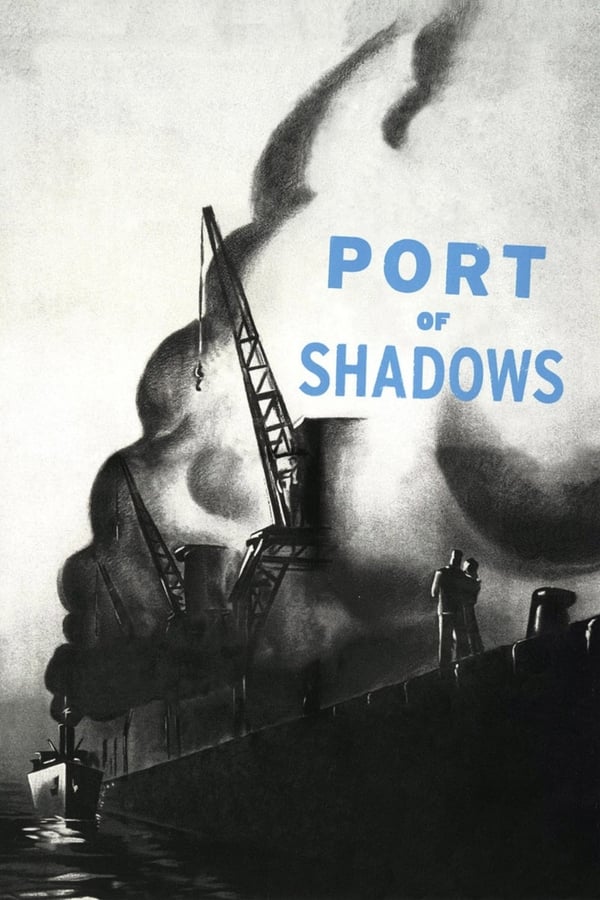
Also released in 1938 was Le Quai des brumes (Port of Shadows). Though it predates what we consider the classic film noir era, it very much has that kind of feel. Jean (Jean Gabin) is a deserter from the French military and is looking to get out of the country before he is discovered. Unfortunately he has a night that is anything but quiet. In the port city of Le Havre, he finds himself embroiled in a mystery involving a group of thugs looking for a newly-missing man named Maurice, Maurice’s girl Nelly (Michèle Morgan), and Nelly’s godfather Zabel (Michel Simon), who has more than paternal feelings for Nelly. There’s some sinister acts in play, and while Jean just wants to get out of dodge, he is swept off his feet by the beautiful Nelly and her plight. I can’t say more than that for fear of giving away some of the fun. The twists and turns are completely compelling, and while the ending doesn’t quite live up the greatness of the rest of the film, it’s still a satisfying and gripping murder mystery for fans of the noir genre. Near perfection, with a bit of deduction for the uneven finale. ★★★★
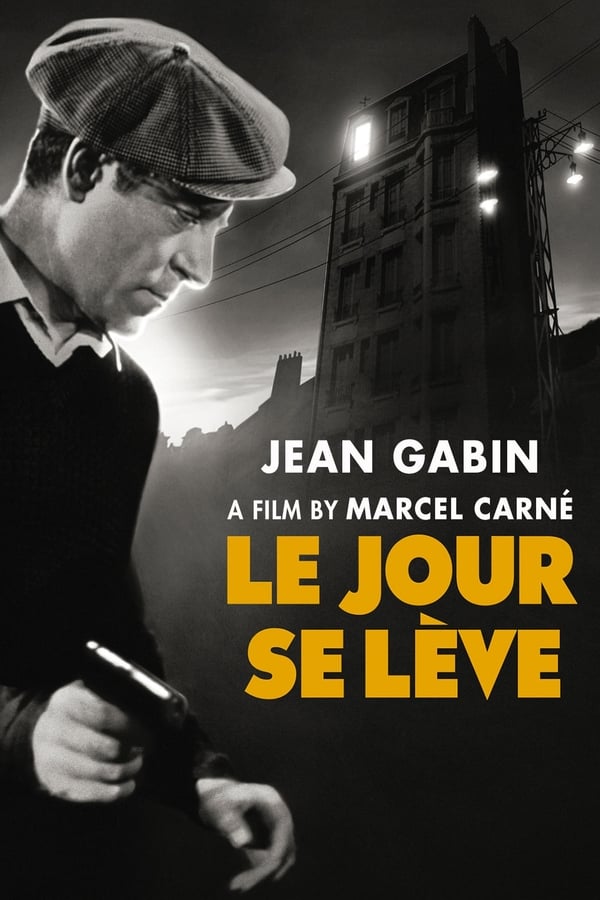
Le jour se lève (literally The Day Rises, but usually translated as Daybreak) also stars Jean Gabin, this time as François. The film starts with him having killed a man at his own apartment building, and then barricading himself in the room against police. We then get a series of flashbacks over the previous few months, leading up to today’s events. He had begun to date a young woman named Françoise, who shared several similarities besides the name. François finds though, that she’s been seeing an older man on the side. François starts dating the older man’s wife (no love between the two, both are doing it for revenge it seems), and this love triangle plays out in the rest of the film. Between the flashbacks, François engages in shootouts with the cops, while his neighbors are interviewed about his nice and accommodating François was before today. The film is ok I guess, though the plot isn’t as intriguing as the first trio of films I saw, and Gabin seems to ham it up at times in this picture. Characters are pretty shallow too, so there isn’t as much to grab on to as a viewer. ★★

Les visiteurs du soir (The Visitors of the Night, or more often called The Devil’s Envoys) is an absolutely charming film about the power of love. Released in 1942 when Paris was under Nazi occupation, and fearing his usual kinds of movies wouldn’t make it past their censors, Carné went back in time and did a fantasy historical picture. In 1485, a musical duo, Gilles and Dominique, have made pacts with the devil to sow jealousy and discord. For their newest assignment, they are riding up to a castle to seduce the the bride- and groom-to be’s. Dominique performs her role well, getting both the groom and bride’s father to fall in love with her, but Gilles unexpectedly falls in love with the bride himself. The devil can’t stand to let this one go, and shows up to the party to make sure things go his way. It is a wonderfully rich and enthralling story, with superb acting all around. Though it’s an old film in the 4:3 format, it is shot beautifully and grandly, evoking the wide open spaces of the castle galleries and surrounding countryside. Who doesn’t love a good love story? ★★★★½
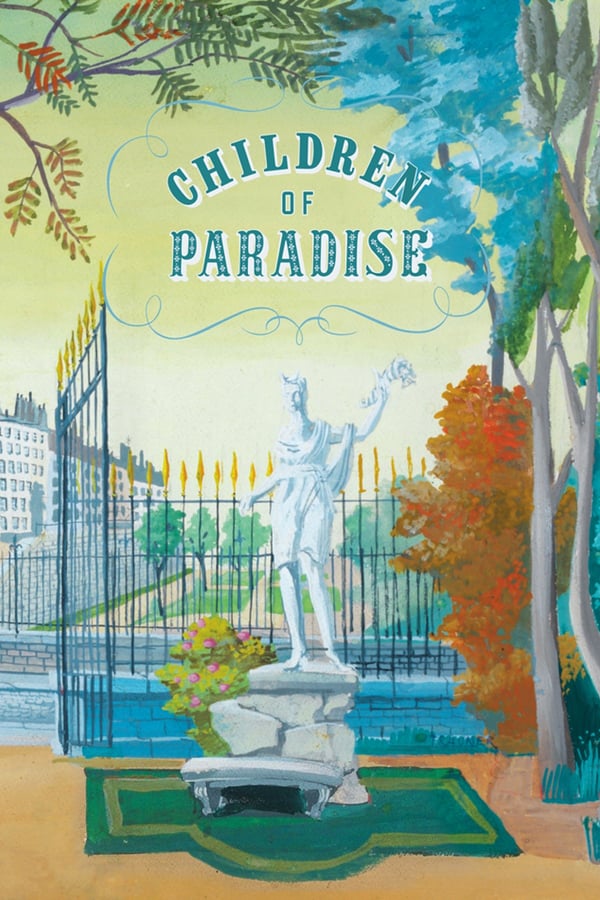
Released in 1945, Children of Paradise is considered Marcel Carné’s masterpiece. It is a 3 hour epic historical film, about an astoundingly beautiful woman named Garance, and the four men who love her. These include Baptiste, a very talented mime actor; Frédérick, a crowd-pleasing actor; Lacenaire, a criminal; and introduced halfway through the film, Édouard, a rich Count. Garance cannot pick between her suitors, not because she is unable to decide, but because she refuses (or is unable) to give love to any one person, and refuses to be “owned” in such a way. Baptiste is a dreamer, pining away for Garance despite having another woman, Nathalie, who loves him wholeheartedly. Frédérick does bed Garance, but he is frivolous in both love and money, and treats it all as a game. Lacenaire wants to own Garance like a stolen jewel, and the jealous Édouard doesn’t care if his love is returned, as long as Garance doesn’t love anyone else. Garance is forced to choose a man when she becomes a suspect in a crime, and relies on Édouard’s power and influence to keep her safe. The second half of the film fasts forward several years, after which Garance has been traveling the world with Édouard but finally returns to Paris. Baptiste has married and started a family with Nathalie, and has become a sensational mime actor with rave reviews. Frédérick is still the ladies man, and while the critics don’t like his performances, he plays to the crowd and sells out his shows (though he admits to himself that Baptiste is the better actor). When Baptiste learns that Garance is back, it threatens his entire life, and Lacenaire shows up to muddle matters as well. This is a supremely great film, with moving performances by all of the leads. Every one of the five main characters, as well as Nathalie and the others, is perfect. It is a powerful and emotional film; if it had been in English, I think it would be right up there with some of the great classics that are household names in this country. As it is, it is considered one of the best films ever to come from France, and if you look at that long history of cinema, that is saying something. ★★★★★

 Jons Movie Takes