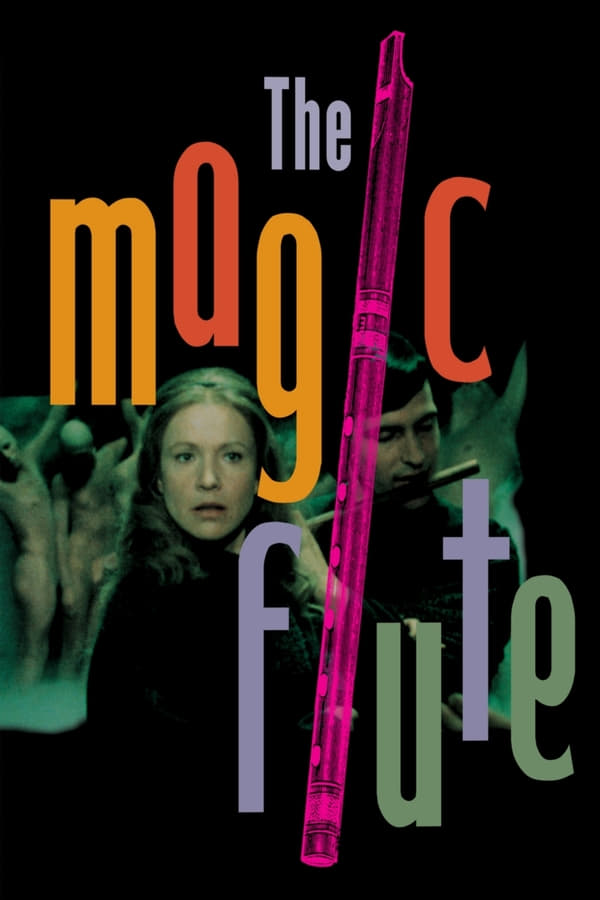
The Magic Flute is a film very different from anything else Ingmar Bergman did. It is a filmed version of Mozart’s famous opera of the same name, from a Swedish language version of the original German libretto. Bergman had been enthralled with The Magic Flute since he first saw it performed as a child, and he finally got the chance to produce it in 1975. The film is put together as an audience watching the staged opera, with spectators in the seats and cardboard stage sets instead of 3D props. The story follows Prince Tamino, who is set on a quest by the Queen of the Night to rescue the lovely Pamina from the vile clutches of Sarastro. Tamino learns though that Sarastro is the good guy, and Tamino undergoes 3 trials in order to prove himself worthy of marrying Pamina. The comic relief in the opera is supplied by Tamino’s traveling companion Papageno, who also wants to win himself a lovely bride, but who can’t seem to pass his trials. Besides having great material (The Magic Flute is one of the most famous operas of all time, even if you know nothing about opera, you’ve probably heard the Queen of the Night’s aria a time or two and didn’t realize it), Bergman’s version is enthralling to watch. Since Bergman needed real opera singers, none of his usual acting troupe are present, but these actors are obviously trained performers, and it is an enchanting performance. Though it has dark elements, it is probably one of the most light-hearted films Bergman has made, in stark contrast to the often introspective, and sometimes downright brooding films he is so famously known for. I highly recommend it, it’s a great opportunity to sit back and enjoy one of the greatest directors of all time putting together a performance from one of the greatest composers of all time. ★★★★★
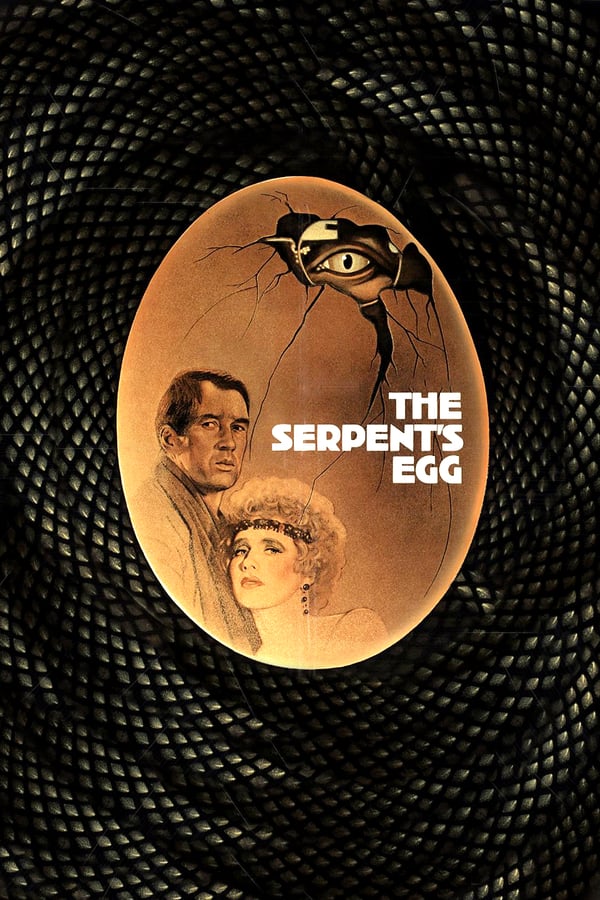
To put it bluntly, The Serpent’s Egg sucks. The weird coincidence is the last really bad film from Bergman was also English language, The Touch. That one teamed a Bergman regular (Bibi Andersson) with an American actor (Elliott Gould), and The Serpent’s Egg does the same, with Liv Ullmann partnered with David Carradine. Taking place in Berlin in the early 1920’s amongst the rise of the Nazi party during the economic hardships Germany faced after World War I, Carradine plays Jewish American Abel Rosenberg, who came to Germany with his brother Max as part of a circus troupe, but is now left stranded after the suicide of said brother. Abel initially finds solace in Max’s ex-wife Manuela (Ullmann), a by-night cabaret dancer and by-day prostitute, but events spiral out of control quickly for him. The film is a jumbled mess of off-kilter subplots and out-of-left-field twists, with really no Bergman-esque introspection. The film boils down to “Nazi’s are bad.” There are flashes of Bergman’s ouervre, such as when Manuela talks to the priest about her guilt in not being there for Max, perhaps attributing to his suicide, and her ensuing struggle with faith, but these moments are fleeting. The movie just isn’t very good. ★

Autumn Sonata gets Bergman back to what he’s good at: a look at the female psyche and loneliness in the world. Eva (Liv Ullmann) is wife to a local pastor, and has an estranged relationship with her mother Charlotte (the great Ingrid Bergman, in her final film role). Eva is breathlessly awaiting Charlotte’s visit, the first time they’ve seen each other in 7 years. Upon her arrival, Charlotte is distressed to learn that her other daughter, Helena, has been living with Eva too. Helena has been suffering from a paralyzing illness, leaving her unable to move on her own and barely talk, and it is obvious that Charlotte is uncomfortable around her. Charlotte is an accomplished pianist, spending much of her life away from the family while touring, and the film plays out as Eva airs her grievances of a life felt abandoned and unloved. It is an emotional film, about a girl who only wanted to loved, and a mother who, due to her own upbringing, admits she was incapable of it. Liv is good, but Ingrid steals the camera, as she did for all of her career. She received her seventh and final Oscar nomination for this picture. ★★★½
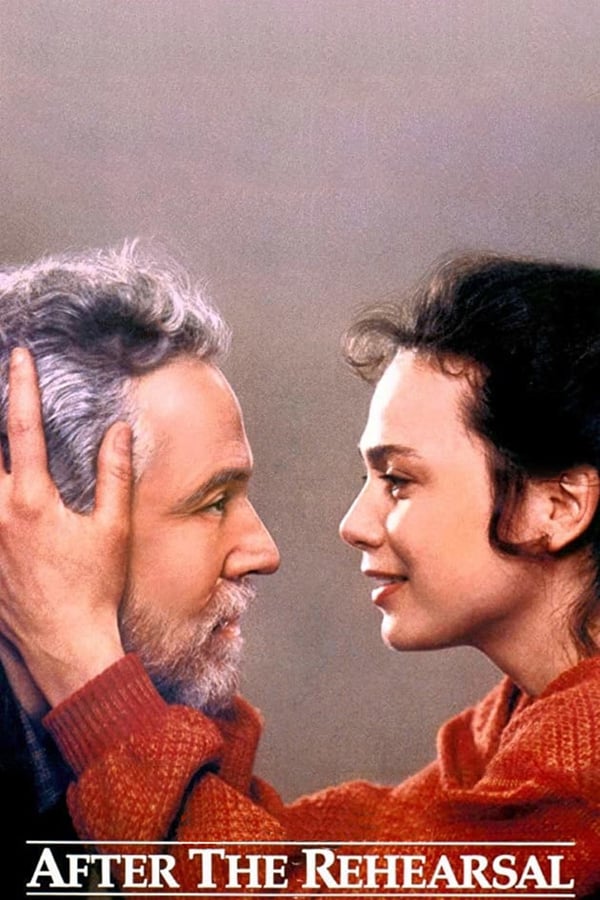
After the Rehearsal is one of those pictures that is fascinating as a look behind the curtain, so to speak, but I’m not sure it makes for a good movie. It has just three characters: Henrik, Rakel, and Anna, and takes place entirely on a stage after the rehearsal of an upcoming play. Henrik, the aging director, is sitting at a desk musing when Anna, his young beautiful star, walks onstage. They talk of the play a bit before conversation turns to Anna’s hatred for her mother Rakel, who always put her career ahead of her daughter. This makes Henrik think back to a time when Rakel approached Henrik after a rehearsal of their own, and invited him to her room for sex, though Rakel rambles a bit about her failing health and looks due to her alcoholism. Back in the present, Anna poses the question of what would happen if she were to enter into a relationship with Henrik like her mother did, and Henrik and Anna spend some time considering the ramifications, none of which turn out good for anyone involved, because Henrik too always puts his art first. I’m the sure the film was therapeutic for Bergman, who notoriously had relationships with several of his leading ladies over the years, and admits he wasn’t a good father to his children (he couldn’t remember their ages, and reckoned his life by his films and not by years). Excellent performances by all three leads, and especially Ingrid Thulin as Rakel. Fans of the stage, I think, would particularly like this picture, as a look behind the scenes of interpersonal jealousies and fears that can develop. ★★★

 Jons Movie Takes
One thought on “Quick takes on 4 Bergman films”