
Night Train to Munich is, after a couple early surprises, a very straight forward war/spy thriller, with a whole lot of comedy thrown in. In 1939 as Germany is invading Czechoslovakia, a Czech scientist makes his escape to Britain, but his adult daughter, Anna, isn’t so lucky. The Germans want to use her to get to her dad, but she of course doesn’t cooperate. Thankfully she finds a friend in a fellow prisoner named Karl, who helps her escape from the concentration camp. If it sounds too good to be true, it is, as Karl is a German spy trying to get Anna’s dad out of hiding. As soon as Karl has his target in hand, he secrets them all to Berlin. Their savior is Dickie Randall, a British spy who decides to take a page out of Karl’s book and impersonate a German officer. He boards the train to Munich with hopes to rescue Anna and her father before the other Germans find out he’s not who he says he is. Lots of laughs to keep the tension from getting too heavy, poking especially at Nazi Germany. It was written in 1939 and released in 1940, before Britain had suffered much in the war and Hitler’s atrocities were widely known, otherwise the jokes may not have been so well received. Overall I enjoyed the movie while I was watching it, but I believe ultimately it’s not going to be a very memorable picture for me. After those very early surprises about Karl, the film is very paint-by-numbers with no real surprises. I’d probably watch it again, because it is entertaining, but it isn’t genre defining or anything. ★★★
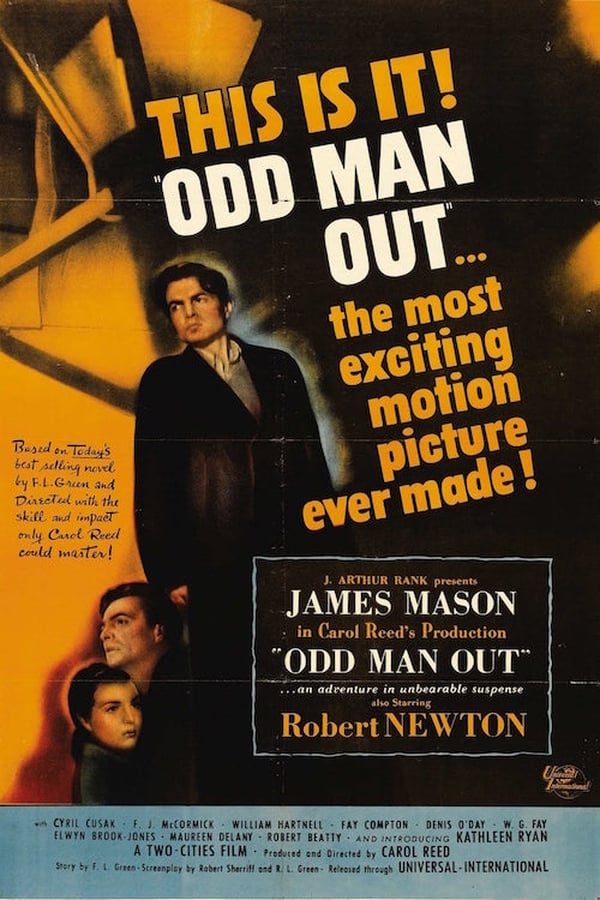
Odd Man Out takes place in the late 1940s and focuses on the IRA in Belfast, though, for whatever reason, the words “Belfast” and “IRA” are never used (though director Reed does condemn “illegal” groups in the opening intertitles). Johnny McQueen has just escaped from prison and is already planning another heist with his fellow conspirators. They’re going to rob a profitable business and use the money to fund the organization. However, during the getaway, Johnny struggles with a man and kills him, and is himself shot in the arm. He isn’t able to make it safely to the getaway car and is left to roam the streets. The majority of the film takes place on this long night, as Johnny attempts to make it the couple miles to his safe house, as the police tighten their circle around him. The Irish residents in the area run the gamut of clandestinely rooting for Johnny to make it, to apathy to his cause as long as they aren’t involved, to openly trying to help the police locate him. Reed tries to make us root for Johnny too; perhaps to ease past Hollywood code at the time, they really play up Johnny’s guilt at having killed a man, and his own doubts about the violence of the IRA. There are plenty of tense moments and a surprisingly shocking ending, but honestly there were some long stretches in the middle where Johnny disappeared from the camera for awhile and other various characters decided what they were going to do with him. I think a lot of trim could have been cut to make it closer to 90 minutes instead of 120, and it would be a tighter film, but who am I to argue with a celebrated director. ★★★½
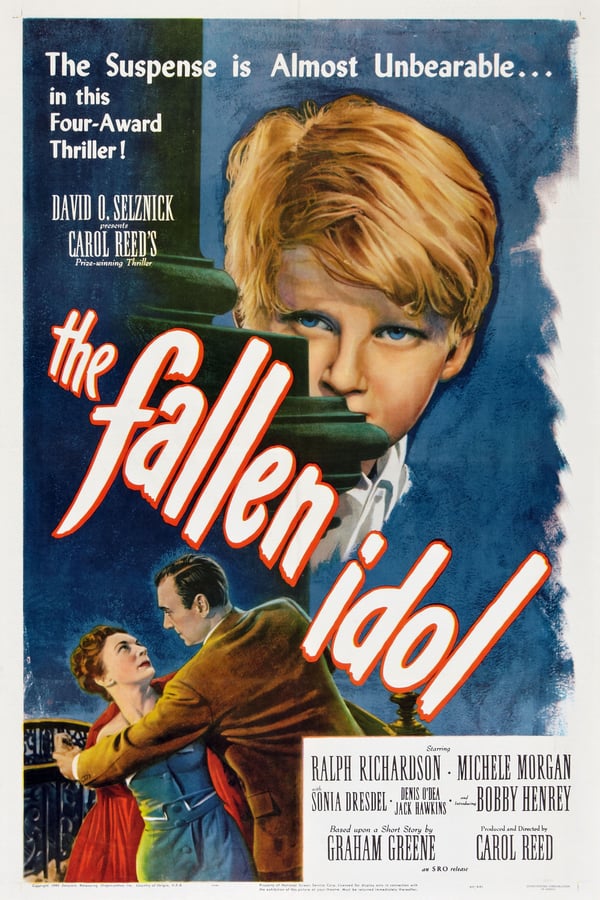
The Fallen Idol is told almost entirely through the eyes of Philippe, the young son of a French ambassador, who idolizes the English butler in the embassy, Baines. Baines’ wife is a bit of a shrew, and Baines has a younger girlfriend on the side, who Baines introduces to Phil as his niece when caught with her at a store. Mrs Baines weasels the info out of Phil, and sets a trap to catch her husband in the act by pretending to leave the embassy for the day. When she returns and catches Baines with his young girlfriend, they have an argument. Baines turns to leave, and his wife climbs a window to try to get a peek at her competition, and falls to her death. Phil didn’t see it happen, and suspects that Baines killed his wife. He makes a couple offhand comments that the police overhear, making Baines an immediate suspect, and he doesn’t help his cause when he lies to the police to hide the fact that his girlfriend was there as well. Very fun and gripping film, but may I again talk about how much I hate child actors? For every good performance you get, you have to watch 10 that are God awful. I wanted to reach through the screen and slap Phil myself. He’s a big distraction, especially in the final 5 minutes, where you can see him grating on the real actors on screen, no matter how much they and their characters try to ignore him. ★★★½
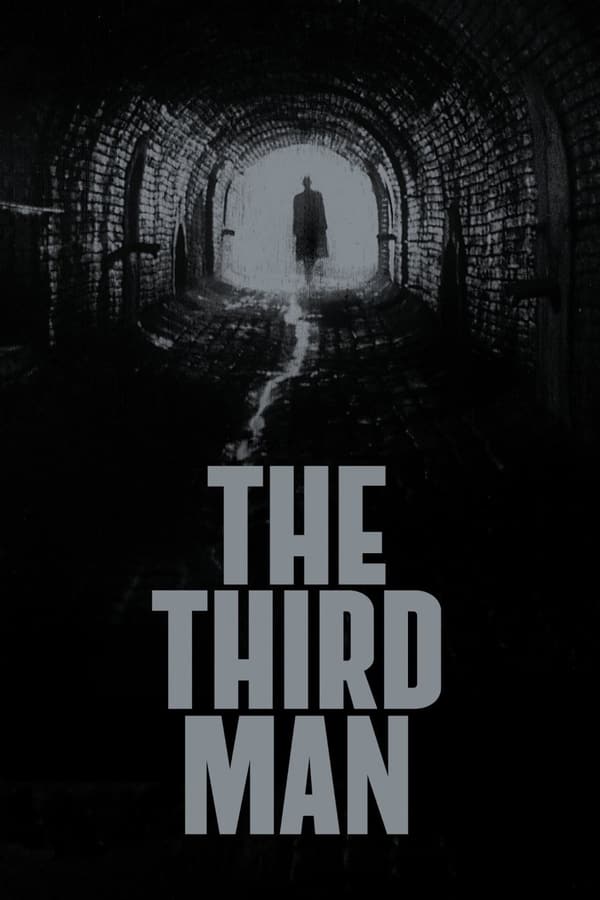
This next movie is the reason I wanted to watch some Carol Reed films. The Third Man is a highly acclaimed film, widely regarded as one of the best British films ever made. I love it when they are worthy of their praise. This film is fantastic, full of beautiful, rich noir imagery and a soundtrack, a very un-noir-like zither accompaniment, which may seem off-putting at first but which comes together brilliantly in the end. Martins is an American new to Vienna. He’s come because his long-time friend Harry has promised a job, but when he arrives, he discovers Harry has just died under very suspicious circumstances. In this post-World War II environment, Vienna is jointly ruled by Russians, Americans, British, and French, so there’s a lot of bureaucracy to sift through, but Martins is able to piece together that Harry was hit by a car, and some people say 2 people moved his body from the street, while others hint that there was a third person who helped. Heightening Martins’ suspicions, some say he died instantly, while other reports say he lived long enough to give some instructions. Involved somehow is Harry’s local girlfriend, and the British police suspect that Harry was into some nefarious plots that got him killed. The big reveal with about 30 minutes to go is fantastic, and well worth staying away from spoilers. The detailed environment of a city just removed from devastating war, with crumbled buildings not yet rebuilt, and various governments fighting over the scraps, adds to the ambiance of the experience. Go in blind, sit back in a dark room, and enjoy movie making at its finest. ★★★★★
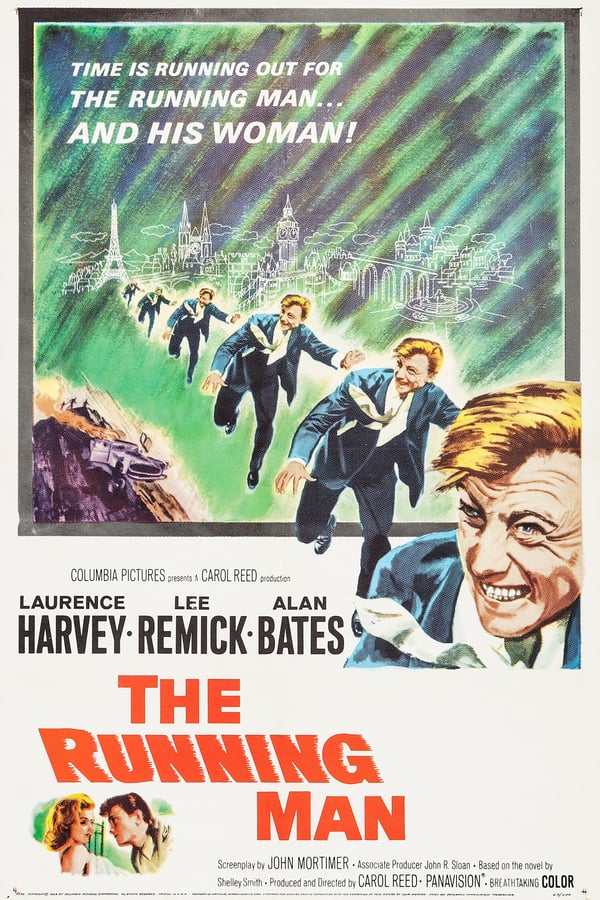
The Running Man (no, not Arnold’s Running Man) came much later, in 1963. In it, Rex has faked his own death to get a big insurance settlement, and he and his wife Stella plan on running off with the money. Stella has had her doubts from the beginning, but she’s gone along with it, and puts on just a good enough show when the insurance agent, Stephen, stops by for a check-in. Rex goes off to Spain, and shortly after, Stella joins him. They think they are in the clear, and just as Rex starts to think he’ll pull the same trick again with a new name, Stephen shows up in Spain. Supposedly on vacation, Stephen immediately earns the suspicions of Rex and Stella, who thing the jig is up. They continue the local ruse they’ve set up, that Rex is a rich sheep farmer from Australia, but they don’t think they’re fooling anybody. Gets a little hokey in the end, where it pulls out all the clichés of 60s film, but it didn’t ruin the experience for me. It doesn’t have the depth of The Third Man, but it is still an entertaining movie, and filmed very well in widescreen with popping colors and gorgeous scenery. ★★★

 Jons Movie Takes
I do agree that Odd Man Out should have been trimmed, but I still love the movie! A problem with being a film critic is we kinda don’t get to enjoy movies as much, do we?
LikeLike