Recently having watched many films of Roman Polanski’s, I wanted to see what other Polish directors were out there. Krzysztof Kieślowski is one of the most famous, for his Three Colors trilogy and his Dekalog: the Ten Commandments, a 10 part drama series. I still need to watch Dekalog, but I did dig into 5 of his films, both Polish and French, from the 80s and early 90s.
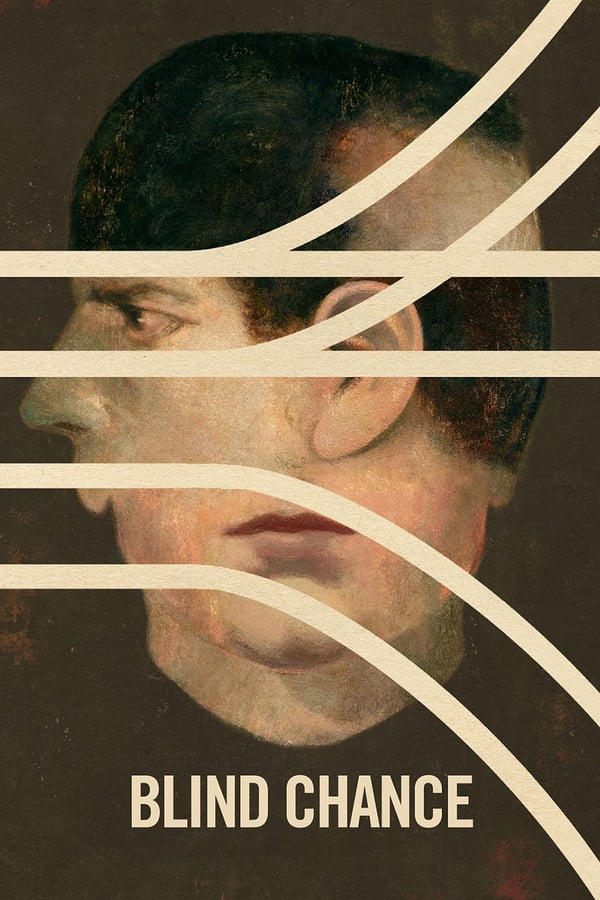
Blind Chance is an interesting film, about if we really have a choice in our lives or if everything heads in the same general direction no matter what we do. Witek is a med student who, after the death of his father, decides to leave school and head off to Warsaw in search of something new. Barely catching the train in time, he meets an old Communist named Werner. Through him, Witek becomes involved in the Communist Party, much to the chagrin of his girlfriend Czuszka, a girl he dated as a youth and met again later. She’s been involved in an anti-Communist group. Events for Witek spiral out of control when she leaves him and he falls out of favor with his superiors. Here, the movie resets back the train station. This time, Witek misses the train, and in his frustration, lashes out at the train depot security, getting him arrested. In a work detention camp, he meets a member of the resistance, and this time, Witek ends up going against the Communists. He even gets baptized and gets into religion. Again, he eventually ends up on the outs of those around him in a misunderstanding. Again, a reset, and though Witek misses the train again, this time he takes it in stride and stays with his current girlfriend. They have a family, and Witek becomes a successful doctor, and stays out of politics completely. Ultimately, things still don’t end well for him though. It’s a very intriguing picture, with fine acting by Bogusław Linda in the lead. It would be easy for a movie like this to feel hopeless, but I got a sense of a bigger picture at work, and enjoyed it. The film was made in 1981 but banned for years in Poland, finally released (heavily censored) in 1987. ★★★½
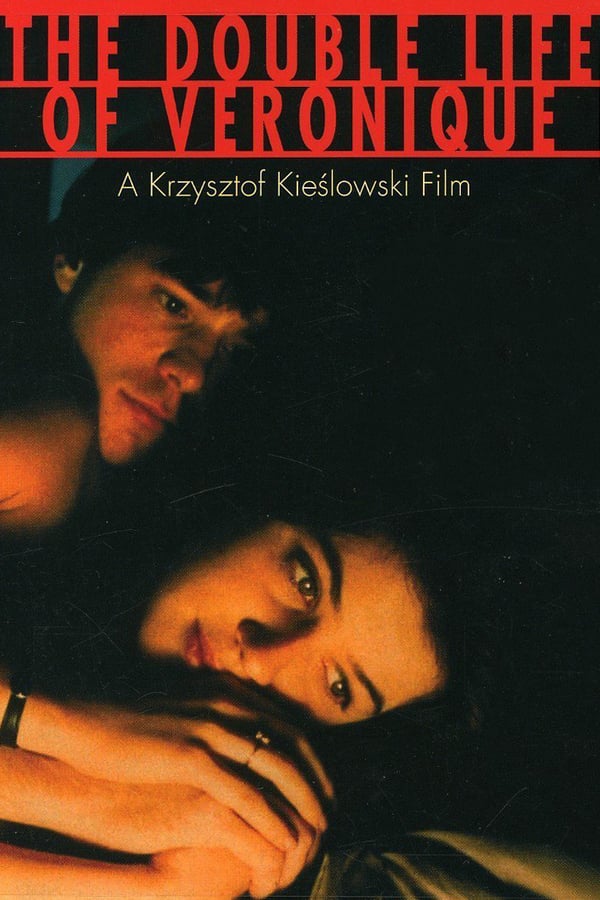
In 1990, Kieślowski started working with financers in France, so his movies became more international. The first was 1991’s The Double Life of Veronique. I straight up didn’t get this one. I’m convinced it was an excuse to follow around the stunning beauty Irène Jacob for 2 hours. She plays two characters, the first is a Polish singer named Weronika. Talented and on the cusp of stardom, she talks to her father feeling like she’s not alone in the world, and shortly after, she’s walking through the town square when she spots a French tourist who looks just like her. It is in fact the same actress playing both. That night during a concert, Weronika suddenly collapses and dies. We then meet the French tourist, Veronique. She too speaks of always feeling like she’s missing something, and recently, has had a profound sense of loss and emptiness. The film follows her in her relationships and obtuse discussions about mysterious connections between people. Jacob is captivating, so its impossible not to keep watching, but I’m not exaggerating when I say nothing of import happens. For me the movie comes off as an attempt at deep introspection from a half-baked idea about a split soul or some other nonsense. ★
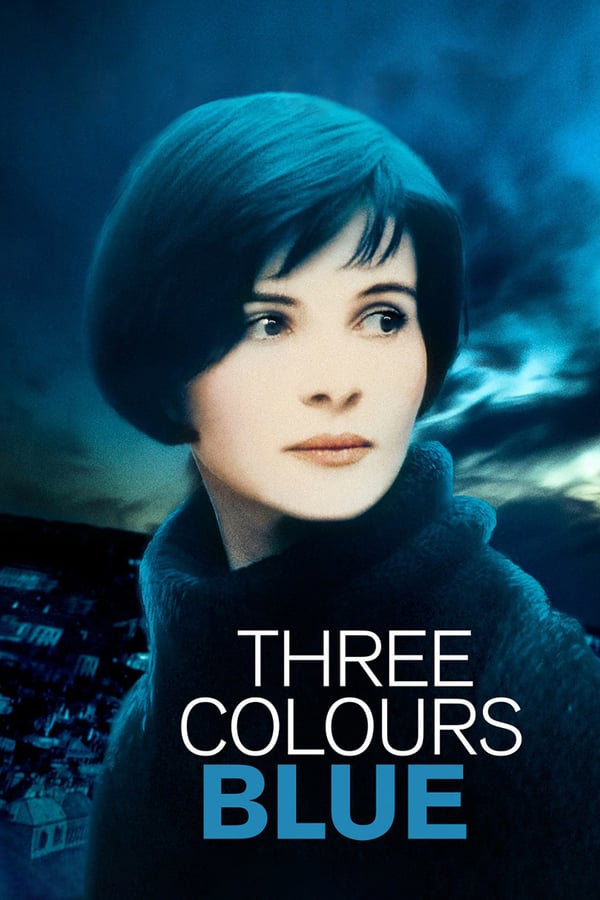
Kieślowski fired off three films in 2 years between 1993-94, in a planned trilogy called “Three Colors.” Each signifying a color of the French flag, these French productions are lauded as some of his best work. Blue stars Juliette Binoche (3 years before The English Patient, shout out to my fellow Seinfeld fans) as Julie. Julie has just lost her husband and young daughter in a terrible car wreck, of which she was the only survivor. The country mourns the loss of her husband, an all-ready famous composer who was working on what was anticipated to be his masterpiece, while Julie begins to detach herself from her feelings and memories in order to protect herself. She walls herself off from everyone and everything she knew before the crash; she sells the house and all of its belongings, gives enough money to the maid and gardener so they are set up, destroys her husband’s work on his final piece (it is whispered in circles that Julie was the main composer, or at least, a big helper), and moves into a tiny apartment where no one knows her. The film comes to show Julie as she works through the stages of grief in her own way, first by secluding herself, and then, slowly, by allowing herself to feel again. It’s a truly stunning and emotionally charged picture, with gorgeous scenes and thought provoking moments that will stick with you. There are a lot of great films dealing with healing from tragic events, but I’m not sure any have been done better. ★★★★
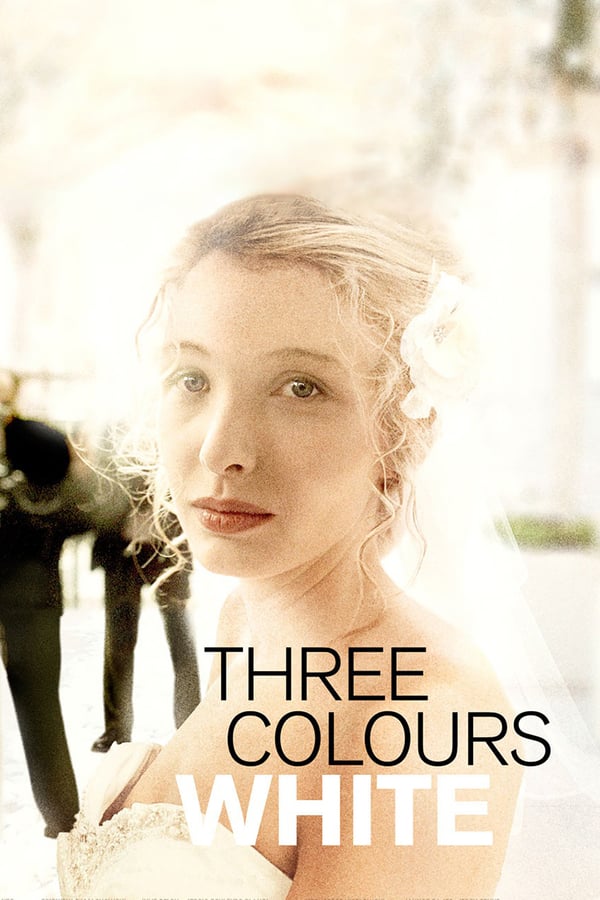
White came next, and it is a much more straight-forward, less esoteric picture. Maybe because of this, it was the least well-received (critically) of the trio, but I enjoyed it. It’s a dark comedy about a man, Karol, who is about the biggest loser on the planet. A Polish man, the film starts with him in French court getting divorced from his French wife Dominique. Her grounds are that after 6 months, Karol has been unable to consummate their marriage, an embarrassing fact Karol has to admit to in open court, and which no one can believe after one look at the beautiful Dominique. She gets all their belongings and money, leaving Karol penniless in a foreign country. He happens upon a countryman gambler who agrees to smuggle Karol back to Poland in a suitcase, but the luggage is stolen in transit and Karol is beat up when the robbers discover him. Ultimately, Karol does make it home, and hatches on to a plan to make it all back. Karol’s pitfalls are pretty funny stuff, and actor Zbigniew Zamachowski has the lovable loser look down pat. The ending does offer some reflection, but as a whole it doesn’t get as deep as Blue. But it is a fun (and funny) 90 minutes. ★★★½
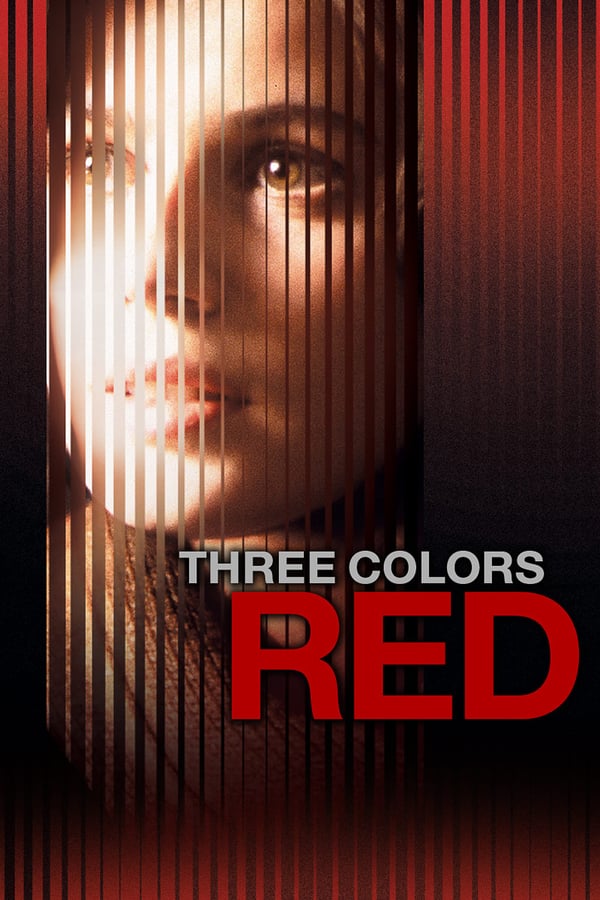
The final film is Red, a story of fate and and fraternity between people. Valentine is a young model studying in Geneva, longing for her mentally abusive boyfriend, who never seems to make time for her (in fact, I don’t think we ever see him on camera). Driving home one night, Valentine hits a dog in the street, and uses its collar to take the dog to its owner, who turns out to be Joseph, an old crotchety retired judge. Joseph doesn’t seem interested in the dog or Valentine, so she takes it upon herself to take the dog to the vet to get fixed up. When she brings the recovering dog back to Joseph later, he begins to open up to her, only slowly and over time, and the two form an unlikely friendship. Going on in the background of all this is the relationship of another couple, unrelated to our two leads, but intertwined anyway, and not only because of proximity (the male is Valentine’s neighbor, the female is Joseph’s). Kieślowski plays with the idea of fate a lot here, and not just because these 2 separate “couples” live close to each other. Saying more than that would give too much away, but it is a wonderful picture. Perhaps it isn’t the emotional juggernaut that Blue is, but it is no less moving, and the denouement is a strong and appropriate ending to the trilogy. ★★★★½

 Jons Movie Takes
One thought on “Quick takes on 5 Kieślowski films”