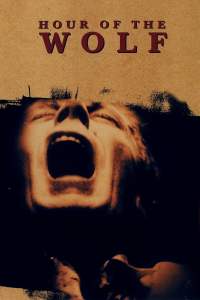
 Hour of the Wolf is a bit different from other Ingmar Bergman films. It’s very much a horror picture, and it shows Bergman using different themes than he’s traditionally known for. Johan Borg (Max von Sydow) is an artist of local fame, and he’s brought his younger wife Alma (Liv Ullmann) to a tiny island where he has a summer home. They aren’t there for long before Johan starts becoming distant and surly; he stops sleeping and starts talking about being haunted by demons on the island, people he names as the Birdman, the Meat Eaters, and a lady who removes her face when she takes off her hat. Shortly after Johan starts acting this way, Alma is visiting by an older woman who tells Alma where Johan keeps his diary. Trying to help him, Alma reads through it, and finds out that Johan was once involved in a scandalous affair on the island, before their marriage, to a married woman named Veronica. Johan also admits to Alma that he killed a young boy on the island once, a story that repulses Alma. A local baron invites the couple to his castle for dinner, at which Johan’s past is brought up, and allusions are made that Veronica is still around. Before the conclusion, Veronica’s ghastly visage does indeed show up, and the demons are unmasked. It’s a very different feel from what I’m used to from this director, but it is good nonetheless. Bergman’s longtime cinematographer Sven Nykvist (look up his impressive list of films!) creates a gloriously dark miasma which permeates through each successive scene, getting bleaker and bleaker until a stunning conclusion. ★★★½
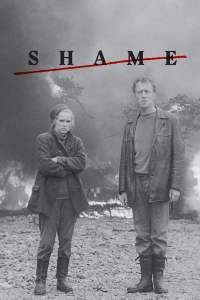 Released the same year, von Sydow and Ullman return together in Bergman’s Shame, another film very different from his usual fare. It is the most political film he ever made, and also very antiwar, as a look at the legacy of World War II and probably eyeing the ongoing Vietnam conflict as well. Jan and Eva are a married couple, violinists in a local symphony before a Civil War broke out recently, but they’ve stayed on their farm and away from the conflict. Eva is a strong willed woman and the defacto head of the house, while Jan is submissive and prefers to avoid conflict. They can’t forever though, and war finally comes to them. Nearly sent to a labor camp, they are saved at the last second by a local politician and supposed friend, Jacobi (another Bergman stalwart, Gunnar Bjornstrand), who became a conspirator for the (so far) winning side of the war. I didn’t enjoy this first hour of the film, to this point; it is almost an action film, which seems neither Bergman’s nor von Sydow’s forte, but the second act found them both in their element. Things have settled down a bit, but Jacobi has used his power over the couple to his advantage. Showering them with gifts (food and supplies, in a time when such things are hard to come by), he’s seduced Eva into granting sexual favors in exchange. The mousy Jan is unable to stop it, but when the political tides turn against Jacobi, Jan is finally able to grow a backbone. The problem is, will Eva like the man he becomes? There are some stunning moments in the second half, some heartfelt and heartbreaking dialogue and emotional peaks and valleys that only Bergman could produce. Sit through the first half, because the payoff is fantastic. The second half is 4+ stars, but I’m docking it just a bit for the first half. ★★★½
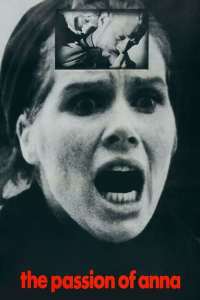 Having just finished The Passion of Anna, I’m just going to freewrite a bit on my thoughts about it. I went into this one blind, and probably should have read at least a synopsis to know what I was getting into. Without it, I didn’t know what to think for quite awhile. It starts with an almost New Wave-y feel, with a voice narration describing events to the viewer, and the film is interspersed with interviews with the four main actors, breaking the fourth wall and discussing their individual views on what makes their character tick. Ultimately, I think the film deals with one of Bergman’s favorite subjects: loneliness, and its entwinement with humanity. Andreas is a man who has cut himself off from others, figuratively and literally, but he seems to give in to others’ needs when they require companionship. This flaw (if it is one, it seems to be for Andreas) leads him to two love affairs, first with the married Eva, and later with the widowed Anna. Each of these two women have their own issues, as does Eva’s husband Elis. The film closely examines each of these four people. There are a whole lot of movies out there where characters are one dimensional, but certainly not here. These four are complex, flawed human beings, not always aware of want they want in this world, only that they don’t have it yet. Bergman’s monologues in this film are truly exceptional, and will have you thinking about the greater world around you, and your place in it. It’s an exceptional picture, probably one of Bergman’s lesser known gems, and one I’ll need to revisit one day now that I know what to look for. ★★★★
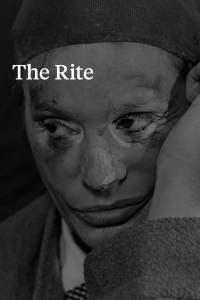 Like many high profile directors, Ingmar Bergman was a bit of a narcissist; he loved glowing praise but was condescending to unfavorable critics. For a time he led the Swedish Royal Dramatic Theatre, and when one of his productions was not warmly received, he made The Rite. It’s basically a filmed stage play, featuring a cast of just four. A traveling threater trio is brought in on charges of indecency in their latest act, and they are being investigated by a local judge, who interviews them. A short film at just 75 minutes, it is basically satire with Bergman making fun of the sensor process, pointing out perceived hypocrisy in how content can be accepted in one situation and derided in another. He also has the judge do some terrible deeds himself, which are not persecuted. I’m sure Bergman had a big laugh at it all, but it doesn’t make for a great film. Just sort of felt like showing off what he could get away with, while thumbing his nose at his detractors. ★½
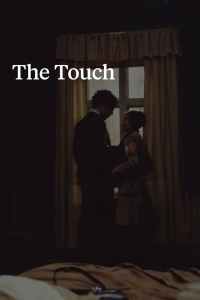 The Touch is the first truly bad film I’ve seen of this director, and at this point, I’ve seen quite a few. At least with the above The Rite, I get where it’s coming from and, while I didn’t enjoy, it at least has some artistic merit and I can see how some would get into it. I don’t see anything in The Touch. Bergman’s first film in English, and with a bonafide American star (Elliott Gould, just a year removed from MASH and two from his first Oscar nom), it is the least “Bergman” Bergman film he probably ever did. Bibi Anderson plays Karin, a woman torn between two men. Her husband Andreas (Max von Sydow) isn’t the warmest partner around, and he is absent due to work, but he obviously loves her. Karin wants something more though, and ends up in the arms of displaced American David (Gould). As the common phrase goes, I don’t know what she sees in him. David is childish, and prone to angry outbursts when he doesn’t get his way, i.e., if Karin doesn’t drop everything and come to his apartment when he calls. Their love affair is just poorly done too; it’s the worst kind of melodrama where the couple says and does things that don’t even make sense from an adult relationship point of view. Since the above films had great second acts, I stuck around until the end waiting for a big “ah-ha” moment. I’ll save you the viewing: it doesn’t come. ½

 Jons Movie Takes