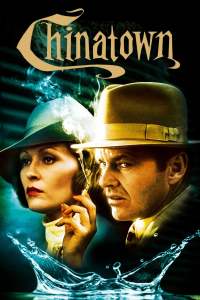
 Going to look at some of controversial director Roman Polanski’s films. In my mind, probably a piece of shit as a human being, but he can make some fine films. Up first is Chinatown, considered one of the 2 or 3 best films he ever made. Its a neo-noir featuring a younger Jack Nicholson as Gittes, a private investigator and a good one. After Mrs Mulwray hires him to follow her husband, Gittes becomes embroiled in a mystery when the husband turns up dead, and the real Mrs Mulwray shows up to sue Gittes for his involvement. The mystery goes deeper than just a shadowy death, involving big money and government contracts, and Gittes can’t help himself but to keep pulling at strings to see where they lead. Excellent writing and superb acting with Nicholson and Faye Dunaway in the leads, the film is a fantastic look at the time and collective mind of 1974, when the USA was growing increasingly cynical, what with the failing of the government, our involvement in Vietnam, and a bleaker outlook on life in general. I loved it. ★★★★
 Knife in the Water was Polanski’s first feature film, released in 1962, in his native Poland. It follows a simple premise, but the director is able to do something with it. Andrzej is a middle-aged man with a much younger wife, Krystyna. They are on the way to their sailboat for a weekend on the lake when they pick up a hitchhiker, a young man who never gives his name. What follows is a tense weekend full of pissing contests between the two men, who vie for the attention of Krystyna. Andrzej uses his knowledge of boating to ridicule the younger man. Though inexperienced, the man has a youthful exuberance for life that is infectious to Krystyna. Overall I thought the film was very average. I appreciated some moments, creating psychological tension with very little to work with, but I just wasn’t enthralled. Solid, but unremarkable. ★★½
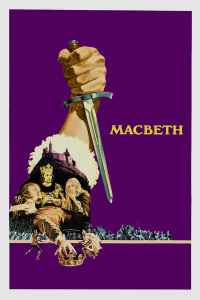 Next up is Macbeth, obviously based on the famous Shakespeare play. I’m ashamed to admit I was unfamiliar with this one. Outside of its reputation as one of the top 3 of his plays, which is saying something of course, I honestly knew nothing about it. Maybe for that reason, going into it blind, I absolutely loved this film. How did I stay away from this story for so long?! The eponymous Macbeth is a Scottish lord and a legendary fighter. After (purportedly) fighting back a horde of enemies single-handedly, Macbeth and his longtime friend Banquo are returning home when they come across a trio of witches. The witches prophesies that Macbeth will become king, and it isn’t long until he is given that opportunity. King Duncan visits Macbeth’s house to celebrate his recent victory, and during the night Macbeth and his wife murder the king and pin it in some of the king’s entourage. The popular Macbeth is indeed named the new king, but almost immediately, he becomes paranoid that others want to take his power for their own. He has Banquo and other former friends and colleagues of his killed, and eventually he is surrounded by thieves and murderers, alone on the throne with no true friends. Things do not end well for old Macbeth. Grisly and sometimes disturbing, Polanski’s telling feels very real and modern (though it came out in 1971 and seems to use the text to the original play faithfully). It is easy to follow, lyrical to listen to, and entirely mesmerizing. A brilliant film. ★★★★★
 Overall, I generally enjoyed Tess (based on Thomas Hardy’s classic work Tess of the d’Urbervilles). I have to say I liked it more a couple days later than I did immediately after viewing. It does offer for a lot of reflection. Tess is a beautiful young woman from a very poor family, but her parents have hopes that she can raise herself and them up from their situation. Tess’s dad has recently learned that his family name Durbeyfield is actually a crude version of an old aristocrat family, the d’Ubervilles. He sends Tess off to the surviving members of that ancient family in hopes that she can make an impression, but it turns out that the current d’Ubervilles are nothing more than a rich family who bought the name for its prestige, and aren’t d’Ubervilles at all. Tess’s situation doesn’t get any better, in fact, the whole film is basically one wrong turn after another for our heroine. She is pursued by a man she loathes, and is in love with a man who won’t have her. From the opening scenes, the viewer is struck by absolutely gorgeous cinematography, but what I can’t stop thinking about, is the care Polanski took to making this film. There are movies where directors make things happen, and others where the director lets things happen naturally. Tess goes at a leisurely pace (at nearly 3 hours long), but it never feels slow. And after Tess’s trials throughout, the ending seems very fitting. ★★★½
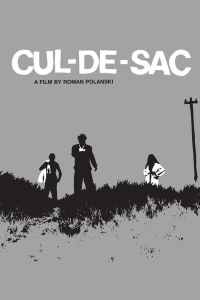 Cul-de-sac was the first dud that I’d seen of Polanski’s. It was his third film, after the above mentioned Knife in the Water and Repulsion. Honestly I don’t get what anyone sees in this film. A supposed black comedy, it is about a couple gangsters who are fleeing a botched job, who end up at a villa inhabited by a rich effeminate man and his sexually charged wife. What follows is a weird display of sexual tension, absurd wordplay, and over-the-top acting and dialogue. I wasn’t amused, I wasn’t engaged, and I couldn’t wait for it to be over. I kept waiting for some big “ah-ha” moment which never appeared. ★
 Not quite sure what to make of The Death of Dick Long. The filmmakers themselves didn’t know if it should be a comedy or a dark drama, and so it sort of fails at being both. The eponymous Dick and his two buddies Zeke and Earl are a trio of redneck friends in a garage band. After a night of drinking, drugs, and debauchery, we see Zeke and Earl dumping their buddy, who is bleeding profusely, in front of the hospital and then making a run for it. Dick does (obviously) end up dying, but the answer to what brought them to that point isn’t immediately clear. The two surviving friends do a really lousy job of covering their tracks, even to the point that the inept local police officers are still able to put two and two together (finally). The funny moments aren’t funny enough, and the dramatic moments aren’t believable enough, for this film to ever get anywhere worth really enjoying. I rather liked director Daniel Scheinert’s previous film, Swiss Army Man, and this one has a bit of that same zany, off-beat comedy, but it’s just not very good.
  I expected to not enjoy Jay and Silent Bob Reboot. Don’t get me wrong, growing up in the 90’s I loved Clerks, Mallrats, Chasing Amy, and Dogma as much as anyone, but watching those films now, the humor doesn’t really hold up. But you know, the newest film isn’t half bad, if you are a fan that is. Watching it was like slipping on an old hat; worn, tired, but comfortable. Even the actors themselves joke that this movie is a reboot of Jay and Silent Bob Strike Back from nearly 20 years ago. The marijuana-loving duo are headed to California to stop a reboot of that film from 2001 being made again, and have adventures along the way, with all of Kevin Smith’s cast of regulars back for more shenanigans. The film is chuck full of familiar and new faces, all poking fun at themselves and the filmmakers, and the viewer really feels like they are in on the jokes too. Some of the best jokes are saved for some of Kevin’s failed movies, so it’s nice that he can be as self deprecating as he is. If you aren’t a Kevin Smith fan, you’ll hate this movie, but if you are, give it a chance, because you’ll probably laugh more than you’ll expect to. It’s no great “cinema,” but it doesn’t try to be, and sometimes that’s ok.
 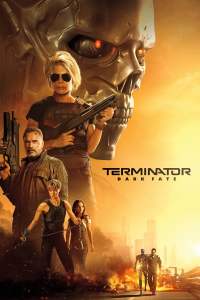 I also enjoyed Terminator: Dark Fate a whole heck of a lot more than anticipated. Heralded as the return of director James Cameron, who did the first two films so many years ago, this one is a direct sequel to Terminator 2, and ignores the 3 movies that came after that one. Maybe those films lowered my expectations, but this one was great. After a short intro that shows a Terminator was indeed able to kill John Connor shortly after the events of T2, we fast forward to present day and the arrival of two newcomers to our time from the future. One is the newest killing machine, Rev-9 (Gabriel Luna), and the other is a cybernetically enhanced human named Grace (Mackenzie Davis in a badass role). Even though Sarah and John Connor halted the start of Skynet, the inevitable happened and robots (AI) still started a war with humans. In the new future, with John Connor dead, the new hero is the unborn child of a woman named Dani, so Rev-9, with some seriously cool new tricks, has been sent back to kill her and Grace has been sent back to protect. Sarah Connor (Linda Hamilton, reprising her role) also shows up to do her part. The film sounds like a reboot of its own, but it isn’t. It has a similar premise but feels fresh, and it is a wild ride from the get-go.
  Big Time Adolescence is much better than anticipated too. It co-stars two guys who we’ve seen before, but I believe this may be their first leading roles. Mo (Griffin Gluck) is a 16-year-old boy who seems to have a good head on his shoulders, except for the fact he hangs out with much older guys, who aren’t exactly role models. The main one of this group is Zeke (SNL’s Pete Davidson), a stoner ex-boyfriend of Mo’s sister. Zeke is in his early 20’s and is just floating through life. Mo’s parents urge him to hang out with people his own age, but Mo really looks up to Zeke, and that influence begins to show. First Zeke starts getting alcohol and drugs for a few people in school, but eventually builds to being the dealer for the entire school. Zeke’s relationship advice doesn’t exactly pan out well for Mo either. I love me a good coming-of-age film, and this one mostly hits in all the right places, even if it is a bit predictable as most in this genre are. Gluck is really good as Mo, a young man who, like most 16 year olds, just wants to be accepted, and Davidson is passable as Zeke. Davidson has the kind of personality that makes him feel endearing to viewers, which helps in a role like this, even if his acting chops aren’t quite there yet. The comparisons to Adam Sandler are inevitable, and like in Sandler’s early films, Davidson’s charisma creates entertainment, allowing the viewer to look past some shortcomings. Sandler was able to grow and show some more nuanced performances later on, and we’ll see if Davidson can do the same. Still, I liked the movie.
 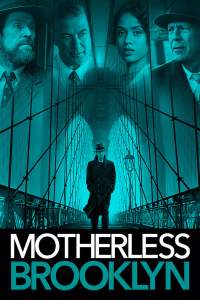 Motherless Brooklyn is an old-school film noir with a sterling cast who seem perfect for their roles. It has the right music and feel and even the deadpan voiceover narration; except for some curse words, if it were in black and white, it could have come out in the 50’s and you’d never know it. It is about a private investigator, Lionel, who has tourette’s (unnamed for this era, but that’s what it is), but his ticks are forgiven by his office’s head, Frank, because Lionel can remember anything and everything he sees and hears. What he hears one day is a contentious discussion between Frank and some unknown visitors, and it leads to Frank being shot and killed. Lionel immerses himself in finding the culprits, but the rabbit hole takes him to corrupt politicians, seedy Harlem jazz nightclubs, and a fight over redevelopment of lower-middle-class housing which the city wants to clear out for new highways. It is a very good film, maybe not great but close, with some remarkable acting jobs by Edward Norton in the lead, as well as Bruce Willis, Alec Baldwin, Willem Dafoe, Gugu Mbatha-Raw, Cherry Jones, and Michael K Williams, as well as a host of other recognizable faces. The good moments are really good, spellbinding in fact, but there are slow stretches which, while important to the mystery Lionel is trying to unravel, do seem to drag.
  Krigen (A War) comes out of Denmark, from director Tobias Lindholm. It stars Pilou Asbaek (Euron Greyjoy of Game of Thrones fame) as Claus, a commander of a group of soldiers hunting Taliban in Afghanistan. His troop loses one man when he steps on an IED, and it has shaken unit’s core. Shortly after, they are pinned down in a compound while on a patrol, taking heavy fire, when another member is critically wounded. The medevac can’t come in, so Claus orders an airstrike of the vicinity where he believes the enemy fire is coming from. It works, and the wounded soldier is rescued out, saving his life. Unfortunately for Claus, there were woman and children in that compound, and he is brought up on charges that he called the attack without having confirmation of an enemy presence there. The final section of the film shifts from the war zone to the court room. The movie is critically acclaimed, but I wasn’t moved. For one, I don’t think Asbaek is that great of an actor (wasn’t in Game of Thrones, and this film hasn’t changed my mind). Secondly, while Claus was obviously in a no-win situation, it’s still awfully egotistical to think the life of one soldier is more important than a house full of innocents. Very average film for me.
  Theeb is much better. A joint production from a few countries including Jordan, UAE, and the UK, and from director Naji Abu Nowar, it takes place in the desert during World War I. Young Theeb (a name that means wolf) and his older brother Hussein are hired to guide an English soldier and his Arab companion Marji through the desert to a railway. The Englishmen’s orders are to get there fast, so they take a shortcut through the canyon, despite local warnings that the path has more bandits than pilgrims these days. The warnings prove prophetic, as they are waylaid at a well halfway through. Several bandits are killed and one badly injured before the soldier, Marji, and Hussein are all killed, leaving Theeb alone. After waiting at the well a couple days, the initially wounded bandit returns, having been abandoned by his thieving “friends.” Theeb is too small and not physically strong enough to get the bandit’s camel to follow orders, so he nurses the bandit well enough to take them out of there. This uneasy alliance is the focalpoint of the final third of the film. Fantastic, suspenseful film, and a bit of a coming-of-age in a world very different from the one we live here in the USA. The end will leave you thinking.
  Monos hails from Colombia, directed by Alejandro Landes. This is a powerful film about a group of teenagers, really not much more than boys and girls, who have been recruited into a guerrilla war. The commander looking over their regiment, a militant and abusive man known as “the messenger,” has charged them with watching over an American hostage whom they call the doctor. The kids all go by nicknames, or call-signs, themselves, including Dog, Rambo, Bigfoot, Wolf, Lady, Smurf, and others. They though are obviously “bad guys,” they really are just children playing at being grownups, and their play in the beginning of the film drives this home. However, as the film goes along, they become more violent, and the movie takes on an almost Lord of the Flies-esque feel, with one boy starting to call all the shots and punish those who go against him. The imagery and music in this film are incredible. It’s impossible to explain, but the jungle feels alive through the screen, and you feel like you are there with them. An incredibly touching and emotional film, with mostly an unknown cast, with only two recognizable faces if you watch a lot of films, and otherwise newcomers, all of whom are up to the task for the nuanced and difficult roles.
  Mustang is a powerful film, the debut of director Deniz Gamze Erguven, and a coproduction of France and Turkey. Drawing a lot of parallels to Sofia Coppola’s famous The Virgin Suicides, it is about five sisters growing up together in Turkey. Their parents are dead, and they’ve been raised by their grandmother and uncle. Seeing them as getting too wild in their strict conservative society, grandmother decides it is finally time to start marrying them off, though all are just teenagers, and still engage in childish games with each other. Worse yet, in their culture, they rarely get to pick the lucky husband. Not to mention, we see more is going on behind closed doors than we are aware of in the beginning, when we see that after the two oldest daughters are married out, the uncle secrets into the third daughter’s bedroom one night. Told from the perspective of the youngest sister, Lale, who sees and notices all, it is a compassionate film about the perseverance and bond of sisters’ love. Though the film received criticism in Turkey for not accurately depicting the culture towards women there, I’m sure there are still plenty of places in the world where they are treated as such, and it is an eye-opening film for the age we live in.
 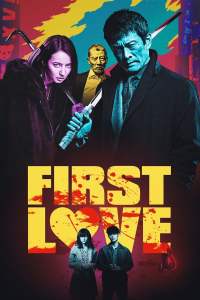 First Love is a Japanese film, highly entertaining, which almost defies characterization. It is billed as a crime thriller, but I think it had more laugh-out-loud moments that suspenseful ones, and the fight scenes have so much gratuitous gore that it is beyond ridiculous. Many times in the film, you can’t help but chuckle and shake your head at the purposeful outlandishness of it all. Leo is a boxer who is told he has a huge inoperable brain tumor, on the same day that he crosses paths with Monica, a prostitute and drug addict who has been set up to take the fall in an inside drug deal that is supposed to go bad. Chased by the “good” bad guys, the “bad” bad guys, a corrupt cop, and a vengeful girl bent on getting revenge for her killed boyfriend, Leo and Monica spend a night just trying to survive. Thankfully for them, the pursuers are as inept as they come. I’m unfamiliar with director Takashi Miike’s work, but if they are all like this, they are probably all a wild ride.
 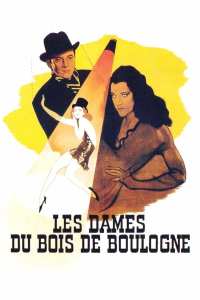 Hell hath no fury like a woman scorned. That’s the gist of Les Dames du Bois de Boulogne (The Ladies of the Park). Helene is a rich single woman who’s been in an open relationship with Jean for two years, but she loves him enough to finally get married. Unfortunately he doesn’t feel the same way, so when he calls it off to be “just friends,” Helene sets out to get her cold-hearted revenge. She knows of a single mother who has fallen on hard times. The adult daughter, Agnes, once dreamed of being a ballerina, but has resorted to being a cabaret dancer and prostitute to support herself and her mom. Helene rescues the family from their debts and puts them in a new apartment, and slyly introduces them to Jean, knowing that Agnes’ good looks will entice him. Helene is right, and Jean falls head over heals. Agnes rightly guesses that Helene has an ulterior motive, but her mom refuses to listen, feeling indebted to Helene. Agnes resists for awhile, shameful of her past, and even tries to tell Jean, but he dismisses her protestations, going on Helene’s word that Agnes’s is a fine upstanding family which has just been going through a difficult situation. Agnes and Jean get married without him knowing of her past, and only then is it revealed to him, with Helene having invited many of her former lovers to the wedding. It’s a delightful perverse film, but also has a message of redemption, and not just for Agnes.
  Diary of a Country Priest is a low-key film about a man who takes on his first parish in a rural community, and he’s probably unprepared for what he finds there. Our unnamed priest is a young man, just out of seminary, who is quiet and contemplative, pious yet unsure of himself. He is prone to arguing with his parishioners when they don’t see things the way he thinks they should, which doesn’t exactly make him any friends in the small community. To make matters worse, he is sickly for an unknown reason, able to only eat and drink break and diluted wine. The constant wine drinking spreads rumors that he is a drunk, and a lying young girl makes up more lies about him which makes matters worse. In the end, as his illness progresses, he finds solace not in any of his community, but in a fallen priest who attended school with him, who left the church and is now living unmarried with a woman. Though he struggles with his faith through most of the film, with his friend at his side, our priest seems to find himself at the end. I liked this film, and I think I would have really liked it more if I hadn’t been interrupted while watching it. I hate to start a movie if I don’t have time to get through it in one sitting, and unfortunately I was pulled away a few times, once for an extended time, and this is the kind of character film that you just can’t do that on. It pulls you in with all of the emotion of the priest, his fear of not living up to his calling. If I watch this one again, I’d make sure to do in one sitting, and would probably rate it higher.
 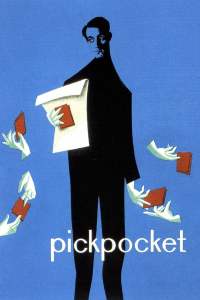 Pickpocket is widely heralded, but I just didn’t get the hype. It is about a man, Michel, who is forced to turn to thievery to survive. Already living in a rundown building (he leaves his apartment door wide open when he isn’t home, the lock is broken), and trying also to support his ailing mother, Michel has been out of work for a long time. His first stealing attempt, at the racetrack, ends up with him getting caught, but the police are unable to prove he is the thief, and he is let go. He is caught again a short time later, but the victim simply demands his money back without calling the cops. After these early run-ins, Michel is able to latch on to a group of professional thieves who take him under their wing, teaching him techniques and honing his “craft.” In the meantime, Michel begins to fall for the young neighbor of his mom’s. Bresson was famous for wanting his actors to display as little emotion as possible, preferring to let the story speak for itself, but that becomes the detriment in a film like Pickpocket. Even as Michel narrates to the viewer that he is under extreme stress from fear of getting caught, we certainly can’t tell by watching his face. Call me old fashioned, but I like to immerse myself in the film and get to a place where I am swept up in events the characters are going through, and it’s hard to do that when they are all stone-faced all the time.
  Unfortunately I didn’t really enjoy The Trial of Joan of Arc either. Bresson did a lot of research to make this film, a portrayal of Joan’s trial and eventual death by being burned at the stake, but to get that true story across, the whole picture is just spoken dialogue. In fact, it could take place in one long scene had Bresson not attempted to break up the monotony of it by showing the priests walking around. And by walking around, I mean out of the “room,” since it is was obviously filmed on a shoestring budget on tiny lots. It happens so often, it almost became comical to see the judges ask Joan a few questions, then get up and walk out the back. And unfortunately Bresson’s reliance on nonprofessional actors really shows in all the dialogue. It literally looks like they are reciting lines, unemotionally and with little rehearsing. The final scene of Joan’s death is powerful, but you’d expect that for such a climactic and historical scene. The rest of the movie bored me to sleep.
  We go from 2 movies with little emotion, to one that is full of it. Au Hasard Balthazar is a monumentous film; at its root, it is the life and death of Balthazar the donkey, but it is so much more. Balthazar is born into what appears to be a good life. He is loved as a young donkey by Marie, a little girl, and Marie’s playmate/early “boyfriend,” Jacques. However, when Jacques’s sister dies, the family moves away, and Marie isn’t so happy anymore, and Balthazar’s own life of joy ends, never to return. He spends the next 15 years floating from owner to owner, all within the same tiny town, and each seemingly more cruel than the previous one. None really care for Balthazar, other than his use as a pack animal, and he is beaten and mistreated continuously. Even an older Marie, who has fallen in with a bad crowd, shows mostly apathy towards Balthazar when she sees him. In the end, Balthazar dies alone, surrounded by sheep on a hillside. The obvious metaphor to Balthazar’s life is that of Jesus (Bresson was a Catholic and did not shy away from religious material in many of his films, as noted above). Balthazar is treated roughly during his time on this earth, used as a tool by the cruel and loved by few, yet he carries on as a noble animal without ever quitting. I think the selection of a donkey, besides its obvious biblical link, works perfectly: we associate it as a burden animal, and one that doesn’t fight back and which can’t escape its life.
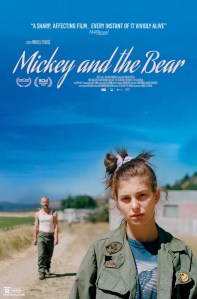 Mickey and the Bear is, I think, falsely called a coming-of-age tale, because the girl in it was forced to grow up a long time ago. Mickey is on the cusp of graduating high school, and lives with her single father, a marine veteran who clearly suffers from PTSD. He uses oxy and alcohol to get through his day, and Mickey has been playing the roles of student, breadwinner, and caregiver for a long time. As she’s trying to navigate her own issues with a juvenile boyfriend, and tamp down dreams of leaving Montana for bigger and better places, she has to come to terms with the fact that her father may never be what she wants and needs. He’s a drunk and abusive, and he’s never going to get better. It might be an unpopular opinion, but I’m not a fan of making excuses for people, no matter what they may have gone through. Mickey’s dad’s bad life doesn’t give him a pass to be an asshole to his daughter. She loves and wants to help her dad, but he seems unwilling or incapable of helping himself, yet she continually sticks by his side. It’s a very good film. The dad is played by James Badge Dale, who you’d recognize for all his roles in military and action films, and Camila Morrone, who I’d not seen before, is fantastic as Mickey. This is the type of film that critics love, but it’s good for average moviegoers too.
  Midway is one of those films where you better hope the action scenes make up for the rest of it, and for the most part, it is passable. Telling the historical lead-up and eventual battle of the one of the turning points in World War II in the fight for the Pacific, it features some amazing actions sequences, offset by some cringe-worthy dialogue and a serious case of over-acting by everyone on screen, even by well-known actors I like, which I can only attribute to bad directing. There’s a huge cast on both the American and Japanese side of the conflict. After a short prelude showing a meeting between the countries in 1937, the film fasts forward to the attack on Pearl Harbor, the USA’s response in the Doolittle Raid on Tokyo, and finally the epic battle around the tiny island of Midway. Director Roland Emmerich’s movies tend to make a lot of money, but these days his pieces are more about explosions than story, and he hasn’t made a really great picture in 20 years. Despite all that, the action moments, those referenced battle scenes, are so incredibly good, that they nearly make up for everything bad. I found myself cheering aloud when an enemy plane was shot down. Fans of the genre should find enough to like.
  Horse Girl stars Alison Brie as Sarah, a shy and lonely young woman whose only real contact with the world is a kind coworker (Joan, played by Molly Shannon) and a roommate (Nikki, Debby Ryan). She regularly visits a horse she used to own, Willow, but its new owners don’t appreciate her coming around. She’s also haunted by the accident of her friend Heather, who suffered a brain injury after falling from a horse years earlier, and the recent death of her mother. Sarah begins suffering from nosebleeds, and at the same time, starts zoning out while awake, coming to in odd places and not remembering how she got there. As Sarah starts to give in to some crazy paranoid delusions about alien abductions and cloning, she really starts to spiral out of control. The film begins as sort of an off-beat, quirky drama, typical for what you’d expect from an indie flick, but as Sarah starts losing time, it takes an unexpected, dark turn, and takes the viewer with it. Towards the end, I had less of an idea of what was going on than Sarah. There are parts that are really good, and Brie tries her best to sell it, but man, what a weird film.
 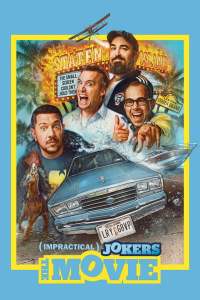 Impractical Jokers: the Movie is really just for die-hard fans of the long-running tv show, fans like me and my wife. We’ve been watching since shortly after it debuted and I don’t think we’ve ever missed an episode. Recent seasons seem to have lost the luster a bit, so I did have a little trepidation in going to see the four comedians ribbing each other on the big screen, but the film is whole lot of fun. Based around a very loose plot about the four men getting dissed by Paula Abdul in high school, and 20 years later making the cross-country drive to see her in Miami, the movie is mostly just more skits that you’d normally see on the show. But for the most part, they are really good skits. There are lots of subtle jokes and easter eggs for longtime fans, so I’m not sure that someone new to the Tenderloins will laugh as hard as I did, but I thought it was great. No spoilers here, but know that if you like the show, but didn’t know how it would translate to the big screen, my advice is to just go see it.
 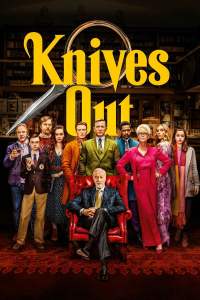 Knives Out is a terrific film from director Rian Johnson. Even if you weren’t a fan of The Last Jedi (I was!), you have to admit Brick and Looper were pretty amazing. He continues to make strides with Knives Out, a modern day murder-mystery. The film revolves around the wealthy Thrombey family, all of whom trace their money to patriarch Harlan (Christopher Plummer), an established writer. When Harlan is found dead one day though, of an apparent suicide, the family can’t wait to divy up his wealth. The kink in the works though is a private investigator, Benoit Blanc (Daniel Craig) thinks that, just perhaps, it was murder and not suicide. Each family member and caregiver is examined and interviewed, and all of the dirty laundry is aired. The cast is great, with members of the family including Chris Evans, Jamie Lee Curtis, Michael Shannon, Toni Collette, Don Johnson, Ana de Armas, and even Frank Oz showing up as a lawyer. Though the mystery isn’t as good as maybe it could have been, as I had it all figured well before the end, the reveal is no less fun for it. A tremendously exciting, well acted, and well told story.
  Jons Movie Takes