Robert Altman was a celebrated director whose films weren’t always commercial successes, but many of which were critically acclaimed, and he’s often cited as inspiration to today’s directors and writers. Unfortunately I did not have much experience with his work, outside of his first big hit (MASH) and a show he did for HBO in the 80’s (Tanner ’88). It was high time I rectified that.
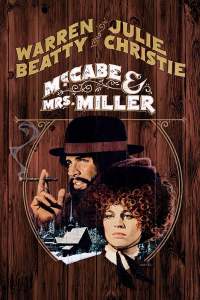 McCabe & Mrs Miller is a revisionist western film released in 1971, with an all-star cast lead by two of the biggest stars at the time, Warren Beatty (coming off Bonnie and Clyde) and Julie Christie (recently from Doctor Zhivago). Altman called it an “anti-western.” The heroes (or anti-heroes, as the case may be) are likeable, but they certainly aren’t role models. John McCabe is a gambler, newly arrived in the tiny northwest town of Presbyterian Church. He sees potential in the little town with its nearby rich mine and large male population, and opens up a whorehouse. He’s just getting started when Constance Miller comes to town and wants to become his partner. She wants to take his trashy prostitutes and classy them up a bit, charging more money for a high-class establishment. As the town continues to grow, business is good, and the duo start making a ton of money. This catches the attention of some businessmen in a nearby city, who come to Presbyterian Church to make McCabe and offer he can’t refuse. Unfortunately for him, he does refuse it, leading to some good old fashioned gun fights. I didn’t know what to think about this film for the first half or so. It took awhile to get going and the narrative is hard to follow, but by the end, I was hooked. It is one of the most “real” westerns I can remember seeing in some time. Everything from the sounds of the town, to the unfinished sets in it (purposefully done so by Altman, to give the impression of a growing town), to the flaws of its citizens, to even the grainy subdued picture (again, on purpose) really places the viewer inside the action. Great film, with lots of recognizable faces in the cast (Shelley Duvall, the late, great Rene Auberjonois, etc). ★★★★
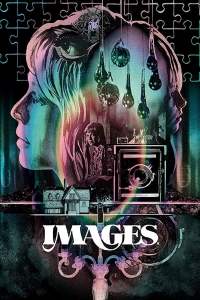 Altman followed up with Images, and at first, I couldn’t decide if this film is really good or really bad. It is a psychological thriller starring Susannah York (who won a best actress at Cannes for the role in 1972). At first Cathryn is just hearing things: an unknown woman keeps calling to tell her her husband Hugh (Star Trek’s favorite future shapechanging Odo, Rene Auberjonois again) is cheating on her. It isn’t long before she starts seeing things too though. She keeps seeing visions of a dead former lover, and when a man she once had an affair with stops in to visit Cathryn and her husband at a weekend getaway, she starts seeing all three men interchangeably. Cathryn will be kissing a man she thinks is her husband, see in a flash that it is actually the family friend, and then think it is her dead former lover, all in the span of seconds. She also intermittently sees herself in out-of-body experiences, walking across the gardens from the window, or overlooking the house from nearby cliffs. Her deteriorating condition worsens as the film goes along. Altman puts amazing camerawork to use, swapping out actors in the same take to disturbing effect for the viewer. The beginning felt a little gimmicky, but after awhile, even the viewer starts to feel Cathryn’s insanity, like something is slipping. It really pulls you in. At the end of the day, it is a solid film worthy of a single viewing, though I’m not sure I’d watch it again. ★★★
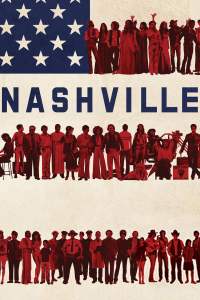 In 1975, Altman had his biggest critical success since MASH, with his film Nashville, which still holds the record for most Golden Globe nominations at 11. The backstory of the film is about a politician (who is never shown on screen), running for President on an independent ticket, who is putting together music talent for a fundraiser and rally in Nashville. While that is the overarching idea, most of the film is light on actual plot, following the lives of a multitude of eclectic characters over the course of a few days. The first 20-ish minutes go by at a frantic pace. The large cast isn’t given given true introductions in the traditional movie sense, we just see them on camera doing their normal things, and not even one at a time. It goes by so fast that we don’t know who to focus on, and the various characters aren’t fleshed out until later. Characters are always talking over each other, with multiple on-camera conversations going on at the same time, something Altman would become famous for in his pictures. It works in real life, but does make it difficult to follow in a motion picture. The film ends up playing out as satire, portraying our culture as one obsessed more with the performer as a celebrity and less about the music they are creating. As I mentioned, it has a huge cast; I think I read somewhere it has 24 main characters. Many are future all-stars before they were big. The list includes Ned Beatty, Keith Carradine, Scott Glenn, Shelly Duvall, Jeff Goldblum, and Lily Tomlin (in her first role). While the movie is critically acclaimed, it was a it too aimless for me. There are some quirky, funny moments, and it features a fantastic soundtrack (Altman once noted there was an hour of music throughout the 2 ½ hour+ film), but I think this is one of those films that was much more important in its time, especially its political aspects, than what it is today. ★★½
 If you want to see a case study in strong women actors, look no further than Altman’s masterpiece 3 Women, released in 1977. The 2 obvious women are Millie and Pinky, introduced early in the film. Millie (Shelley Duvall) is an outgoing yet lonely woman, whose forceful personality turns just about everyone off. Yet she is an instant attraction for the shy and introverted Pinky (Sissy Spacek), who is new to the area. Whereas Millie keeps people away with her attitude, Pinky does so with her awkward and clumsy speech. Pinky does latch on to Millie though and it isn’t long before they are roommates, where they come into contact with the third woman, Willie (Janice Rule). Willie is an artist, painting murals around the area, and she doesn’t say much to anyone, even her husband, the womanizing Edgar. As these three females hang around each other, their personalities blur, until an amazing final scene which makes you want to stop and rewatch the whole thing again. Altman has stated that Bergman’s Persona was a big influence for this film, and having seen it recently, I can definitely see why. The film is engaging from the start, gripping throughout, and downright chilling at times too. Truly amazing acting from Duvall and Spacek, who were still relatively early in their careers. Duvall was still 3 years away from her biggest known role in The Shining, and Spacek was a year removed from Carrie. ★★★★★
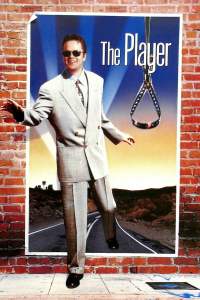 Going to skip ahead a few years, to arguably Altman’s next biggest hit, in 1992. The Player features a huge cast and an even larger list of A-list cameos of the era, a reported 65 people, many in short scenes just playing themselves around the Hollywood lots and restaurants. At the start, I thought maybe it was a comedy, because the opening scene shows Buck Henry pitching “The Graduate 2” to a film exec. While it continues to have hilarious moments throughout, the film gets dark too. The movie follows a Hollywood exec named Griffin Mill (Tim Robbins) who starts to receive anonymous death threats. Mill thinks he knows who’s been sending them, a disgruntled writer he rejected recently named David Kahane (a young Vincent D’Onofrio), and Mill goes to meet him to try to make amends. At the same time, Mill feels threatened from a new hotshot executive at the studio, Larry Levy (Peter Gallagher), who seems to have risen through the ranks quickly by rubbing the right elbows. The rest of the film plays out in thrilling fashion, much like one of the classic Hollywood pieces discussed on screen. Murder, sex, a police investigation, a run from the cops, and the supreme ego of the film execs all come together for as complete a film as you will find. It’s also a movie-lovers wet dream, full of visual and spoken references (some subtle, some not so much) to the history of film. I loved every minute of it. ★★★★★

 Jons Movie Takes