I recently wanted to watch some modern foreign films, and in doing so, stumbled upon Iranian filmmaker Asghar Farhadi. He’s one of few directors in the history of the Oscars to have won twice for best foreign language picture. I’m going to look at 5 of his films, going in reverse order (because that’s the order I’m watching them in).
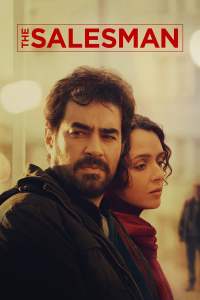 Farhadi’s recent Oscar came in 2016 for The Salesman. It follows a married couple, Emad and Rana, who are actors in a new showing of Arthur Miller’s Death of a Salesman. Emad’s day job is a teacher at the local school, but the couple is struggling. Their current apartment was found to be structurally unsafe, so they are forced to move into a rough neighborhood. On their first night there, while Emad is late returning home, Rana is attacked in her home when she mistakenly lets a stranger into the building through its intercom. Emad finds out the person who rented the apartment before them was a promiscuous woman, and he believes a former “client” of hers is the attacker. Rana is obviously shaken up and doesn’t want to go to the cops, so Emad makes it is business to hunt down the attacker himself. Despite what you might think, it isn’t a thriller. It is a deep and heartfelt drama, taking the viewer through all of the emotions from both the husband and the wife. I was reminded of a great film I saw a few years ago with a similar premise, The Light of the Moon. Check out that one if you don’t like subtitles, but this one is even better. ★★★★★
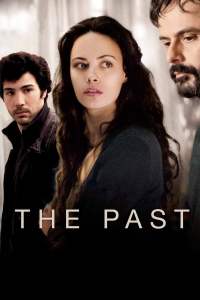 Farhadi’s preceding film was The Past, released in 2013. This one is about an Iranian man, Ahmad, returning to France to finalize his divorce to Marie, his estranged wife whom he left 4 years previously. Ahmad was husband # 2, and has a good relationship with Marie’s kids from her first marriage, especially teenage daughter Lucie. But he was not a great husband; they fought a lot and he was constantly absent. Her new guy, Samir, isn’t much better, and he and his son Fouad are dealing with their own problems, namely the suicide attempt of Samir’s wife. Samir and Marie had been having an affair, but he now feels conflicted since his wife lies in a vegetative state. All of these dynamics from this mixed family come to bear throughout the film. It is a deeply emotional, quietly contemplative movie, and while I felt it started to come off its rails for a few minutes in the latter half, it all comes together nicely in the end. Every character is this film is real: they each are flawed humans who at various times know and do not know what they want in this life. I ended up liking it even more than The Salesman. ★★★★★
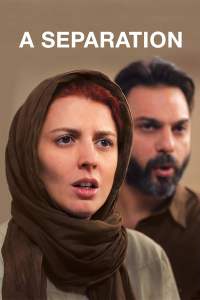 There’s a scene in the iconic Fiddler on the Roof where one character is right, and the opposing argument is also right, and a bystander quips, “They can’t both be right.” In A Separation, the opposite holds true: no one is right. Yielding Farhadi’s first Oscar win in 2011 (it was the first film from Iran to win), this film shows the classic example of pride and honor getting in the way of truth. Nader and Simin are getting a divorce (Simin wants to move to a country where their daughter Termeh will have more rights as a woman), but Nader doesn’t want to leave his father, who is suffering from Alzheimer’s. Simin moves in with her parents in the meantime, and Nader hires a woman, Razieh, to look after his father. Just a couple days into the new arrangement, Nader comes home to discover Razieh not there, and she has tied Nader’s father to the bed to keep him from moving about in his condition. When Razieh does show up, Nader is so upset that he shoves her out of the apartment. She falls down the steps, causing a miscarriage. Razieh’s husband sues Nader, but Nader claims he did not know she was pregnant. Everyone gets wrapped in the case, including neighbors, teachers, friends, and not the least of whom, Termeh, who sees her dad Nader in a whole new light. Don’t expect a happy ending for anyone. If you are only used to life in the USA and not familiar with other cultures, especially in the middle east, this film is eye opening. The court system in particular is frenetic, with fast-paced calls for witnesses, quick judgments, and the inclusion of religious beliefs into decisions. It’s a very emotional piece. ★★★★
 The greatness continues in 2009’s About Elly, maybe the most human of these films so far. A group of young adults, life-long friends, have rented a villa by the sea for a weekend. The group consists of married couples and a few young kids, and sole single man Ahmad, but Sepideh has plans to change that. She’s invited her kids’ teacher Elly to come as well, and hopes to make a match. From the get-go however, the shy (or traditional) Elly seems uncomfortable around the partying antics in the group. After just one night, Elly talks to Sepideh about returning home early, but Sepideh begs her to stay. Elly is left to watch the kids while some of the women go into town, and the men play volleyball nearby. When one of the children runs to the men screaming that another child is drowning in the sea, everyone runs in to save him. Only afterwards do they realize Elly too is missing. Did she drown trying to save the boy, or did she return to town without telling anyone? The human need to protect yourself comes out, as these friends blame each other for faults that led to this event, and then lie to save face. It’s a raw and emotional film, as I’ve come to expect from this director by now, and another excellent picture. ★★★★
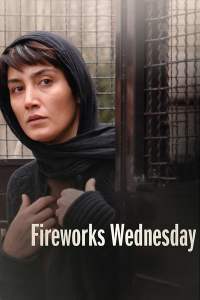 Fireworks Wednesday was the director’s third film, released in 2006. You can tell he’s still a young director learning his craft. It is a fine film, but lacks the subtlety and humanism of his later pictures. The film follows a young betrothed woman, Rouhi, who goes to work for a married couple. The picture is a single day, her first (and maybe only) day on the job. She’s been hired to help clean Mozhdeh’s and Morteza’s apartment before they go on vacation, but she enters a household in flux. Mozhdeh is convinced that Morteza is cheating on her with a neighbor, Simin, who runs a salon out of her place. Mozhdeh clandestinely sends Rouhi over to Simin’s to get her eyebrows done for her upcoming wedding, for some reconnaissance. When he finds out about Mozhdeh’s worries, Morteza vehemently denies it. This picture from a story standpoint is the weakest of the set, but Farhadi does manage to pull fine performances from his actors, and there are glimpses here and there of the greater things to come. ★★½

 Jons Movie Takes
2 thoughts on “Quick takes on 5 Farhadi films”