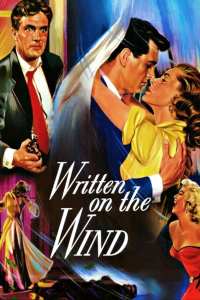
 How about a set of classic films from 50’s, including a couple melodramas from the great Douglas Sirk, and some westerns? Up first is Sirk’s Written on the Wind. This one is about an oil tycoon’s family and the people that circle them. In particular focus is Kyle (Robert Stack, in an Oscar nominated role), the rich playboy son. His freewheeling lifestyle is only slightly tempered by his life-long friend Mitch (Rock Hudson). Their friendship is tested when they fall in love with the same girl, Lucy (Lauren Bacall). Lucy marries Kyle, making Mitch more embittered that Kyle always gets his way. Turning the screws is the femme fatale role, Kyle’s little sister Marylee (Dorothy Malone, who did win her Oscar), who’s always had a crush on Mitch, and she refuses to let him be anyone else’s beau, even hinting to Kyle that Mitch and Lucy are having an affair. For awhile, Kyle changes his ways and plays the straight and narrow for his love of Lucy, but when he learns from a doctor that he may not be able to father children, he goes back to drinking, and through his sickness, Marylee is able to weasel her way in between them all. I loved the movie, it features some really great acting by some of the greats of this era, and the music is fantastic too, with Marylee’s sultry little devil-music popping when she slinks into view. I read that Sirk’s films weren’t highly thought of in their time but have come to be very well regarded (and copied) since. How could this film ever not be loved?! ★★★★★
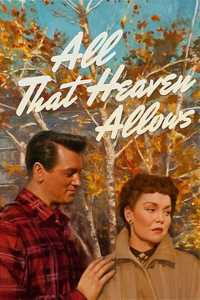 All That Heaven Allows is a beautifully done film, and the inspiration for Rainer Werner Fassbinder’s Ali: Fear Eats the Soul (though this one, spoiler warning, has a happier ending). Cary (Jane Wyman) is a 50ish year-old widow who runs in affluent circles. Her snooty friends, and even her own college-age children, turn their noses up when she falls in love with her former gardener, Ron (Rock Hudson). Ron introduces her to friends of his in the working class, people who genuinely care for others and who don’t put on airs or facades. Cary ultimately needs to decide if she should do what her friends and family want, or what she herself wants. It’s a very touching film, with a lot of subtle (and not-so-subtle) digs at the affluent class and how they treat others and each other. ★★★½
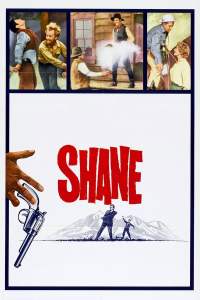 I watched Shane because of its reputation as one of the finest westerns ever made. Perhaps I watched a different version, because I just didn’t get it; it seemed rather ho-hum to me. The eponymous Shane is a drifter who finds himself in a valley in Wyoming where there is a conflict going on between the homesteaders and the cattle ranchers. The homesteaders are there legally and trying to run small farms, but the cattle ranchers, led by the nefarious Ryker, are bullying them off the land. Joe and his wife and son give Shane a place to stay for a couple days in exchange for work around the farm, and Shane likes them enough to join in their fight against the ranchers. It all comes to a head when one of the homesteaders is killed by a gunslinger hired by the cattlemen, leading to a battle between Shane and the rest of them. I don’t see the appeal of this movie at all, and honestly it was so full of tropes and stereotypes that I could not get into it. Not to mention, one of the main characters is little Joey, and we all know how I feel about child actors. And little Joey is one of the worst, showing off his dumb stares and wooden acting for all to see. Every close up of his wide-eyed glances made me cringe. Maybe it was great in 1953, but it hasn’t stood the test of time. ★½
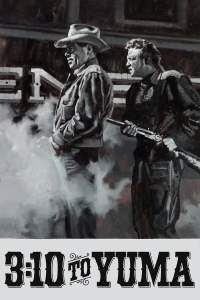 I saw the 2007 remake of 3:10 to Yuma, starring Russell Crowe and Christian Bale, years ago, and liked it very much, but I’d never seen the original until now. Going up against Hollywood Code in its day, this one has a happier ending. Directed by Delmer Daves, it is about the leader of a band of outlaws, Ben Wade (Glenn Ford) who is captured in a small town in the Arizona territory. The local marshal knows that can’t keep him there, because Wade’s group of thugs will easily overwhelm the small village, so he recruits local cattle rancher Dan Evans (Van Heflin) to secret Wade to neighboring Contention City, where they can put Wade on the next train to Yuma. Dan is a simple guy but he’s great with a gun, and while he initially doesn’t want to get involved, he is lured by a substantial cash reward which can help his struggling family. Daves does an excellent job laying out this picture. The first 30 minutes lay the groundwork for what kind of men the actors are, followed by 30-40 minutes of slowly building suspense as Dan waits for the train to take his charge away, and finally the heartpounding climax as he leads Ben through the town, trying to avoid getting himself killed. More than anything this movie looks at the psyche of men. Dan has a strong moral compass, but even he is tempted to let Ben go when Ben offers more and more money to do so. Ben himself is morally ambiguous; he’ll shoot his own man without blinking an eye, but he still holds to his own code of honor. ★★★½
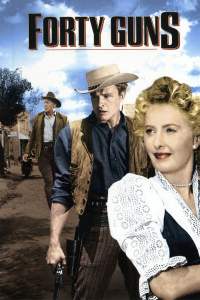 Forty Guns, from Samuel Fuller in 1957, is a rip-roaring good time. Made at a time when he had already established clout as a director and was independently making films with less studio influence, it is a very different kind of western. For one, it features a strong female character as one of the co-leads. Jessica Drummond (Barbara Stanwyck) runs an area in the Arizona territory with a posse of 40 men. She’s involved in some shady business but is otherwise a tough but fair ruler of her “kingdom.” However, her brother Brockie is a thug, killing and trashing the town. She has a soft spot for him because she birthed him (losing their mother at the time) and raised him, so she’s turned a blind eye to his misdeeds. Their little section of earth is shaken up when US Marshal and former gunfighter lawman Griff Bonnell (Barry Sullivan) comes to town with his two brothers, there with a warrant to arrest one of Jessica’s gang. Jessica sees in a Griff a man as tough as her, and the two immediately fall in love. A film full of gun fights and intrigue, double crosses, love, and death, this movie has it all. The word play is downright shocking for 1957; there is so much innuendo and double entendre that you wonder how Fuller got it past the sensors (Jessica reaches for Griff’s gun, saying she’s interested in “his trademark,” but he warns her that it might go off in her face). Very enjoyable film, and very different from the westerns you are used to seeing. ★★★★

 Jons Movie Takes