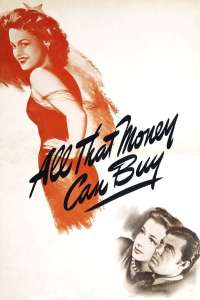
 The Devil and Daniel Webster (originally released as All That Money Can Buy, but later had its name switched back) directed by William Dieterle and released in 1941, was a new take on the classic Faust tale. Jabez is a good farmer and a good man, taking care of his wife and mother as best he can, despite rotten luck. The family is inches away from losing their farm, and in anguish, Jabez mutters that he’d sell his soul for 2 cents if given the chance. In walks “Mr Scratch” with an offer. He offers Jabez 7 years of the best luck in the world, and promises to make him the richest man in New Hampshire, in return for his soul, payable on the 7th anniversary. Jabez agrees, and immediately finds a stash of gold coins buried under the floor of his barn. At first, Jabez does good for his neighbors and friends, but over the years, he loses sight of who he was. When storms ruin everyone’s crops but his own, Jabez hires his friends to work for him on the cheap. He builds a huge manor, and openly flaunts his young pretty girlfriend, even in front of his wife. Mr Scratch is happy to have Jabez in his back pocket, but secretly longs for the soul of local lawyer and politician Daniel Webster. Webster is an honest man and strong orator, who may even be president one day, and Scratch would love to bring him down. When Jabez’s seven years is up, and Scratch comes to collect, Webster agrees to defend Jabez in court against the devil himself, with Jabez’s soul on the line. I thought the acting was just so-so, and though the story is old hat, I was enraptured and thoroughly enjoyed it from start to finish. Somehow the filmmaker gets us to root for Jabez’s salvation, perhaps just for his family’s sake, though he doesn’t seem deserving in the slightest. ★★★½
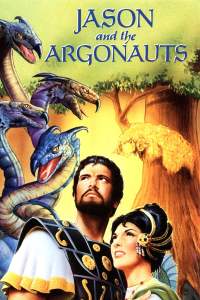 I’m going to chalk up the praise on Jason and the Argonauts as a “you had to be there” kind of thing. Some of my most revered actors and directors laud this 60’s cult classic as one of the best, but man, it just isn’t that good today. Maybe once upon a time it was better. It’s a take on the classic Greek mythology stories of Jason and in particular, his quest for the Golden Fleece. Depicted as a plaything of the Gods, Jason undertakes his quest as a way to gain an item to avenge his family, who were murdered by Pelias in a coup when Jason was a child. Along the way he gathers a group of heroes to aid him on his quest, including the great Hercules. I can forgive the over-the-top acting as a relic of the era, but the campy music and shoddy, almost low-budget feel ruined the experience for me. The saving grace is the stop-action special effects, which is really what everyone talks about when they recall this film. The scenes of a colossal Talos chasing after Jason and his group, and in the end, a force of skeletons attacking, are way ahead of their time and done extremely well for 1963, but they didn’t save the experience for me. ★½
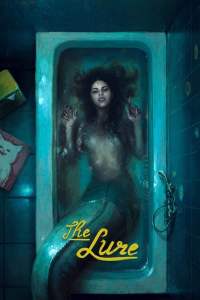 The Polish film The Lure is way out there. Let’s get that out of the way first. It is an updated telling of the classic “little mermaid” tale. Silver and Golden are two mermaid sisters who leave the sea and come on land, growing legs in the process. Silver falls in love with a man, who can’t return her love because he only sees her as a fish, an animal. Sounds interesting, but there’s a twist: these mermaids grow sharp fangs and feast on flesh. While Silver is doing human things and having fun, Golden is out giving in to her base desires, which finally lands the sisters in trouble with the only people who have looked after them. Other parts of “The Little Mermaid” intertwine throughout, such as Silver will lose her voice if she has an operation to become fully human for her love. This horror film/musical/comedy mashup is strange, no two ways about it, but I was enthralled. Beautifully shot with a tinge of the surreal, and songs that are catchy even in a different language, I thought this movie was fantastic. It’s a not-so-subtle look at feminism, puberty, sexuality, and what it is to be human. And it’s also one of those movies which, at the end, you ask yourself, “What the hell did I just watch?” ★★★★
 There’s the good “What the hell did I just watch?” and then there’s the bad “What the hell was that?” The latter was my reaction to Valerie and Her Week of Wonders, a film from the Czech New Wave in 1970. Valerie is a young teenager living in a surreal landscape in a medieval village. She is looked after by her grandmother. Around her amasses a circle of wicked priests, evil spirits, and vampires, while she floats through the village in a horror/fantasy, dreamlike manner. She loves Eaglet, whose uncle the constable desires Valerie’s magical earrings, which provide a bit of protection from the evil in the village. Weird stuff, and not my cup of tea. I probably would not have gotten through the film if it had been any longer than its short 1 hour 17 minute length. ★
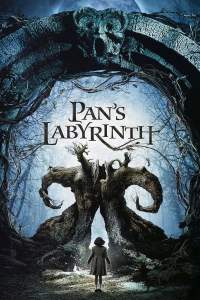 In full admittance, while watching Guillermo del Toro’s Pan’s Labyrinth, I realized I had seen it before, but it has been a long time, so I felt like I was coming at it fresh. This is a beautifully filmed, wonderfully told story about the loss of innocence. Ofelia is a young girl living at the tail end of the Spanish Civil War. Franco’s army has won, but the brutal Captain Vidal and his small troop are mopping up the guerrilla fighters in the hills. Vidal has just married Ofelia’s mom and they are awaiting the birth of their child. One night, Ofelia is approached by a magical creature known as a faun. It tells Ofelia she is the spirit of the long-dead daughter of the King of the Underworld, but to take her place as the princess, she must complete three tasks. These missions take Ofelia to dark and terrifying places, all while in the real world, Vidal is continuously needled by resistance fighters, including hidden people in his own staff. This film has the initial feel of a child’s tale, but the brutal killings and downright scary tone quickly dispel that notion, and overall it comes off as more of a horror film, but with a much more involved and thought-provoking story than what you often find in that genre. ★★★★

 Jons Movie Takes
One thought on “Quick takes on 5 fantasy films”